

Opinion editor’s note: Strib Voices publishes a mix of guest commentaries online and in print each day. To contribute, click here.
•••
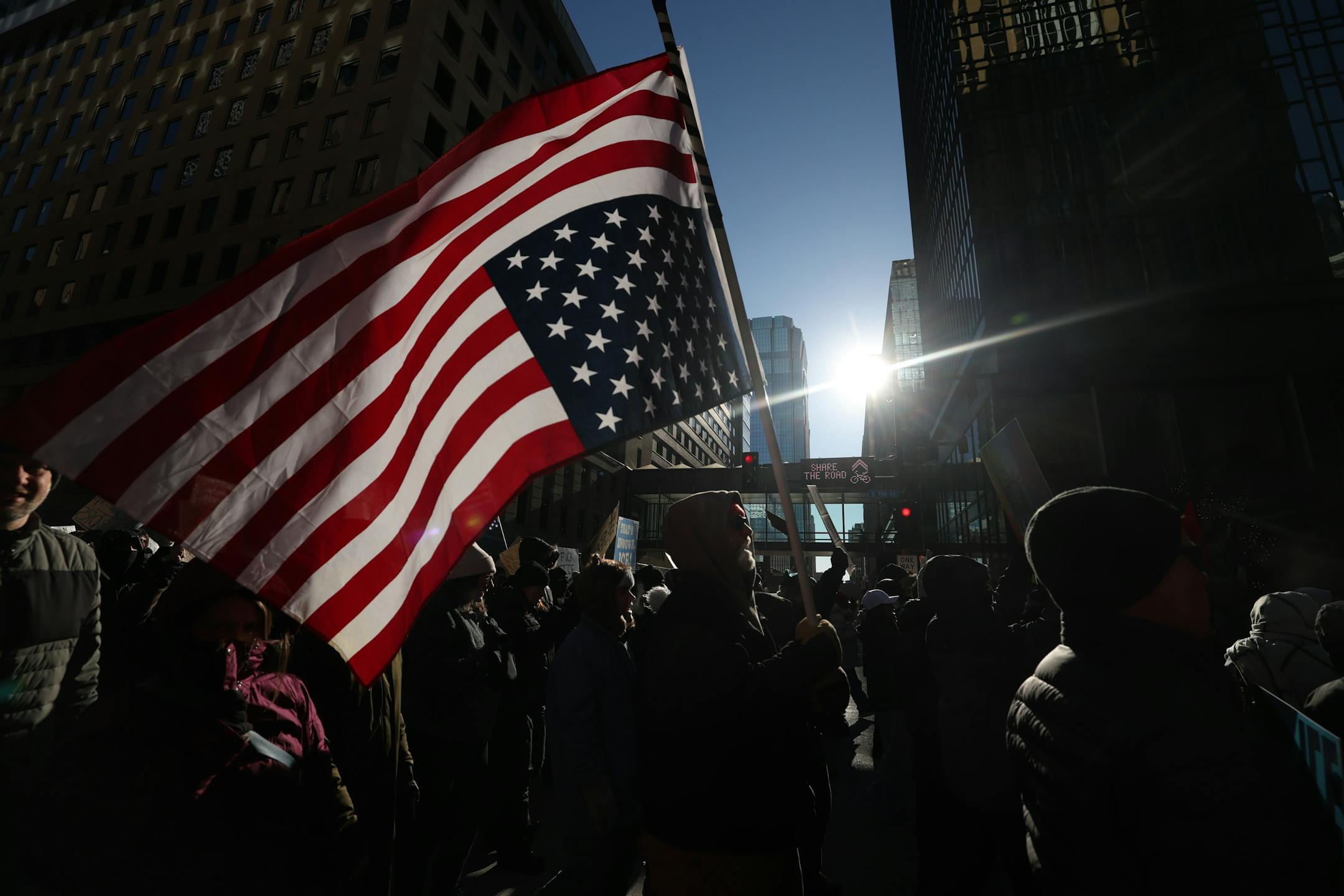
I (Delta) am a lifelong resident of the Twin Cities. Over the past month I have been spending mornings protesting at the Whipple Building, where Immigration and Customs Enforcement agents gather before heading into the streets. I spend my weekends serving as a legal observer. I am not an anomaly. I am white and a part of a multiracial coalition that is guided by the historical lessons of Black and Indigenous resistance.
My co-author (Robin) does not live in Minneapolis but has been researching white socialization for decades. She has documented how white Americans are taught to see racism as an aberration, an ugly interruption of an otherwise noble national story. The line is repeated reflexively after every racial reckoning: This is not who we are. But for Black and brown people in this country, racism has never been a deviation. It is the throughline.
What white Americans experience as situational moral rupture, communities of color recognize as historical continuity — as systemic. Having learned from history what comes next, we are writing to our fellow white people with a direct challenge: How do we sustain our engagement beyond the current crisis and build a foundation that is redemptive rather than just reactive?
The U.S. was not haphazardly shaped by momentary aberrations of racism. From stolen land to stolen labor, from chattel slavery to racialized wealth extraction, this system is not evidence of national failure; it is evidence of design. The propaganda project of America tells us that history should not be uncomfortable and that our stated values outweigh the evidence of our actions. The recent slate of executive orders underscores that project.
History textbooks celebrate the Civil War as a turning point, a tragic but reparatory chapter in which the nation confronted its sins and chose justice. But this story collapses under even modest scrutiny. The brief period that followed, known as Reconstruction, demonstrated what was possible. Black men were elected to Congress. Public education systems were developed. Black people built businesses, accumulated land and bought homes. But as author Carol Anderson documents, every inch of Black progress has been met by a backlash of white rage.
The backlash to Reconstruction was swift and brutal. Racial terror campaigns, lynchings, economic sabotage and political violence made clear that white people were willing to destroy democracy rather than share power. Contrary to popular myth, Reconstruction did not fail because Black governance was incompetent or corrupt. It failed because it worked. The message was unmistakable and the pattern was set: Democracy is negotiable; white supremacy is not.


