Roper: Doomsday docs aside, Minneapolis’ lush urbanity makes it a special place to call home

The city blossoms in the warmer months, even when bad headlines drown out what makes it great.

Columnist Icon
The Minnesota Star Tribune
October 14, 2025 at 2:39PM
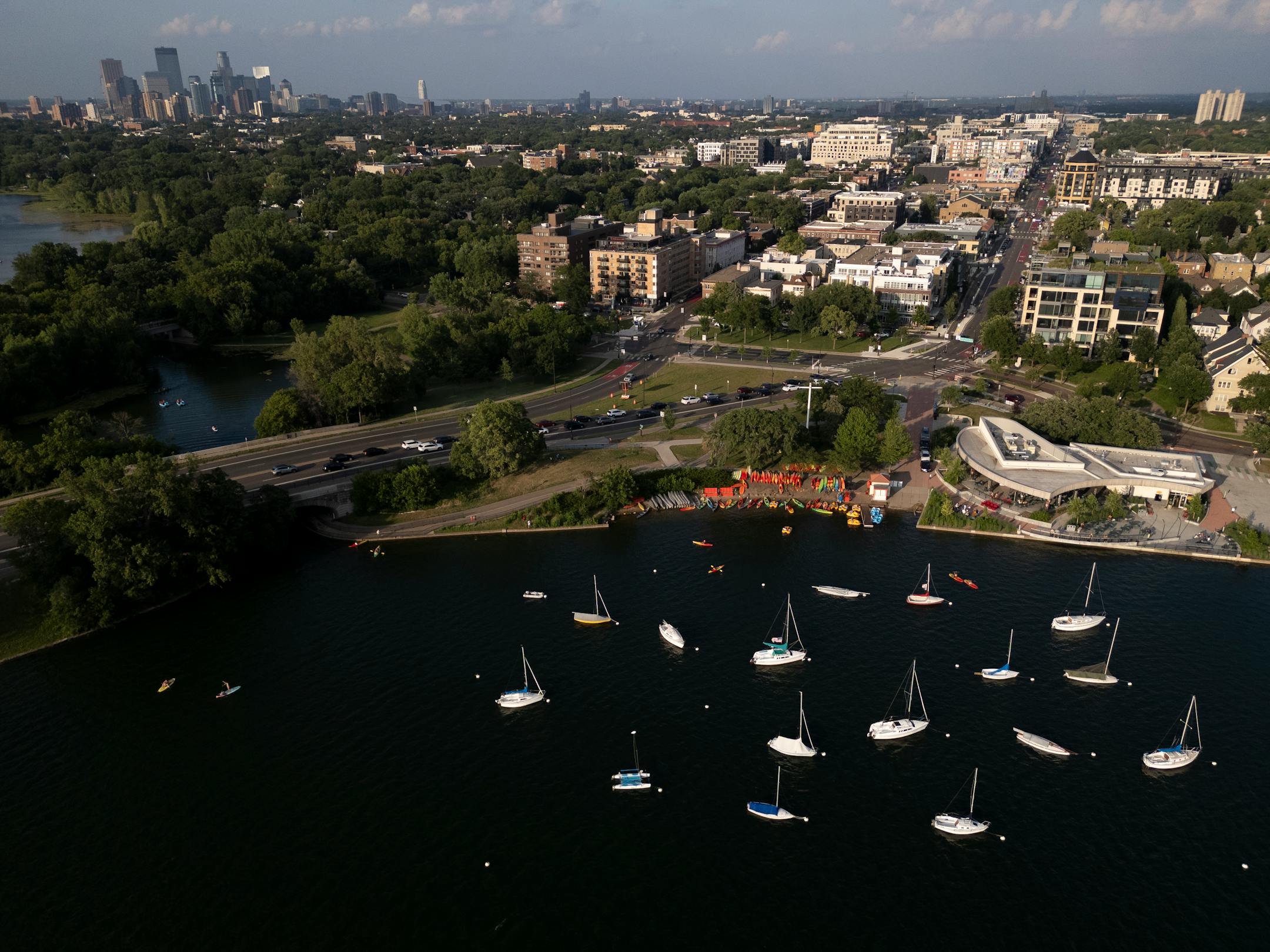
The view from above Bde Maka Ska looking east toward the urban buildup of Uptown’s Lagoon Avenue and W. Lake Street in July 2025. (Aaron Lavinsky/The Minnesota Star Tribune)

Minneapolis is magical in the summer.

I’ll be walking down a sidewalk and stumble into a passageway made of sunflowers. I’ll be biking up a protected bike lane and whiz past charming homes near quaint clusters of small businesses. I’ll be running around the lake and see sailboats framed beneath the downtown skyline. I’ll be at the annual alley dance party with my neighbors, a little toasted.
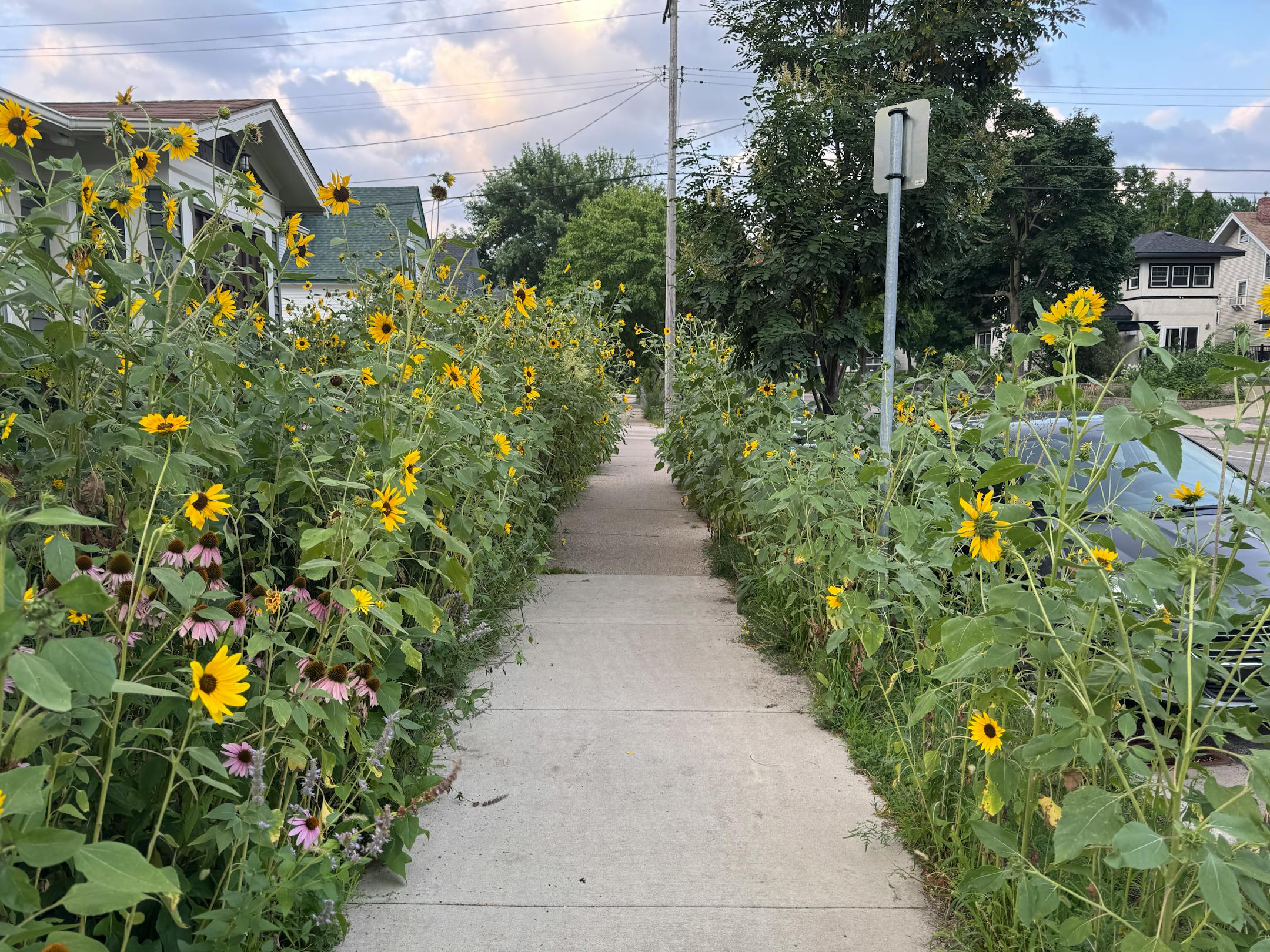
A passageway of sunflowers in south Minneapolis. (Eric Roper)

Lush urbanity. Postcards once called it the city of lakes and parks — maybe we should revive that slogan.

Bad news has been washing over Minneapolis lately, cramming people’s heads with scary visions of urban decay. For my own sanity, I need to reflect on why there’s arguably no better place to live.

I grew up in Manhattan, a concrete jungle. It is too dense, too big for my taste. Minneapolis occupies a sweet spot. Its plentiful residents and visitors support a constellation of lively districts — big and small, corporate and eclectic — surrounded by tree-lined historical neighborhoods that exude a small-town feel.
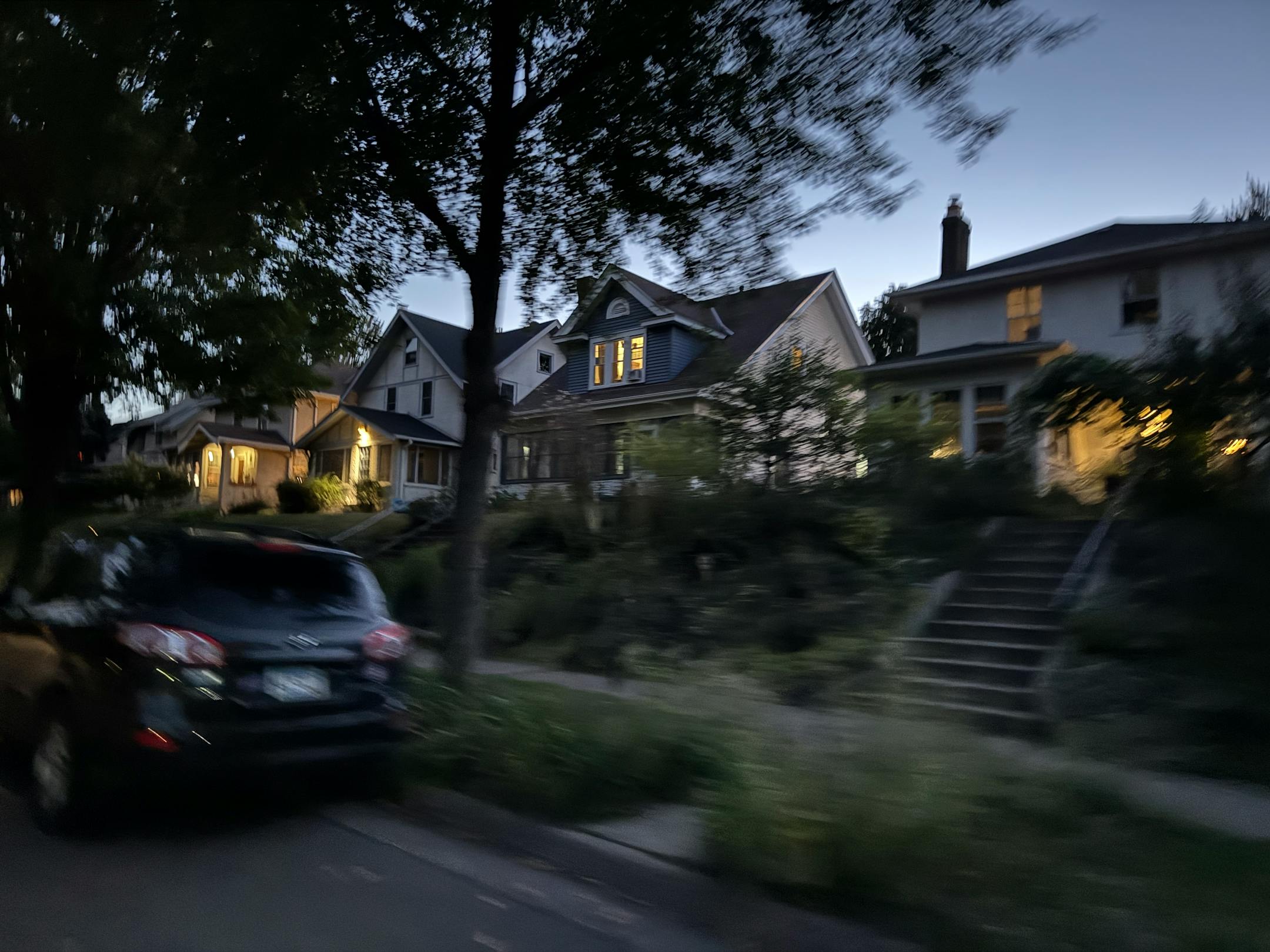
A snapshot of historical Minneapolis homes as seen on an evening bike ride. (Eric Roper)

There haven’t been this many people living in Minneapolis in half a century. It is not dead or emptying out, despite the implications of a recent primetime documentary.

And as with most places in Minnesota, it blossoms in the summer months.

Go stand in the middle of the Stone Arch Bridge at sunset, where a diverse hum of humanity crosses the Mississippi River surrounded by milling relics and plentiful new housing. This is not some aberration. Bop around sipping beers on an industrial chic strip like Quincy Street NE., or follow the enticing aromas down Nicollet Avenue’s Eat Street, and tell me this is some wasteland.
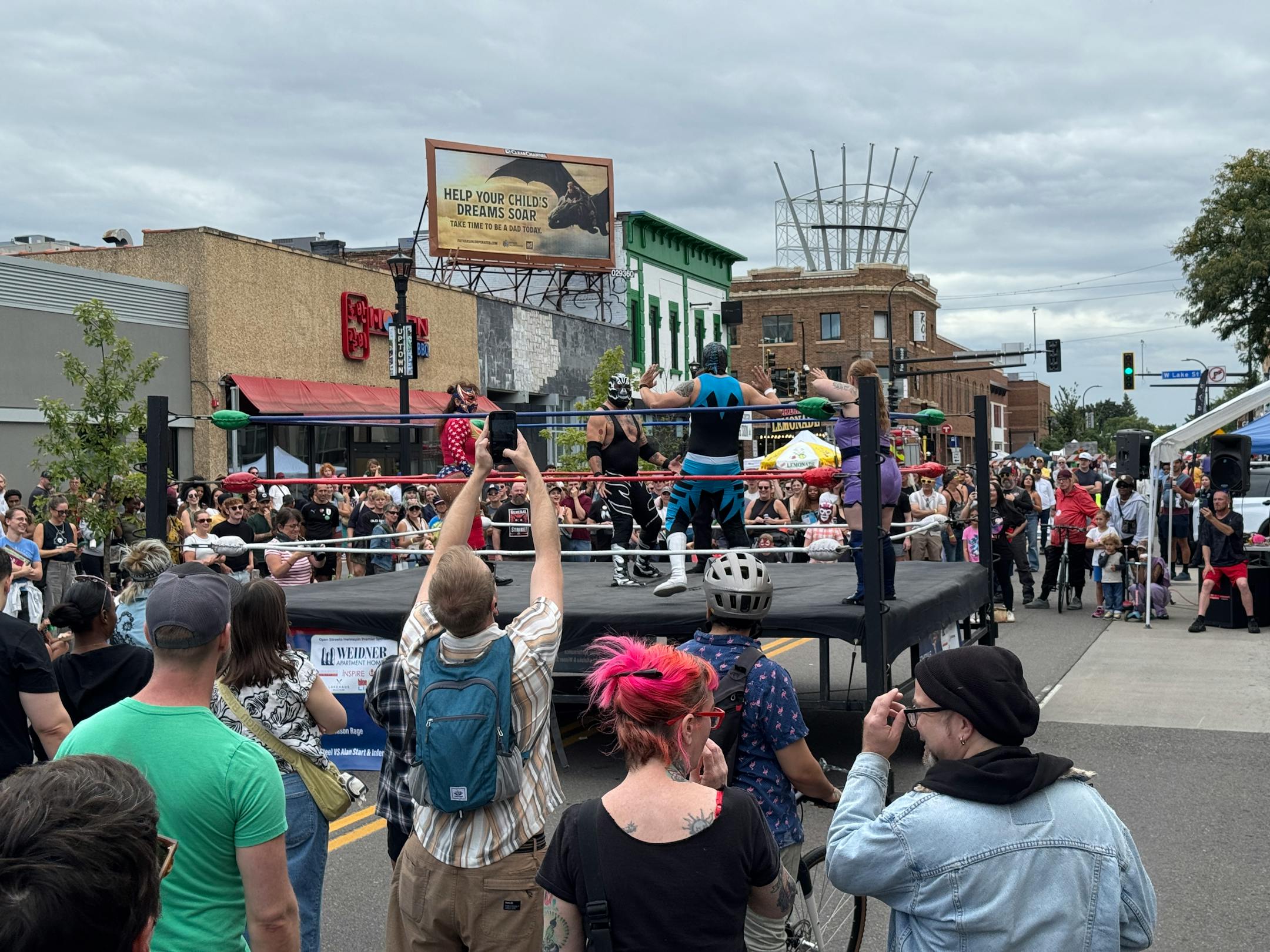
Wrestlers perform at Hennepin Open Streets in Uptown in September. (Eric Roper)

I was sitting beneath cafe string lights at the aforementioned dance party when I met a European woman who was visiting the city. She was surprised to see Minneapolis’ extensive bikeways — which have been multiplying lately.

I think the bike improvements are making the city much more desirable, and downright Amsterdam-ish at times. Watch the parents delivering kids to school on cargo bikes and you start to realize there’s an interesting shift going on.

Downtown has been drawing headlines lately for its declining building values. But a mundane Saturday excursion this June made me appreciate the small stuff I don’t notice during my downtown work day.

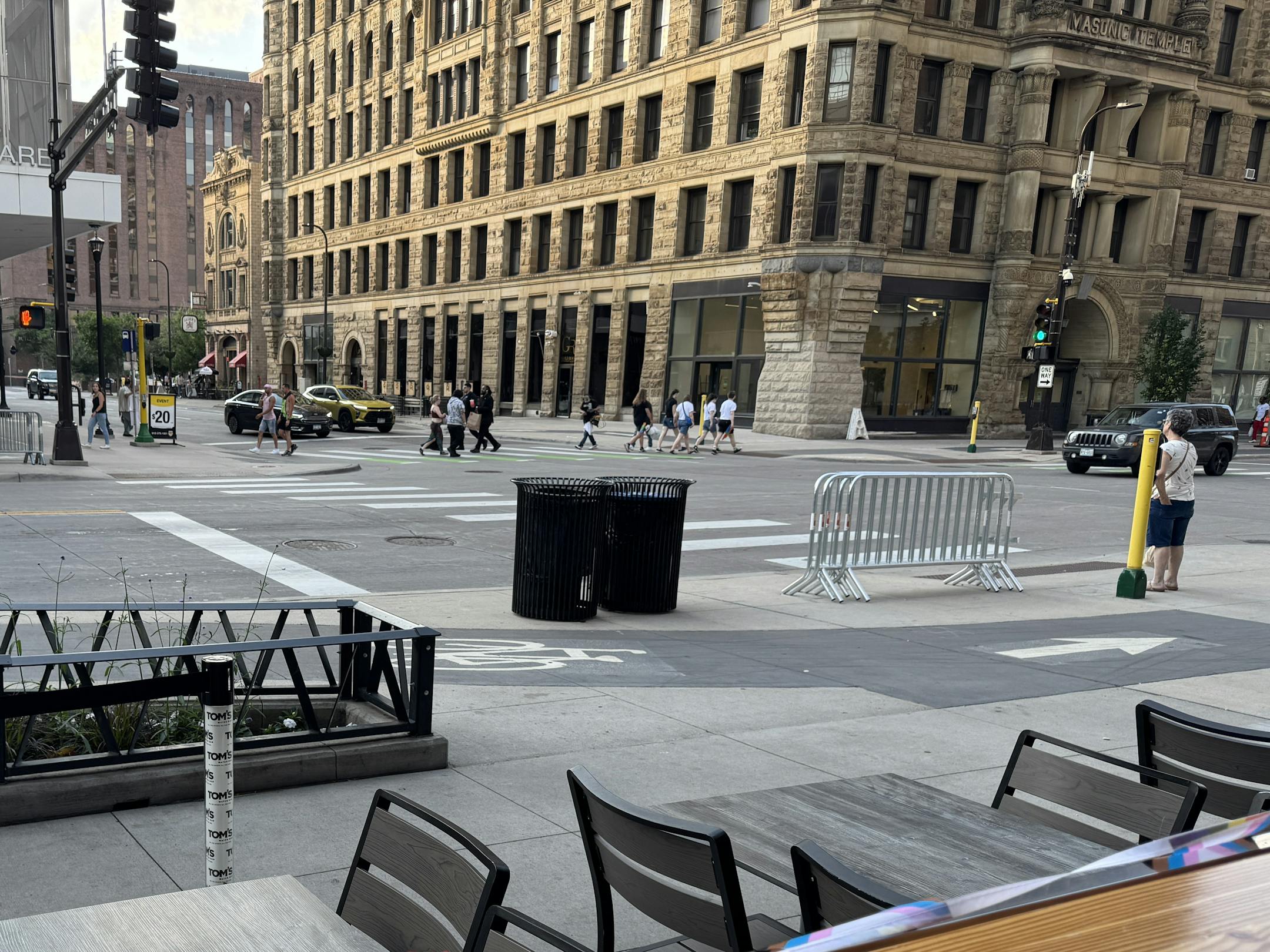
I took a bus up Nicollet Avenue and had dinner on Hennepin Avenue at Tom’s Watch Bar, which has a sidewalk-facing rail. I saw many groups beginning their evenings on Minneapolis’ entertainment strip, as well as youth athletes in town for a basketball tournament. A packed sightseeing trolley bus cruised by. My eyes were also drawn to the carved stone details of the historic Masonic Temple building across the street, which glowed amber in evening sunlight.

Groups walk down Hennepin Avenue at 6th Street on a Saturday night in late June. (Eric Roper)

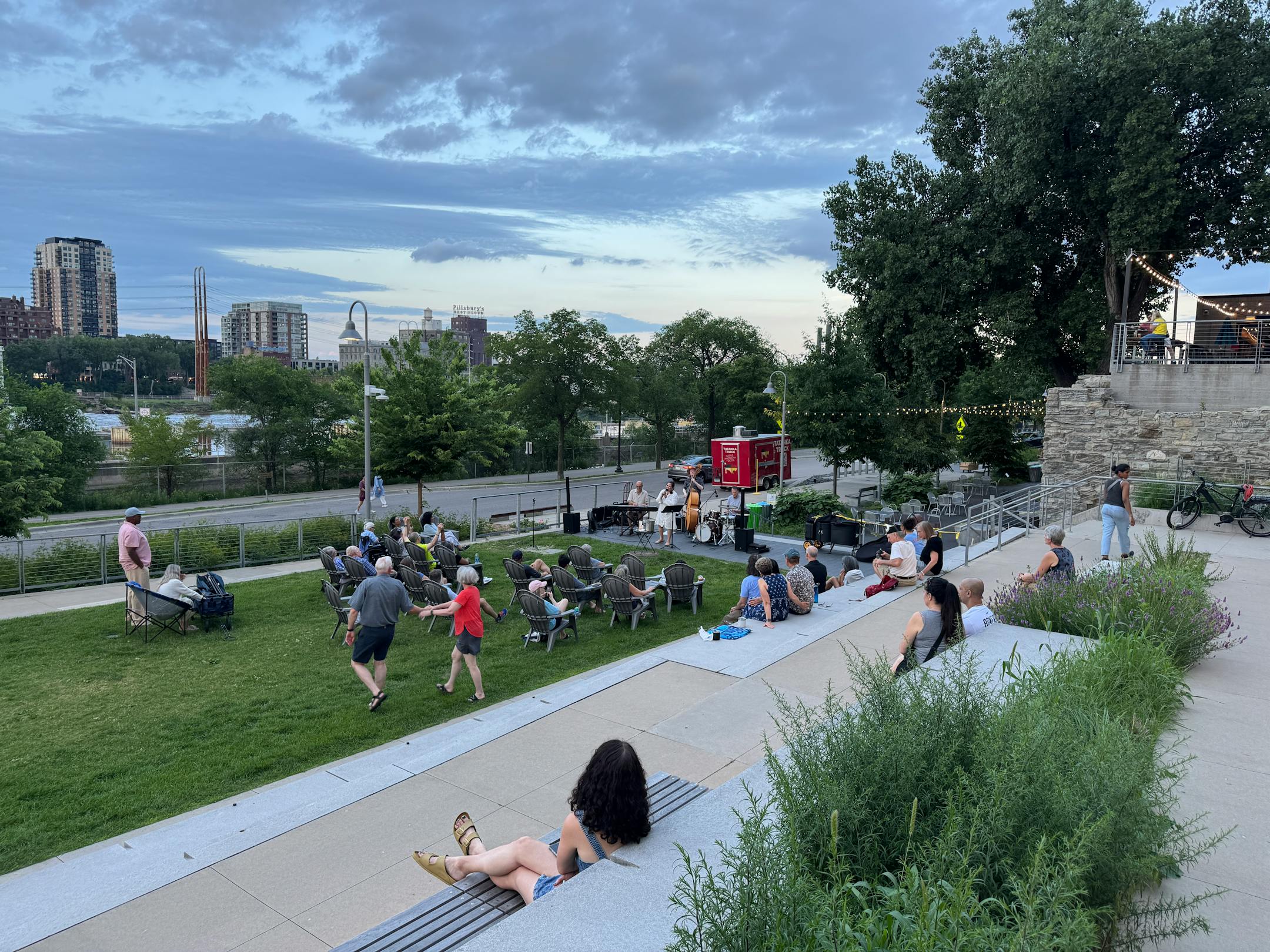
After dinner, I found people enjoying music and admiring the tumbling Mississippi at a small concert in the riverfront’s multi-level Water Works park. Then I met friends at Eagle Bolt Bar on Washington Avenue, where I danced to club music at an outdoor Pride party.

You’re not going to have that experience in any other city in this region.

People watch a concert at Water Works park alongside the Mississippi River. (Eric Roper)

But I think I’m also clear-eyed about the condition of Minneapolis, which is grappling with real public safety problems. The recent documentary “A Precarious State” showed startling images of warzone-like gun violence at 19th Street and Nicollet Avenue, declaring that this was the “new normal” in Minneapolis.

The actual “new normal” in that area (where I commute twice a day) is mostly open drug dealing and groups hanging out sipping liquor and smoking pot — the latter of which isn’t illegal. Businesses are closing left and right on Nicollet north of Franklin Avenue. So it’s not good. But I don’t expect to take a bullet on my way home.

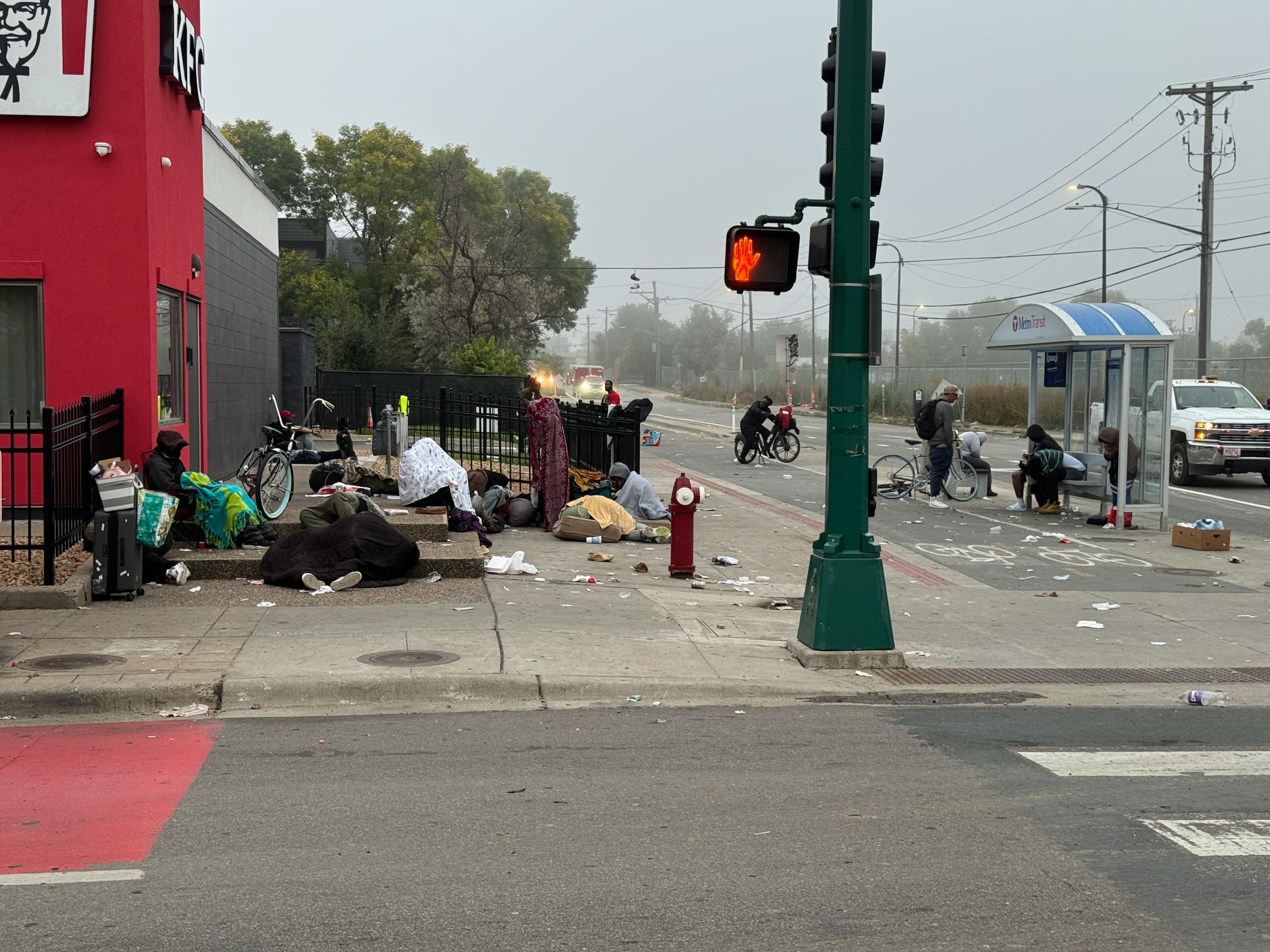
The intersection of Lake Street and Blaisdell Avenue — where I also roll on my bike commute — has become a drug-use hotspot where people are gathered day and night. And anyone trying to exit the Midtown Greenway at Interstate 35W this summer could see the crowded drug market on the path, which then became the site of a mass shooting.

The scene at Blaisdell Avenue and Lake Street on a September morning. (Eric Roper)

Then we’ve got kids out there bashing in hundreds of car windows, a senseless and rage-inducing act of vandalism.

Our inability to address things like this is very worrisome. A lot of it stems from an understaffed police department.

Couple that with the unprecedented potency of modern street drugs, a regional shortage of affordable housing, the prevalence of guns in this country and Minnesota’s inadequate funding for mental health care and you get a (partial) recipe for the conditions impacting Minneapolis.

It often seems like the rest of the metro thinks that a) grim headlines translate into some daily Mad Max hellscape and b) this is not their problem. The reality is Minneapolis provides a beautiful center of gravity for this region, and everyone should be rooting for its success because MSP rises and falls together.

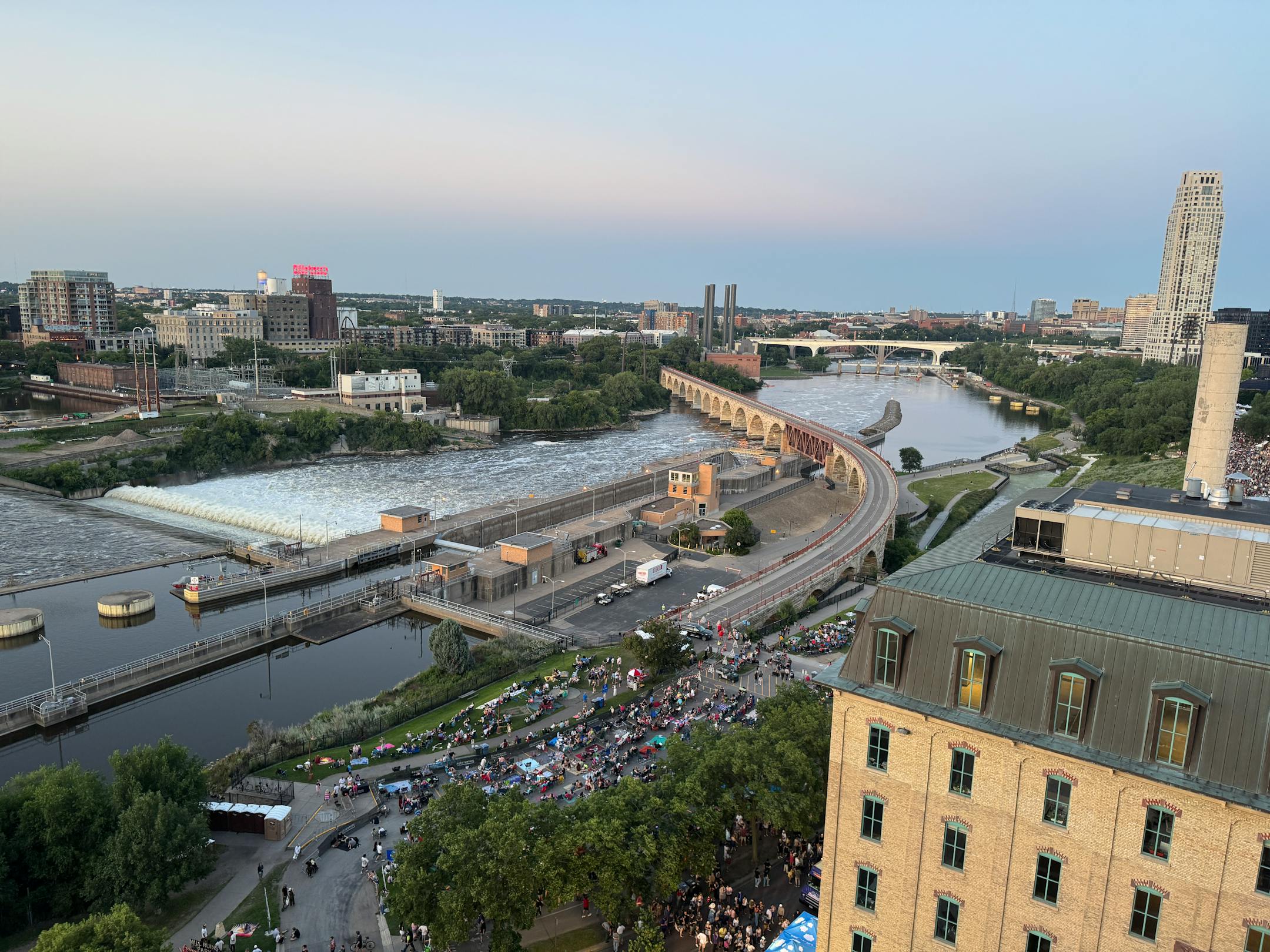
Crowds gathered for Aquatennial fireworks at the central riverfront in July. (Eric Roper)

So yes, Minneapolis has problems. But it’s also important to recognize its many assets.

I’m reminded of that when I am taking in a concert at the Lake Harriet Bandshell (free, nightly!). Or biking to breweries after work with colleagues (we call it News Cycle!). Or sitting in my front yard meeting neighbors (let‘s start a front yard movement!).

I wouldn’t want to live anywhere else.

about the writer

about the writer

Eric Roper

Columnist

Eric Roper is a columnist for the Star Tribune focused on urban affairs in the Twin Cities. He previously oversaw Curious Minnesota, the Minnesota Star Tribune's reader-driven reporting project.

See Moreicon