Roper: Jazz Hampton wants to be a City Hall bridge builder

The moderate Democrat is the only Minnesota native among the top candidates for Minneapolis mayor.

Columnist Icon
The Minnesota Star Tribune
October 1, 2025 at 11:00AM
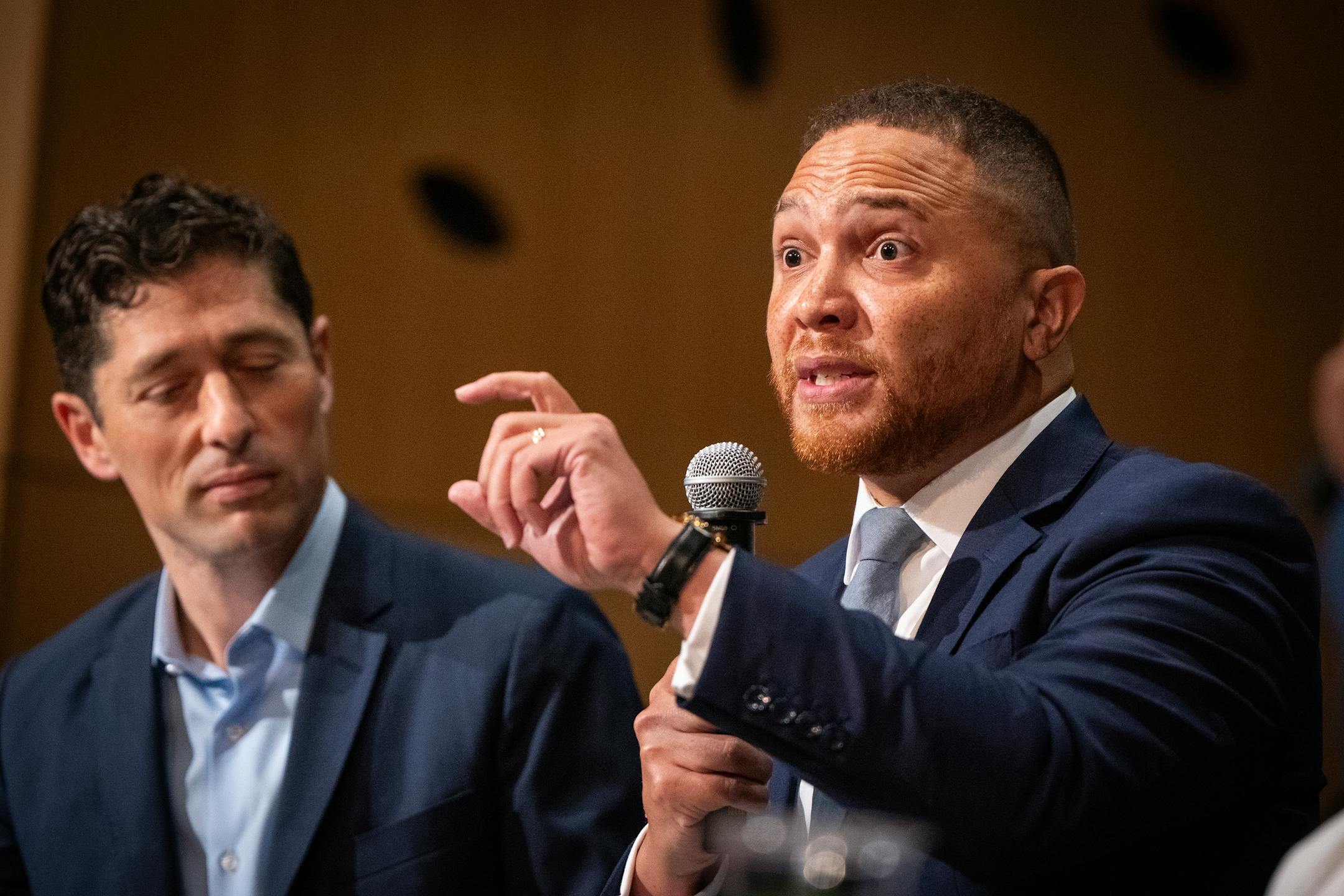
Jazz Hampton speaks during a Minneapolis mayoral candidate debate at Westminster Hall in Minneapolis in September. (Leila Navidi/The Minnesota Star Tribune)

Sign up here to follow this column by email.

Two candidates for public office in Minneapolis — on different ends of the lefty spectrum — were chatting outside a Linden Hills coffee shop when I arrived to meet Jazz Hampton. Hampton had pulled up a chair to the conversation.

The accidental scene felt like a metaphor for the rough sketch I had been developing of Hampton’s campaign for mayor: a more moderate liberal who is eager to engage with different political factions.

“I’ve sat down at coffee or breakfast with every single City Council member,” Hampton said midway through our conversation about his stances on city issues. “I’ve asked multiple times for every single City Council member to door knock with me.”

Hampton is a tech entrepreneur with a law background, a father of three kids and, perhaps most notably, the only Minnesota native among the top mayoral candidates. He travels in a political lane that’s closer to Mayor Jacob Frey than the other top candidates, but he’s offering voters a more collegial approach to leadership. His campaign describes him as a “Humphrey-Wellstone Democrat.”

“The leadership that is in that chair is just as important as the policy that’s in that chair,” Hampton said. “And I believe I provide much better leadership in this role.”

There’s been so much focus on Mayor Jacob Frey and Omar Fateh that I met with the other two top mayoral candidates — Hampton and DeWayne Davis — to dig into their positions.
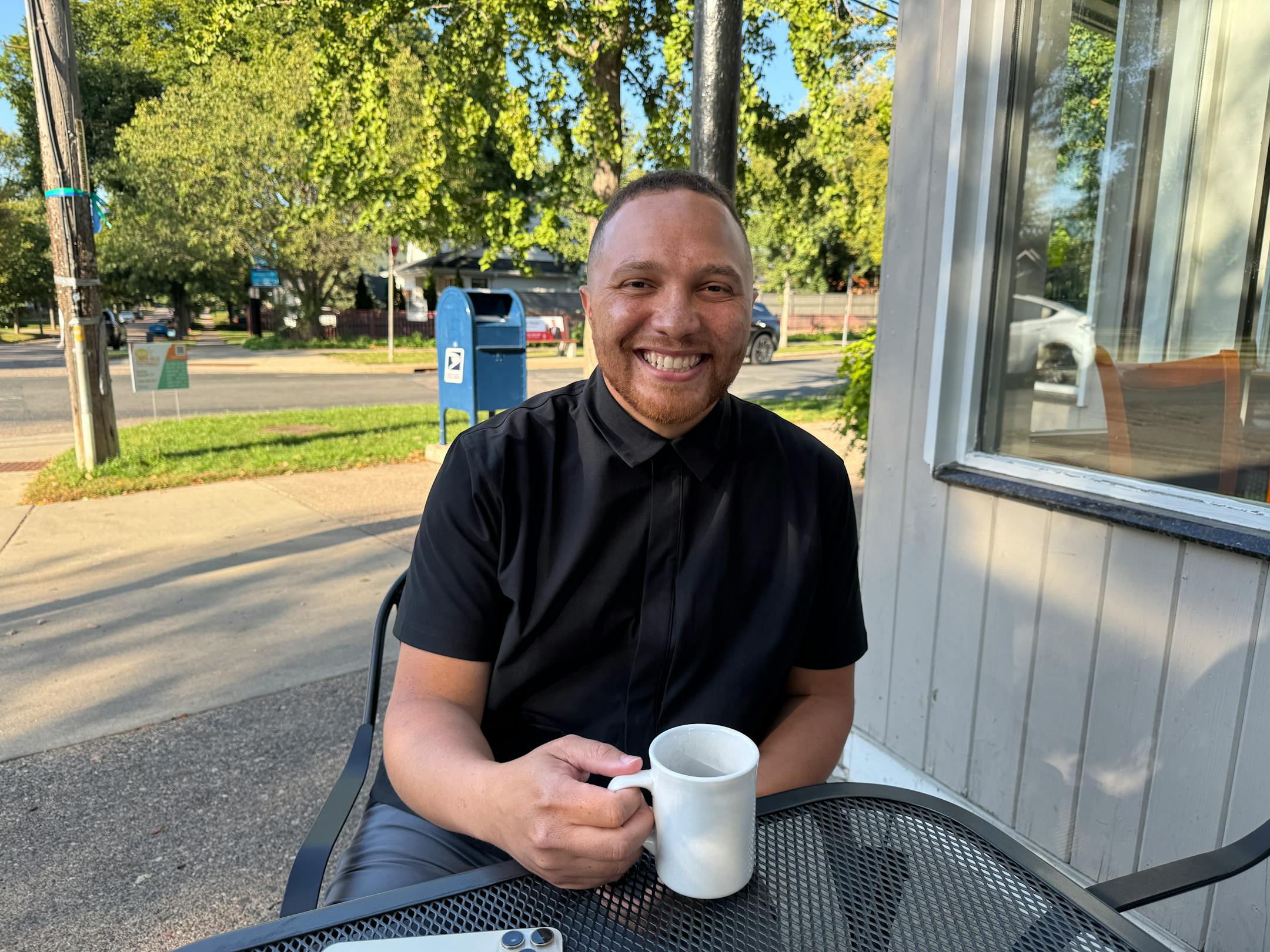
Jazz Hampton sits outside Turtle Bread Co. in Linden Hills in September. (Eric Roper)

Hampton seems convinced that, through building relationships, he can find some amicable path between warring factions at City Hall. He compares that collaborative work to packing a parachute, and the mayor’s veto pen to a reserve parachute that is important but shouldn’t be relied upon (his father was a paratrooper).

“If you aren’t consistently meeting with the City Council members to try to find ground that everyone is happy with moving forward, then we’re going to continue to fail,” Hampton said.

In the ranked-choice election, he has snagged the third-choice endorsement of several progressive City Council members. Council President Elliot Payne described him as “an outsider and an innovator.” Moderate City Council Member Emily Koski, who abandoned her own mayoral bid, endorsed Hampton and nominated him at the DFL convention.

Hampton is in the awkward position of promoting an agenda that, to some voters, sounds similar to the incumbent. But he’s tired of hearing excuses for the mayor.

“I get a little miffed with people that say, ‘That’s what the mayor says he’s gonna do.’ Or, ‘That’s what the mayor wants to do,’” Hampton said. “If that’s what he says he is doing or has done, and it’s not working, then he’s implementing it poorly or a different policy should be in place.”

Hampton is the co-founder of a startup tech company with a social justice mission, TurnSignl, and teaches an entrepreneurship course at the University of St. Thomas. You can hear some of that business instinct in the way he talks about his approach to the city.

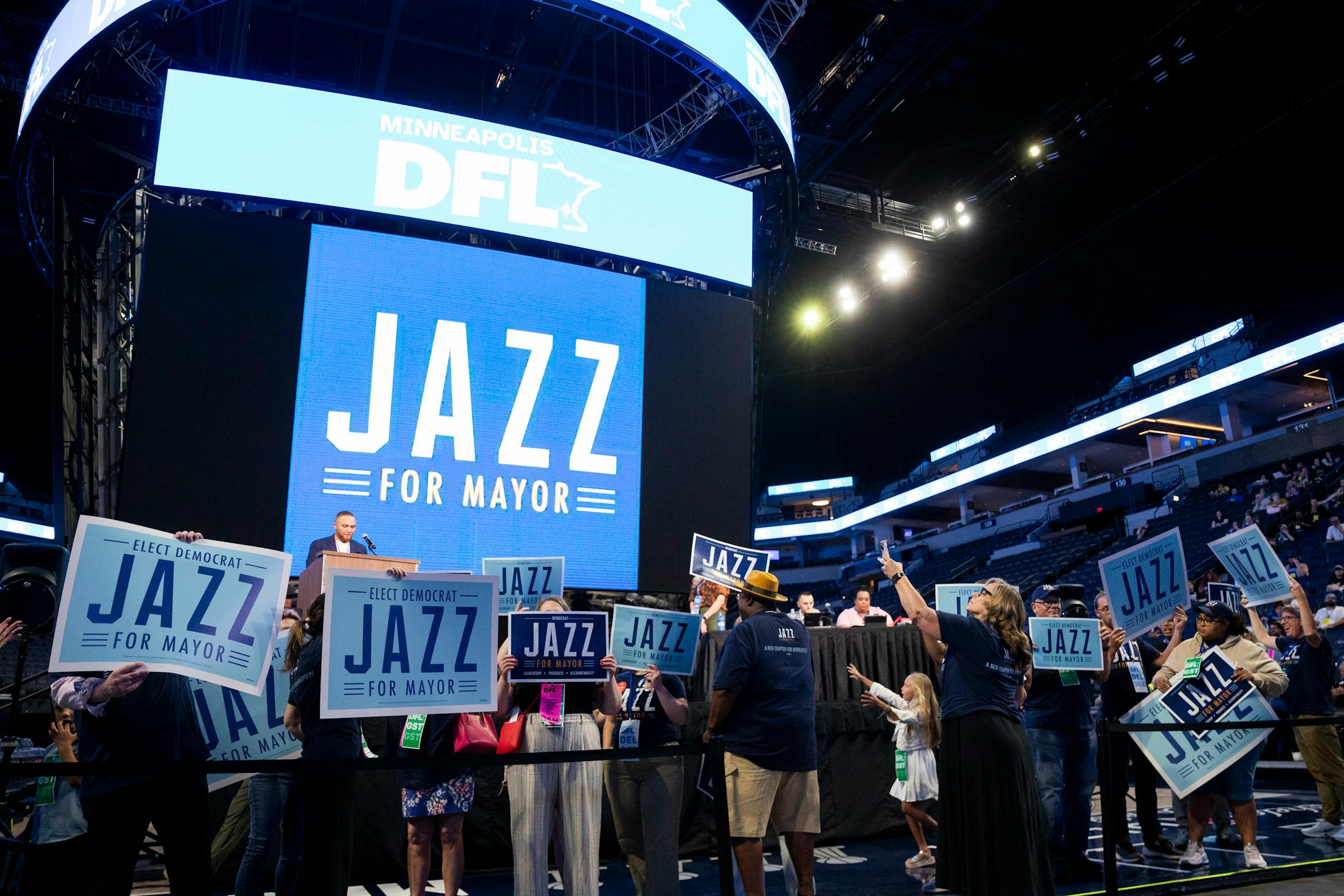
Mayoral candidate Jazz Hampton speaks during the Minneapolis DFL convention in July. (Rebecca Villagracia/The Minnesota Star Tribune)

“In Minneapolis, we struggle mightily on saying, ‘If we allocate these dollars, I need to know what the end goal is,’” Hampton said of his push to attach clearer metrics to city spending.

“And after we allocate those dollars, we have to go back every six months and 12 months and say, ‘Did we hit the goals?’” he added.

A similar accountability tone emerges in his stump speech. At a recent forum, Hampton highlighted among his top priorities (in addition to public safety and housing) the idea that “people are saying that they feel like they’re paying more in taxes and receiving less in services within our city.”

This caught my attention. What did he mean by that?

He pointed to public safety. Property taxes are rising steadily, yet some people he speaks with have given up calling 911 about lower-level criminal activity — because they don’t expect a response. Hampton himself was on hold with 911 for two minutes recently trying to report a stolen car.

He says the city should meet the charter-mandated minimum number of police officers. But a bigger issue, he says, is having enough staff who can handle nonemergency and mental health calls.

“We need to reduce the things we’re asking [police officers] to do by 30 or so percent,” Hampton said. “And if we don’t do that, they still will be overworked.”

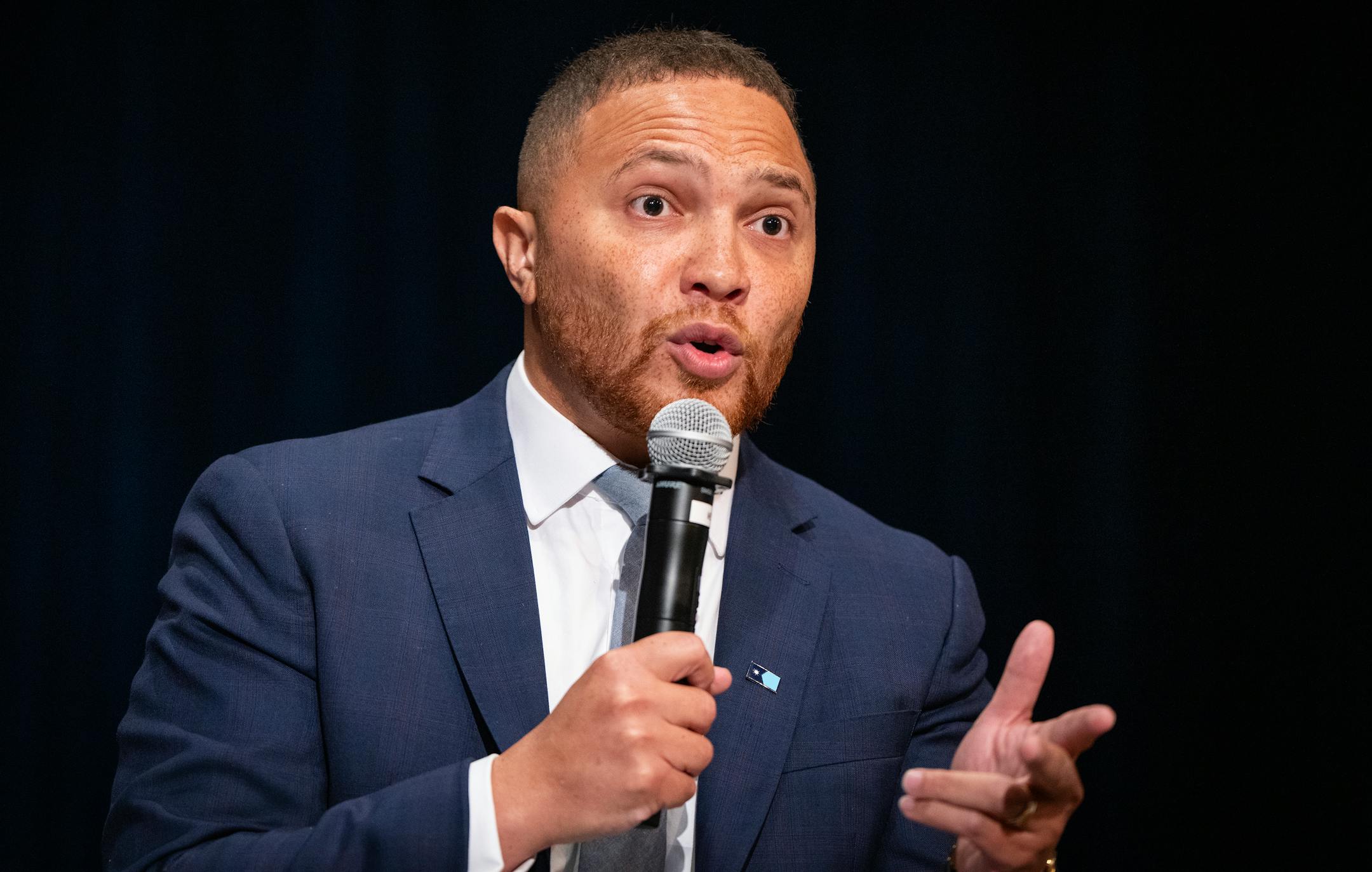
Jazz Hampton speaks during a Minneapolis mayoral candidate debate at Westminster Hall in Minneapolis in September. (Leila Navidi/The Minnesota Star Tribune)

Talking about housing, Hampton said he would like to use the city’s zoning code to more strongly incentivize the construction of lower-cost units.

Hampton is opposed to rent control — citing the lessons learned from St. Paul’s tumultuous rollout. His general philosophy is to be “nudging the market in the right direction while not overcorrecting.” He would like to see more investment in nonprofit-owned affordable housing, though.

“What we’ve really struggled to do in Minneapolis is lay out the plan and go to the state and county with a more robust plan, saying, ‘This is what we want to do. Will you help us with the dollars for it,’” Hampton said.

In addition to improving the city’s relationship with Hennepin County and the state government, Hampton wants City Hall to respond to the needs of Minneapolis Public Schools — where he has three children enrolled. (The school district operates independently of city government.)

Pointing to the share of Black students who aren’t graduating from high school in four years, Hampton said it’s imperative for the city to step in with more after-school opportunities to help students succeed. He highlighted the success of the Sanneh Foundation.

That assistance could also extend to funding needs inside the schools themselves. “There are more things that the city can help supplement outside of the Minneapolis public school budget to improve the outcomes for our students,” Hampton said.

Hampton is a serious candidate who, along with Davis, illustrates that the mayor’s race is more complicated than a choice between the incumbent and democratic socialism. Given the importance of this election, it’s good that voters have options.

about the writer

about the writer

Eric Roper

Columnist

Eric Roper is a columnist for the Star Tribune focused on urban affairs in the Twin Cities. He previously oversaw Curious Minnesota, the Minnesota Star Tribune's reader-driven reporting project.

See Moreicon

More from Minneapolis

See More
card image
The Minnesota Star Tribune

Scott W. Carlson, 67, was charged with third-degree assault Monday in connection with a July attack against the same woman that left her hospitalized with facial, eye fractures.