Minnesota investigators are halting payments earlier and longer when fraud is suspected

The Human Services Department is cutting off payments often before law enforcement opens an investigation. Providers are suing over the practice.

February 16, 2026 at 12:00PM
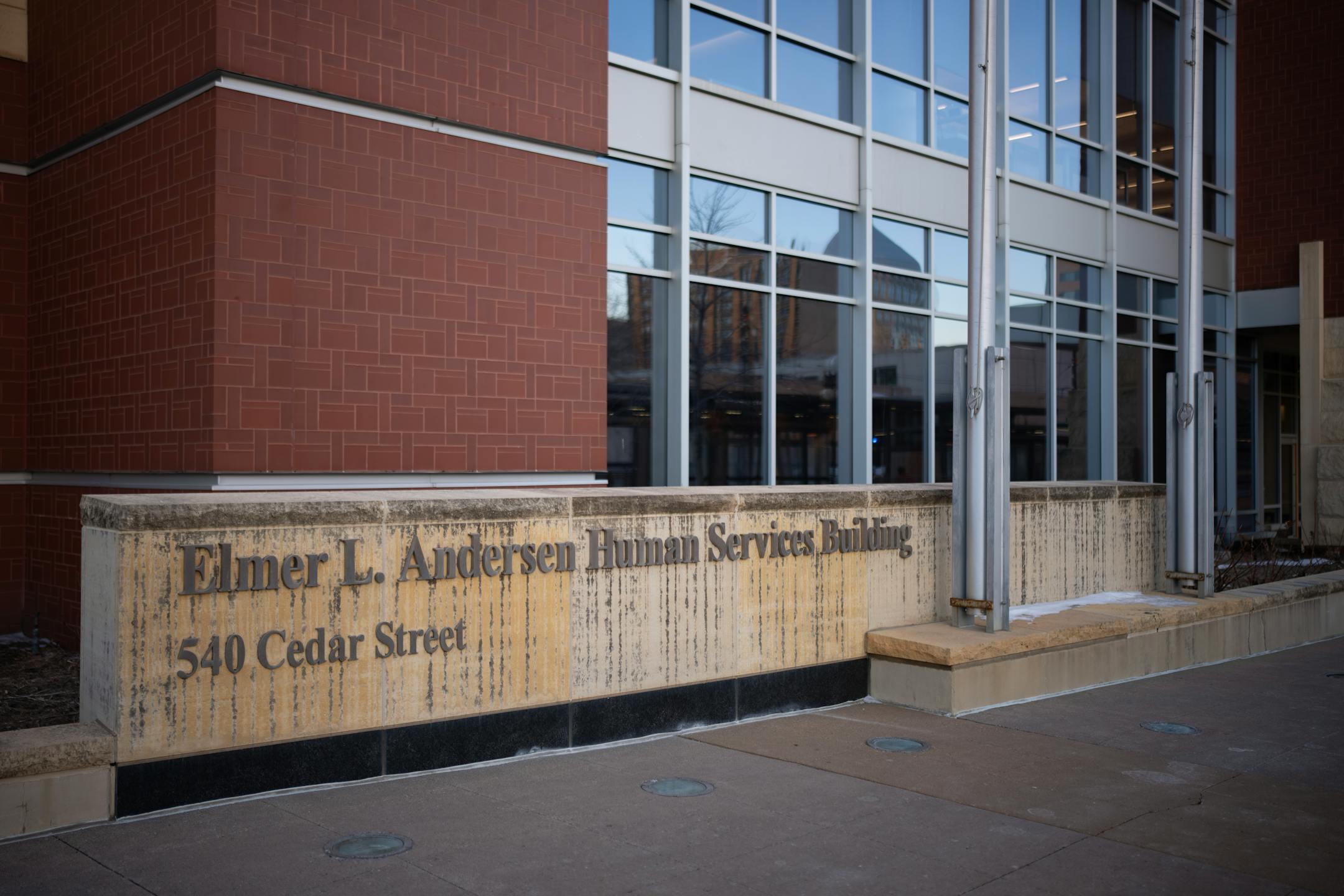
The Minnesota Department of Human Services is increasingly withholding payments from social service providers when they identify a "credible allegation of fraud." (Jeff Wheeler/The Minnesota Star Tribune)

Eight months ago, Minnesota social services officials abruptly stopped paying millions of dollars to an overnight health care provider and an autism care center.

The reason: an owner’s connection to Feeding Our Future, the $300 million pandemic era fraud scheme that has dogged Minnesota since 2021.

Both businesses — Joy Home Healthcare and Hennepin Autism Center — shut down in late December and mid-January as a result.

The state routinely blacklists known fraudsters. But the experience of the two operations reflect a tougher approach by the Department of Human Services (DHS) as it tries to root out fraud.

Now, state investigators are taking greater measures to stifle suspected bad actors, cutting off funding indefinitely based only on suspicion of fraud and, in many cases, absent an open law enforcement investigation.

In the past year, the DHS withheld payments from providers more frequently than it did in any of the previous four years. The action comes as Minnesotans are demanding state leaders address the fraud crisis, especially after the Trump administration used the abuse of social services as justification for the massive Operation Metro Surge immigration crackdown.

The DHS’ expanded use of payment freezes is hitting providers without known fraud connections, too. Unlike the temporary pauses in high-risk Medicaid programs that recently ruffled providers across the state, these suspensions can last months and may put operators out of business.

The DHS declined to disclose to the Minnesota Star Tribune a broad range of its payment withholds that were trigged by its investigators’ fraud findings. It said such information is made public only in limited situations.

Inspector General James Clark, whose office oversees social services fraud and abuse investigations, said the department reviews all businesses for ties to Feeding Our Future defendants.

“To the extent allowed by law, we are stopping all payment when people and businesses have connections to Feeding Our Future defendants,” Clark said in a statement. “In addition, we are stopping all payments to all affiliated providers when the evidence supports doing so.”

Former manager charged with fraud

The state’s changing tactics come after federal prosecutors identified overlap between some Feeding Our Future defendants, who bilked a program administered by the state’s education department, and another scheme targeting Medicaid-backed social services programs last year.

The state’s examination of those kinds of connections put Joy Home Healthcare and Hennepin Autism Center under scrutiny.

A lawsuit filed on behalf of Suleiman Isse, owner of both businesses, denied any participation in Feeding Our Future. Isse has not been charged with a crime.

But public records on file with the Minnesota Secretary of State show Yusuf Bashir Ali, an admitted Feeding Our Future participant, as a manager of Hennepin Autism Center in late 2022, at the same time a grand jury charged him in the vast criminal conspiracy.

Isse bought the business from Ali in late 2022, according to his attorneys.

Ali pleaded guilty in 2023 to defrauding public programs between December 2020 and June 2021 through his role in Feeding Our Future. He and his conspirators used a shell company called Youth Inventors Lab and fraudulently claimed to serve 1.3 million meals to children in exchange for more than $3 million in illicit reimbursements, according to his plea agreement.

Ali currently awaits sentencing. His attorney did not respond to a request for comment.

Joy Home Healthcare treated more than 160 vulnerable Minnesotans annually, Isse’s attorneys said in court filings. Nearly a third of them could not live independently; others were bed-bound, and some required 24/7 supervision. Many were children diagnosed with intellectual disabilities, court papers say.

Hennepin Autism Center specialized in services for children with autism. Last summer, the center submitted nearly 6,500 claims to the state for services valued at roughly $2.1 million.

State data for Medicaid providers in high-risk programs show the organization billed nearly $8.9 million in the past two years, ranking among the largest service providers in its class.

The businesses draw on Medicaid funding through programs — autism services and night supervision — that have been flagged for their exponential growth and, in a recent report, potential billing irregularities.

A recent analysis by Optum, a subsidiary of UnitedHealth Group, outlined $703 million and $195 million in potential overspending, though not necessarily fraud, in autism services and night supervision, respectively.

In June 2025, the state notified Joy Home Healthcare and Hennepin Autism Center that their Medicaid reimbursement payments would be shut off immediately. The notifications cited findings of “inaccurate claims” at Hennepin Autism Center and alleged participation in Feeding Our Future’s “fraudulent scheme.”

In court documents, the DHS said it has an “ongoing investigation” into the businesses. It said the state has no requirement to disclose further details.

The state has not provided enough information about its investigation for Isse to sufficiently defend himself, said his attorney, Joe Dixon.

“The state owes Mr. Isse’s companies over $2 million for past services and refuses to pay — or even tell us why,” Dixon said in a statement.

He added that Joy Home Healthcare and Hennepin Autism Center served clients “for years without issue.”

Isse’s two businesses are the only ones with an alleged Feeding Our Future connection known to have been cut off by the state amid its more expansive enforcement actions targeting associates.

But more providers are seeing reimbursement checks stop without detailed explanation. Some allege the state is carelessly cleaving off health care businesses instead of taking on the more difficult task of identifying and rooting out the bad actors.

“It is causing real operational harm here,” said Adam Richard, an attorney representing Agape Home Care Services, a provider that was cut off in September.

“We’re hoping it’s finished up quickly, so that we’re able to keep the necessary services stable for the vulnerable clients.”

The Attorney General’s Office, which represents the DHS, asked in December that Isse’s lawsuit be dismissed. It cited state law, saying payment freezes stay in place until there’s either insufficient evidence of fraud or legal proceedings into fraud allegations are complete.

A judge has yet to make a decision in the case.

Broadened oversight, pushback

Andy Schneider, a professor at Georgetown University’s Center for Children and Families and a Medicaid expert, said every state is required to partly or fully withhold funds amid fraud allegations with a pending investigation.

“It’s a tool that state Medicaid agencies have to protect their programs from bad actors,” Schneider said. “It tries to balance the interests of the state and the federal government with the interests of the provider and the patients.”

And Minnesota is doing that more often.

In 2025, the DHS withheld payments to twice as many providers as in recent years. More than 500 providers saw a pause in payments based on reviews from the department’s Program Integrity Oversight Division.

Payment pauses — a tool available when an investigator determines a fraud allegation meets a bare standard of “credible”— were used more frequently in the past year than in any year from 2020 to 2024.

Over the past year, representatives of at least 11 providers sued the state, arguing the actions were unlawful and stand to bankrupt them.

They pointed to a lengthy investigative process from the DHS, followed by another lengthy wait from law enforcement to determine whether the case merited further investigation. Some providers rely heavily or solely on serving Medicaid-dependent clients and are unable to sustain operations without reimbursements.

In one case, the state’s Medicaid Fraud Control Unit, a division of the Attorney General’s Office, declined a referral to investigate a matter referred from the DHS. The department then referred the case to the state Bureau of Criminal Apprehension (BCA), resetting the clock.

And cases are bottlenecking in the Attorney General’s Office. A spokesperson said the Medicaid fraud unit “focuses its limited resources” on the investigations and prosecutions most likely to stop fraud and recover losses. Those resources, the spokesperson said, are being stretched thinner because referrals in 2025 increased “substantially.”

A declined referral is neither a sign of innocence nor guilt, the spokesperson said.

The business caught in that investigative loop, Bright Community Services, sued the state after its payments were suspended in September. Attorneys for the St. Paul-based home and community services provider said in the lawsuit that the state “is unlawfully cutting off legitimate providers’ payments indefinitely.”

The attorneys accuse the social services agency of “choking off the very providers the legislature has authorized to provide critical services to the public.”

about the writers

about the writers

Eleanor Hildebrandt

Reporter

Eleanor Hildebrandt is a reporter for the Minnesota Star Tribune. She can be reached on the encrypted messaging app Signal at ehildebrandt.31.

See Moreicon

Bill Lukitsch

Reporter

Bill Lukitsch is a business reporter for the Star Tribune.

See Moreicon