Listen and subscribe to our Curious Minnesota podcast: Apple Podcasts | Spotify
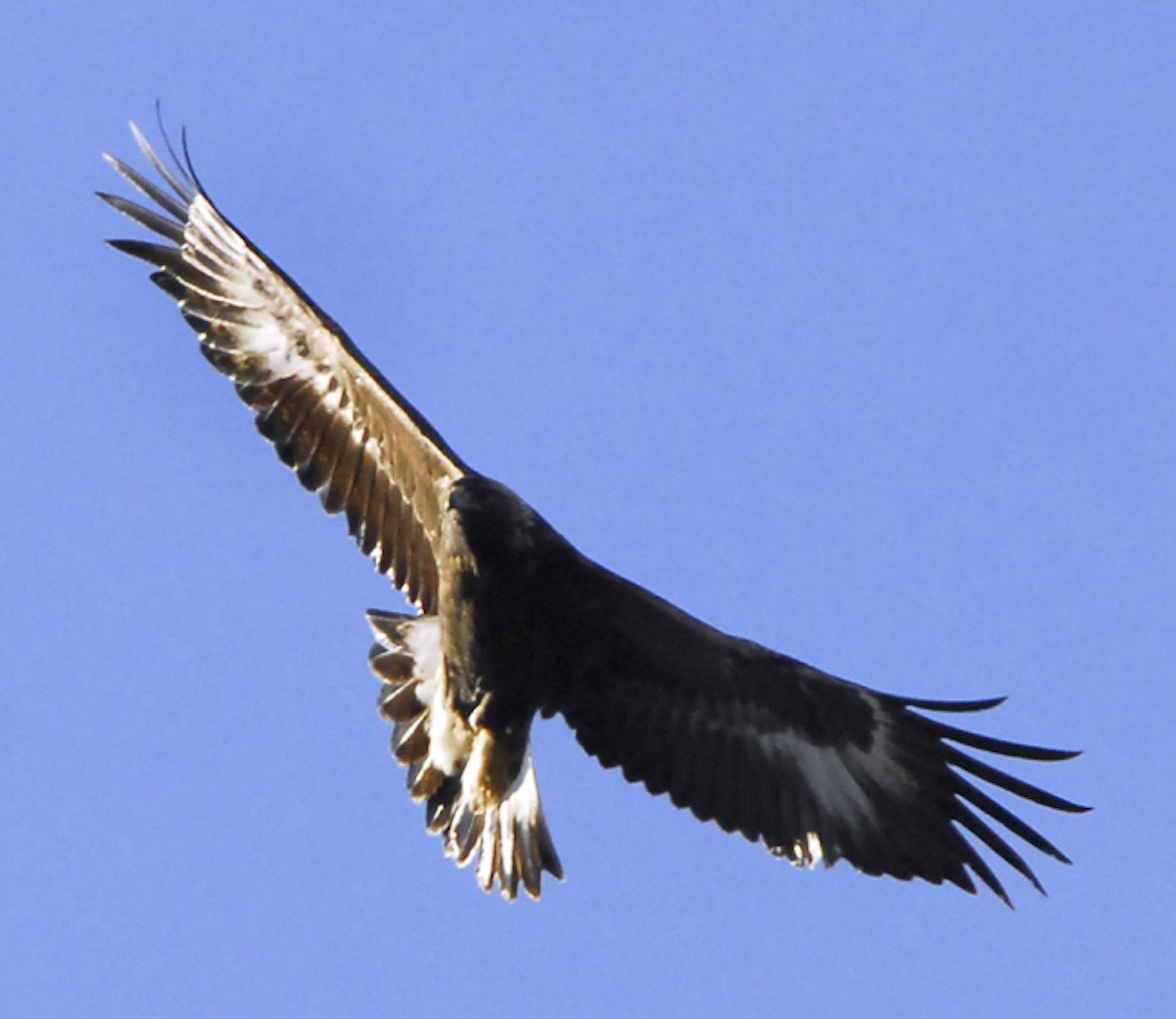
Look at the armpits — or, technically, the “wingpits.”
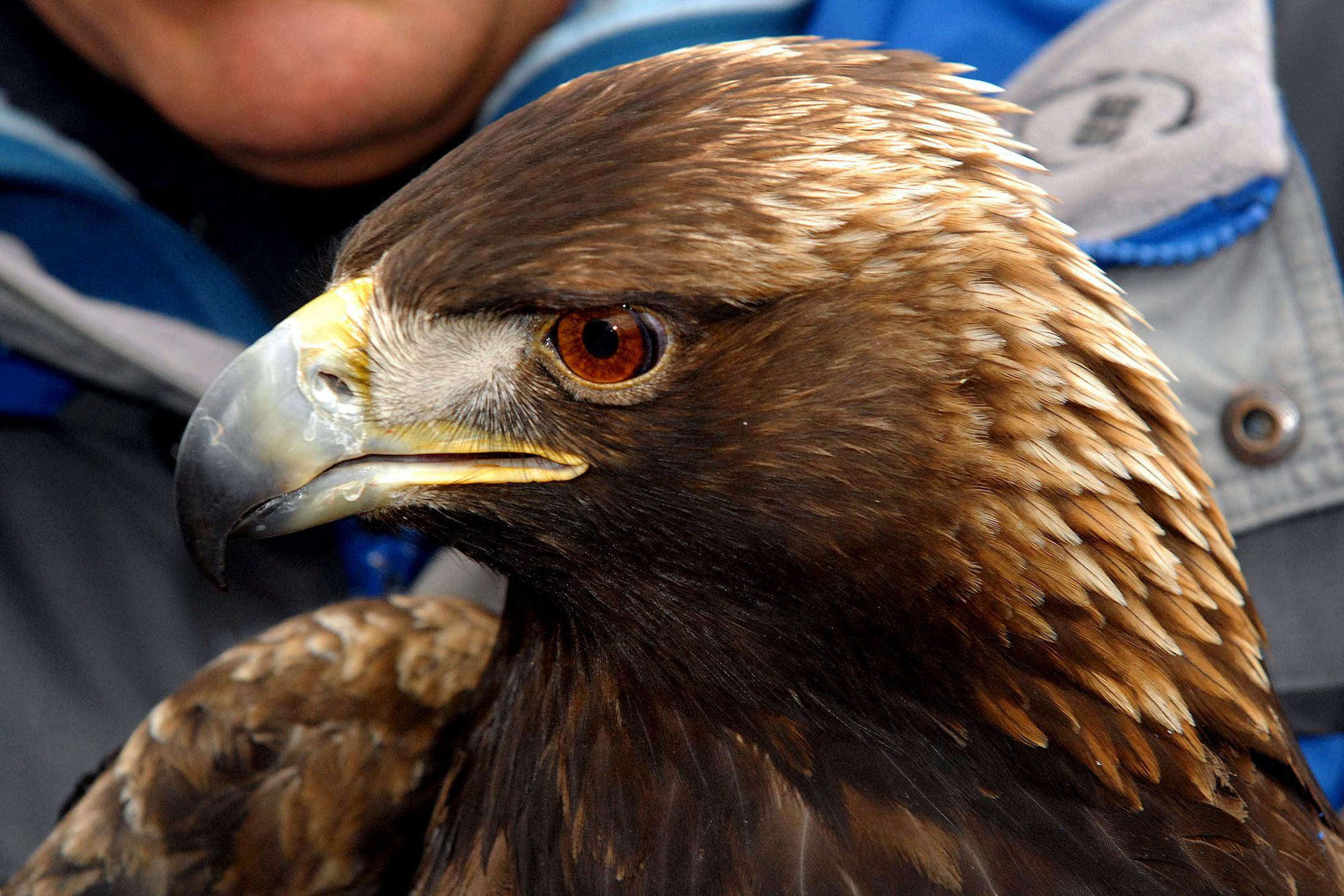
That’s what Scott Mehus, education director at the National Eagle Center in Wabasha, Minn., told a group of bird watchers recently as they prepared to scan the winter skies for a majestic raptor that’s especially tricky to identify: the golden eagle.
It’s easy to confuse the giant birds with juvenile bald eagles, which don’t get their distinctive white head and tail until they’re at least four years old.
But looking up at the two birds as they soar, white feathers appear in different places on their wings, he said: “If the white is in the wingpits, we’re looking at a juvenile bald eagle. If the white is out at the wrists, the outer part of the wing, then we’re looking at a golden eagle.”
To remember, Mehus likes to think that the national bird and symbol of the United States “should probably wear deodorant.” While the golden eagle, which unlike the bald eagle is also found in Europe and across the Northern Hemisphere, takes a more continental approach and dabs cologne on its wrists.
Wrists and wingpits aside, which raptor is the biggest found in Minnesota? A young reader asked Curious Minnesota, the Strib’s audience-powered reporting project, this question during an event at the State Fair. The answer is a little tricky.
Bald vs. golden
The largest raptor, or bird of prey, most commonly found in Minnesota is the bald eagle, according to experts at the University of Minnesota’s Raptor Center. (The last statewide bald eagle nest survey, in 2005, found that there were more than 1,300 pairs nesting in the state, and the population has been on the rise since.)
djoles@startribune.com Bald eagles on Mississippi River](https://arc.stimg.co/startribunemedia/TY7DFNIDZOXQMEC37Q2ROAHKJU.jpg?&w=1080)