Why do Minnesota anglers need a special stamp to fish for trout?

The fishing license add-on funds trout and salmon stocking, habitat maintenance and more.

The Minnesota Star Tribune
July 25, 2025 at 11:00AM
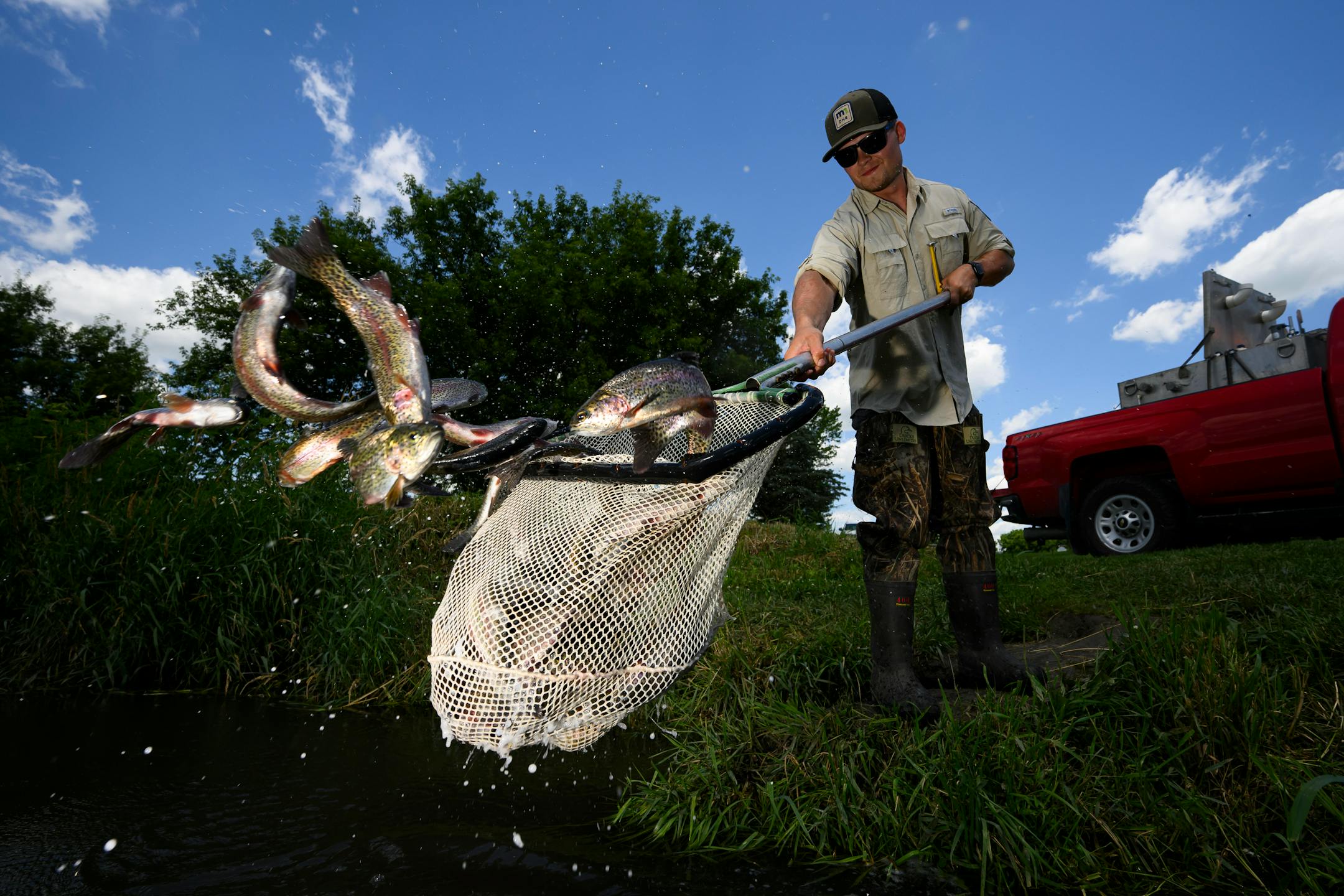
Gavin Bauer, a fisheries technician with the DNR, releases rainbow trout into Mill Creek on July 2 in Chatfield, Minn. (Aaron Lavinsky/The Minnesota Star Tribune)

Listen and subscribe to our podcast: Apple Podcasts | Spotify

Gavin Bauer spent a recent workday hauling hundreds of trout about 20 miles.

The Department of Natural Resources hatchery technician added about 450 fish to a stream in Chatfield, near Rochester.

But first Bauer and Scott Sindelar, who supervises the DNR’s hatchery in Lanesboro, had to corner the fish at the end of a long pool. Then they loaded them in a tank in the back of a red pickup, one 25-pound net-full at a time.

“I’m gonna keep stocking the rest of the day, and basically come back to the hatchery and redo the same thing,” Bauer said.

Trout stocking is just one of the programs funded by Minnesota’s trout stamp, a special add-on to fishing licenses.

Reader Mary Moilanen has been wondering about the stamp. She reached out to Curious Minnesota, the Strib’s reader-powered reporting project, to ask: Why do you need a specific endorsement to a fishing license to catch trout?

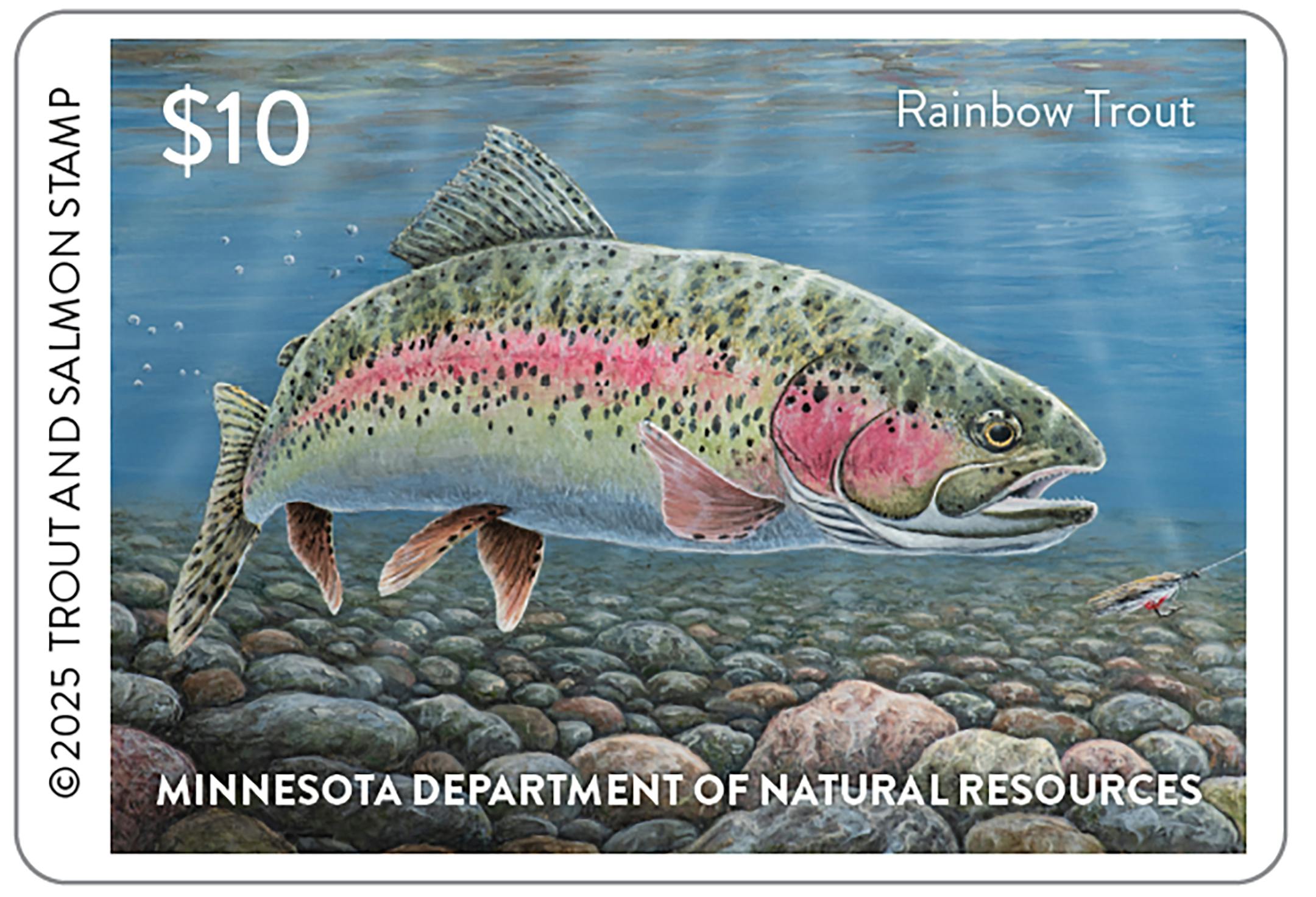
The Legislature created the trout and salmon stamp, often just called the trout stamp, in 1982 to fund programs like stocking and habitat restoration. Anglers over 18 and under 65 must purchase a special stamp to fish in designated trout waters or to keep trout caught anywhere.
The stamp costs either $10 or $10.75 for the collectible version, which features the annual trout stamp contest’s winning artwork. Harvesting sturgeon also requires a $5 tag, while walleye enthusiasts can voluntarily purchase a walleye stamp to fund similar stocking efforts.

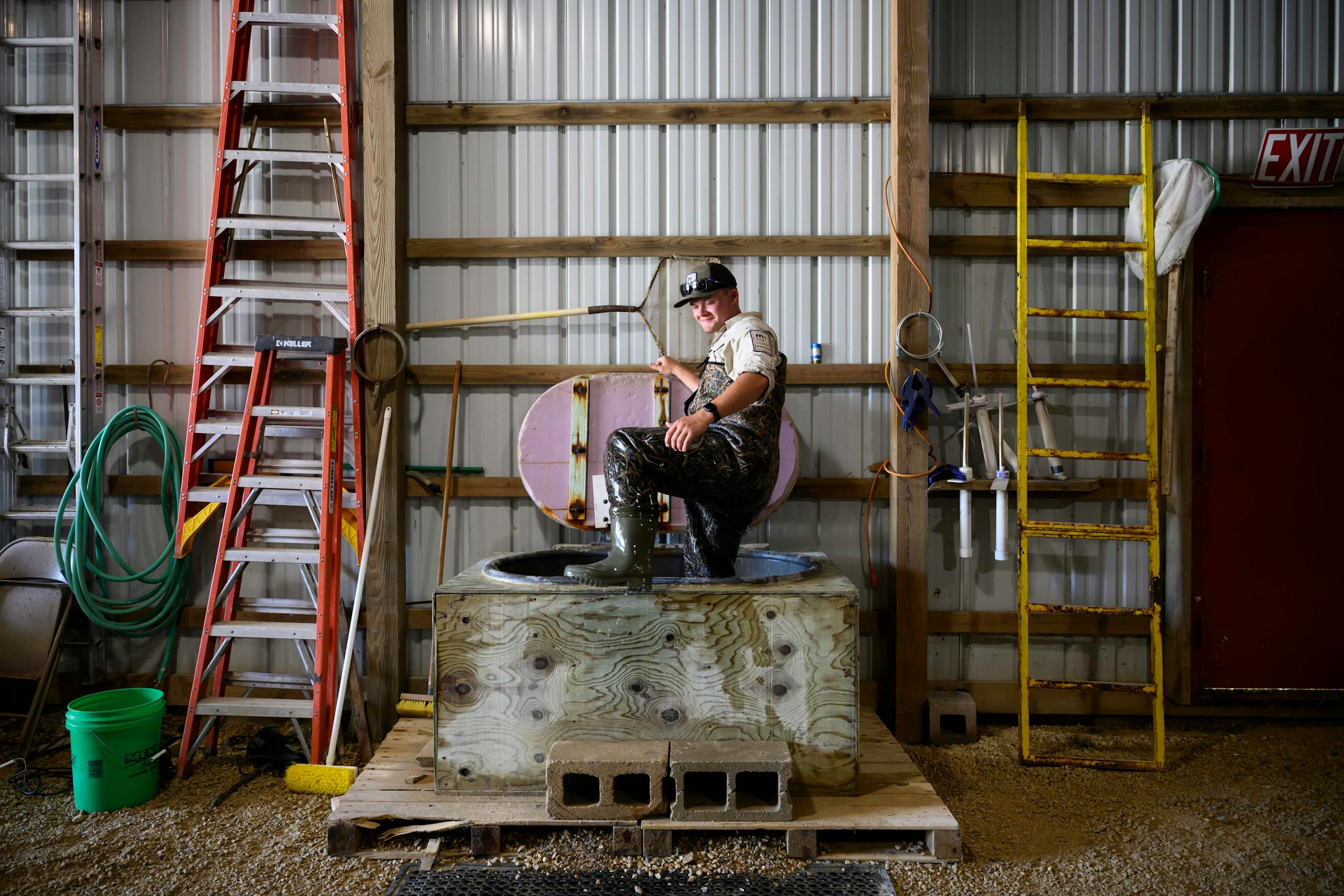
Gavin Bauer, a fisheries technician with the DNR, steps into a decontamination tank before working in a holding tank full of soon-to-be released rainbow trout at the Lanesboro State Fish Hatchery. (Aaron Lavinsky/The Minnesota Star Tribune)

Early conservation efforts

Requiring a stamp to hunt or fish for certain wildlife began as part of broader national conservation efforts.

In 1934, the federal Duck Stamp Act required people hunting for migratory waterfowl to purchase a stamp and fund efforts to conserve the birds’ habitats.

Since then, stamp programs have expanded to dozens of states, including Minnesota.

When the concept of charging a fee to fish in trout waters was first introduced in the Legislature in the 1950s, it didn’t immediately catch on.

The idea slowly won support from recreation groups though, according to newspaper accounts, and was eventually signed into law in 1982.

John Lenczewski, the executive director of Minnesota Trout Unlimited, a group that aims to promote trout angling through conservation, has been fishing for trout since the stamp program was first implemented.

“People saw it as a way to improve the angling, improve the quality of the angling” and access to streams and shores, he said. “So people supported [it] because they thought it would improve their angling opportunities.”

Fishing often connects people to the environment, said Chris O’Brien, a longtime angler and advocacy coordinator with the Twin Cities chapter of Trout Unlimited.

“I think that one of the neat things about the fly fishing community and the trout fishing community is that there is this really strong conservation ethic, and this desire to protect the habitat and the clean, cold water for the future,” he said.

The program has undergone a few changes though the years.

Initially, it was only required for designated trout waters. But in 1995, the stamp requirement was expanded to anyone who possesses trout or salmon, no matter where they were caught.

By law, at least 90% of the proceeds from trout stamp sales must go toward stocking trout and salmon and maintaining the Minnesota lakes and streams where these fish thrive.

The 2025 trout and salmon stamp features artwork by Mark Thone of Shakopee. (Minnesota DNR)

Hatching 1.7 million tiny trout

The state operates four cold-water hatcheries. Combined, they rear a whopping 1.7 million trout annually. Then staffers release them into streams and lakes for anglers to catch. These population management expenses comprised the majority of trout stamp fund expenditures in fiscal year 2023.

At a hatchery like the one in Lanesboro, operations mirror those at any other farm, said Sindelar — care, cleaning, feeding and breeding.

The fish begin their lives as eggs, with around 50 collected from every trout in the facility to ensure genetic diversity.

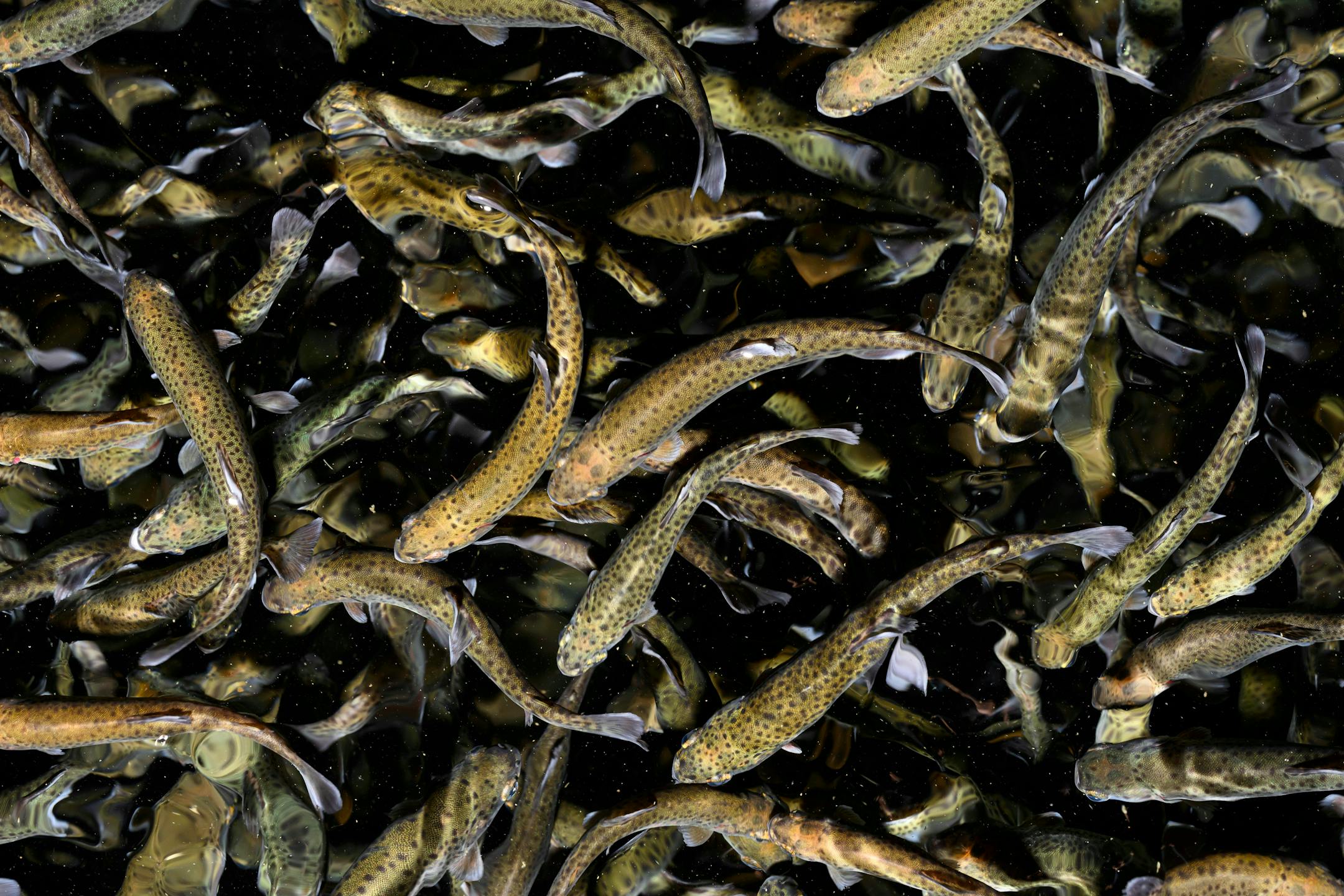
The eggs grow into fingerlings — young fish that are about the size of a finger — in a huge nursery containing dozens of long, bathtub-like tanks. The separate tanks and quiet atmosphere help keep fish healthy.

“It’s all about keeping them stress-free, so that we don’t get any disease issues,” Sindelar said.

Young trout are most vulnerable to death and disease, but after around three months, the fish can be held in larger pools or stocked in lakes and streams, depending on the breed, Sindelar said.

Brown trout are typically released at this age, while rainbow trout and brook trout are released once they reach the “yearling” stage.

Rainbow trout fingerlings swim in a holding tank at the Lanesboro State Fish Hatchery. (Aaron Lavinsky/The Minnesota Star Tribune)

Stamps fund more than stocking

In 2024, trout and salmon stamp sales brought in around $1.1 million. Stocking is what most think of when they think of trout stamp funds. But trout stamps also fund longer-term efforts to promote Minnesota’s trout populations.

The stamp funds support three goals: rearing and stocking trout, restoring and maintaining habitat and purchasing public access to lakes and streams (called easements) from landowners, said Melissa Wagner, Lanesboro area fisheries supervisor with the DNR.

Expenses can vary from year to year, she said. For example, when the economy is in a downturn, more landowners are willing to sell easements on their property.

Lenczewski and others would like the DNR to make more easement purchases.

“Essentially, it allows the DNR, or somebody like us, to do [habitat] work,” he said. The DNR should focus on “not just maintaining the level of acquisition, but increasing it,” he said.

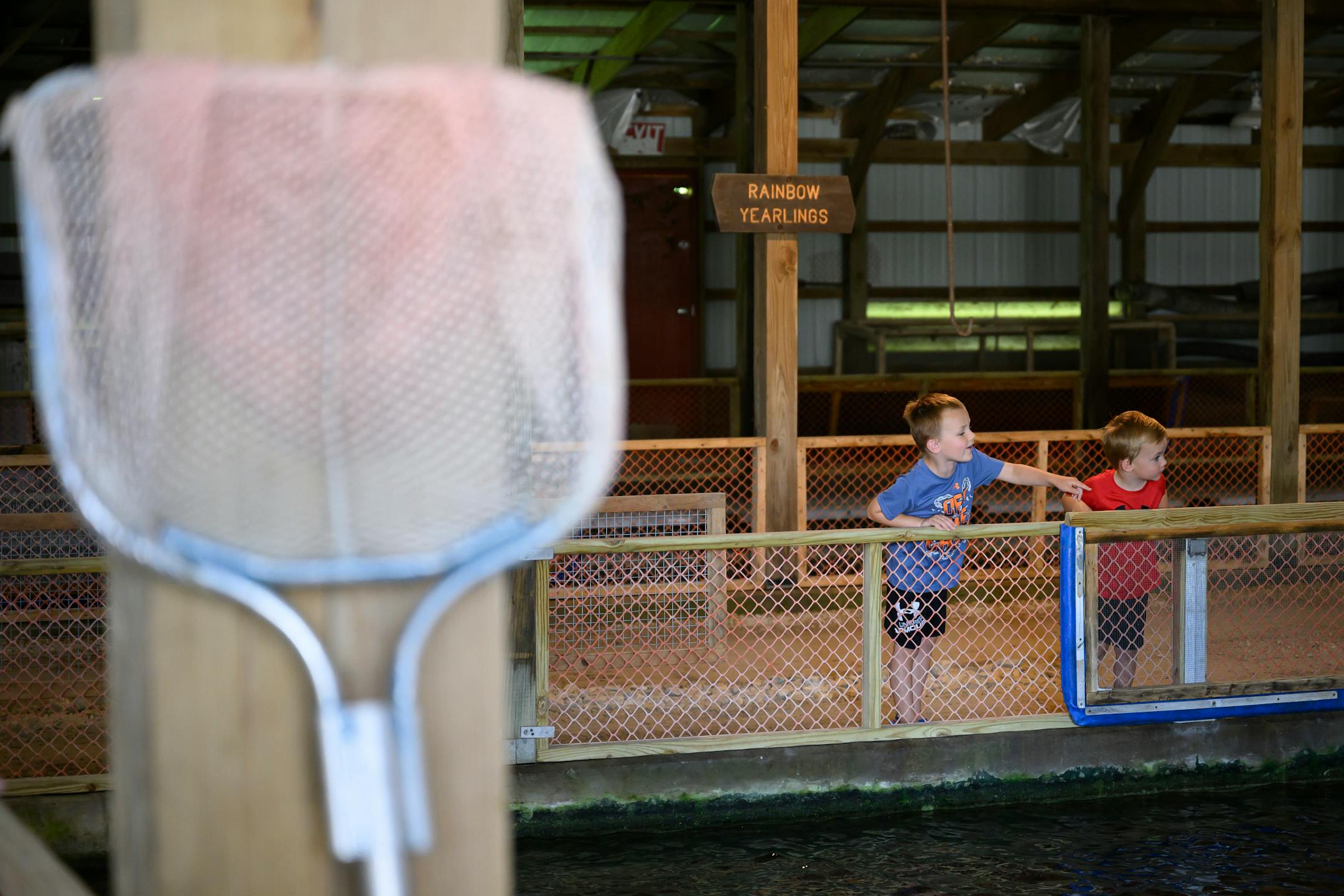
Justin, 5, and Dylan Wagner, 3, look down at rainbow trout, some of which were to be stocked into Mill Creek at the Lanesboro State Fish Hatchery. (Aaron Lavinsky/The Minnesota Star Tribune)

Bringing back heritage trout

Since 2003, the DNR has also focused on the long-term restoration of native brook trout in Minnesota’s Driftless region.

After isolating the species’ native or “heritage” genes, officials developed a strain of the fish believed to be most similar to the ones that once inhabited the area.

Then, the DNR reared thousands of heritage trout. Since 2023, they have been stocking a handful of streams and lakes with the strain.

Initially, some waterways needed to be checked for temperature and other environmental factors to make sure they would be habitable for the trout. But others already had a strong brook trout population, suggesting reintroduction efforts would be successful.

Now, the DNR is monitoring these heritage trout to see if they take to the environment.

The DNR sometimes stocks brook trout in areas where anglers can’t easily catch them, Wagner explained.

The idea is to target areas where the populations are likely to succeed, she said, planting the seeds for future generations of Minnesota fishing.

If you’d like to submit a Curious Minnesota question, fill out the form below:

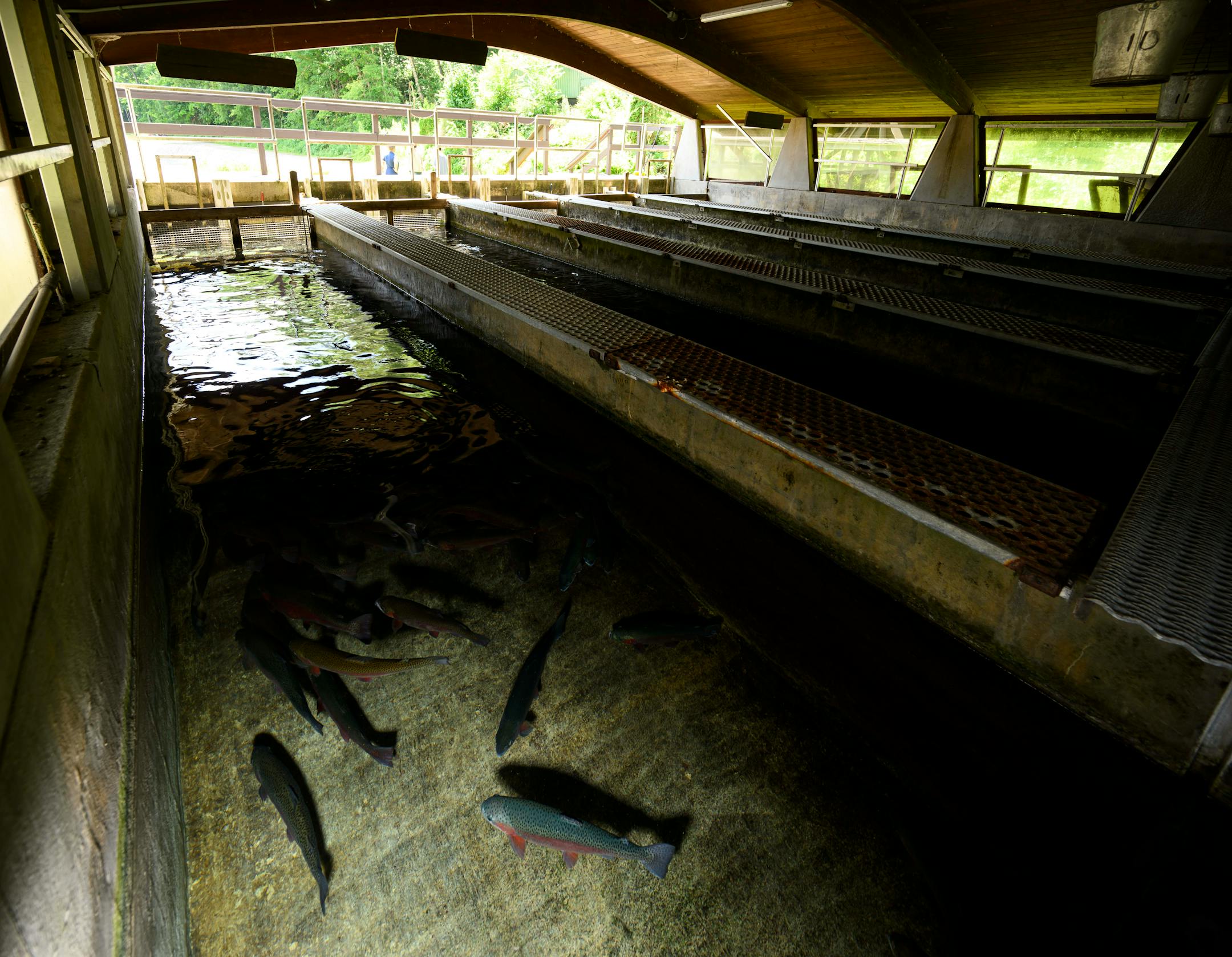
Three-year old rainbow trout swim in a holding tank at the Lanesboro State Fish Hatchery. (Aaron Lavinsky/The Minnesota Star Tribune)

Read more Curious Minnesota stories:

about the writer

about the writer

Anna Sago

Intern

Anna Sago is an intern for the Minnesota Star Tribune on the Today Desk.

See Moreicon

More from Curious Minnesota

See More
"Santa" waved to people as he made his way to the Christmas photo booth at Southdale Mall, Friday, December 4, 2015 in Edina, MN.
Elizabeth Flores/The Minnesota Star Tribune

Southdale’s architect had a vision to thwart the cold and create an indoor town square in Edina where it was always 75 degrees.

card image
card image