Why do hockey players take pregame naps? It’s a tradition with many idiosyncrasies.

All Wild players have different habits, including “nappuccinos,” but they find that rest is their friend.

The Minnesota Star Tribune
January 14, 2026 at 12:30PM
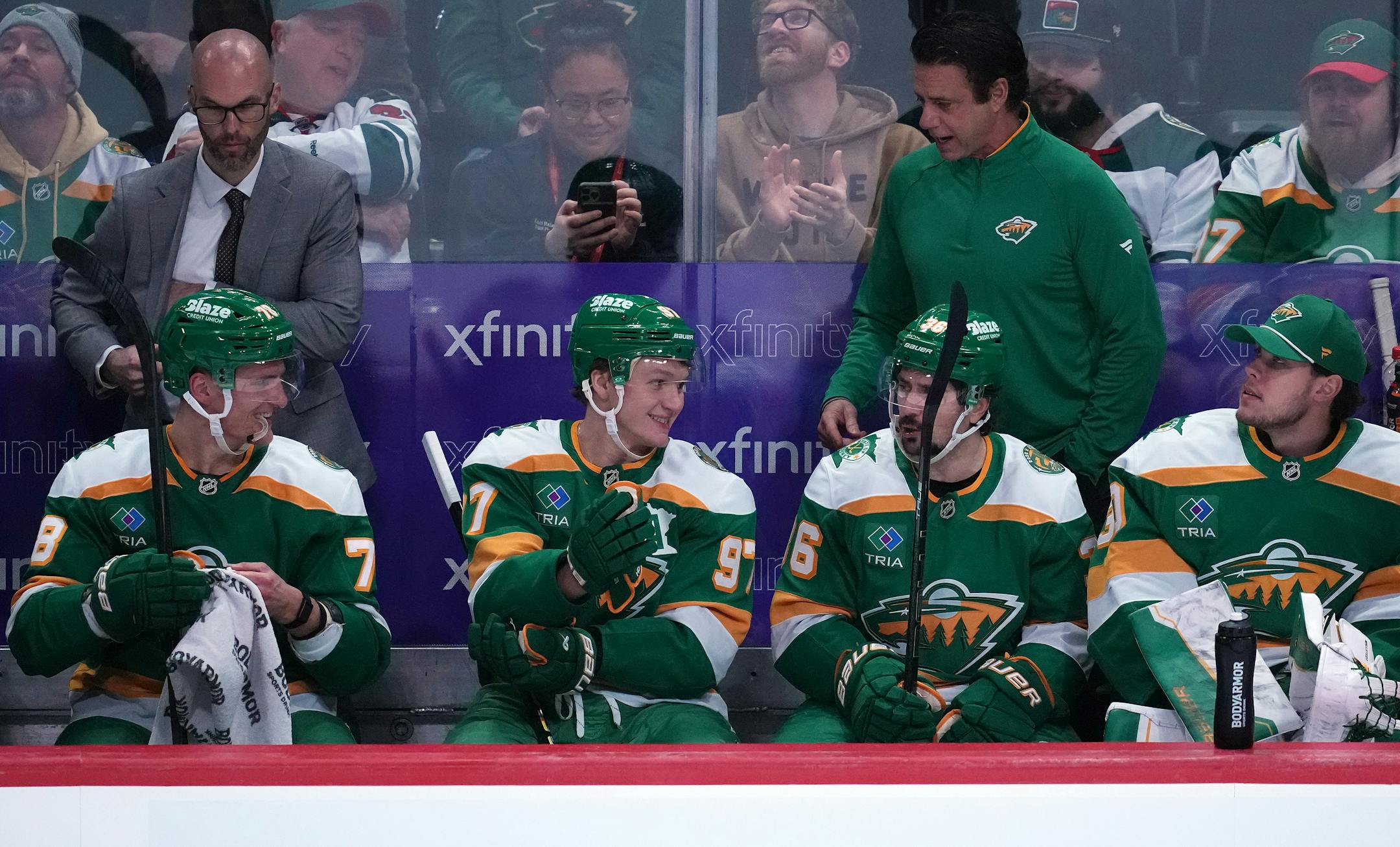
Kirill Kaprizov (97) smiles on the Wild bench after scoring a goal against the Islanders on Jan. 10 at Grand Casino Arena in St. Paul. (Anthony Souffle/The Minnesota Star Tribune)

Kirill Kaprizov used to get on the Wild plane and go to sleep.

As a rookie fresh from Russia, he would be out like a light while teammates played cards, and how much the newcomer was nodding off didn’t go unnoticed.

“Guys asking me like, ‘How do you fall asleep right away?’” Kaprizov recalled.

Now, in his sixth NHL season, Kaprizov stays awake and has joined the card game.

But the Wild superstar is still catching Zs.

“I’m nap guy,” he said.

Like babies and those who siesta, hockey players take afternoon naps.

Some partake only on gamedays. An aficionado like Kaprizov will also snooze after practice for an hour or hour-and-a-half.

ADVERTISEMENT

“Sometimes 20 minutes and just boom,” he said. “Like new.”

Sleep, like the opponents he overwhelms on the ice with his skill, is apparently no match for Kaprizov.

Aside from being able to drift off at the drop of a hat, brightness doesn’t keep him up. Neither does caffeine.

“I can drink coffee before bed and sleep right away,” the Wild’s leading scorer said. “I don’t care. Nothing changes for me. I don’t feel nothing.”

Shuteye, though, isn’t the enemy. It’s an ally, and the Wild are sleeping on the job to do the job.

“You need to bank hours,” alternate captain Marcus Foligno said, “and your body needs to be rested in order to perform at its best.”

Hit the hay

The tradition of the pregame nap tends to begin before the NHL, when players are younger — but not stopping by the snack bar in the rink and loading up on candy and Gatorade.

Many add naps in junior hockey or once they play games at night.

“It’s more to reset the day,” goaltender Filip Gustavsson said.

Matt Boldy was with USA Hockey’s National Team Development Program and Vladimir Tarasenko was a 16-year-old in the KHL in Russia when they started napping — Tarasenko napped because the older players did. Kaprizov also started because everyone else on his Russian junior team was doing it, and he discovered a passion.

“I just love naps,” he said.

After class, captain Jared Spurgeon would have a six-hour bus ride to games, and he would pass the time by sleeping. Going to high school prevented Foligno from napping, so the forward didn’t start snoozing until later in his junior career.

“You’re just trying to survive, and you’re still growing,” said Foligno, 34 and the father of three. “So, I feel like you have to sleep. I would go two hours, and now I’m down to like maybe 45 minutes to an hour.”

Spurgeon has also cut back from a few hours to 30-45 minutes.

“As you get older, I think it gets a little harder to nap for longer,” the defenseman said.

The Wild's Jared Spurgeon, pictured Dec. 23, has cut back his naps from a few hours to 30-45 minutes. “As you get older, I think it gets a little harder to nap for longer,” the defenseman, 36, said. (Carlos Gonzalez/The Minnesota Star Tribune)

Even a cat nap is restful.

“You get a good 45 minutes to an hour,” Foligno said, “and that’s all my body needs. You just feel good coming out of it. It’s quicker, but it’s right to the point. Maybe you’re mentally not as groggy because you know what to expect in this league.”

But the more the better for Boldy.

“I don’t have any kids or anything like that,” he said. “I got no responsibilities. I just sleep as long as I can.”

Quiet time

Joel Eriksson Ek never misses naptime, which lasts a couple of hours.

“With how much you travel and how much you play and with a lot of late nights,” he said, “it’s a good way to catch up on some sleep.”

The players aren’t the only practitioners.

“You want to be mentally sharp and have energy for the game that night, too,” Wild coach John Hynes said. “So, most coaches nap.”

But not everyone is on a strict schedule.

“If I sleep for 30 minutes or if I sleep for an hour, two hours,” Brock Faber said, “it doesn’t matter.”

On a Sunday, Ryan Hartman might put on a football game during the downtime; Mats Zuccarello only dozes off when he feels like he needs to; and goalie Jesper Wallstedt doesn’t nap at all.

“I feel like if I sleep at night enough, I shouldn’t have to sleep during the day,” the rookie netminder said. “… I just don’t get tired during the day.”

Gustavsson naps for the opposite reason.

“Because I’m tired,” he said.

Not only does Gustavsson sleep with an eye mask, but he also wears custom earplugs.

“If I had earplugs,” Wallstedt said, “I’d be scared I would not wake up.”

A father of two, Gustavsson hasn’t had that problem — not when “you have a kid coming jumping on you.”

Tarasenko, who would log 3½ hours ahead of late-night puck drops in the playoffs, doesn’t want to feel like he has to rush to fall asleep, so he will read a book beforehand.

“I never [hit] snooze,” he said. “If I snooze, I’ll sleep in, for sure.”

Foligno’s ideal temperature in the room is 68 or 69 degrees Fahrenheit.

“I don’t want freezing, but it’s gotta be cool,” said Foligno, whose daughters know to watch TV in the basement while dad sleeps. “Then blackout shades is the big thing.”

Before the Nov. 28 home game vs. Colorado, which started at 2:30 p.m., Kaprizov didn’t nap, and he had two goals in a 3-2 shootout victory for the Wild.

“I feel great in the game,” he said. “Legs feel good. Body feel good. I’m like, ‘Oh, I don’t know, maybe I don’t need any sleep.’”

Repair and rejuvenate

Wild players are encouraged to do what feels best for their bodies, but any extra sleep is beneficial, especially considering how much they exercise and their schedule, which is in flux due to games and travel.

“That’s when everything recharges and gets better, is when you’re sleeping,” said Wild head strength and conditioning coach Matt Harder, who pinpointed six to nine hours as the optimal range for nighttime. “Everything we do improves during the sleep. So, if we can sleep more or sleep better or have higher-quality sleep, even if it’s shorter-duration sleep, then great.”

The team doesn’t track sleeping habits, but some players have an Oura Ring that gives them their data.

Nico Sturm wears a WHOOP on his wrist, and he has used it every single day for the past five years.

The device monitors his calories, steps and blood oxygen level, but what Sturm pays attention to most is his sleep, which he has prioritized this season.

“It analyzes the quality of the sleep,” the forward said. “Tells you, hey, you might have been in bed for eight, nine hours, but you only got 45 minutes of regenerative sleep. You were not in deeper REM sleep. Those are the two important phases you try to get into.”

Wild center Nico Sturm, shown Jan. 2 at Anaheim, wears a WHOOP device on his wrist that monitors his sleep quality. He tries to be consistent with his sleep patterns. (William Liang/The Associated Press)

Sturm missed the first six weeks of the season because of a back injury. While he was recovering, he believes he had the healthiest sleep of his life: He was falling asleep at 9:30 p.m. and waking up at 6:30 or 7 a.m.

“You can feel how your brain clears up and how crisp and clear your thoughts are,” Sturm said. “You don’t drag yourself out of bed.”

This rhythm was interrupted by his return, and Sturm struggled to fall asleep during his first few pregame naps.

Still, he tries to be consistent when he can, like getting into bed at 9 p.m. on a non-game night and reading, which tires him out.

“The last couple years, I was very, very sensitive,” said Sturm, who will play for Germany in the Olympics. “It had to be a totally dark and quiet room. I could not stand the sound of white noise or A/C or anything like that.

”So, actually, last couple years I slept with a mask and foam earplugs. I’ve now been more accustomed to white noise. The darkness I still need, so I need the sleep mask, and temperature, I’m like around a 68.”

After games, Sturm wears blue light glasses and tries not to scroll Instagram. He and Tyler Pitlick do crossword puzzles on the plane. During the bus ride to the hotel, Sturm will take magnesium.

“If there’s a stretch where you play a lot of hockey,” Sturm said, “you have a lot of pregame skates, it’s like you can’t wait after pregame meal to be in bed, and you’re just lights out.”

Wide awake

As advantageous as sleep is, the nap is also appealing because it’s part of a routine, and players like knowing what’s going to happen.

“That first week of summer when there’s nothing, it’s chaos. I hate it,” Wallstedt said, “because then there’s no predictability in your day. You have no idea what you’re going to do or how the day is going to look.

“Everything is just off of what happens. But during the season, every day it’s either a practice, a day off or a gameday, and it’s over and over and over.”

Even though he’s not napping, the Swedish Olympian has a plan for the afternoons before games, lounging in massage pants while making saves with virtual reality controllers.

Gustavsson, also on the Swedish Olympic team, downs a Monster energy drink before the game, and Foligno sips black coffee with maple syrup. Sturm has his coffee during the pregame meetings.

“I don’t need to have it right after my nap to get going because it’s still 3½ hours till game time,” Sturm explained. “So, I don’t want to have that crash.”

Hartman has heard of drinking an espresso shot before a nap so that it kicks in just as someone is waking up, what’s referred to as a nappuccino.

“I’ve never done it,” Hartman said. “I probably wouldn’t fall asleep.”

Instead, Hartman has a Red Bull in between periods.

“Doesn’t help with the night sleep, that’s for sure,” he said.

Wild veteran Ryan Hartman handles the puck Jan. 3 at Los Angeles. The forward will have an energy drink between periods. “Doesn’t help with the night sleep, that’s for sure,” he said. (Jayne Kamin-Oncea/The Associated Press)

But caffeine in-game is popular to ward off fatigue, especially Coca-Cola.

That’s right: Professional athletes are gulping sugary soda at intermission.

“Just a splash, yeah,” said Boldy, who was shown on a game broadcast pouring a can of Coke into cups inside the Wild locker room earlier this season. “Just to pick you up.”

Aside from the occasional matinee, go time for the Wild is typically in the evening, when all the preparation leads to a performance that will either win or lose them the game.

But first they have to wake up from their nap.

“Three alarms minimum,” Kaprizov said with a chuckle.

about the writer

about the writer

Sarah McLellan

Minnesota Wild and NHL

Sarah McLellan covers the Wild and NHL. Before joining the Minnesota Star Tribune in November 2017, she spent five years covering the Coyotes for The Arizona Republic.

See Moreicon

More from Wild

See More
card image
Anthony Souffle/The Minnesota Star Tribune

All Wild players have different habits, including “nappuccinos,” but they find that rest is their friend.

card image
card image