
Minnesota schools asked voters for more taxes. Most said yes.

Unlike last year, the majority of school districts asking for tax hikes to fund day-to-day expenses received voter support.

The Minnesota Star Tribune
November 5, 2025 at 7:25PM
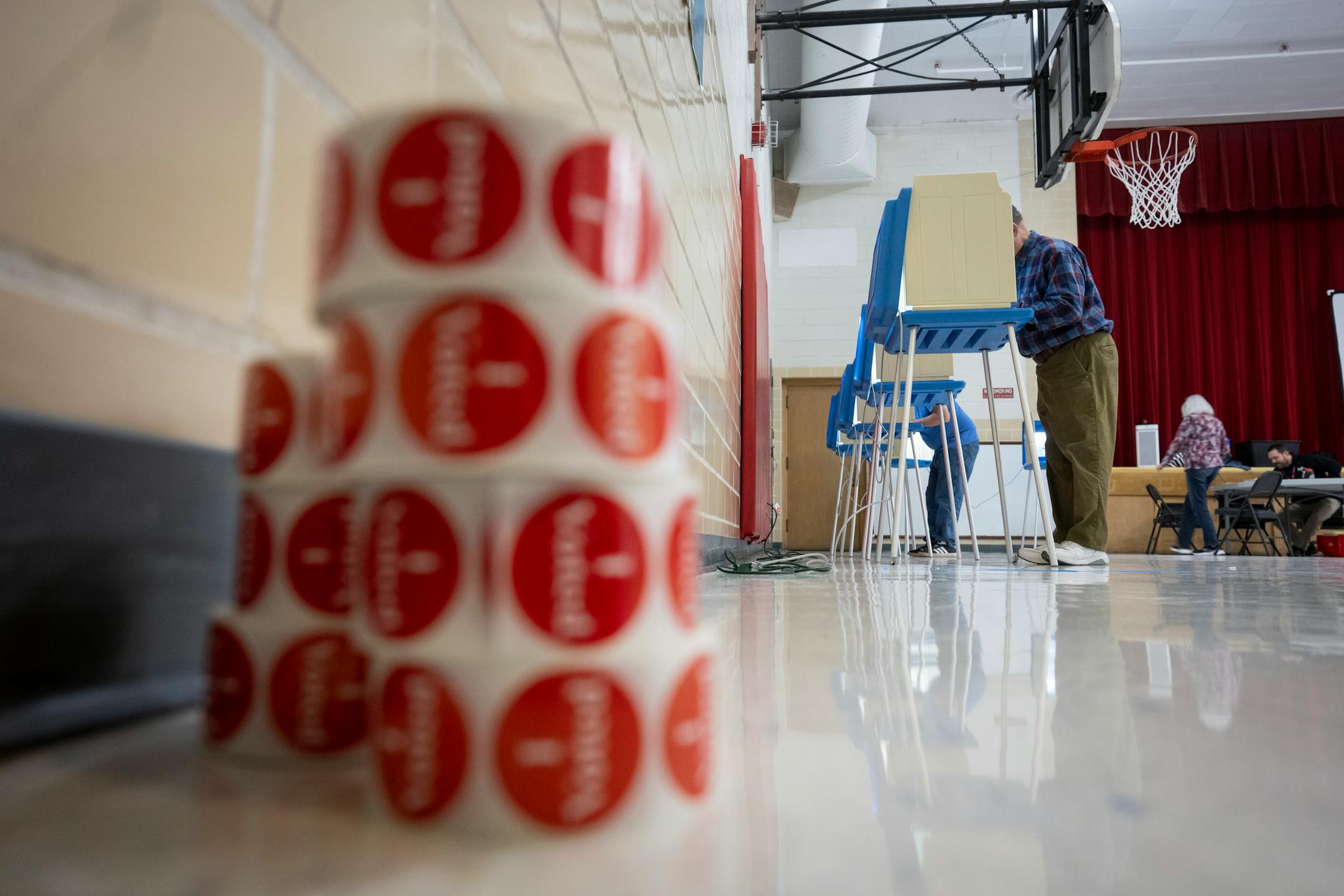
“I voted” stickers are stacked up for people to receive after voting in Maplewood. (Renée Jones Schneider/The Minnesota Star Tribune)

Nearly two-thirds of the 90 Minnesota school districts seeking more taxpayer funding won voter approval in Tuesday’s election.

Some of the wins came in smaller, more rural districts where tax hikes have historically been a tough sell.

Operating levies — which fund day-to-day costs such as staffing, curriculum, and classroom needs — saw the highest level of support, passing at a rate of almost 70%. That’s in contrast to 2024, when fewer than half of operating levies earned voter support.

Taxpayer dollars are proving more critical as districts become increasingly dependent on operating levies amid widespread budget cuts and uncertainty about the future of state and federal funding.

That’s forced districts to become more proactive in explaining referendum questions to voters, said Kirk Schneidawind, the executive director of the Minnesota School Boards Association.

“They’ve become better in their communication with their communities about their needs and the consequences if it doesn’t pass,” he said.

In some cases, like in Annandale, located south of St. Cloud, that message also came from parents and community members. When the district of about 2,000 students was facing cuts after voters rejected an operating levy last year, a group of moms launched a fundraiser that transitioned into a levy support campaign. Their efforts seemed to work: About 56% of voters supported the levy Tuesday.

A banner on the Annandale Public Schools website announced the win: “This is an important milestone for our district, and we want to thank everyone who made their voices heard in this election.”
Voters in smaller, rural districts including Badger, Cleveland, Crosby-Ironton, St. Michael-Albertville, Wheaton and Win-E-Mac also secured voter support for operating levies.

“In general, our greater Minnesota districts had a little bit more success this year than they have in the past,” Schneidawind said.

Still, several other districts, including Becker, Benson and Deer River, failed to win voter approval for their proposed operating levies.

In the Twin Cities and surrounding suburbs, districts’ requests fared well. Of the 15 metro-area districts with questions on the ballot, only one, North St. Paul-Maplewood-Oakdale, failed to garner voter support.

That district asked voters for an increase to the operating levy and a new capital project levy for technology and security upgrades.

Across the state this year, two-thirds of all the capital project levies passed. Most of those included technology upgrades, which proved a popular, and largely successful, ask of Minnesota voters in 2024.

Building bonds, however, continued to be a tougher sell this year. Just over half of the 30 on the ballot earned voter approval — about the same rate as the last three years.

Most of the successful ones, including in greater Minnesota communities like Belle Plaine, Madelia and St. Michael, included funding requests for safety and security improvements.

Voters in the Cambridge-Isanti school district voted down two bond questions that would have funded school building improvements and a $36 million field house at the high school.

Scott Croonquist, executive director of the Association of Metropolitan School Districts, said the referendum results showed “strong support for our public schools.”

“Voters showed they understand that education funding is a state/local partnership in Minnesota, and they stepped up to support their local school districts,” he said. “Unfortunately, even in a good year, there are some referendums that don’t pass and that leads to difficult budget challenges for those districts.”

Schneidawind agreed, adding that referendums in off-cycle elections can have advantages despite the lower voter turnout. Districts can focus their message without competing with the noise from state or federal elections, he said.

“It offers that great opportunity for our districts to kind of tell their story.”

Anoka-Hennepin school board

Many Minnesota school boards also had elections Tuesday. One of the most high-profile ones was in the Anoka-Hennepin school district — the state’s largest — where voters supported incumbents Kacy Deschene, Matt Audette and Jeff Simon to serve four-year terms.

The result of Tuesday’s election maintains the current 3-3 partisan split on the six-member board, which has clashed repeatedly on culture war issues. That divide has threatened to slow or even halt budget and curriculum decisions.

The race drew more than $300,000 in campaign contributions, most of which came from political action committees backing the conservative slate of candidates. That slate included Audette, Lorraine Coan and Tiffany Strabala. Audette was the only member of the slate to win a seat, winning re-election by defeating challenger Abbey Payeur.

The progressive candidates received financial support from the School Board Integrity project as well as the teachers union.

Jeff Simon was re-elected after spending less than $6,000 of his own money. He did not take contributions, according to campaign finance reports.

Throughout his campaign, Simon vowed to remain nonpartisan.

School board races are officially nonpartisan, but national political divides and culture war debates that have heated up since the start of the pandemic are continuing to shape school board races.

about the writer

about the writer

Mara Klecker

Reporter

Mara Klecker covers suburban K-12 education for the Star Tribune.

See Moreicon