
Twin Cities suburb fights over personal freedom — to choose a trash hauler

Voters in Anoka rejected moving to organized garbage collection. But now the city could recycle the issue that has stirred debate across the region.

The Minnesota Star Tribune
January 11, 2026 at 12:00PM
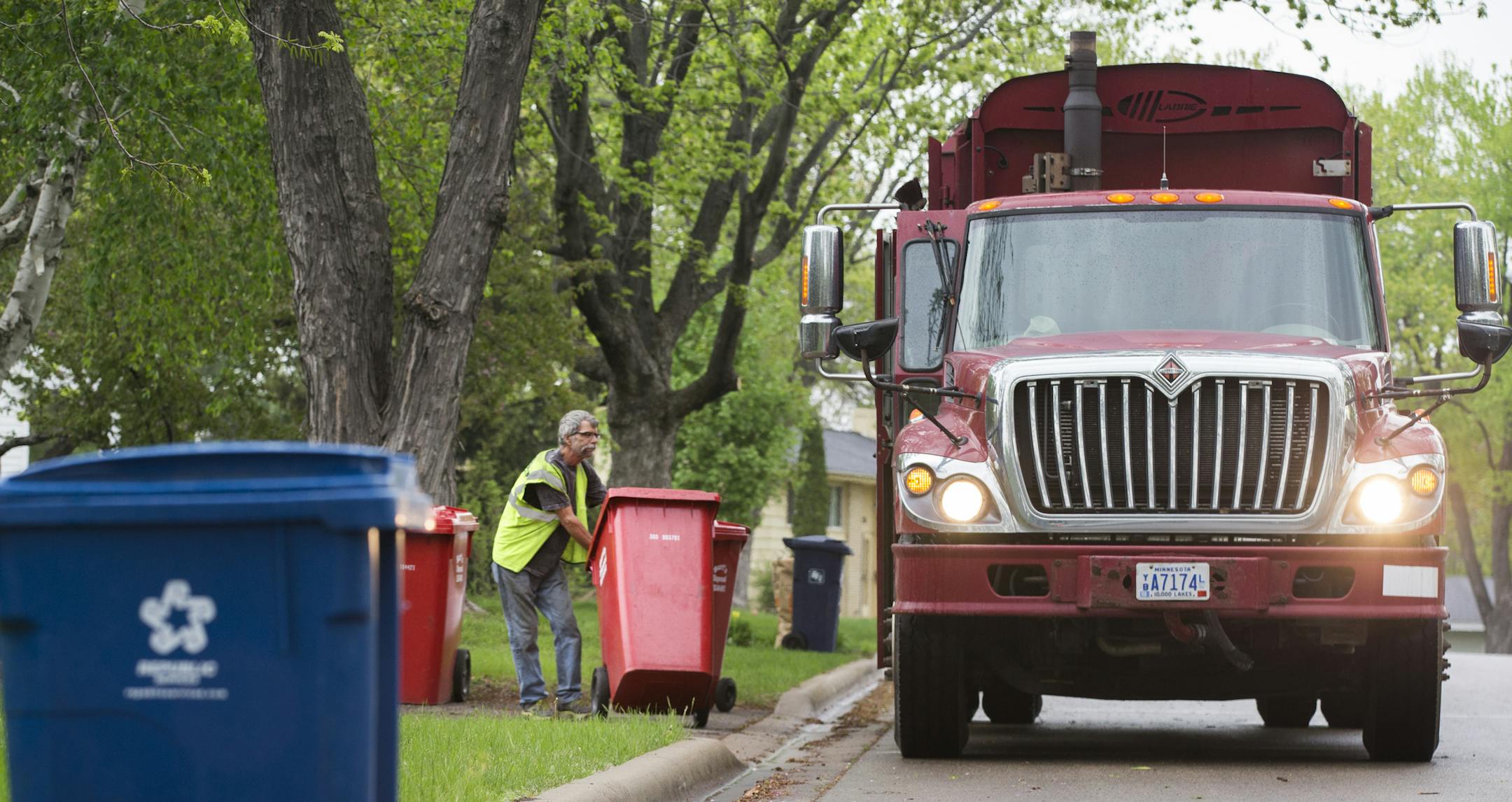
Patrick Cunningham with Burt’s Disposal emptied a garbage container into his truck in Bloomington. The city may switch from seven haulers to one.
Cities across Minnesota continue to fight over whether the city or homeowners get to decide who picks up trash. (The Minnesota Star Tribune)

The city of Anoka is once again wading into a stink over a plainly routine service: who decides which company picks up residents’ trash at the end of their driveways.

Fourteen months after voters rejected a switch to city-organized garbage collection, Anoka officials are ready to recycle the idea. And much like the last time, the debate has proved to be one of the most contentious in the Twin Cities suburbs.

Trash haulers have waged fierce campaigns in Anoka and cities across the region, with intense lobbying, lawsuits and tens of thousands of dollars in spending. The yearslong debate hasn’t died down as residents argue over personal freedoms, rising costs, sustainability and misinformation.

Anoka residents this winter have packed city meetings and opened their mail to glossy notices from a political action committee backed by area haulers stating that officials voted to “start taking away your rights” by revisiting the trash question.

“We want to earn people’s business every day. We don’t want the government telling them they have to deal with us,” said David Wiggins of ACE Solid Waste.

Opponents of city-organized trash hauling argue that Anoka’s decision to revisit the trash question is a waste of taxpayer dollars after 52% of voters rejected the idea in November 2024.

But others contend that voters might be swayed this time because household expenses — from taxes to groceries — have gone up.

In many communities, the question has stirred emotional debates over personal choice and the government’s role in the market.

Mounds View voters in 2024 rejected switching to organized collection, and the city has since adopted new price transparency rules. Several cities, including St. Paul and Richfield, have made the change. Coon Rapids, Edina and others have picked up and then abandoned the idea.

“I think maybe it’s part of our inherent culture in America, of freedom of choice,” Mounds View City Administrator Nyle Zikmund said of why the issue has become so controversial. “But people don’t get to choose their gas utility or electric utility. I don’t understand it, but I accept it.”

Cities split on trash pickup

Anoka and many other cities have talked about trash for years, since the Legislature in 2013 adopted changes to a law spelling out the process for communities to organize trash collection.

Advocates argue that moving to a city-organized system ensures consistent costs and often results in lower prices because the service is more efficient and cities have leverage bargaining with haulers.

They also say that having a single hauler reduces the number of trucks on the street, which is more sustainable and can reduce road deterioration.

About 38% of communities in the Twin Cities area have organized trash collection, according to a 2024 report from the Minnesota Pollution Control Agency.

When moving to organized collection, cities work with the existing haulers and see if they can develop a consortium model, allowing different haulers to serve designated areas. St. Paul, which was embroiled in garbage debates for years, tried using a consortium of companies. But after residents complained, it moved to a single hauler in 2025.

“Having an organized system allows for the city to step in and help when residents are having issues, and for prices to be set according to a contract,” said Rachel Lindholm, sustainability coordinator for the city of Richfield, which moved to a consortium of three haulers.

She argued the issue causes so much uproar because trash pickup is one of the most visible services affecting a resident’s quality of life.

Trash haulers have spearheaded an effective campaign against the change in many cities. They argue that residents should have the right to shop around, choose who picks up their waste and negotiate for a lower rate.

“An open and competitive system allows residents to select the service that best fits their needs — and to change providers if expectations are not met,” Jeff Newsom, president and CEO of Walters Recycling and Refuse, said in a statement.

Garbage Haulers for Citizen Choice, the PAC backed by area haulers, spent more than $24,000 in Anoka in 2024 on signs and mailings opposing organized collection.

Zikmund said Mounds View has no plans to revisit the question of moving to organized trash collection after more than 60% of voters rejected it. But the City Council has asked the city’s licensed haulers submit their rates so they can be posted publicly, allowing residents to make an informed choice.

“We’ve found variances of 100% or more between garbage bills on the same street for the same hauler,” Zikmund said.

Wiggins, with ACE, said he worries about violations of antitrust laws. It’s an issue that was part of ACE and Walters’ lawsuits against Anoka and Mounds View in 2024 when the companies said they were forced to share confidential pricing information. They also accused the cities of rushing through the process rather than appropriately negotiating with haulers.

Both suits were dismissed after voters rejected the ballot initiatives.

Anoka reconsiders trash collection

Anoka spent more than $35,500 in legal fees related to the haulers’ lawsuit, city spokesperson Pam Bowman said.

City spending on the issue has become a major point of debate as the council considers putting the question on the ballot again.

The PAC backed by haulers said in a mailer sent to residents that the previous ballot initiative cost Anoka $100,000. But Bowman said the city could not provide a tally of all of the costs.

“Do we trust you to use the funds we’re giving you from our taxes wisely, or do we trust you to keep bringing up the same thing over and over without a lot of new data?” resident Dennis Taylor asked the council on Monday, Jan. 5, during a packed meeting, where residents were closely split on the issue.

Mayor Erik Skogquist said he hopes city officials will have more time this year to better educate residents about the initiative if it makes it onto the 2026 ballot.

Anoka now has four licensed trash-hauling companies in the city. In 2024, it negotiated a contract with ACE to be the sole hauler — if voters approved — charging households $16.80 per month for a 90-gallon cart.

Skogquist said that’s less than what most residents are paying. He said he negotiated his own bill down from more than $40 to closer to $30.

Council Member Heather Rostad said at the January meeting that she wants to reconsider organized collection and whether the city can negotiate cheaper rates, as other costs and household expenses have gone up.

But Council Member Jeff Weaver called it a “whack-a-mole” process. He argued it would be expensive for the city to continue down this path again and “hope we get the right answer in November,” especially after a nearly 10% tax levy increase this year.

Council members voted 3-2 to advance talks about putting the organized garbage collection on the ballot. Anoka will now enter a 60-day negotiation period with haulers.

about the writer

about the writer

Sarah Ritter

Reporter

Sarah Ritter covers the north metro for the Minnesota Star Tribune.

See Moreicon

More from Twin Cities Suburbs

See More
Patrick Cunningham with Burt’s Disposal emptied a garbage container into his truck in Bloomington. The city may switch from seven haulers to one.
The Minnesota Star Tribune

Voters in Anoka rejected moving to organized garbage collection. But now the city could recycle the issue that has stirred debate across the region.