
Politics splits some Minnesota school board races this fall

In an odd-year election, some school board candidates are trying to maintain a tradition of nonpartisanship. Others are leaning into national political divides.

The Minnesota Star Tribune
October 5, 2025 at 10:00AM
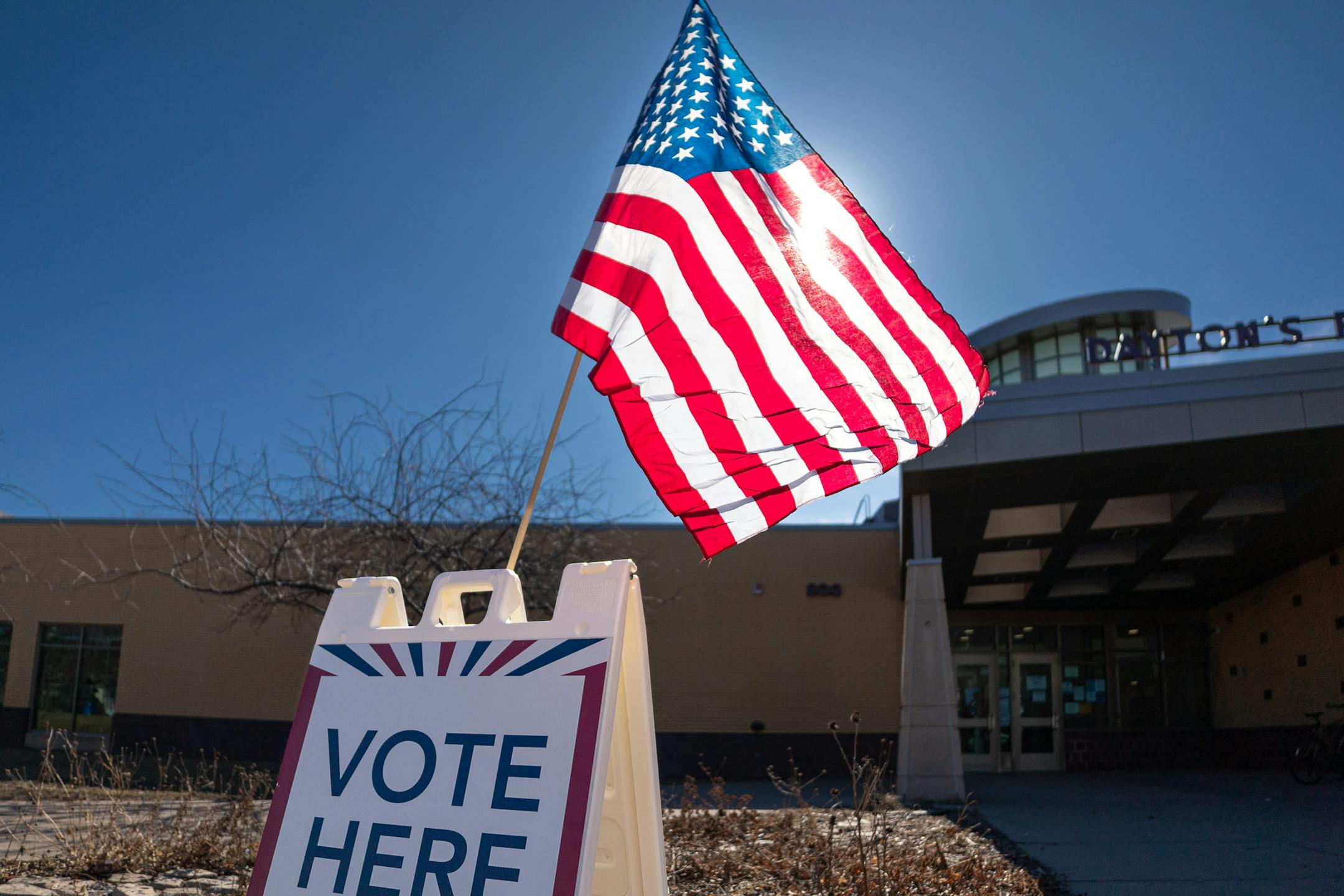
Voters cast ballots in 2024 at Dayton’s Bluff Recreation Center in Ramsey County. (Glen Stubbe/The Minnesota Star Tribune)

A smattering of suburban school board candidates’ websites this year include reminders that, at least officially, their races are nonpartisan.

But candidates running in the few crowded suburban contests say national political divides and culture war debates that have heated up since the start of the pandemic are still coloring their races.

In Anoka-Hennepin, where the school board has a partisan 3-3 split, and in South Washington County, broad culture clash narratives are driving partisan scrutiny and ideological splits, namely over concepts of equity, spending and proper board governance.

And in Hopkins, where all candidates are left-leaning, the fight is over shades of progressivism.

“The original purpose was to make the school board a nonpartisan election without political parties fighting it out,” said Chad Borseth, one of nine candidates for four open seats on the South Washington County School Board. “But that spirit has kind of disappeared.”

School board races attracted more public attention in the early years of the COVID-19 pandemic when debates over distance learning and masking mandates dominated board meetings. In the years since, even once-routine school policy discussions have reflected national culture clashes in a hyper-politicized environment.

This year’s races have drawn an average number of candidates and can’t be characterized by any singular political issue, said Kirk Schneidawind, executive director of the Minnesota School Boards Association. But hot-button issues can generate attention for some districts, particularly in a hyper-polarized environment.

‘Us vs. them mindset’

Keeping divisive politics out of school board races was a primary reason that some districts opted to hold elections in odd-numbered years.

But even that is becoming a rarer choice. Not counting special elections, only about 20 of the more than 330 school districts across Minnesota still hold odd-year board elections, which are taking place this fall.

And several are considering switching to an even-year cycle to save money and increase voter turnout.

“It’s upsetting that politics has leaked into our schools from both sides,” said Johanna Hyman, a candidate for the Hopkins School Board. “No matter what position you take as a candidate on a policy, everyone seems to assign that stance to a political party.”

The DFL has sent letters of support to each of the five candidates running for the three open Hopkins seats. Still, Hyman and candidate Eric Mandel, said the two have been accused of not being “progressive enough,” which Hyman said feels reflective of broader political infighting among progressives.

“I don’t think parents and caretakers who send their kids to school every day are thinking about politics,” Hyman said.

Instead, she said, parents want to know their child is safe, academically supported and prepared for life after school.

Tim Molepske, who is running as part of a three-person slate that does not include Hyman or Mandel, said the tenor of national politics inspired him to run. But he agreed with Hyman that families are most concerned about the issues closest to their child.

Still, he said, people today are quick to jump into an “us vs. them mindset.“

“We’ve got to try to keep it focused on local issues and local successes,” Molepske said.

Increasing partisanship

Election results in Anoka-Hennepin, the state’s largest school district, may shift the board’s current partisan 3-3 split. That divide has threatened to slow or even halt budget and curriculum decisions.

Incumbent Jeff Simon, who is running again after 13 years on the board, said that in an effort to remain nonpartisan, he’s never affiliated with a political party. But, he said, the issues considered by the board have, in recent years, increasingly come with a “partisan lens.”

Simon said parents and community members hear about a culture war issue from national media and assume something dangerous is happening in their schools and that the school board has the authority to fix it.

“Regardless of the amount of detail and information — even leading people to visit the classroom to look — those blinders from that partisan lens just can’t be taken down,” he said.

Board Co-chair Kacy Deschene, who is running for re-election, agreed. National talking points, she said, “take up all the oxygen and end up influencing how people want to look at school board candidates in this election.”

The current split on the board, she said, comes down to discussion points around the national, culture war topics and differing opinions about the scope of its role.

“It’s unfortunate,” Deschene said. “When school boards are working together, students do better.”

In the South Washington County school district, candidate Borseth has so far declined support from groups he considers partisan. He met with a local group called 833 Parents United but declined its endorsement.

The group, which has endorsed three candidates, said in a statement that school board races have become partisan “because the public school system has fully embraced left-wing partisan perspectives.”

As a result, the group said, ”it is only natural for the races to become partisan as well.”

One of its endorsed candidates, Bryn Forstner, said he’s running specifically to counter “political bias” and a “liberal narrative” in the schools.

Incumbent Sharon Van Leer, who’s running for re-election, said groups like 833 Parents United feel more empowered to support partisan ideas because of the “current political situation in our country.”

“But regardless of who you are,” she said, “if you’re elected, you’ve got to represent everybody, no matter their political beliefs or yours.”

about the writer

about the writer

Mara Klecker

Reporter

Mara Klecker covers suburban K-12 education for the Star Tribune.

See Moreicon