Minnesota has second-highest rate of violent injuries of hospital workers

High number of injuries among hospital workers in Minnesota includes intentional assaults and aggression by confused or delirious patients.

The Minnesota Star Tribune
January 29, 2026 at 11:00AM
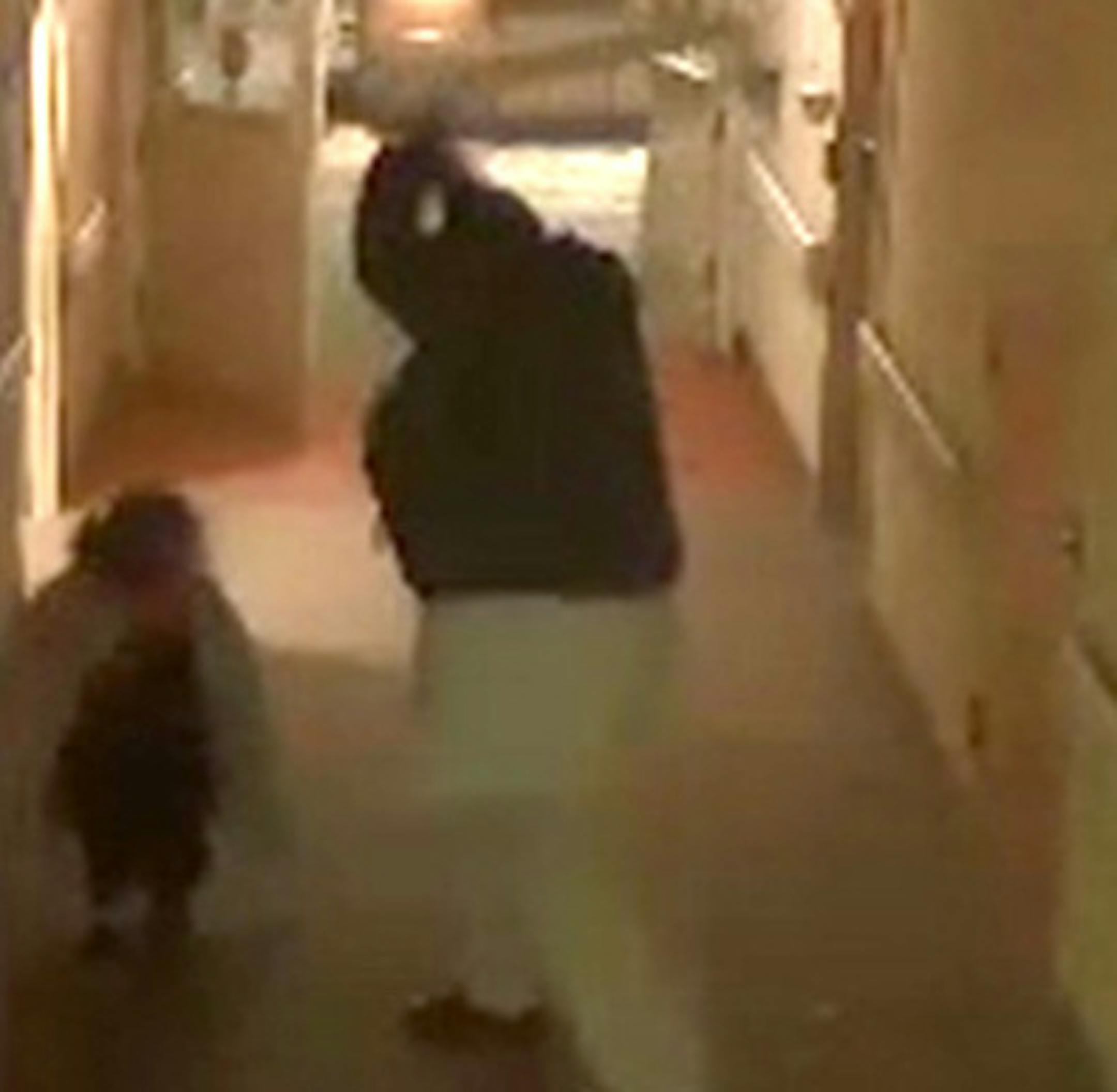
A still from surveillance video of a patient attacking a nurse at St. John's Hospital Nov. 2, 2014.
A screengrab from surveillance video of a patient attacking a nurse at St. John's Hospital on Nov. 2, 2014. (The Minnesota Star Tribune)

Every day in Minnesota, on average, one or two hospital employees are violently injured at work so severely that they need to take time off to heal, or they change jobs entirely, new federal data shows.

An estimated 1,070 workers in privately operated hospitals suffered these violent injuries in 2023 and 2024, giving Minnesota the second-highest rate in the nation, according to new data from the U.S. Bureau of Labor Statistics. Most assaults don’t gain the same public attention as the killing of a security guard by a patient trying to escape hospital confinement in Wyoming, Minn., on Christmas Day. But nurses and hospital workers said the attacks leave physical and emotional scars that drive badly needed colleagues out of the profession.

“What kept me out of work for a long time was that I kept having flashbacks of this patient hurting me,” said nurse Kayla Erickson, who was sidelined for three months in 2022 after a patient kicked her and sent her crashing into a countertop. She returned to her intensive care unit at North Memorial Health in Robbinsdale, where said she was kicked in the ribs last year and missed another day.

Only Connecticut had a higher rate than Minnesota in 2023 and 2024 of hospital violence causing DART injuries — a federal acronym for injuries that force workers to take days off, restrict their duties or transfer to other roles. The latest biennial data for 42 states was released last week after being delayed because of the federal government shutdown last year.

Minnesota hospital and union leaders said the data is skewed because the state has a culture of reporting adverse events, which likely increased its total of worker assaults compared to others. The number of facilities reporting injuries also exceeded the 136 hospitals in Minnesota, suggesting that some cases in the federal data might have been misclassified.

Nonetheless, the data is a reminder of a nagging problem for Minnesota hospitals at a time when most are dealing with rising costs and crowded emergency rooms, and a few are grappling with the presence of federal immigration agents in their hallways. State health authorities targeted hospital violence in 2015, after a patient at M Health Fairview St. John’s Hospital in Maplewood attacked four nurses with a metal rod before dying in police custody outside the hospital. Reports of violent injuries increased since then.

The Minnesota Nurses Association (MNA) raised alarm over attacks at Essentia Health hospitals in Duluth and Brainerd that injured four nurses in two weeks last October. A man under medical confinement at Essentia’s St. Joseph’s Hospital in Brainerd grabbed a nurse by the hair and tossed her into a countertop, according to one police report. The nurse collapsed motionless on the floor, which was covered with a “pool of blood as large as her head,” the report stated.

The pandemic exacerbated the problem, causing patients with politically charged views about COVID-19 to quarrel with their doctors and nurses about how to prevent and treat the infectious disease. Workers’ compensation claims surged from 91 in 2012 to 272 in 2022 among hospital workers who missed at least three days of work because of injuries related to violence, according to the Minnesota Department of Labor and Industry.


Approved claims declined to 177 in 2024, but nursing leaders said violence remains a concern as hospitals encounter more patients with complex combinations of mental and physical disorders that make them prone to confusion and agitation. About four in 10 claims involved nurses, but injuries sidelined security guards, mental health specialists and others as well.

Security guard Andrea Merrell died from traumatic head injuries after she confronted a patient who had been confined to M Health Fairview Lakes Medical Center in Wyoming because of mental health concerns but was trying to flee on Dec. 25. The assailant repeatedly exclaimed, “I didn’t mean to hurt her” to police officers before attacking them as well, according to court records.

“The loss ... has deeply affected our organization, and we are taking this moment with the seriousness it deserves,” said Jeoff Will, Fairview’s executive vice president and chief operating officer.

The health system has increased violence prevention training, invested in security planning and technologies, and agreed last year in its union nursing contract to outfit nurses with wearable panic alarms. A space known as an EmPATH unit was built next to the emergency room at Fairview’s Southdale Hospital in Edina as a calming place for patients in mental health crises. But Will said solutions must extend “beyond hospital walls” and include more crisis response options that calm people before they reach ERs.

Workplace injuries and illnesses declined overall in Minnesota hospitals, largely because fewer workers suffered workplace exposure to COVID-19 than they did in 2021 and 2022, the data showed. Changes in the federal data prevented a comparison over time of the violence data, though. (Federal officials combined datasets that previously separated out violence-related injuries by whether assailants intended harm or not.)

Even if the data is limited or skewed, MNA union president Chris Rubesch said it reveals a problem that stems from understaffing that allows agitated patients to fester.

Risks increase when patients are in transition, perhaps emerging from medicated comas or weaning off prescription medications or illicit substances, he said. “Additional people present to help talk to that patient, to help de-escalate, can often result in less violence, less risk of injury,” he said.

Rubesch said he was recently attacked when trying to move a patient with dementia who was “sundowning,” or suffering heightened confusion, but avoided serious physical harm.

“That’s a very tough situation because, of course, I wouldn’t expect my spouse, my co-workers, to ever have to endure that,” he said. “At the same time, it’s not the patient’s fault. This is a medical condition.”

The Minnesota Department of Health has separately tracked the most severe assaults in hospitals that seriously disabled workers or patients. The state reported 16 such attacks in hospitals in the 12-month period ending in October 2024, compared to 13 in total from 2005 through 2018. No fatalities were reported since a death at the now-closed Shriner’s pediatric hospital in 2006.

State legislation in 2023 addressed the problem by requiring hospitals to submit violence prevention plans and annually update them to correct any deficiencies. A report sent to lawmakers this week showed all Minnesota hospitals submitted prevention plans by an initial deadline, though five smaller hospitals needed reminders of the new requirement.

Erickson has been a nurse for 10 years and said she knew she wanted to return to intensive care, even after being assaulted. She said she froze briefly the first time a patient in the unit was belligerent.

“I don’t even remember the specifics of it,” she said. “I just remember: stuff got loud, lots of limbs flailing, a comrade yelling ‘I need some help in here,’ and that hesitation, that not again sensation.

“But, you know, you power through,” she said.

about the writer

about the writer

Jeremy Olson

Reporter

Jeremy Olson is a Pulitzer Prize-winning reporter covering health care for the Star Tribune. Trained in investigative and computer-assisted reporting, Olson has covered politics, social services, and family issues.

See Moreicon

More from Health Care

See More
A still from surveillance video of a patient attacking a nurse at St. John's Hospital Nov. 2, 2014.
The Minnesota Star Tribune

High number of injuries among hospital workers in Minnesota includes intentional assaults and aggression by confused or delirious patients.

card image
Hennepin Healthcare Clinic and Specialty Center,l 8th Street between Park Av and Chicago Av.