Children’s Minnesota redesigns hospital ER to reduce wait times and walkouts

Triage unit treats many children without ever taking them into the actual ER, freeing up time for the rest of the emergency medical staff.

The Minnesota Star Tribune
December 25, 2025 at 12:00PM
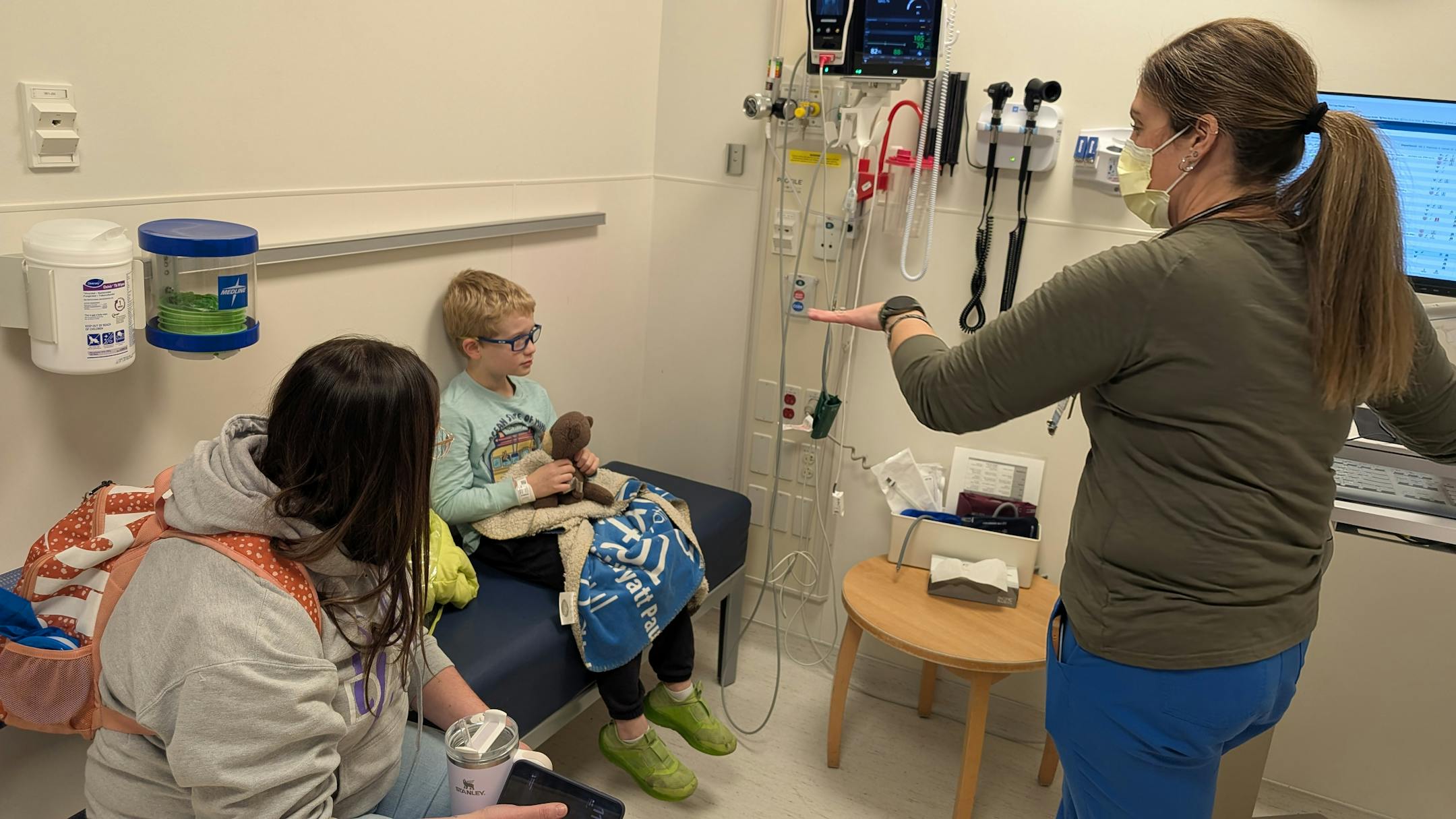
Nurse Lisa Agrimson describes how her patient, 6-year-old Wyatt, would slide into a CT scanner at Children's Minnesota in Minneapolis, where he would be evaluated for a concussion. (Jeremy Olson/The Minnesota Star Tribune)

The emergency room at Children’s Minnesota was quiet on a recent Monday morning when nurse Lisa Agrimson checked on her first patient, a distressed 11-month-old girl who was tugging on her ears and worrying her young mother.

But it wouldn’t stay quiet for long, leaving a narrow window of time to treat the girl’s likely ear infection before doctors and nurses had to turn attention elsewhere. Waiting too long could turn a one-hour visit into a three-hour ordeal.

“Anybody bringing their child to the ER doesn’t want to sit here for hours,” Agrimson said.

The patient pileup had become such a daily problem that Children’s decided to redesign its entire intake process when it renovated its ER entrance in Minneapolis. Agrimson kept the infant and her worried mother in a new three-room triage area, where Dr. Dave Blackwell prescribed antibiotics and sent them home without ever seeing the inside of the actual ER.

“Not every kid needs to have the whole ER experience,” the doctor said.

Children’s leaders hope the new triage unit, which opened in November, will reduce delays and reverse a somewhat embarrassing trend: the rising number of parents who leave the hospital in frustration before their kids receive any medical attention.

The walkout rate among pediatric hospitals nationally is about 4%, but the Children’s rate had risen above that mark in recent years.
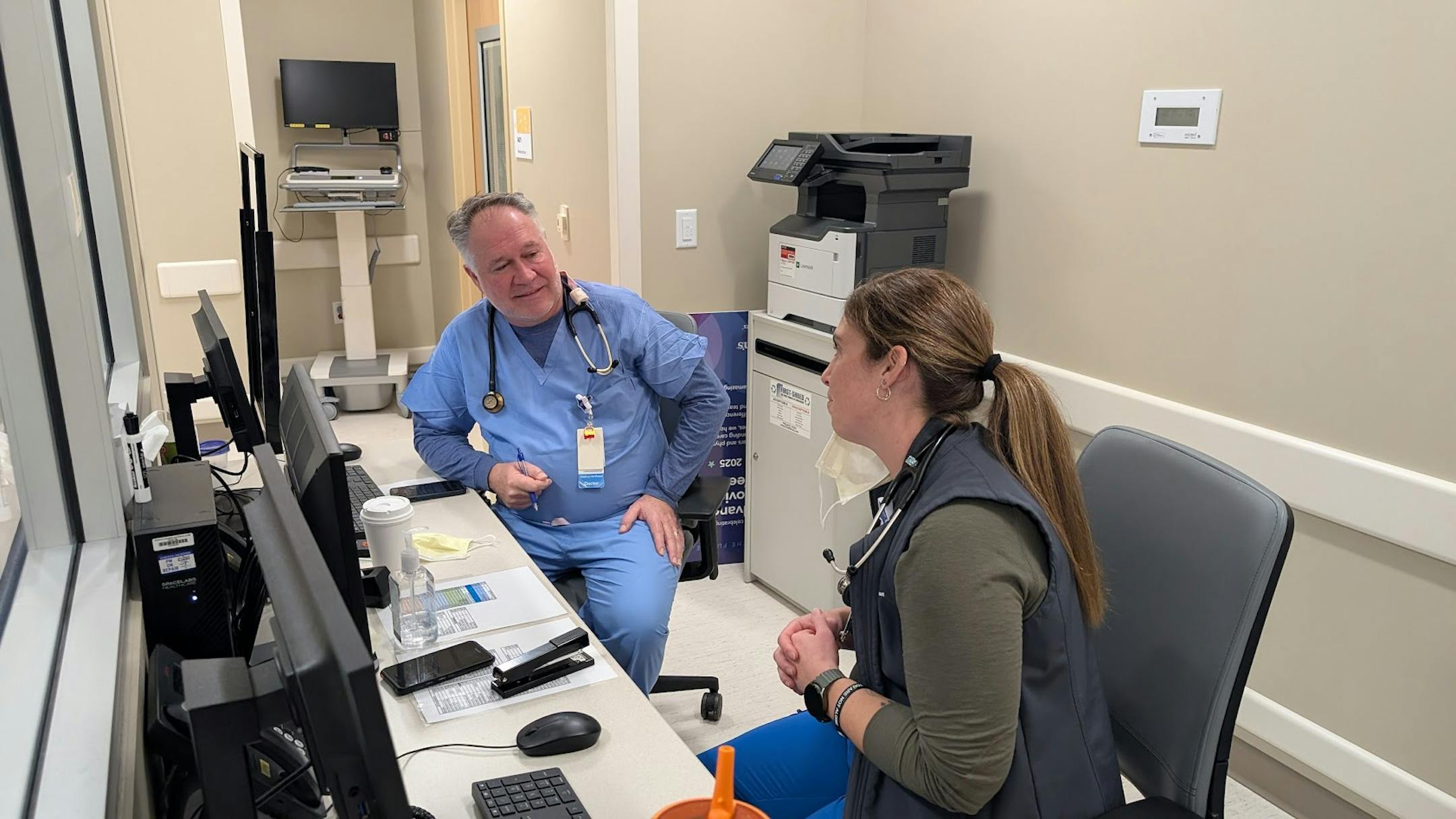
Dr. Dave Blackwell, left, and nurse Lisa Agrimson staff the new triage unit of the Children's Minnesota emergency room in Minneapolis on Dec. 8. (Jeremy Olson/The Minnesota Star Tribune)

The new unit is staffed each shift by one doctor and nurse, along with medical technicians and front-desk workers. Of the 138 patients treated in the Children’s ER on Dec. 8, 60 were diverted to the new triage unit, called PIT, or Provider-in-Triage.


Some patients don’t stay long. Lainey Walker of Bloomington barely had her blood pressure and weight checked before she was whisked to an ER bed.

Elevated blood sugar had been plaguing the 13-year-old with Type 1 diabetes all week, and it hadn’t improved when she woke up with stomach pains. Blackwell ordered tests so that the next doctor that day would have one less step before analyzing the results and diagnosing Walker’s problem.

One of the unit’s goals is to achieve “productive” waiting, meaning that patients are waiting for tests or test results, and not just for doctors or nurses to show up and order tests so that they can then wait some more.

“We at least get the process started, whether it’s a simple swab or a simple X-ray or something,” Blackwell said.

Agrimson carried instructions for an antibiotic prescription into the room with the irritated 11-month-old infant and young mother. “All right,” she said, “sweet girl has an ear infection. I’ve got papers to go home, OK?” They had been in triage for 20 minutes.

Children’s has confronted its ER backlog in multiple ways, including launching a recruiting campaign last year to fill open nursing positions. Agrimson was part of a team of providers that studied different ways to speed up triage. They recommended the new unit after seeing that it worked at a pediatric hospital in Colorado.

The hospital is hardly alone in its pursuit. M Health Fairview St. John’s Hospital in Maplewood has been so overrun at times that patients were treated in the hallways and waiting areas. The general hospital added a triage center to provide faster up-front care, as well as a short-stay observation unit to move patients out of the ER who might need a day or so of tests before going home.

The next triage case at Children’s didn’t like to be messed with. Nine-month-old Dream Jones screamed when a technician affixed a blood oxygen monitor to her foot and cried some more when a blood pressure monitor tightened around her arm.

“This is way out of normal for her,” said her mother, Cherish Jones, who felt the agitation was cause for concern. Her baby was vomiting any food she ate, putting her at risk for dehydration and further complications.

Blackwell offered a medication to reduce vomiting, which would hopefully help her digest food and get through what was likely a bad norovirus infection.

“There’s not a cure for it,” he told Jones. “The dehydration is the key.”

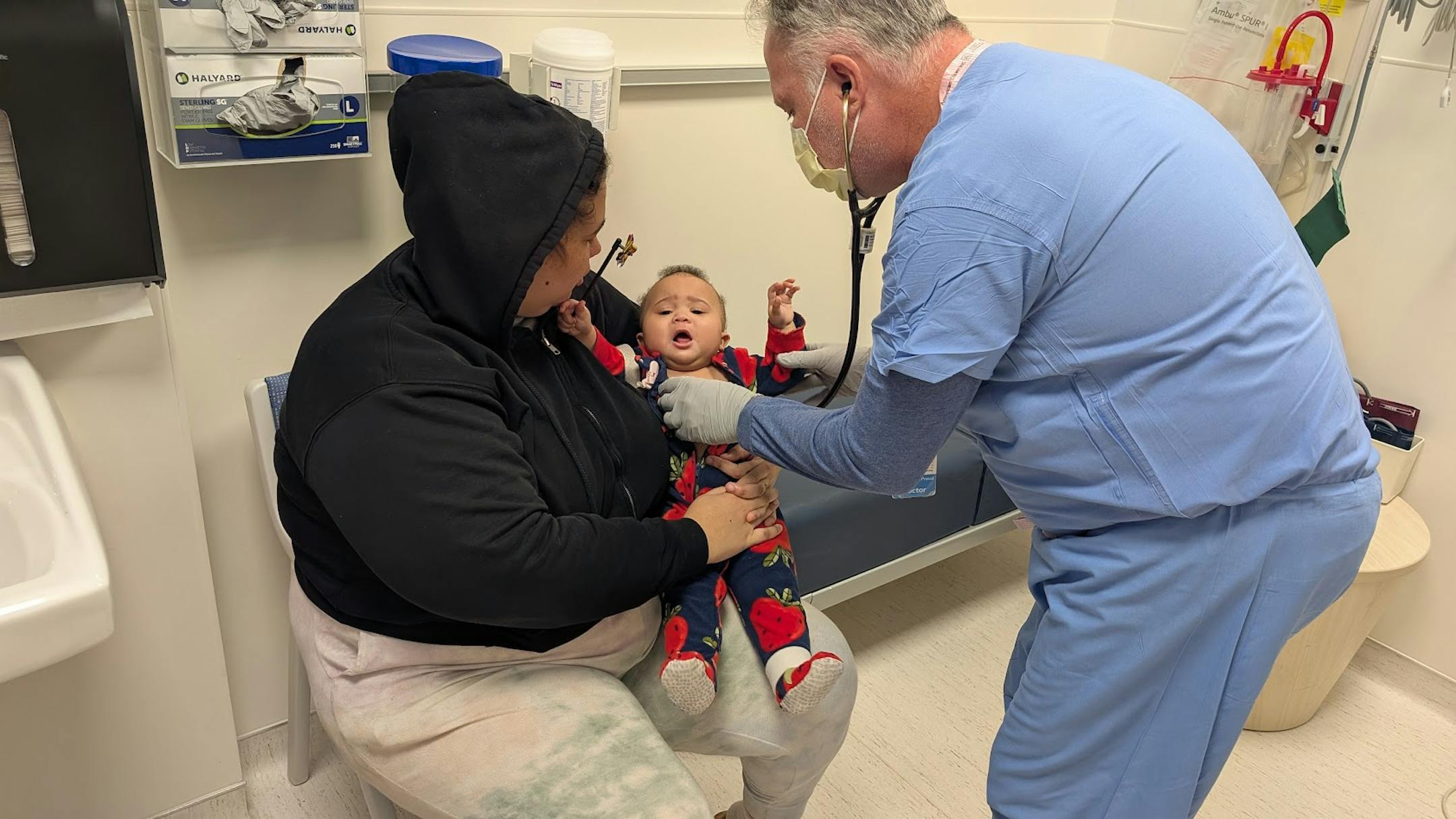
As Dr. Dave Blackwell places a stethoscope on infant Dream Jones' chest to diagnose her stomach problems, she cries despite her mother's attempts to comfort her. (Jeremy Olson/The Minnesota Star Tribune)

Hospital leaders in the Twin Cities have tried a variety of preventive strategies to ease pressure on their ERs by keeping patients healthier or directing those with minor ailments to clinics or urgent care centers.

But patients keep coming. Of the 60 patients diverted to the triage unit on Dec. 8, 22 were treated outside the main ER and sent home.

ERs remain unique under federal law and are required to at least screen and stabilize every patient who walks in. So they remain a last resort. Some patients end up in ERs because they didn’t want to pay the rising cost of doctor visits, so they ignored health problems until they worsened. Others, such as Jones, tried to get into clinics but couldn’t.

“Uh, they’re booked,” Jones said of her doctor’s office. She opted for the Children’s ER, just down the street from home.

Wyatt Fieke came into the triage unit with his mother after a classmate, who was whizzing by him on a scooter in a school gymnasium, tripped him. The 6-year-old hit his head and had the hallmarks of a concussion, which would be his second.

“We figured we would cut to the chase and come right here,” said his mother, recalling how a friend’s daughter ended up in the Children’s ER after a head injury in soccer.

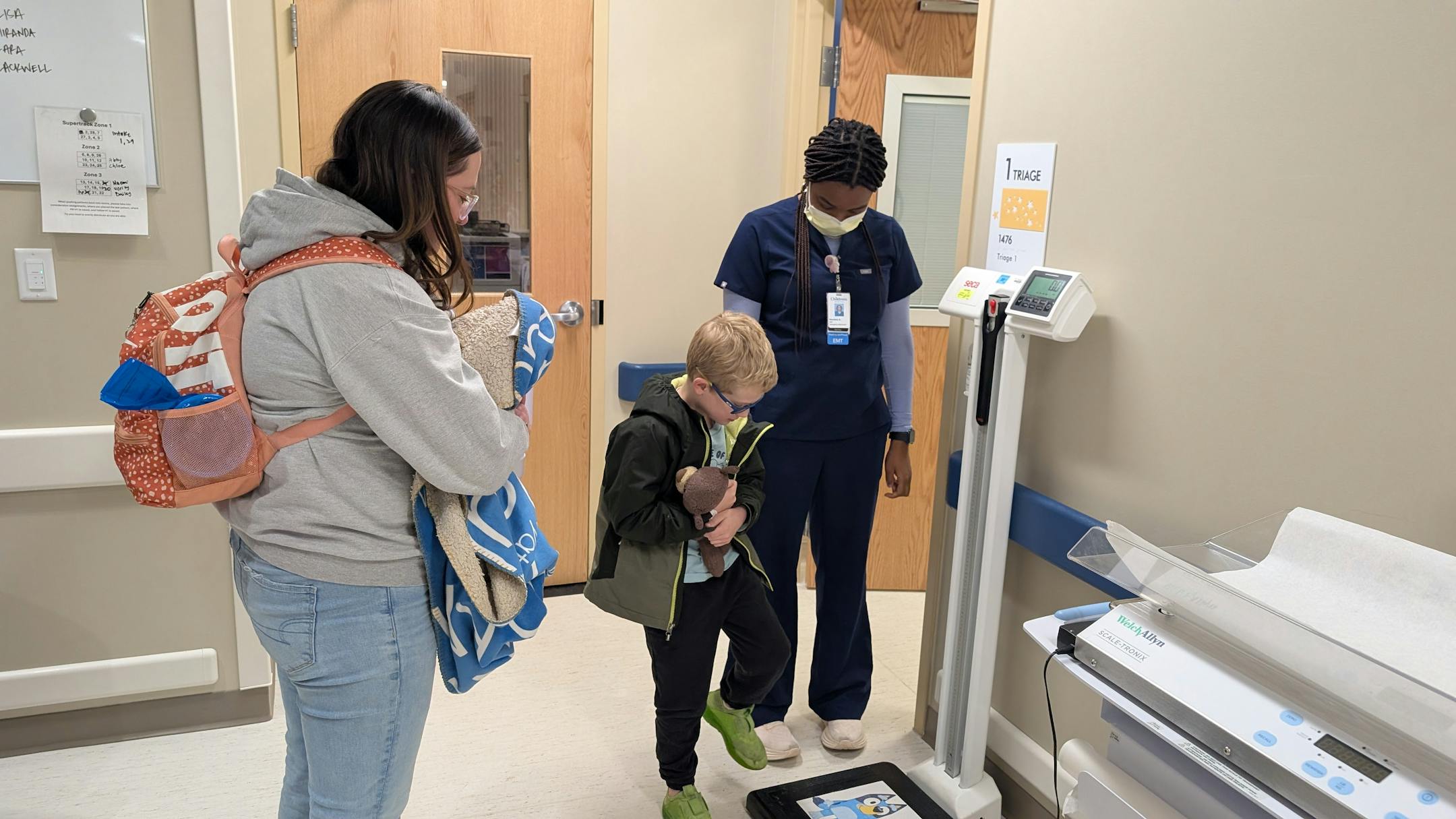
Six-year-old Wyatt Fieke steps on to a scale at the new triage unit in the Children's Minnesota emergency room before being evaluated for a concussion. (Jeremy Olson/The Minnesota Star Tribune)

Wyatt looked nervous. When a technician asked him to put a thermometer probe under his arm, he squeezed it tight and clenched his face. The boy was going to need a CT scan to check for a brain bleed, but Agrimson wanted to make sure he knew what he was getting into.

“It’s like a big donut,” she told him. “And you lay on the table and the table goes into the donut and out of the donut.”

Blackwell ordered the scan, and Agrimson took Wyatt and his mother into the main ER to wait for the test.

It was nearing noon and all three triage rooms were full.

A 7-year-old with a severe stomach illness was wheeled into triage because he was too weak to walk.

A teenager walked in still wearing a sling from a recent shoulder surgery, and went straight through to the ER. A fever and other symptoms suggested complications, and she was going to need imaging scans and IV fluids.

More patients filled the waiting room, but Agrimson said they wouldn’t be waiting for as long as they did in the past. Delays have declined on average in the month since the triage center opened and offered faster access to tests and treatments of simpler maladies.

Three patients left without treatment on Dec. 8, but that was only 2% of the total.

about the writer

about the writer

Jeremy Olson

Reporter

Jeremy Olson is a Pulitzer Prize-winning reporter covering health care for the Star Tribune. Trained in investigative and computer-assisted reporting, Olson has covered politics, social services, and family issues.

See Moreicon

More from Health Care

See More
card image
Jeremy Olson/The Minnesota Star Tribune

Triage unit treats many children without ever taking them into the actual ER, freeing up time for the rest of the emergency medical staff.

card image