

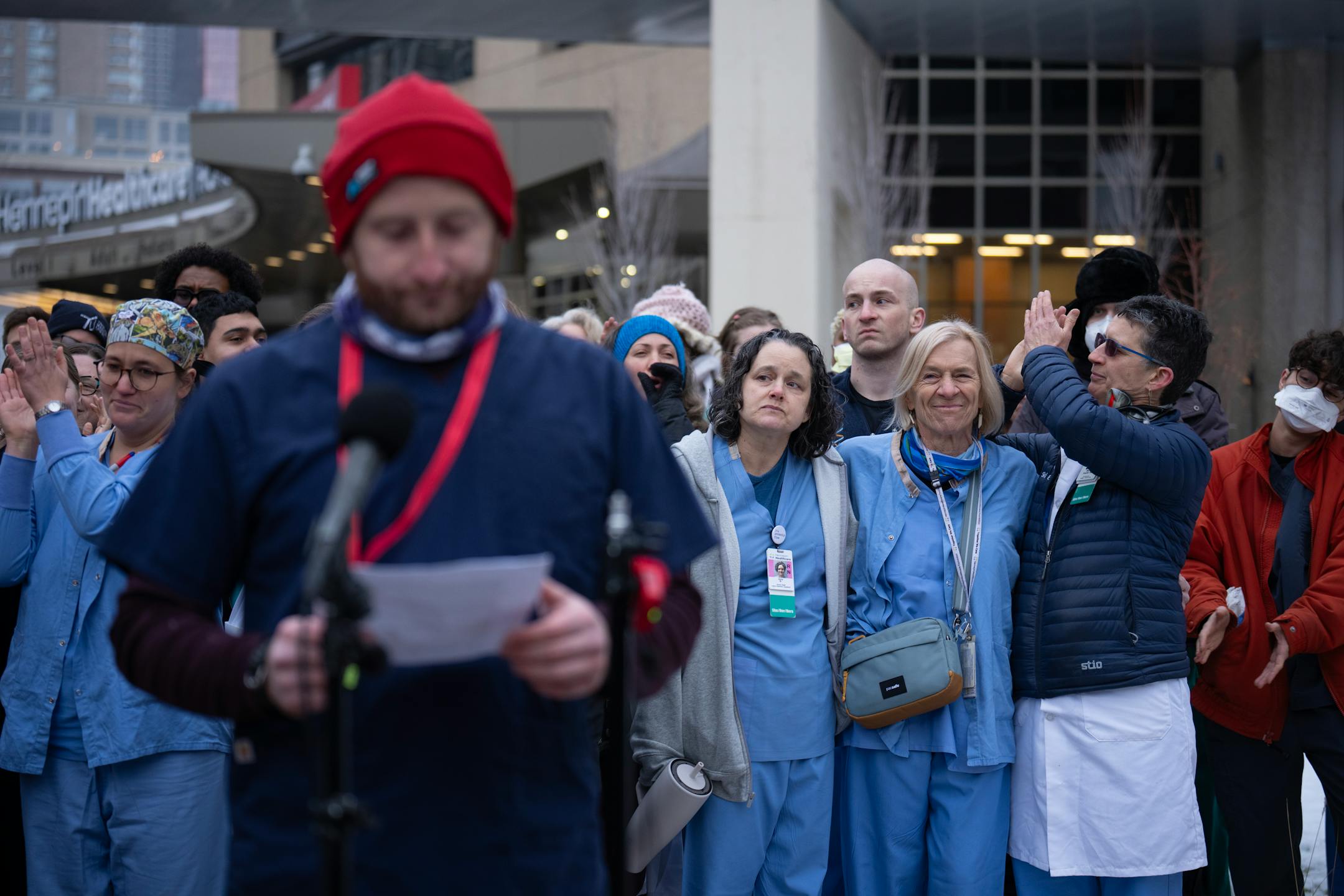
The Department of Homeland Security issued a subpoena on Jan. 8 to inspect employee records from Hennepin Healthcare, two days after a public protest over the presence of federal immigration agents in its downtown Minneapolis safety-net hospital.
Administrators notified employees on Wednesday, Jan. 14, of the records check, noting “we are complying with this legal requirement, as failure to do so could result in civil or criminal penalties.”
“Please note that this process is standard and does not indicate any wrongdoing by you or our organization,” said the memo to employees authored by Hennepin Healthcare’s co-interim administrators, Dr. Kevin Croston and David Hough.
The memo, which was provided to the Minnesota Star Tribune, did little to settle nerves among workers at HCMC, where federal agents with Immigrations and Customs Enforcement (ICE) have accompanied detainees who need medical attention. Workers and union officials also were upset by the one-week delay in notifying them of the federal subpoena.
The presence of ICE agents in the hospital over the holidays led to a standoff that ended after 28 hours when a Hennepin County commissioner and state lawmakers intervened, according to Unidos MN. The social justice advocacy group detailed the standoff during a demonstration outside HCMC on Jan. 6.
Hennepin County Commissioner Angela Conley called the subpoenaing of worker records a “retaliatory move” against the hospital provider for its resistance. She noted that Harvard University similarly had to produce its employee documents following its high-profile standoff with the Trump administration over its educational and diversity policies.
Conley at a news conference Wednesday said Hennepin Healthcare had received an extension to turn over the documents and had been weighing options since the subpoena was issued. However, a statement from the health system on Thursday said that it “has supplied the information.”
ICE has routinely carried out record checks of larger employers, cross-checking I-9 documents that reveal workers’ names, addresses, Social Security numbers and the identity documents they presented as proof that they were eligible to work. But the federal agency has used that tactic more broadly on smaller businesses in Minnesota during its aggressive enforcement campaign in the state.



