
Minnesota doctors say ICE deters patients from seeking health care

Clinics are offering telemedicine and house calls to patients who won’t leave home during the federal immigration crackdown and are running out of medicine and food.

The Minnesota Star Tribune
January 20, 2026 at 10:52PM
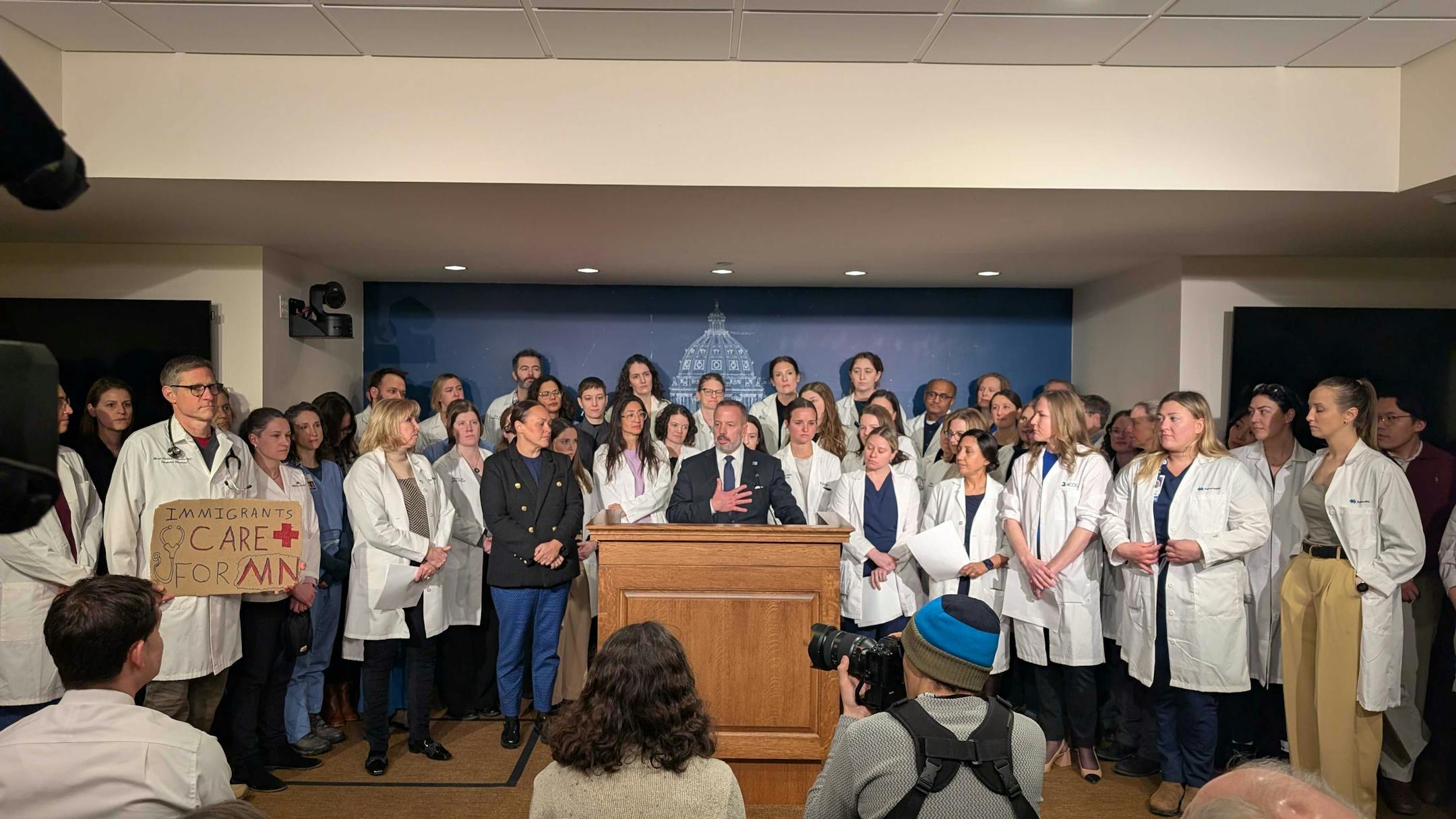
State Sen. Matt Klein, DFL-Rochester, is a physician who joined with 50 medical colleagues at the State Capitol on Jan. 20 to protest the federal immigration enforcement sweep in Minnesota and highlight how it is hurting patient care.

The ongoing federal immigration campaign is hurting patients too scared to attend checkup appointments, pick up prescriptions or even give birth in hospitals, doctors said at a State Capitol news conference Jan. 20.

One diabetic patient rationed insulin and ran low on food to avoid leaving home, the doctors said. A pregnant woman in her third trimester stopped attending prenatal visits or answering her phone.

“A nurse went to her home and found her eight centimeters dilated, laboring alone and too terrified to seek help,” said Dr. Roli Dwivedi, representing the Minnesota Academy of Family Physicians. “She delivered just two hours later.”

Doctors representing Minnesota’s general physicians, obstetricians, pediatricians, emergency room specialists and family practitioners all shared examples of how Immigration and Customs Enforcement (ICE) has disrupted care for patients who are both undocumented immigrants and U.S. citizens.

Tricia McLaughlin, assistant secretary for the Department of Homeland Security, disagreed with that assessment and blamed protesters for roadway obstructions that impede travel to clinics and pharmacies. ICE agents only accompany detainees in need of medical care into hospitals as a measure of public safety, she said in a written statement.

“ICE does not conduct enforcement at hospitals — period,” she said.

The doctors — concerned by the daily harms happening as immigrants and people of color refuse health care in order to avoid the risk of detainment — said they hoped their stories would reach ICE officials.

One patient suffered complications from a burst appendix, said Dr. Janna Gewirtz O’Brien, representing the Minnesota Chapter of the American Academy of Pediatrics. Another patient was struggling to breathe, but her mother hesitated to bring the young child in for care.

“They’re weighing this fear of putting their family at risk against the health of their child,” she said. “This is an impossible decision.”

Requests for home births are up, even among women with higher-risk pregnancies, and attendance at prenatal care checkups is down, said Dr. Erin Stevens, representing the Minnesota Chapter of the American College of Obstetricians and Gynecologists.

More than 50 doctors in white coats stood in solidarity at the event arranged by DFL Sens. Alice Mann and Matt Klein, who are physicians. Doctors have been afraid to speak up on their own, fearful their criticism will draw ICE activity to their clinics and harm their patients, they noted.

A Hennepin County commissioner accused ICE of retaliation because the agency subpoenaed employment records from Hennepin Healthcare two days after a protest against the presence of federal agents in HCMC, the county’s safety-net hospital.

Mann said DFL lawmakers have discussed state legislation, but ICE agents are currently behaving “illegally and unconstitutionally” in ways that are disrupting care and patient privacy. When escorting detainees into hospitals, agents have insisted on staying in rooms while patients are changing or being examined, she said.

“We can pass 100 laws,” the senator said. “But ICE is already acting above the law.”

McLaughlin last week reported that the immigration surge in Minnesota had resulted in more than 2,500 detainments, including people with violent criminal histories.

Klein said agents’ intrusive posture in hospitals is avoidable. Police officers and sheriff’s deputies for years have brought prisoners or detainees with medical needs to hospitals and been able to keep them secure without being in their rooms constantly, he said, adding that “this is intolerable.”

ICE’s operation in the Twin Cities has thrust hospitals into uncomfortable roles when agents bring detainees to them.

M Health Fairview Southdale Hospital had no medical reason to admit an ICE detainee with a rare genetic skin disorder, so instead, he returned to detention and suffered wounds from his shackles and contact with rough surfaces.

Allina Health’s Mercy Hospital campus in Fridley barred relatives from visiting a patient who was en route to the hospital for treatment of back pain when ICE detained her and her husband, according to a family attorney. Federal agents brought her to Mercy but didn’t list her on the hospital’s registry, so hospital staff didn’t even acknowledge she was in the building.

Detainment fears are driving away immigrant patients and patients of color after years of efforts to invite them in and address the disparities in their health care, doctors said.

Even when they have private health insurance, only 35% of Somali-born adults in Minnesota receive colon cancer screenings when recommended compared to 75% of U.S.-born adults, according to MN Community Measurement. Only 38% of Somali-born adults with asthma have the disease adequately managed, compared to 51% of U.S.-born adults.

“Acute and chronic illnesses are not being managed properly, and it increases the likelihood that these individuals will end up seeking emergency care,” said Dr. Lisa Mattson, representing the Minnesota Medical Association.

Doctors have offered telemedicine and virtual visits as alternatives to patients who won’t leave home. But Mattson said patients fearful of immigration raids aren’t even picking up their phones.

Gewirtz O’Brien said a group of doctors in the Twin Cities has arranged to drive to patient’s homes to provide health care and deliver medications. She urged people to call their clinics and providers to see if the option exists.

“I’m not going to share more details about that,” she said, “because, believe it or not, there has been retaliation, and we’re worried about naming specific systems.”

about the writer

about the writer

Jeremy Olson

Reporter

Jeremy Olson is a Pulitzer Prize-winning reporter covering health care for the Star Tribune. Trained in investigative and computer-assisted reporting, Olson has covered politics, social services, and family issues.

See Moreicon

More from Health Care

See More
card image

Clinics are offering telemedicine and house calls to patients who won’t leave home during the federal immigration crackdown and are running out of medicine and food.

card image