
Met Council members oversee Twin Cities transit, but rarely ride it

December 9, 2025
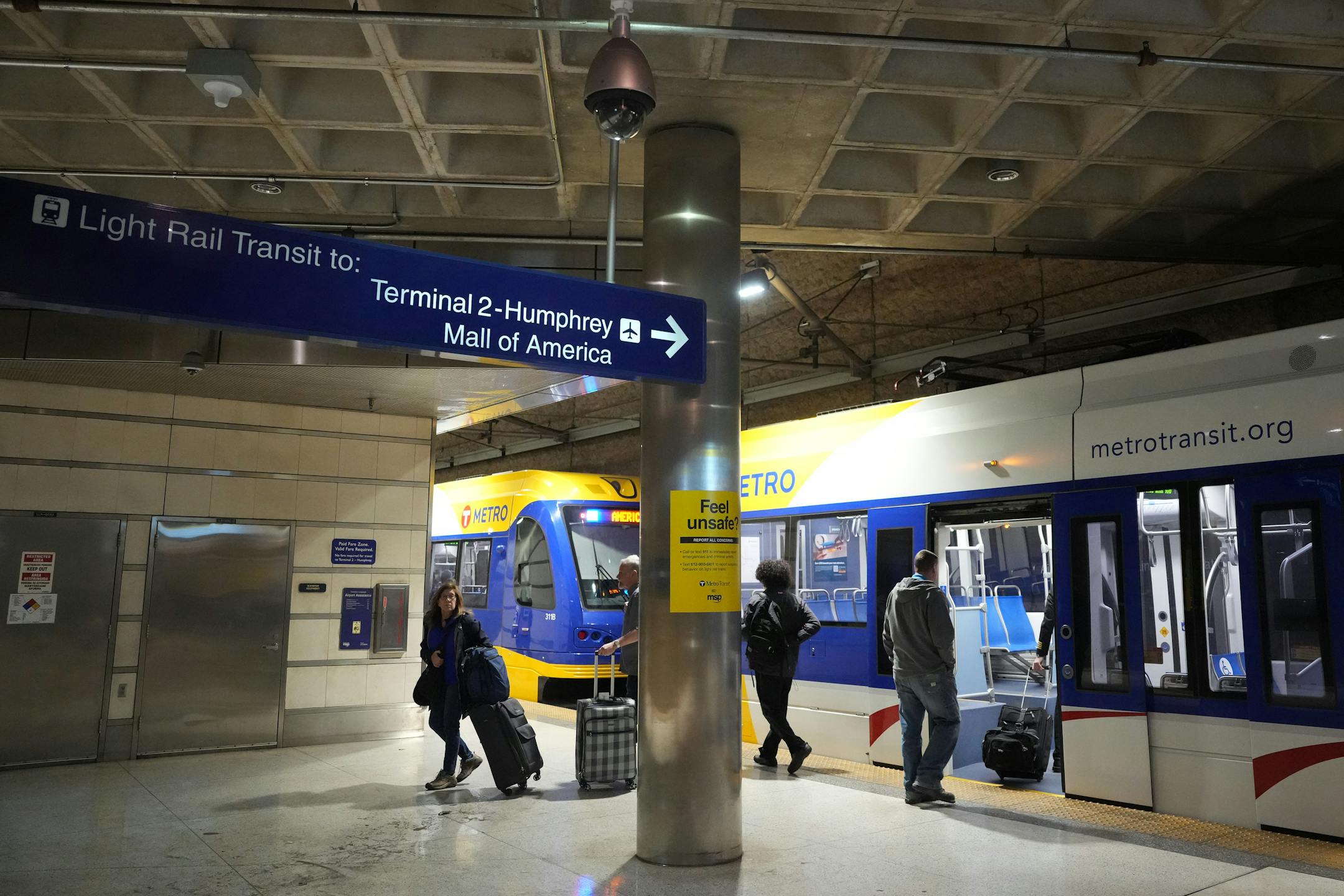
Riders arrive by train at the Metro Transit Terminal 1 Lindbergh station in 2024. (Anthony Soufflé/The Minnesota Star Tribune)

In the last year, just half of those appointed to the Metropolitan Council have taken advantage of the free Metro Transit rides that come with their job.

The Minnesota Star Tribune

Metro Transit is desperate for more riders. But it’s not finding many on its own governing board.

Just nine members of the 17-person Metropolitan Council tapped their government-issued transit passes between September 2024 and September 2025, according to data collected by Metro Transit.

The anonymized ridership data, obtained by the Minnesota Star Tribune via public records request, show that few council members fold transit into their daily routine, even as they oversee the system. Concerns about safety on buses and trains have hampered efforts to attract riders and fueled Republican pushes to quash transit expansion in the Twin Cities.

But as council members try to reverse a post-pandemic ridership slump, their own habits demonstrate a gap in experience between transit leaders and the riders they’re courting.

“It’s part of your duty, your due diligence, to get out there and experience what daily riders are,” said Annette Meeks, a former Met Council member who once chaired the body’s Transportation Committee.

Even council members who ride Metro Transit aren’t using the service very often. Of the nine members who tapped the free transit passes they receive as a perk of their role, two took just a single trip in the entire year.

Meeks, who said she tried to ride transit at least once per month when she served, would have placed fifth if ranked among members of the current council.

Combined, council members took 259 trips during the 12 months covered by the requested data, far below the roughly 500 annual rides a daily transit user would register for their commute. And one council member was responsible for almost half of those rides — 117 of them.

The numbers come from council members’ government-issued cards and don’t reflect any trips taken on personal transit passes. Some council members said they just flash their passes when boarding instead of tapping them, causing some rides to not show up in their ridership logs.

Though council members broadly agreed they should ride transit in principle, some said too few buses and trains come to their suburban districts to make that feasible.

Robert Lilligren, who represents south Minneapolis, claimed the fare card with those 117 rides. He said his colleagues are often shocked by things that seem ordinary to him when they do jump on transit, such as erratic passengers or unkempt stations.

However, Lilligren said he understands if members who represent suburban areas don’t make transit a part of their lives, and feels that his colleagues pay attention when he shares his personal experience.

“I think people should use transit, both Met Council members and employees,” Lilligren said. “And, it’s hard to mandate that.”

‘Not apologizing’

Taking transit colors one’s leadership of it, said Rep. Katie Jones, a DFL state representative from Minneapolis, who estimates she makes 400 trips across multiple Metro Transit lines every year.

Statistically, serious crimes on Metro Transit, like robbery and assault, have stayed low and stable for years. But Jones said her regular rides let her tap into the “emotional sense” of Metro Transit passengers, especially after she chastised a fellow passenger for smoking on the train two years ago.

Just as lawmakers might take a tour of a water treatment facility or fire station, Jones said, other officials would benefit from riding aboard transit.

“All of those things — we can’t be effective legislators, unless we’re actually experiencing them,” Jones said. “It’s the same with transit.”

But Met Council members from the suburbs contend that they’re ensnared by the same lack of service that leads almost 92% of Twin Cities workers to choose a car for their daily commutes, per federal data from the American Community Survey.

Members of the Met Council are appointed by the governor, and represent an area that stretches as far north as St. Francis and almost as far south as Northfield. Some of their districts lie far beyond where Metro Transit operates.

Council Member Judy Johnson, who serves on the Transportation Committee, said she was a transit rider when she was younger and had less money. And she imagines that, one day, she’ll become dependent on transit when she’s older and unable to drive.

But, for now, transit doesn’t come close enough to her Plymouth home to make a trip on it make sense.

“I’m [riding] maybe once a year or less, and I own that. That’s my availability. I’m not apologizing for it,” Johnson said. “I’m out here working in communities that have no service at all.”

It’s common to see low ridership amongst decision-makers in cities with similar governance structures, said Yonah Freemark, who writes about public transit for think-tank Urban Institute.

Leaders in Philadelphia and Atlanta have faced criticism over their lack of ridership, too.

“It is, frankly, demonstrative of the way that too many local and state governments treat their transit systems, which is a mechanism to move poor people around,” Freemark said. “Board members don’t see themselves as users of the system.”

Meeks, the former Transportation Committee chair, called members attributing their lack of ridership to their suburban homes a “cop-out.” She said the current council, which recently approved a $57 million security package, was sluggish in responding to riders’ safety concerns.

Metro Transit has made it a point to get more of its leadership staff aboard buses and trains in the Twin Cities. In 2024, general manager Lesley Kandaras began to factor ridership into year-end performance evaluations for senior transit staff, requiring four rides per month — including transfers — to pass.

“Riding is a way of staying aware of what our customers are experiencing, what our own employees are experiencing,” Kandaras said. “For me, I find it essential.”

Just two of the Met Council members were on track to reach the staff threshold in 2025 during the nine months of data reflected in the Star Tribune’s request. Kandaras declined to comment on the ridership habits of the Met Council.

A similar requirement would be unreasonable for the part-time council members, said Mark Jenkins, who represents southern and eastern suburbs.

“We sort of have a weird performance appraisal,” Jenkins said. “The governor likes us or he doesn’t.”

Still, Jenkins said he goes out of his way to take trips on public transit, even though it doesn’t come within a half-mile of his house in south Maplewood. Those trips wins the council credibility, he said.

‘One little swipe’

Met Council members, both those who used transit and did not, largely denied that personal experience was necessary to make good decisions.

It’s unreasonable to expect all transit leaders to be transit dependent, said Adie Tomer who writes about local transit for the Brookings Institution. Still, they should attempt to find ways to get on board, he said. And if not, find some other way to hear and gauge the sentiments of riders.

Reva Chamblis, the vice chair of the Transportation Committee, said she isn’t much of a transit rider anymore. However, she suggested that the fare systems aboard Metro Transit aren’t registering council members’ taps, shortchanging them rides.

But, either way, Chamblis said her own usage should matter less than her oversight of Metro Transit, which, despite a slow growth of ridership, still lags behind peers in its post-pandemic recovery.

“I have more of an impact by getting hundreds of thousands of riders than one little swipe,” Chamblis said, holding up her badge, which doubles as a transit pass.

about the writer

about the writer

Cole Reynolds

intern

Cole Reynolds is an intern for the Minnesota Star Tribune.

See Moreicon

More from News & Politics

See More
As common as the sight of a snowplow is in Minnesota, the sight of a gang of plows still can be imposing to drivers. The technique, in which the plows work in tight formation, is used when a storm drops more than 4 inches of snow, said Norm Ashfeld, metro-division maintenance engineer for the Minnesota Department of Transportation (MnDOT). But because it clogs traffic, it's done mostly at night. "We get calls constantly, and people say, 'Your trucks are holding me up,' " Ashfeld said. "I don't k
Provided by Minnesota Department of Transportation

Past winning names have included Plowy McPlowFace, We’re Off To See The Blizzard and Don’tcha Snow. Submissions will be accepted through Dec. 19.

card image
card image