

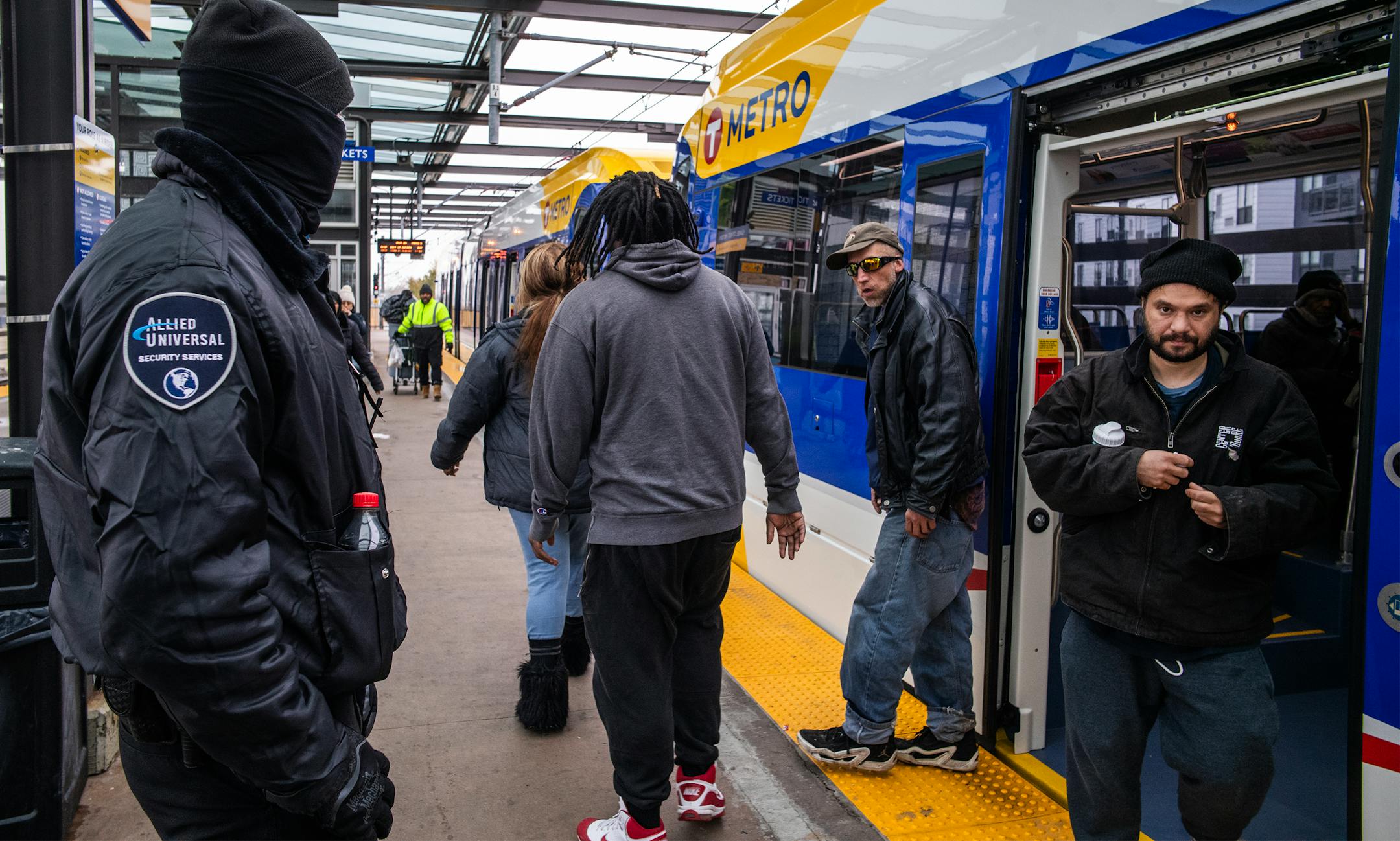
A light-rail passenger boarded a Blue Line train full of fans leaving the Minnesota Twins’ Pride Day game one Saturday afternoon in June.
Within a few stops of Target Field, the passenger messaged Metro Transit’s Text for Safety program to report another rider spouting homophobic slurs.
“I love Metro Transit but I’m so tired of the amount of harassment riders have to put up with,” the passenger said.
The exchange, one of dozens from June reviewed by the Minnesota Star Tribune under the Data Practices Act, reveals what Metro Transit is up against as it tries to bring people back to a transit system that has suffered low ridership since the pandemic. As Metro Transit and partners pour resources into checking fares, connecting people to social services and policing more proactively, safety remains a concern for riders, especially on light rail.
Addressing those issues matters for the future of transit in the Twin Cities, where Republicans have tried to quash its expansion, citing crime, low ridership and billions of dollars in costs. The number of people taking Metro Transit trains and buses plummeted during the pandemic, and while ridership has recovered somewhat, it’s still just over half what it was a few years ago.
Reporting via the Text for Safety program gives riders a discreet way to alert Metro Transit when they see a problem on buses, light rail or at stations. The issues they raise range widely, from concerns about drug use and harassment to fights and calls for medical assistance for unconscious passengers. The agency’s employees respond in real time, sometimes dispatching transit police, to address the problem.
Reported crime on transit is down from its high in 2023, but Metro Transit’s most recent survey found that despite improvements less than half of riders reported feeling safe on trains and just over a third felt safe waiting at platforms.
“It would be impossible to overstate the importance of how people feel on our system, and as long as people are telling us they don’t feel safe, we have more work to do,” said Lesley Kandaras, Metro Transit’s general manager.


