

St. Paul’s largest encampment has grown, but problems have been relatively few

Unlike Minneapolis, St. Paul provides dumpsters and toilets, and city officials say that helps.

The Minnesota Star Tribune
December 30, 2025 at 12:00PM
Vang gathered his belongings as he prepared to leave a homeless encampment near the Bruce Vento Nature Sanctuary in St. Paul in January. While that camp was cleared, another in St. Paul has been relatively clean and calm. (Jerry Holt/The Minnesota Star Tribune)

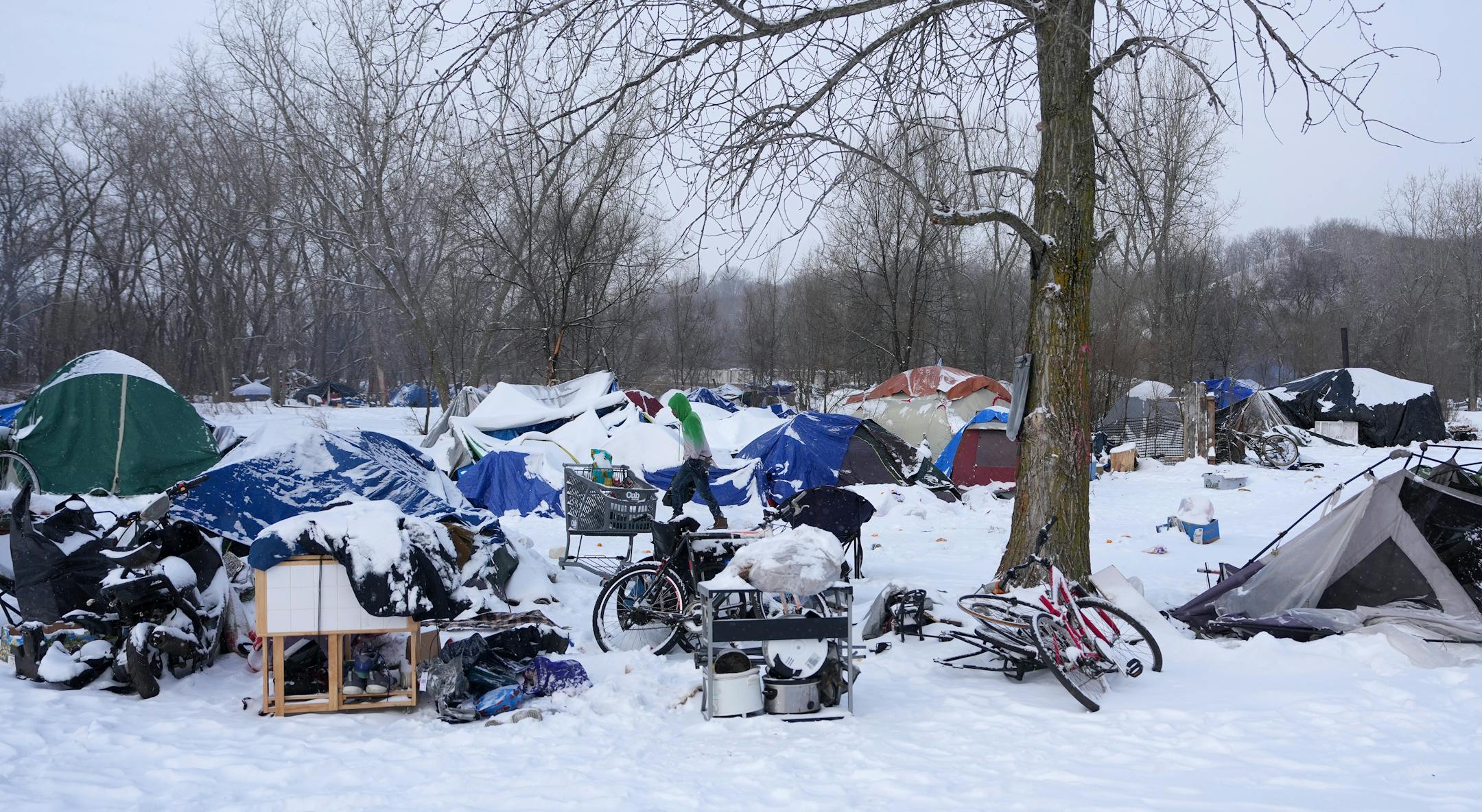
Almost a year after it formed, a major homeless encampment in St. Paul has remained relatively clean and calm, with dumpsters to keep trash in check, portable toilets for residents and frequent visits from outreach workers who try to connect camp residents to services.

Just below Fish Hatchery Road, set in the woods not far from the Mississippi River, more than 80 people have been living in the encampment for nearly a year.

The camp is isolated, separated by a highway from the nearest homes. Wide lanes between tents are largely clear of debris. During recent visits, few residents were outside of their tents. The area smells of wood smoke, not the chemical smell of burning plastic. The camp is typically quiet, though a nearby office of the state Department of Natural Resources saw a spate of thefts earlier this year.

Though the encampment has been growing over the last year, St. Paul’s focus has not been on clearing it.

“We’re able to do encampment management without conflict,” said David Hoban, deputy director of the St. Paul’s Department of Safety and Inspections.
Minneapolis had considered taking a page from St. Paul‘s approach to managing encampments, with the City Council voting this month to provide toilets and dumpsters, but Mayor Jacob Frey vetoed the measure on the grounds that some provisions encouraged encampments to form.

Like Minneapolis, St. Paul still does not officially condone people living outside. But the capital city does not see providing sanitation as being at odds with the goal of getting people into shelter. St. Paul workers connect regularly with unsheltered people with an eye to providing a level of sanitation and dignity — without drama.

The Twin Cities have for years differed in their approach to encampments, especially how and when camps are cleared.
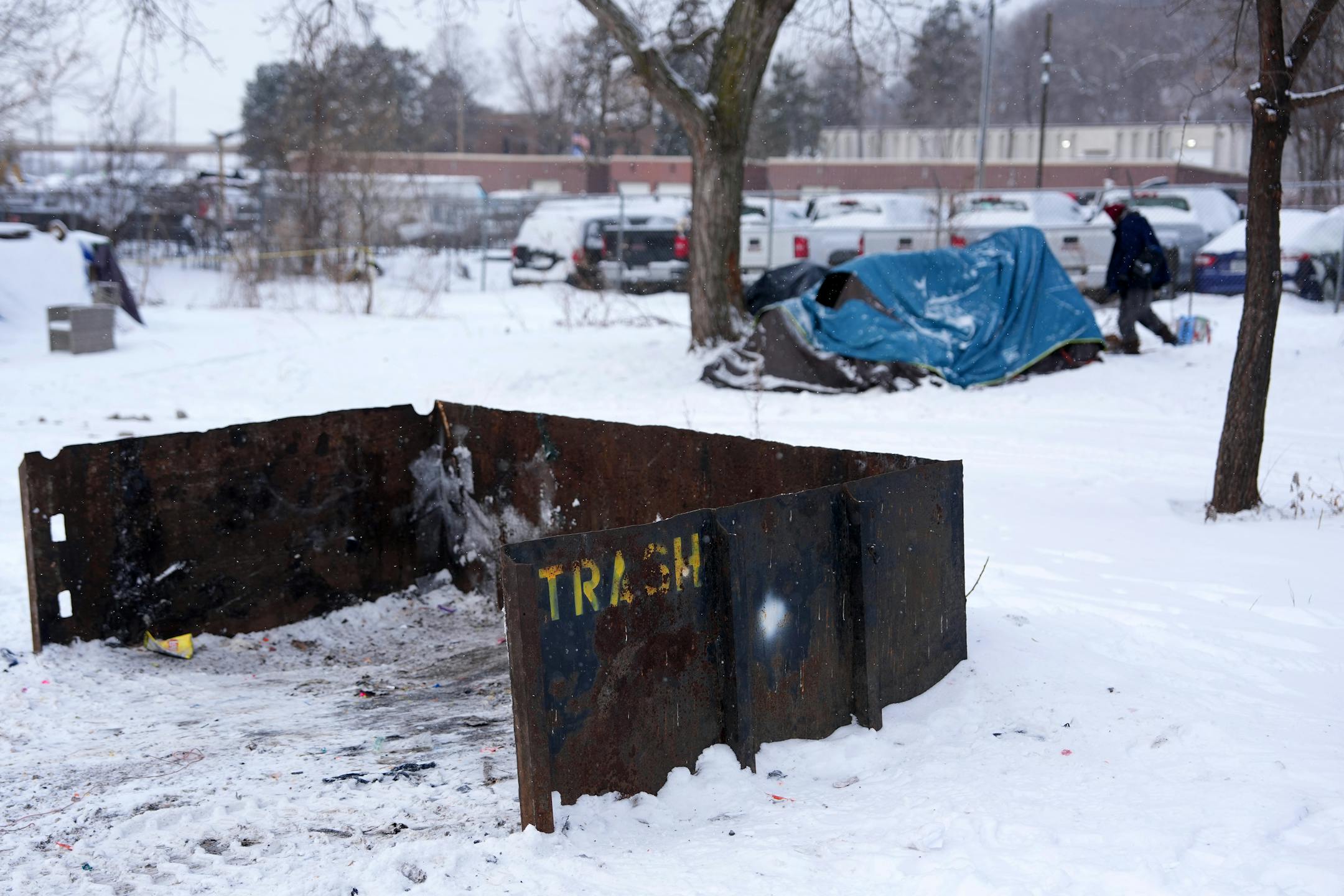
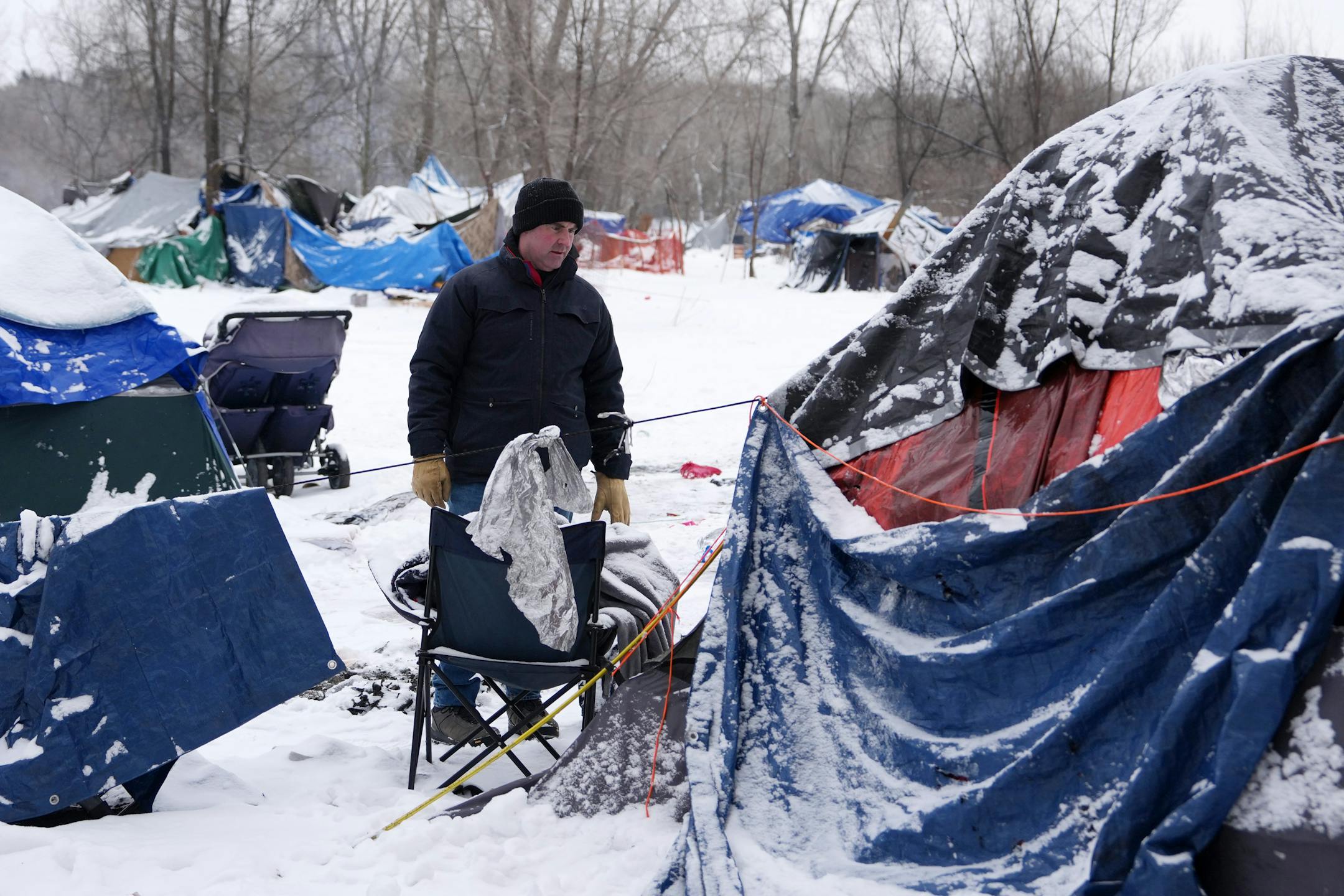
Unless there is a serious safety concern — such as the uncontrolled fires and assaults that led St. Paul to clear a major encampment in January 2025 in the Bruce Vento Nature Sanctuary — St. Paul’s focus is on sending people into the camps to work with those staying there, rather than clearing small camps as they crop up.

After the Fish Hatchery Road encampment formed, the nearby DNR office saw some theft and vandalism, said Erik Evans, a department spokesperson. The agency has hired security guards and installed more cameras. Evans said trouble has waned.

The camps see visits from city outreach workers who try to connect residents with shelter and other services, police trained to work with unhoused people, and medics who either treat people in the camps or help them get to the hospital.

Other city workers empty dumpsters and pick up trash in the camps. Sydney Kamps, a member of St. Paul’s Homeless Action Response Team, said outreach workers help occupants sort through their belongings when they notice someone has started hoarding items.

Cooperation across city government has helped St. Paul assist unsheltered residents, Hoban said, led by outreach workers who know the names and stories of camp occupants.

“It’s relationship-building that starts this whole thing,” Hoban said. “We get to know them, they tell us what would be helpful.”

But the focus, Kamps said, is to maintain connections with unsheltered homeless people during what can be a long wait for the right kind of help.

Like the rest of Minnesota, St. Paul and Ramsey County have a dire shortage of supportive housing and longer-term shelter, especially places that let couples live together and let people stay with their pets.

“Working for St. Paul and seeing how they do things is really wonderful,” Kamps said of the city’s approach to unsheltered homelessness. “They look at them as individuals and the humans they are.”

about the writer

about the writer

Josie Albertson-Grove

Reporter

Josie Albertson-Grove covers politics and government for the Star Tribune.

See Moreicon

More from St. Paul

See More
card image
Jerry Holt/The Minnesota Star Tribune

Unlike Minneapolis, St. Paul provides dumpsters and toilets, and city officials say that helps.

card image
card image