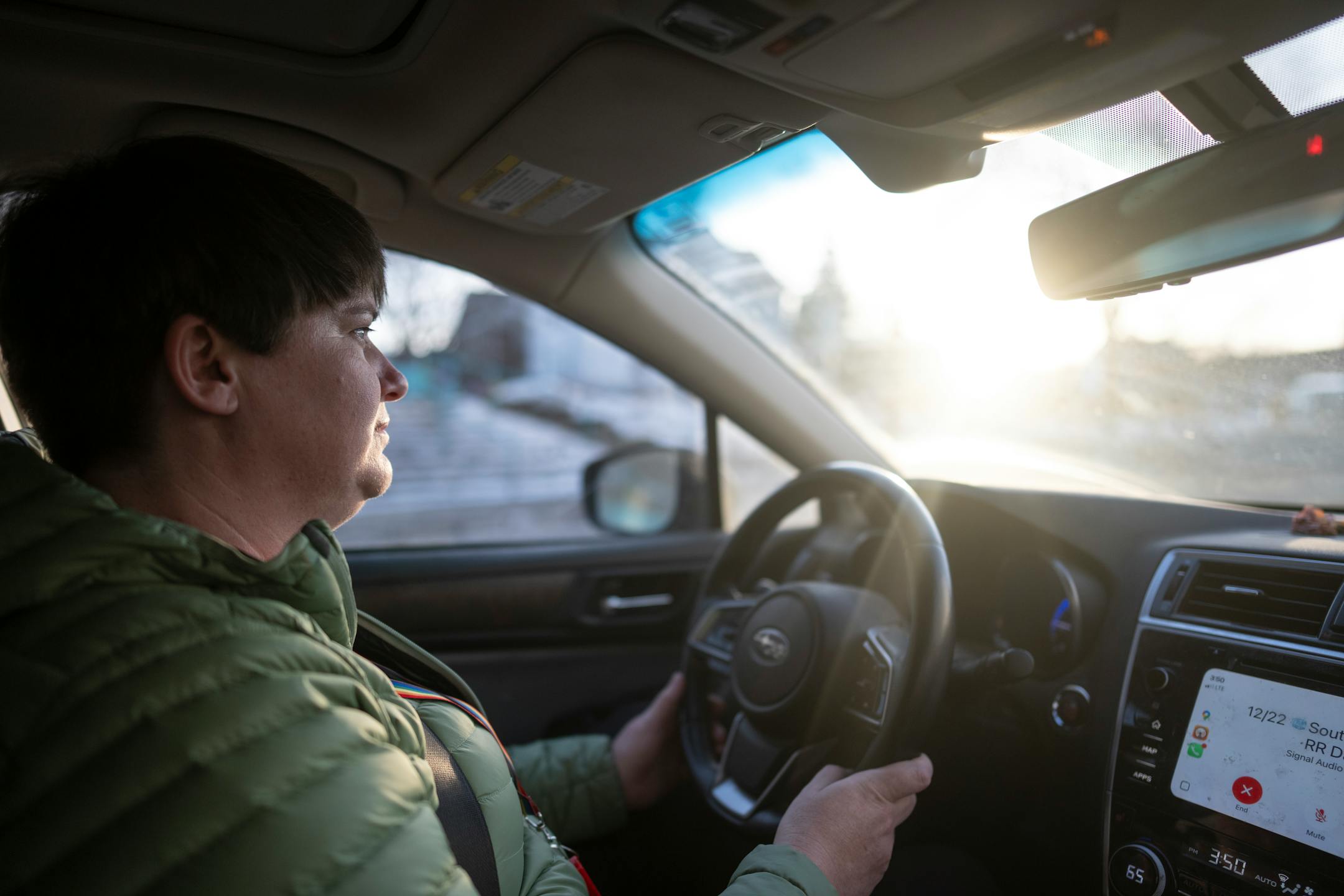
Just before Friday prayer in south Minneapolis, Flannery Clark steered her family’s station wagon down congested E. Lake Street, seeking signs of federal agents.
Suddenly a full-size SUV with heavily tinted windows barreled alongside. She started tailing it, trying to decipher the license plate or determine whether the driver was wearing a face covering or tactical gear.
But when the SUV ran a red light, she had to stomp on the brakes.
ICE agents have been seen driving aggressively, going the wrong way down one-way streets and sharing a single set of license plates between two different cars, Clark said, to prevent people like her from tracking their movements.
“We’ve started to see some very tricked-out ICE vehicles,” she said. “They’re just driving in circles in neighborhoods, not interacting.”
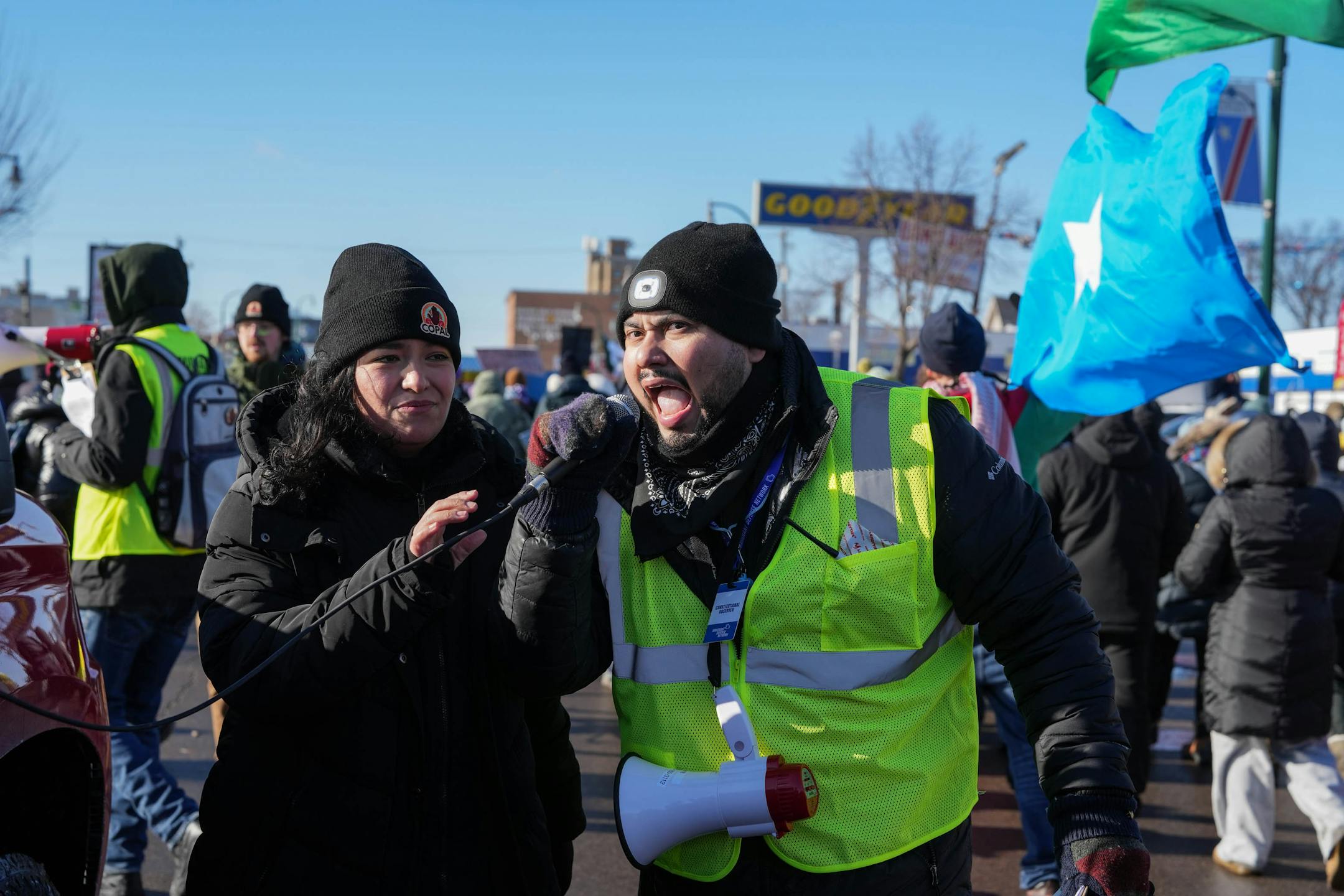
When Clark patrols Lake Street, she does it for hours at once, linked to a Signal call with other activists roving the city. Their goal is to find arrests in progress and blast the information out to protesters who can amass at a moment’s notice.
In past raids, dozens of protesters linking arms and blasting whistles with their phones aimed at agents have succeeded in blocking arrests. Some of these confrontations have escalated, with protesters lobbing snowballs and agents dousing crowds with pepper spray that dyes the snow orange.
But most of the time, they arrive too late.