
Minnesota’s immigration cases are increasingly held in secret

Judges are limiting access to court proceedings, citing safety concerns. Observers say it’s an overreaction that hurts transparency.

The Minnesota Star Tribune
December 17, 2025 at 12:00PM
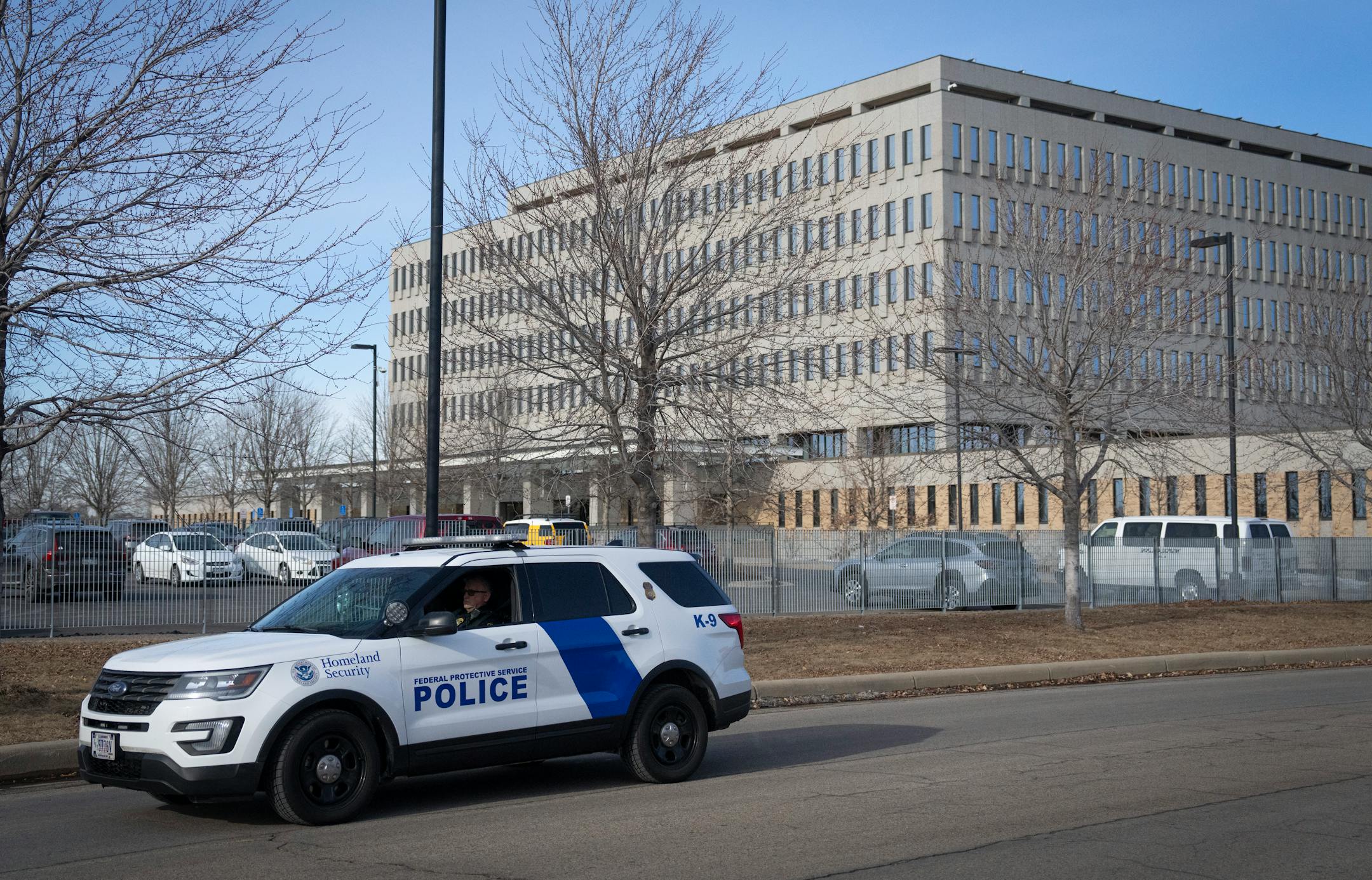
A homeland security officer drives past the Bishop Henry Whipple Federal Building at Fort Snelling in January. (Renée Jones Schneider/The Minnesota Star Tribune)

Federal immigration officials claim to have detained more than 400 undocumented immigrants this month.

But the legal fate of those men and women is increasingly being decided in secret.

Staff at immigration court inside the federal Whipple Building at Fort Snelling are increasingly barring government watchdogs, reporters and the public from witnessing judges’ decisions about who can stay in the U.S. and who will be deported.

The small windowless courtrooms on the first floor of the building are often locked, preventing the public from witnessing hearings. Court staff also routinely redact the names from a calendar listing the dozens of immigrants scheduled to appear in court each day.

As President Donald Trump’s administration works to deport as many undocumented immigrants as fast as possible, a growing number of those cases are being decided without public scrutiny.

Many of the new restrictions appear to violate long-standing court rules that stipulate most immigration hearings are “generally open to the public.” The loss of transparency comes as the Trump administration continues to reinterpret immigration laws in ways that are often challenged in court.

“What concerns us the most is we don’t know what is going on in these closed hearings,” said Madeline Lohman, advocacy and outreach director for the Advocates for Human Rights. “You are supposed to be able to know what kind of decisions are being made in immigration cases.”

But observers are frequently barred from proceedings, because the courtroom is full or at the request of government attorneys. Detention hearings for immigrants who typically appear remotely are also closed to the public.
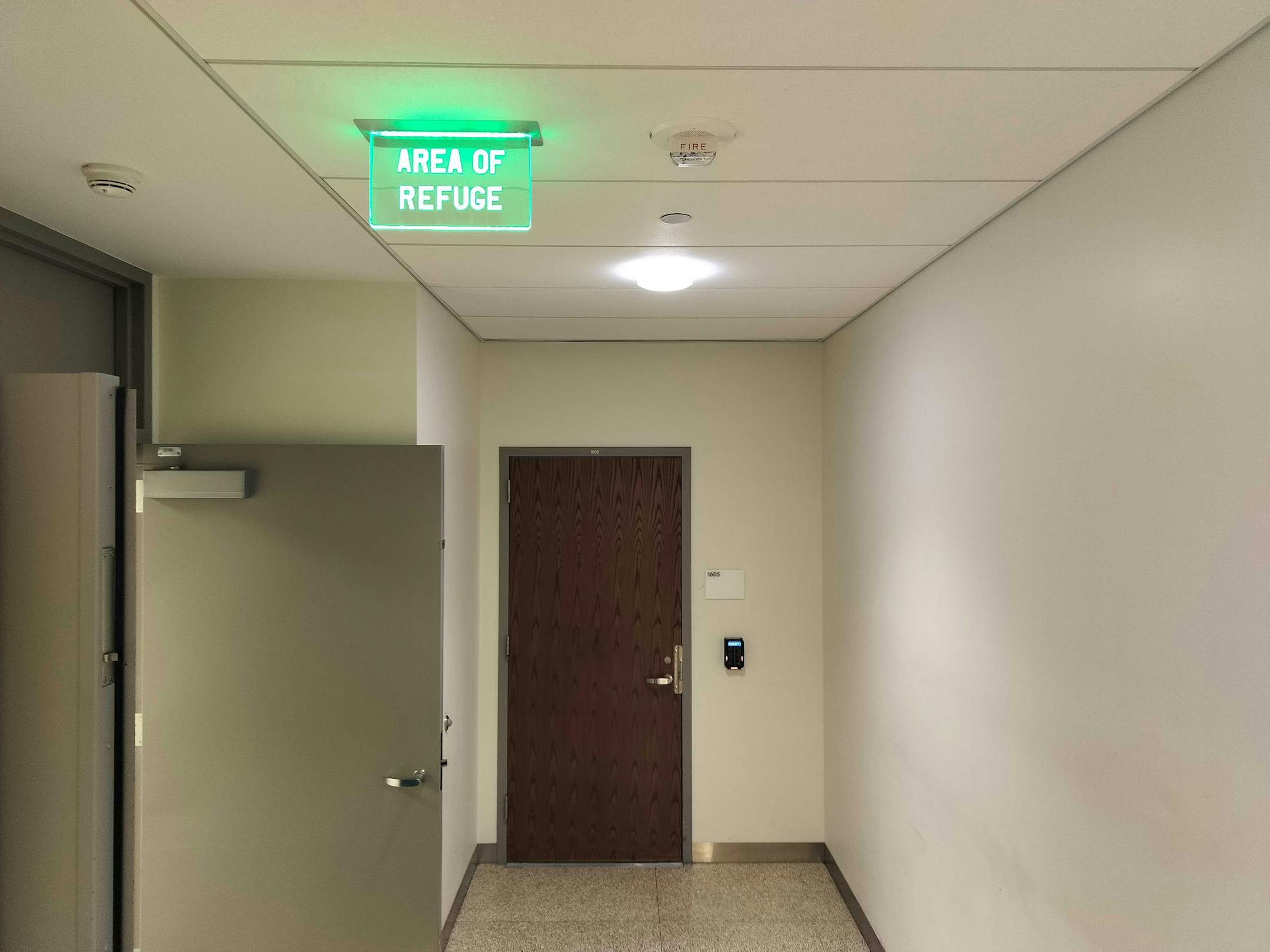
Even the public lobby has updated rules. A Minnesota Star Tribune journalist was told he couldn’t linger longer than 10 minutes, another had his phone searched for photographs of the daily court docket.

One court employee told a journalist that staff couldn’t answer any questions. “Especially from reporters.”

The Executive Office for Immigration Review (EOIR), which handles most deportation cases and is a part of the U.S. Department of Justice, did not respond to questions about changes to courtroom access. Still, most court staffers cite safety as the reason to lock out the public.

For instance, security guards earlier this month limited who could enter and observe immigration court proceedings, which some court observers described as an extraordinary action that further erodes transparency.

Ira Mehlman of the Federation for American Immigration Reform, which supports lowering immigration levels and generally backs Trump’s actions, said that given the current tenor of immigration protests it is no surprise judges and court security officials are taking precautions.

“Some of the protests have turned violent. Judges have the latitude to make those decisions if they fear there is going to be a safety issue for folks,” Mehlman said.

Longtime immigration court observers dispute that the changes are needed to improve safety. They say court staff has overreacted to a few recent disruptions.

“It’s collective punishment. Now everyone who comes is suspect, even though they have years of experience of people coming and not disrupting anything,” said Amy Lange, director of the Immigration Court Observation Project for the Advocates for Human Rights. “The whole premise of having open courtrooms is that the public is a safeguard against tyranny.”

Changing court practices

Fort Snelling is one of 70 immigration courts across the U.S. and has a backlog of roughly 60,000 cases.

Immigration courts operate differently than state and federal courts. While entering the country without permission is illegal, most immigration cases are handled as civil matters.

There are few public records of what happens in court. Immigrants are not entitled to a taxpayer-funded attorney, so most who appear do not have a lawyer. Translators are provided during hearings and official documents must be completed in English.

Courts are under extraordinary pressure from the Trump administration to quickly adjudicate cases and boost deportations. At the same time, about 100 judges have been fired or pushed out this year.

To meet quotas, immigration officials are urging judges to go along with reinterpretations of decades-old laws.

Longtime observers are noticing the changes.

The Immigration Court Observation Project has dozens of volunteers who try to monitor immigration hearings at Fort Snelling each day. Before Trump returned to office, they said court staff were typically welcoming to the public.

The mood is no longer friendly.

Like most Minnesota courtrooms, cameras are not allowed in proceedings. But court staffers previously looked the other way when reporters photographed the court docket to accurately account for names of those appearing, their countries of origin and other identification.

In August, homeland security guards removed a Star Tribune reporter for the day because he took a photo of the court docket on a smartphone. The guards searched the phone to make sure the images were deleted, despite federal laws prohibiting law enforcement from searching journalists’ property and destroying their photos and notes.

A court staffer said immigration judges can close hearings without a public hearing. Yet, federal rules dictate an immigrant can only ask a judge to close a hearing if the person fears torture, has been abused or has an existing protection order.

“This is a continuing trend of reducing transparency to what the government is doing in courtrooms and in detention centers and what is happening to people in the system,” said Julia Decker, policy director for the Immigrant Law Center of Minnesota. “Clearly we are in a very dangerous moment in time.”

Katie Fleming of the Acacia Center for Justice, a national nonprofit that provides immigrants with legal help, said immigration courts across the country are cutting out the public.

“This is an issue that is more widespread than in Minnesota,” Fleming said. “Having these hearings open to the public is essential to ensuring due process is being upheld.”

Elliot Hughes of the Minnesota Star Tribune contributed to this story.

about the writer

about the writer

Christopher Magan

Reporter

Christopher Magan covers Hennepin County.

See Moreicon

More from News & Politics

See More
card image
Renée Jones Schneider/The Minnesota Star Tribune

Judges are limiting access to court proceedings, citing safety concerns. Observers say it’s an overreaction that hurts transparency.

card image
Union members, teachers and supporters cheered during a rally held by Education Minnesota outside the Anoka-Hennepin district headquarters Monday, December 11, 2023, in Anoka, Minn. ] CARLOS GONZALEZ • carlos.gonzalez@startribune.com