
Metro Transit adding full-time security to more stations and lines to win back riders

Expect to see more uniformed personnel at the Snelling Avenue Green Line station and a few others.

The Minnesota Star Tribune
September 7, 2025 at 11:00AM
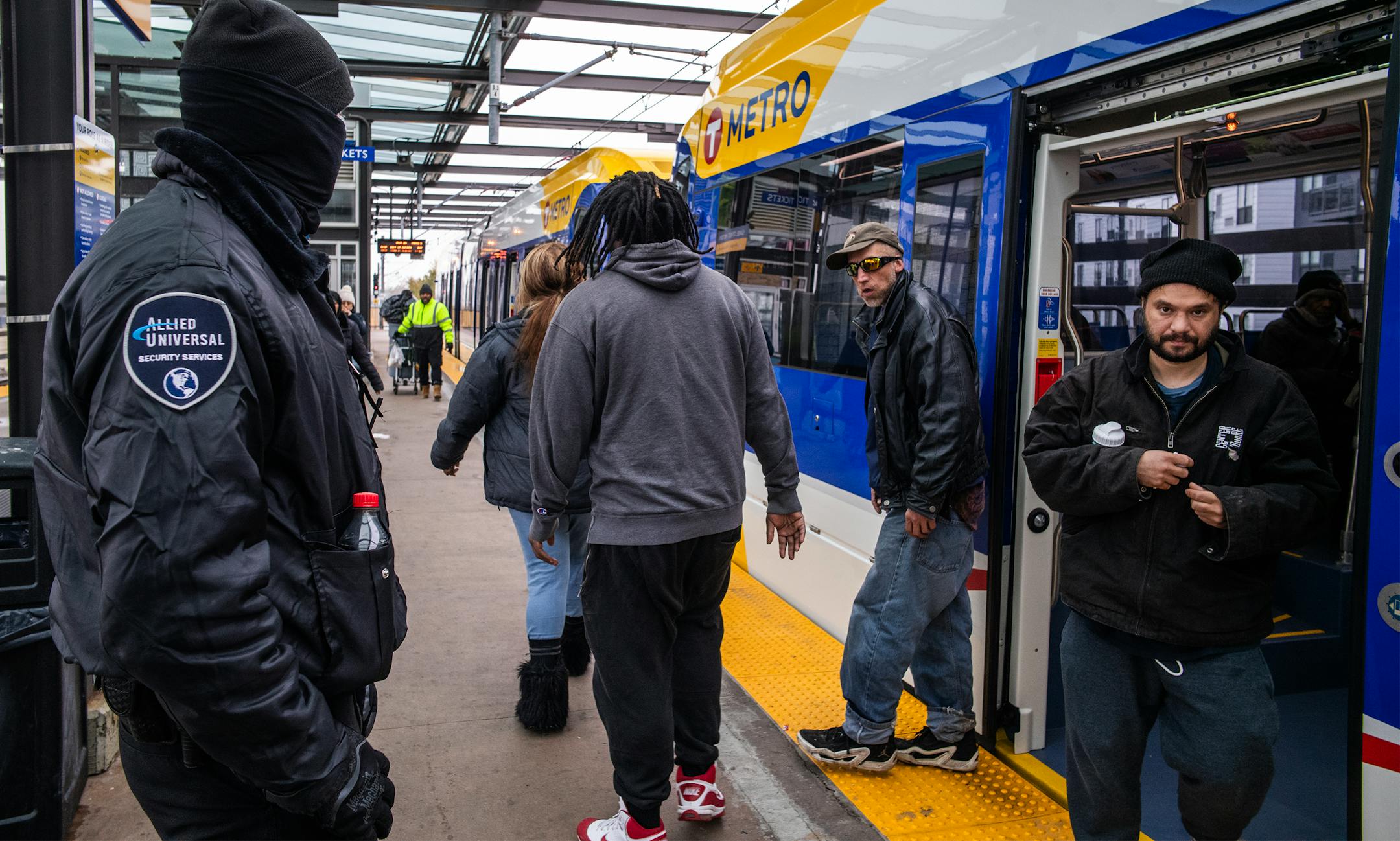
A security guard keeps an eye out at the Lake Street light rail station in Minneapolis in November 2024. (Richard Tsong-Taatarii/The Minnesota Star Tribune)

More security guards and uniformed fare-checkers will soon roam Metro Transit buses, trains and stations as the agency tries to woo back riders concerned about safety.

The Metropolitan Council has approved a $57 million, two-year contract that will add nearly round-the-clock security guards and Transit Rider Investment Program, or TRIP, agents at more of Metro Transit’s busiest — and most troubled — transit stations.

Those include the Snelling Avenue Green Line station, the Brooklyn Center Transit Center and the Uptown Transit Center. More personnel will also roam train cars and stations in St. Paul’s Hamline-Midway neighborhoods and a handful of other locations.

The beefed-up ranks of security officers and TRIP agents will complement Metro Transit’s own police force, said Metro Transit General Manager Lesley Kandaras, as the agency continues to expand its presence of uniformed personnel across its sprawling network.

“We are not where we want to be on public safety, and we’re continuing to work on it,” Kandaras told the Minnesota Star Tribune.

The rate of serious crimes, like robbery, assault and homicides, on transit has stayed low and stable for years, officials say, with fewer than five incidents per 100,000 rides. The rate of all crimes, which include less-serious crimes like drug use and vandalism, is higher — and far more volatile. It’s bounced between 10 and 25 incidents per 100,000 rides since 2021.
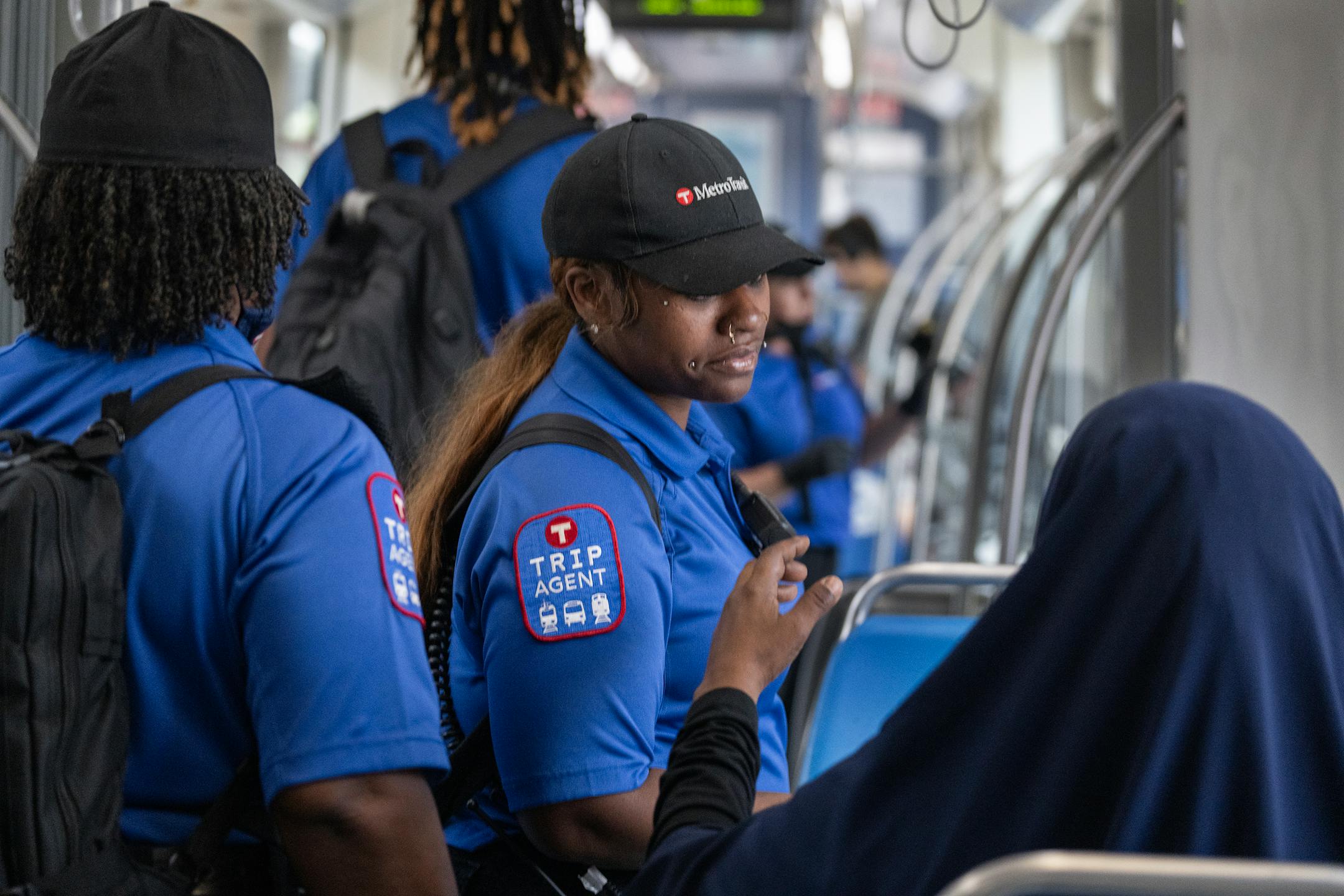
TRIP agent Twana Hawkins checks in with a passenger in St. Paul in August. (Richard Tsong-Taatarii/The Minnesota Star Tribune)

The total number of crimes reported jumped to more than 2,000 in each of the first two quarters of 2025. But Metro Transit police say that’s because they’ve been more proactive in patrolling trains, buses and stations.

“Our beat officers are out there addressing problems before somebody calls,” said Joe Dotseth, Metro Transit’s interim chief of police.
Transit officials hope the increased presence will allay fears of would-be riders who avoid buses and trains because of experiences they’ve had in the past or stories they’ve heard. So far, though, that hasn’t happened.

Ridership has fallen in recent months — especially on light rail — even as the agency continues to add more service.

A ‘night and day’ difference at Midway stations

Dotseth, Ramsey County Attorney John Choi, and other law enforcement officials announced in May a stepped-up focus on the Green Line through St. Paul along with connecting those struggling with housing and addiction to services.

So far, officials say the campaign has been a success, and residents of nearby neighborhoods have noticed too. The increased focus has led to cleaner stations, said Cameron Fure, who leads weekly trash pick-ups along University Avenue.

“Between this year and last year, it’s a night and day difference in terms of the number of needles that we find,” Fure said at a recent community meeting at Bethlehem Lutheran in the Midway. “It’s less. Far, far less.”

There’s less damage to stations, as well, Fure reported. Metro Transit has been rehabbing Blue Line stations, too. But Fure said he still finds needles just a block or two away from the stations, deeper into the neighborhood.

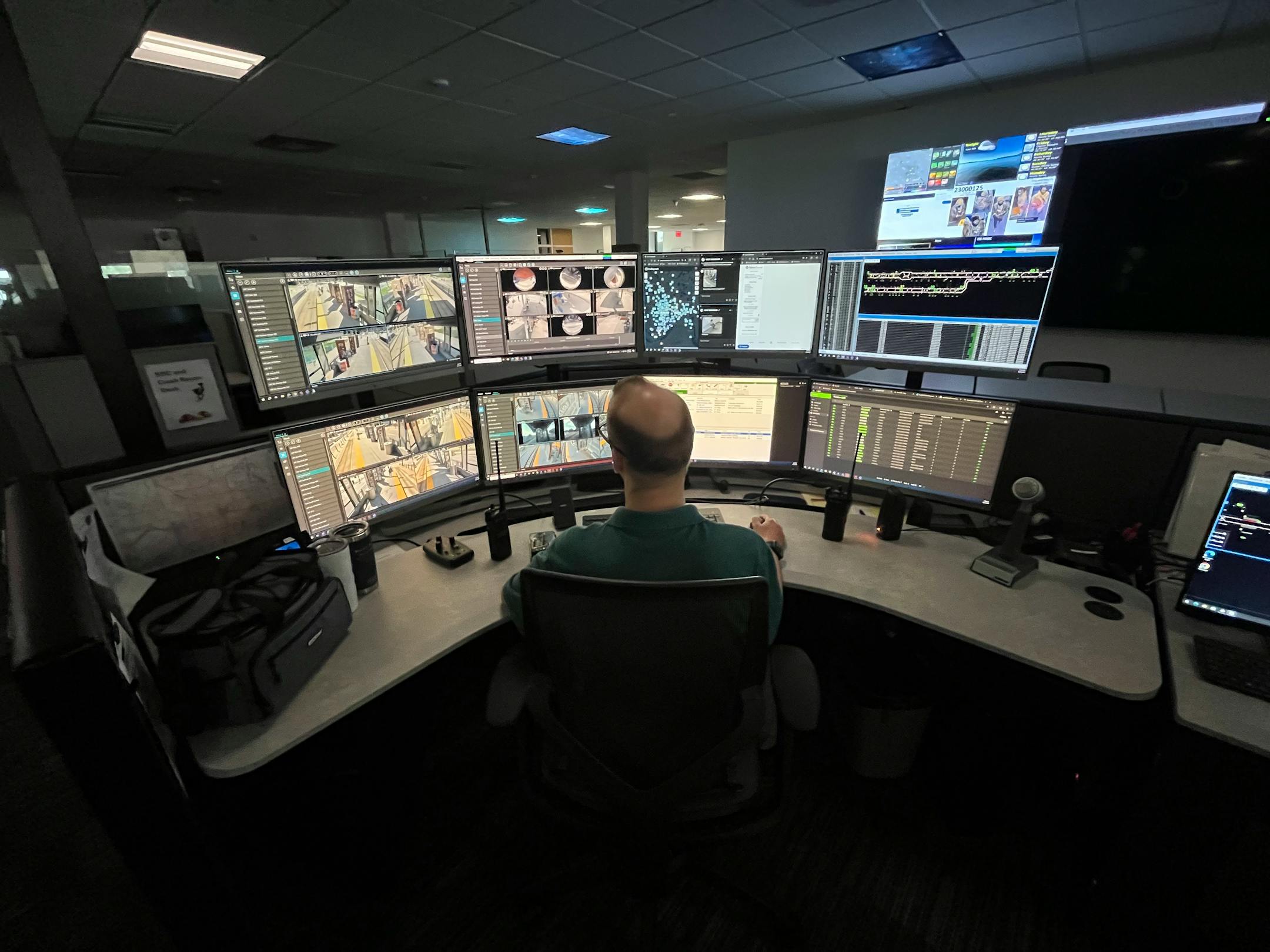
Officers are also using technology to respond more swiftly and directly to problems. If a rider reports a crime or other disturbance on a train, for example, officers can pull up a real-time video feed in their squad cars to zero in on the suspect and intercept them at a station.

Dan Flynn, a real-time information specialist for Metro Transit, monitors camera feeds.
Dan Flynn, a real-time information specialist for Metro Transit, monitors camera feeds from trains, buses and stations at the agency's headquarters in Minneapolis. (Nathaniel Minor/The Minnesota Star Tribune)

But that system isn’t perfect either. One neighborhood resident at the church meeting said police removed one person who was using drugs from a train they were riding this summer. But they left a handful of other drug users who then aggressively interrogated other passengers about who called for help.

Other riders the Star Tribune spoke with said the extra attention from police and security is making the Green Line feel safer.

“When they’re around, it feels a little bit better. I think that helps,” said Aimzhan Iztayeva, a regular Green Line commuter who said she’s been harassed, had her winter coat smeared in human feces, and felt generally unsafe in recent years.

But that feeling extends beyond the train and into her neighborhood near the Hamline Avenue station, she said. Once she gets a raise, she added, she hopes to move to a safer neighborhood and stop taking light rail altogether.

Focus on assistance, not arrests

In 2023, Democratic lawmakers overhauled how Metro Transit can handle safety problems. Fare evasion, once a rarely prosecuted misdemeanor, became an administrative citation. Legislators also approved the TRIP agent program, which now handles the bulk of fare enforcement, allowing police to focus on more serious crimes.

On University Avenue, the summer enforcement campaign generated nearly 3,000 officer-initiated calls for service — a 50% jump over the previous seven weeks — but just 14 arrests through July.

“That’s not really what this initiative was about,” Dotseth said. “This initiative was about presence and connecting with the community.”

Dotseth said his and other law enforcement agencies don’t want to criminalize low-level offenses and instead are emphasizing partnerships with social service providers to offer direct aid to people who need it.

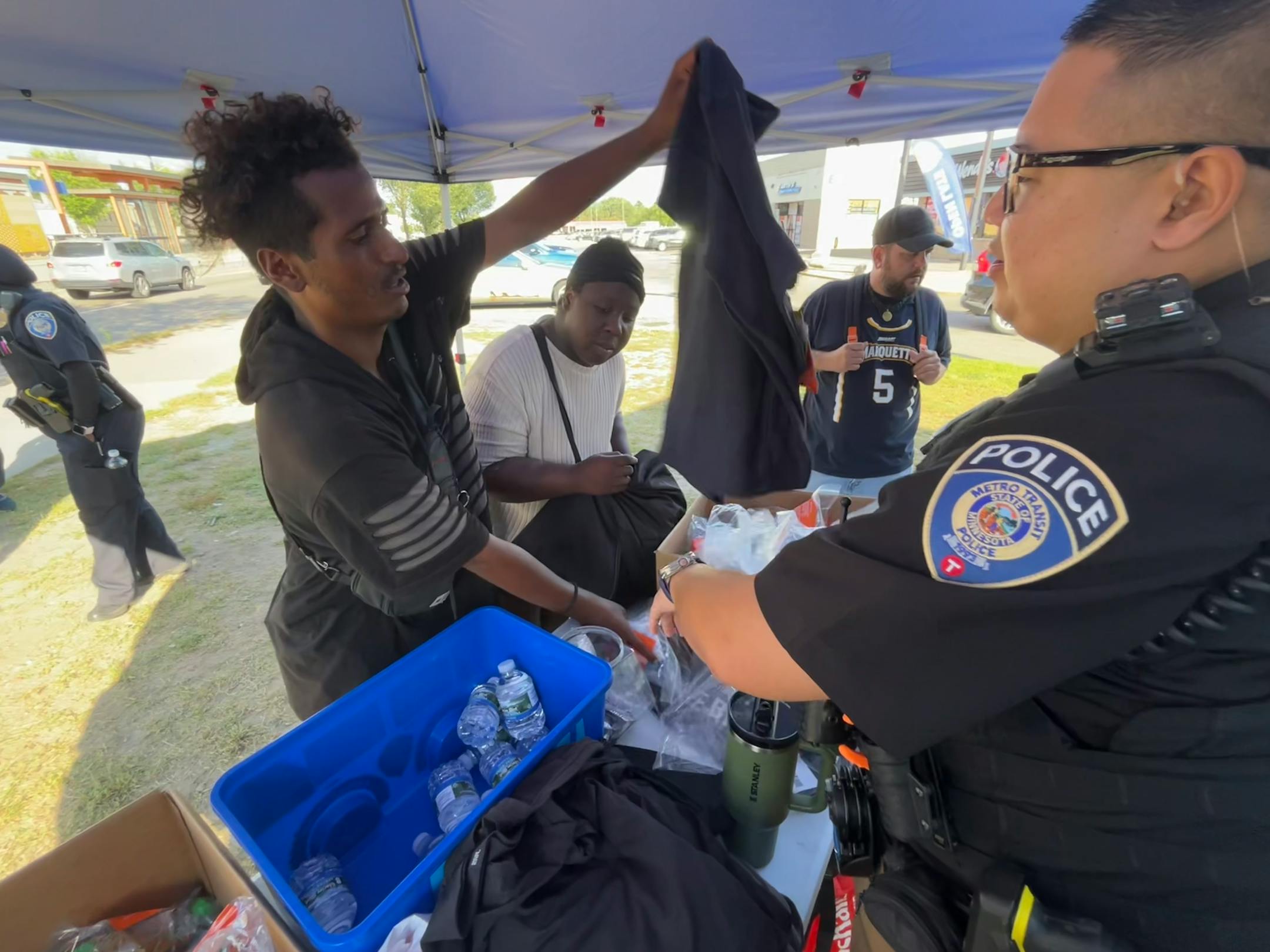
Every Wednesday, the Metro Transit Homeless Action Team sets up shop in a Wendy’s parking lot at the corner of University Avenue and Dale Street. They hand out bottles of water, snacks, clean socks and other essentials and help people find housing and other services.

Bashir Nasir, a 27-year-old who said he slept outside the night before, picked up a bag of toiletries on a recent afternoon. He’s trying to kick the fentanyl habit he picked up years ago, and said he comes by every week.

“The biggest struggle is not having money and not having support,” he said. “I want help.”

Bashir Nasir
Bashir Nasir, 27, looks at clothing at a Metro Transit-sponsored aid station along the Green Line. Officer JuneHee Han, right, is part of the Homeless Action Team. (Nathaniel Minor/The Minnesota Star Tribune)

Nasir said he uses drugs on the train because it’s relatively safe and warm. Several recovering drug users who work or volunteer with Metro Transit also told the Star Tribune the train is popular because camera surveillance can mean quick intervention in case of an overdose.

Nasir told officer Kat Kompelien he would stop using the following week. She’d already tried to him into treatment around five times, she said, but she was encouraging nonetheless.

“You know we’re always here,” she told him. “Every Wednesday.”

about the writer

about the writer

Nathaniel Minor

Reporter

Nathaniel Minor is a reporter for the Minnesota Star Tribune.

See Moreicon