
Metro Transit is expanding service as other cities cut back

“We are in an incredibly fortunate position,” said Metro Transit General Manager Lesley Kandaras. Service will grow by 5% starting Saturday.

The Minnesota Star Tribune
August 10, 2025 at 2:00PM
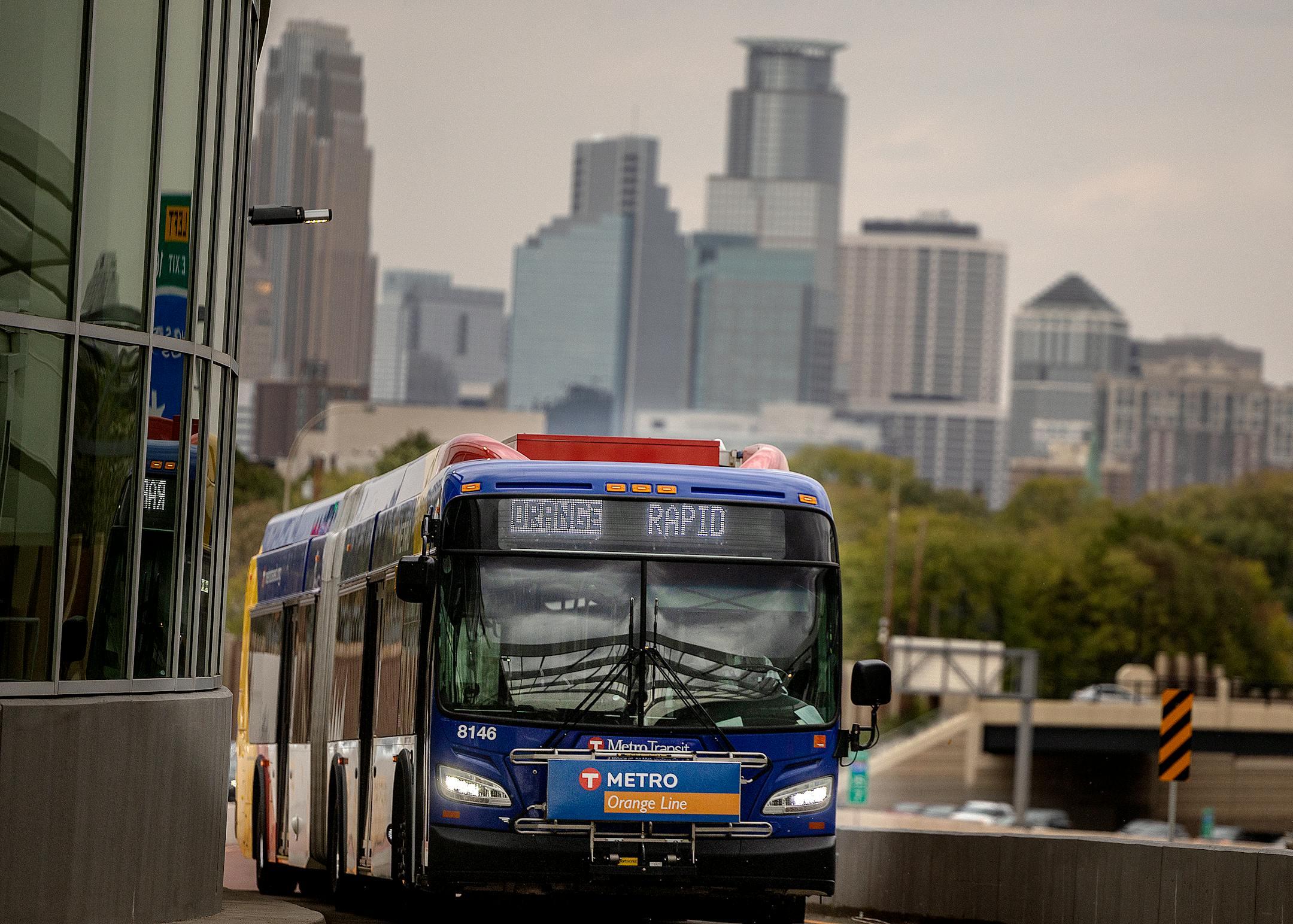
An Orange line BRT makes its way to the Lake Street Station going southbound in Minneapolis on Oct. 3, 2023. (Elizabeth Flores/The Minnesota Star Tribune)

Metro Transit will soon increase frequency on some of the region’s most-used bus lines, launch midday express service to some suburban park-and-ride lots, reinstate routes axed when the pandemic struck and bring its popular on-demand service to Bloomington and Blaine.

In all, the additions represent a 5% service increase, and the state’s largest public transportation agency has more in the pipeline. The service increases are set to begin Saturday.

There is more expansion coming as part of Network Now, a multipronged effort to bring fast all-day service on core urban routes, increase ridership and enhance mobility. The Metropolitan Council endorsed the plan earlier this year.

“A lot of great things are happening,” said Adam Harrington, Metro Transit’s director of service development. The new offerings “may not have the splash as the opening of a new BRT [bus rapid transit] but they are significant.”

More frequent buses and resurrected lines

What’s happening in the Twin Cities is in stark contrast to what is happening in Philadelphia and other large U.S. cities, where budget shortfalls have transit agencies in major cutting mode as federal COVID relief funds have run out.

Here in Minnesota, express bus riders using park and rides in Blaine, Mounds View, Minnetonka, Coon Rapids and Brooklyn Center will have at least hourly service outside traditional mornings and evening commutes. The additions will provide more flexibility for downtown workers at a time when more employers are calling them back to the office, Harrington said.

Two express routes, the 134 running between Highland Park and downtown Minneapolis, and the 765, which runs between downtown Minneapolis and the Target North Campus in Brooklyn Park, are being reinstated. They were among 50 routes cut during the pandemic.

Local bus riders will see improvements, too. The heavily used Route 18 from downtown to Richfield will run every 10 minutes from 11 a.m. to 6 p.m. daily. In all, 16 routes will have buses running more often while others will see new or expanded service on weekends.
Metro Transit rolled out its on-demand ride service called Micro in 2022 in north Minneapolis. Since then, the point-to-point service has expanded to Roseville and Woodbury. Now Micro is arriving in Bloomington on Saturday, and in Blaine, Coon Rapids and Spring Lake Park in September.

“It gives us better coverage in the suburbs where we can’t have the same reach with fixed route service,” said Harrington, noting Micro is providing about 100 rides a day in Roseville and Woodbury since its debut earlier this year.

Sales tax helps fund transit

Metro Transit was in a different place just four years ago. Then, the agency didn’t have enough drivers. A steep ridership loss due to the pandemic led to big service cuts.

Today, a ¾-cent sales tax approved in a 2023 transportation funding bill is a big reason Metro Transit has been able to attract more drivers with higher wages, and open new transit lines and slowly build back service. The Metro Area Transportation Sales and Use tax is bringing in $430 million or more a year, and more importantly, providing a steady and sustainable funding source

“We are in an incredibly fortunate position made possible by additional investment in the regional transit system,” said Metro Transit General Manager Lesley Kandaras.

In Philadelphia, the Southeastern Pennsylvania Transportation Authority (SEPTA) is facing a $213 million deficit. Without new state transit funding, SEPTA will slash service by more than 45% and raise fares by 21.5% to balance its budget. Similar scenarios are playing out in Boston, Washington, D.C., Chicago, San Francisco and New York City.

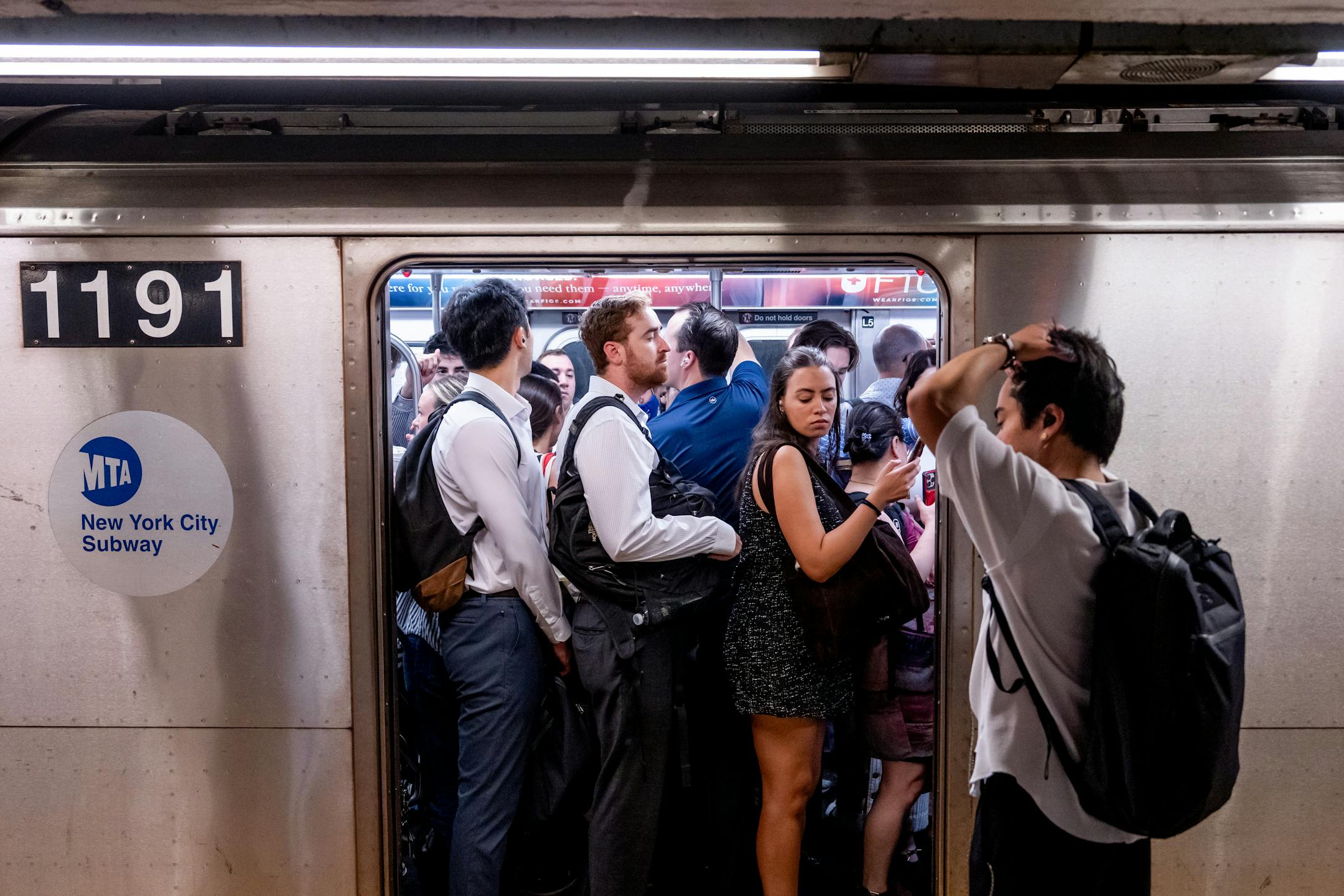
Commuters board a train at the 14th Street-Union Square subway station during high temperatures in New York on June 23. (Adam Gray)

“This budget will effectively dismantle SEPTA, leaving the city and region without the frequent, reliable transit service that has been an engine of economic growth, mobility and opportunity, said General Manager Scott Sauer.

Some of the Minnesota sales tax is replacing about $60 million in lost revenue due to a drop in ridership. Last year, Metro Transit provided 47.5 million rides, well below the 77.9 million rides provided in 2019, the year before COVID-19 torpedoed ridership.

Metro Transit also reduced fares last year and is taking in less money at the fare box, an “important source of revenue,” Kandaras said.

The metro sales tax, however, has allowed Metro Transit to open the Orange, Gold and D rapid transit lines over the past two years. The lines are showing some of the highest increases in ridership, said Camila Fonseca-Sarmiento, director of fiscal research for the Institute for Urban & Regional Infrastructure Finance (IURIF) at the Humphrey School of Public Affairs at the University of Minnesota.

“Metro Transit investments are reaching communities that benefit from the new services provided,” she said

As other systems pare down budgets, Metro Transit has money coming in to cover rising operating costs, and to pay for forthcoming big-ticket items.

A new rapid transit line running from Edina to the U will open in December. And next year, the agency will start on “Renew the Blue,” a major overhaul of the Blue Line.

“It’s pretty much all good news,” Harrington said.

As Metro Transit avoids falling off the fiscal cliff, the agency is moving ahead with building an “attractive service” and winning riders back, Kandaras said.

“We responded to what they [riders] wanted to see,” Kandaras said.

about the writer

about the writer

Tim Harlow

Reporter

Tim Harlow covers traffic and transportation issues in the Minneapolis-St. Paul area, and likes to get out of the office, even during rush hour. He also covers the suburbs in northern Hennepin and all of Anoka counties, plus breaking news and weather.

See Moreicon