
Advertisement

Tolkkinen: In 23 years, this immigrant in rural Minnesota says he hasn’t had more than 3 days off at a time

Undocumented immigrants find opportunity but pay endless penalties to live in the U.S.

Columnist Icon
The Minnesota Star Tribune
February 22, 2026 at 12:00PM
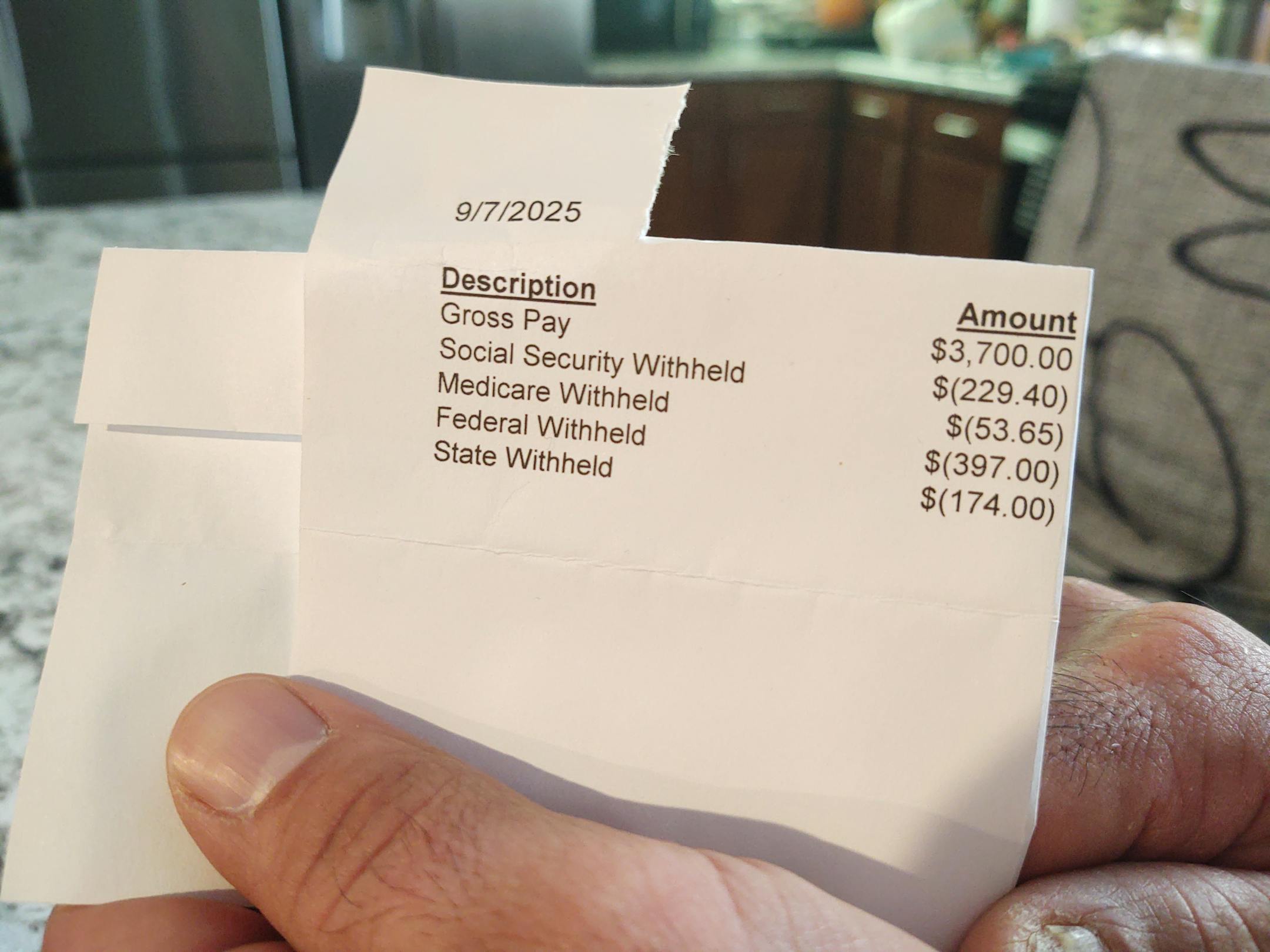
An undocumented immigrant worker in Stearns County shows the deductions from his paycheck. Although he pays Medicare and Social Security, he will never receive those benefits. (Karen Tolkkinen)
Advertisement

STEARNS COUNTY, Minn. - Sitting at his kitchen table, salsa cooking on the stove behind him, the man who wants to be known as John looks disgusted.

Twenty-three years ago, when he was 17, he left his small town in Mexico and paid a coyote to bring him into the U.S. He wasn’t planning on coming to Minnesota, he said, but this was where they brought him and where he found work at a dairy farm in Stearns County, Minnesota’s No. 1 milk producing county.

He found a wife, too, as well as opportunity not available to them in Mexico. He receives a good wage here after working his way up the ladder. Four years ago, he was able to buy a cozy, two-story house in a small city in Stearns County. He’s been able to send clothes and money to family in Mexico. Together, he and his wife have four children, and the youngest two, now teenagers, are American citizens.

But the wave of anti-immigrant fervor that has swept across the country has left John and his family deeply unsettled, wondering if they should move back to Mexico.

“It’s hard to live in a country where people don’t like you or don’t want you,” said John’s wife, who wants to be known as Maria.

Fearing deportation, they agreed to talk to me in exchange for anonymity.

One thing that disgusts John is the poor opinion many Americans have of undocumented immigrants like him and his wife. Undocumented immigrants form the backbone of American agriculture. Just over half of all dairy workers are immigrants, many of them undocumented, and the farms they work for produce 79% of the nation’s dairy supply, according to the National Milk Producers Federation, a dairy industry lobby group.

What that means for John is work. Not just steady work, but all-consuming, yes-boss, no-boss, no-paid-time-off sort of work that Americans wouldn’t put up with because Americans don’t live under the constant threat of deportation. In his 23 years in the United States, he has not gotten more than three days off in a row, he says. No holidays. No paid vacation. No health insurance.

Advertisement

“Trabajo, trabajo, trabajo,” he says. His stepson, 27, who came to the U.S. on his own with a coyote when he was only 6 years old, translates for him. “Work, work, work.”

He works about 50 hours a week. More when a worker doesn’t report for their shift or if he has to run in and fix something.

And Uncle Sam gets its share of his paycheck. John gets up from the table, and I hear him rummaging in a back room. He comes back with his pay stub, which he sets in front of me. It shows all the money taken out for the government during one two-week pay period: hundreds of dollars for Medicare, Social Security and state and federal taxes.

Ironically (to be an undocumented immigrant is to live with irony), despite anti-immigration rhetoric that claims undocumented workers receive government assistance, John will never see a penny of what he pays in for Medicare or Social Security.

Another irony: His taxes are helping to pay for the federal Immigration and Customs Enforcement agents who have driven him and his family largely underground.

“No taxation without representation” was a key rallying cry of the American Revolution 250 years ago. But once again, an entire class of workers in our country gets no vote and no say over their taxes. In 1996, the federal government launched the Individual Taxpayer Identification Number (ITIN) program, creating a way for undocumented workers and others without Social Security numbers to pay taxes. John says his first job paid him in cash, but this one deposits his checks into his bank account. His employers know he is undocumented, he says.

Advertisement

As of Dec. 30, 2022, more than 5.8 million people in the U.S. were using ITINs, according to the National Immigration Law Center. That includes not just undocumented immigrants, but certain other workers without Social Security numbers such as those with student visas and the children and spouses of people with work permits.

Particularly exasperating to John and his family is the common accusation that undocumented workers do nothing to gain citizenship.

John and Maria have tried, speaking to multiple attorneys with no luck. There is no way for them to gain legal status.

“We have been good members of society,” he says. “We have been working, no criminal record, nothing that would throw a red flag. And there’s nothing. There’s not a first step, there’s not an option, a window, a crack of availability.”

Too bad John and Maria don’t have $1 million lying around to buy a fast-track to citizenship via the Trump Gold Card, the president’s scheme to bring more wealthy overlords into the U.S.

Those who support Trump’s immigrant crackdown argue that people like John and Maria are “illegals,” who committed a crime by coming into our country without authorization and who should be punished by deportation.

Advertisement

The truth is that they, like countless other undocumented immigrants, are paying a penalty that never ends.

Their mortgage costs more because of their immigration status. Americans often qualify for mortgages with low down payments or none at all, but John and Maria had a down payment of 25%.

This winter, fearful that ICE agents might detain and deport them, they added their daughter-in-law to the deed. She is an American citizen and can look after their property if they are whisked away without warning.

One of the most galling aspects of life as an undocumented immigrant is how quiet you have to be. America touts its freedom of speech, and people all over the place spout opinions about all manner of topics. But the people in the shadows have to lie low, biting their tongues, keeping their heads down.

“You don’t rock the boat,” said John’s stepson, a recipient of the Deferred Action for Childhood Arrivals immigration policy, also known as DACA. “Even making noise in the boat could get you tossed out.”

about the writer

about the writer

Karen Tolkkinen

Columnist

Karen Tolkkinen is a columnist for the Minnesota Star Tribune, focused on the issues and people of greater Minnesota.

See Moreicon

More from News & Politics

See More
Rising above the treeline (Top of this photo), on the shore of Birch Lake, the Twin Metals Copper Nickel Mine Plant site and Tailings Management site is part of the proposed plan. ] In theory, the copper-nickel mine Twin Metals wants to build in the headwaters of the Boundary Waters Canoe Area Wilderness is a zero-discharge mine -- a closed loop that will endlessly recycle millions of gallons of water, including rainwater and the polluted process water it uses to extract ore and
Brian Peterson/The Minnesota Star Tribune

Efforts overturn the ban in Superior National Forest may come to fruition in late February. A rollback could send a lifeline to the Twin Metals proposal in northern Minnesota.

A timeline chart showing observed federal immigration activity during Operation Metro Surge.
Advertisement