Twin Cities transit ridership still struggling post-pandemic, lags behind most big cities

Ridership fell during the pandemic, and it’s still roughly half of what it once was in the Minneapolis-St. Paul area. It’s bouncing back faster elsewhere.

The Minnesota Star Tribune
August 21, 2025 at 11:00AM
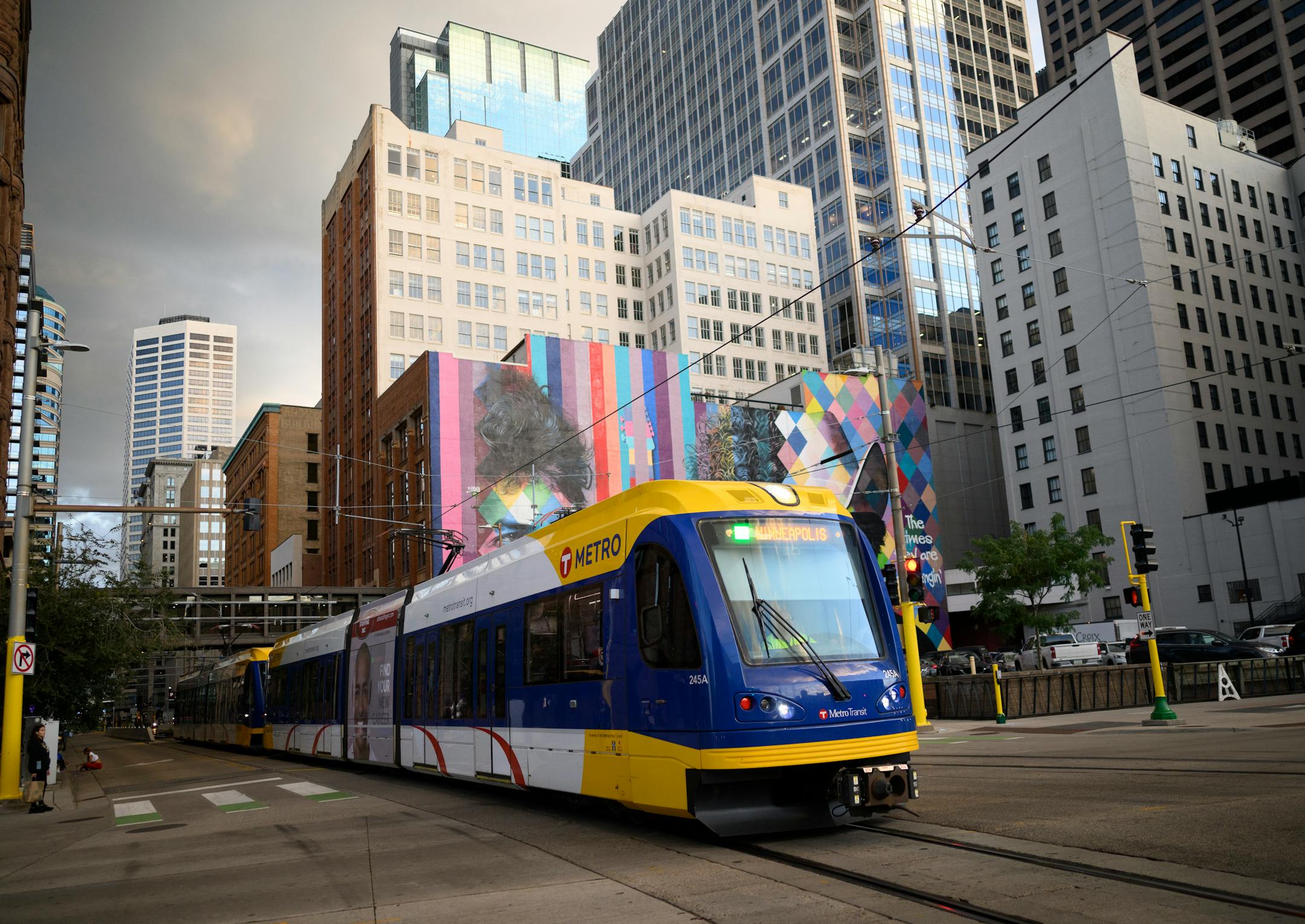
A Metro Transit train moves through the intersection on Sept. 24, 2024, at Hennepin Avenue and N. 5th Street in Minneapolis. (Aaron Lavinsky/The Minnesota Star Tribune)

Metro Transit’s progress in regaining bus and train riders since the pandemic has stalled, and the system now ranks near the bottom among peers nationwide for its sluggish post-pandemic recovery.

Ridership remains down 45% from pre-pandemic levels, according to a Minnesota Star Tribune analysis of Federal Transit Administration data through the first half of this year. And, to the frustration of local officials, ridership in early 2025 was actually less than it was in the same period the year before.

Among metros with transit systems similar to the Twin Cities’, only Atlanta and St. Louis — facing their own sets of problems — saw bigger drops.

“Unfortunately Minneapolis’ recovery is quite a bit below the U.S. average,” said Yonah Freemark, an Urban Institute principal research associate who has studied transit recovery. “It’s not as bad as Atlanta or St. Louis, but I think there should be some soul-searching in the metropolitan area, by the Met Council and others, to identify what’s going on there.”

Agencies across the country that centered their services on taking people to and from work before the pandemic are now operating in a different world. Many jobs are more flexible and transit providers are still reckoning with the effects of pandemic-era service cuts.

“It was a shock to daily travel patterns completely,” said Eric Lind, director of the Accessibility Observatory at the University of Minnesota’s Center for Transportation Studies, who studied post-pandemic ridership on Metro Transit.

“And then, slowly, patterns came back in a different way,” he said.

Metro Transit officials say a stronger comeback requires a mix of strategies — and further study.
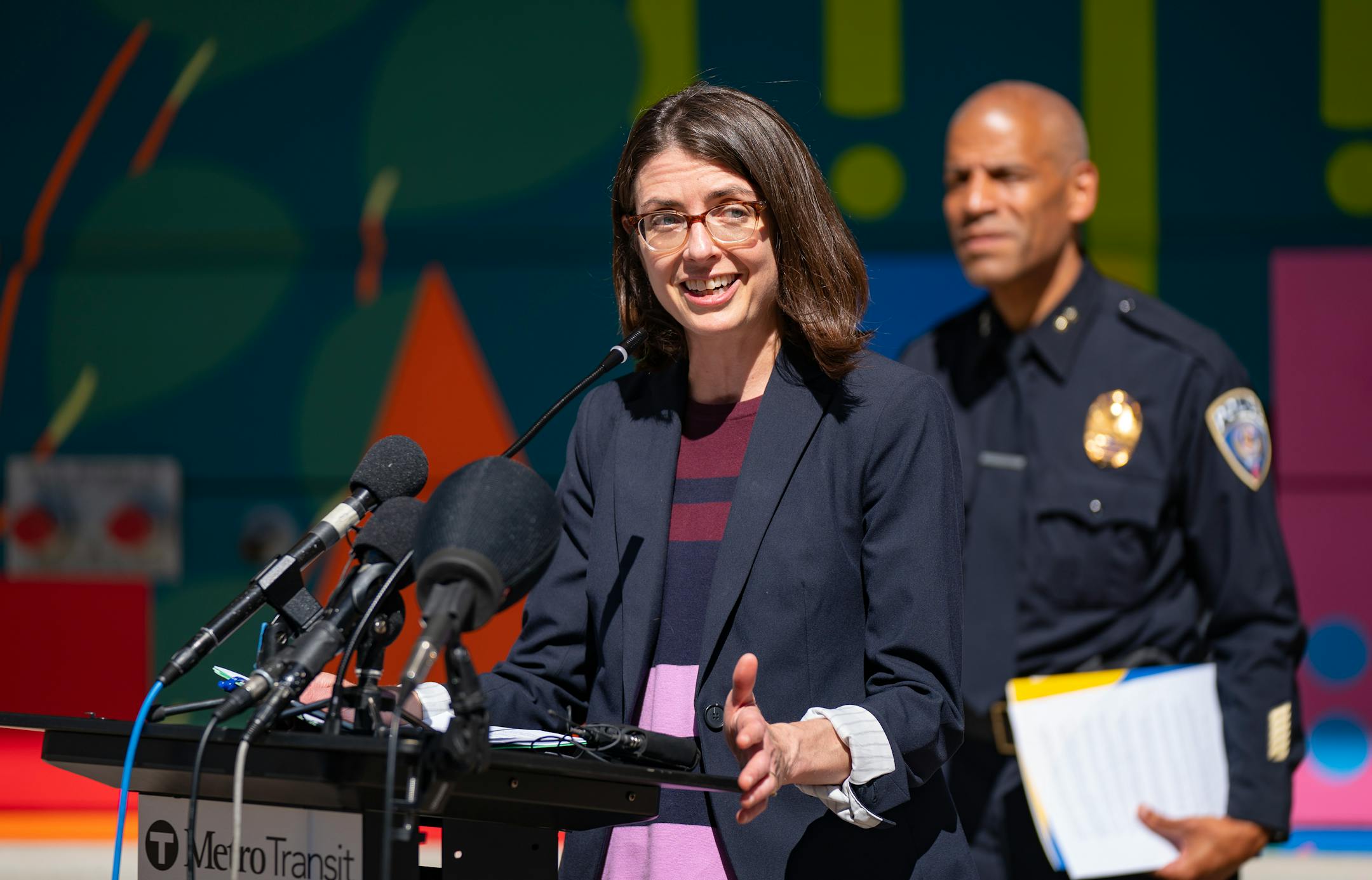
“We feel like we are investing in the fundamentals that should lead to growing ridership over time,” said Lesley Kandaras, Metro Transit’s general manager. “And that is increased service, but also improvements to the customer experience, our public safety investments and other steps we’re taking to make transit easier to use.”

Lesley Kandaras, the general manager of Metro Transit, speaks during a press conference on Aug. 15, 2023. (Alex Kormann/The Minnesota Star Tribune)

Adjusting service to new travel patterns

Metro Transit cut the hours and frequency of many routes and eliminated others during the pandemic.

As it looked to add back service in 2021 amid a tight labor market, the agency struggled to hire transit drivers, Kandaras said.

When riders began to come back, demand tended to be more level throughout the day, not just during rush hour. That meant Metro Transit needed to change its schedules — adding more non-rush hour service — while trying to hire enough people to get back up to pre-pandemic levels, especially on light rail.

Before the pandemic, trains arrived every 10 minutes during peak hours — often enough that riders didn’t need to plan ahead. Now, trains generally come every 12 to 15 minutes.

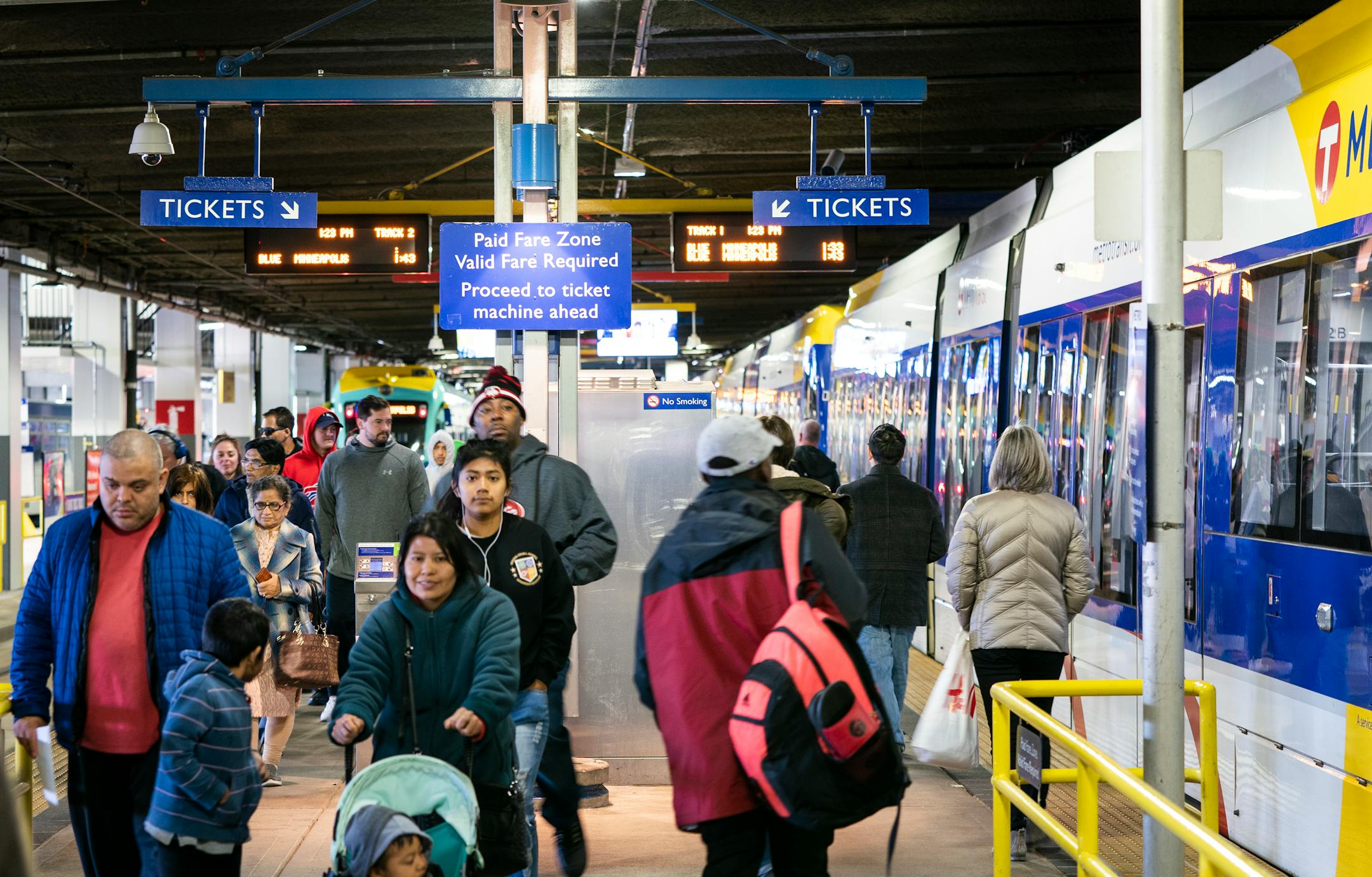
Passengers depart from the Blue Line train inside the Mall of America Transit Station on Oct. 14, 2019. (Leila Navidi/The Minnesota Star Tribune)

Kandaras said hiring is still the barrier to more frequent trains. In October, she said, Metro Transit expects to have enough workers to run trains every 12 minutes for more hours of the day.

Freemark said transit agencies can see ridership rise when they boost service at the times people now travel, with more all-day, night and weekend trips.

That might explain a relative bright spot in Metro Transit’s ridership recovery: bus rapid transit (BRT).

BRT routes tend to travel more quickly than regular buses, with fewer stops and sometimes-dedicated lanes. Some have buses arriving at stations every 10 minutes for much of the day.

Ridership on those routes — four out of seven have opened since 2021 — has shown stronger gains than traditional buses or light rail

For south Minneapolis resident Connor Carroll, hopping on the Orange Line BRT means being downtown for work in less than 15 minutes. Plus, he doesn’t have to deal with traffic or pay for parking.

“I don’t really think about the schedule of the buses very much anymore,” he said. “I kind of just go to the stop when I need to.”

Safety perception problems

Metro Transit is still trying to figure out why overall ridership dipped in early 2025, even amid increased service.

The falloff was largely driven by a drop in light-rail ridership, down about 15% from last year compared to a 7% drop across all types of transit, Kandaras said.

Some of that could be attributed to system closures for maintenance. But Kandaras also pointed to possible effects of stepped-up fare checks through the Transit Rider Improvement Program (TRIP) and more Metro Transit police enforcement of rules against smoking, drug use and disruptive behavior that had cropped up during the pandemic.

Ridership counts are based on fares sold and card taps, which are up, as well as automatic counters.

“We don’t have hard data to prove that that’s the cause, but it’s something that’s changed over this period of time that we’re trying to get a better understanding of,” she said. Ultimately, Kandaras said she believes the increased safety presence by Metro Transit officials will help build ridership.

Some riders say they’ve taken notice.

Brad Coulthart, who rides the Blue Line frequently from southern Minneapolis stations to sports events downtown and to the airport, said he sees TRIP agents on trains fairly often now. He’s noticed less loitering at station platforms, cleaner trains and less disruptive behavior on trips.

“It’s just people going about their business, for the most part,” he said.

But perception problems continue with many riders.

Ann Beckman of Robbinsdale said she’s been a Metro Transit rider for 25 years, and tries to ride buses or the Blue Line instead of driving for errands and to events.

But she used a rideshare instead of the Green Line after an experience when a big group of young people played with lighters close to her winter coat.

“I know a lot of my friends have given up riding,” she said.

Kandaras acknowledged that public perception matters in persuading riders to come aboard.

“If you had a bad experience on our system and stopped riding, you aren’t riding to see the improvements,” she said. “We’ve already lost you as a rider.”

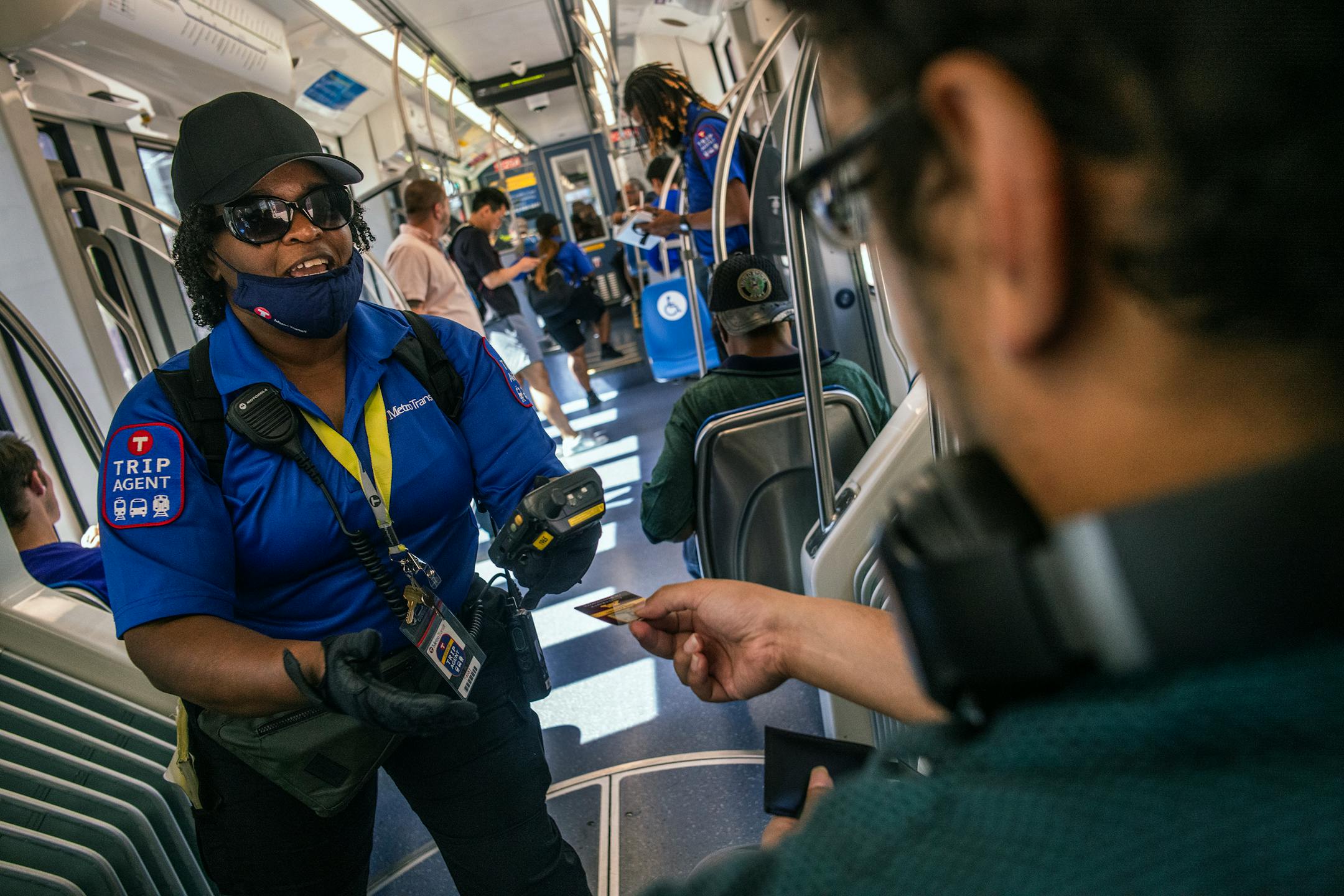
TRIP agent C. Robinson checks the fare of a passenger in St. Paul on Wednesday. (Richard Tsong-Taatarii/The Minnesota Star Tribune)

Expansion key to success?

Some agencies that have seen stronger recoveries also saw notable expansions of their transit systems.

Freemark noted the success of Seattle’s Sound Transit in bringing back riders, likely a result of major light-rail expansion.

Light-rail expansion is on tap for the Twin Cities, with the Green Line extension from Minneapolis to Eden Prairie set to open in 2027. The Blue Line extension, from Target Field to Brooklyn Park, cleared a federal hurdle this month, but it’s unclear whether the project will be funded.

Metro Transit has an advantage as it pushes to recover: a regional 3/4-cent transportation sales tax approved by the Legislature. Having that money has meant Metro Transit isn’t as dependent on fare revenue as it seeks to restore service.

More workers are headed back to the office in September, including many Target and 3M employees, giving Metro Transit another opportunity to recapture riders.

Its success in bringing those workers aboard will come down to how well its buses and trains can compete with driving, Lind said.

“The challenge is the same as the opportunity for Metro Transit right now,” he said. “Daily travel habits are super sticky.”

about the writers

about the writers

Greta Kaul

Reporter

Greta Kaul is the Star Tribune’s built environment reporter.

See Moreicon

Karina Kumar

Intern

Karina Kumar is an intern for the Minnesota Star Tribune.

See Moreicon