Light-rail extension moves ahead with federal approval, but funding for the $3B project still uncertain

The approval means the Met Council can apply for federal grants to extend the Blue Line. But whether the Republican-controlled federal government will pick up a big chunk of the transit project’s massive price tag is unclear.

The Minnesota Star Tribune
August 15, 2025 at 5:11PM
The fate of the Twin Cities' fourth light-rail project, the Bottineau extension of the Blue Line, remains uncertain.
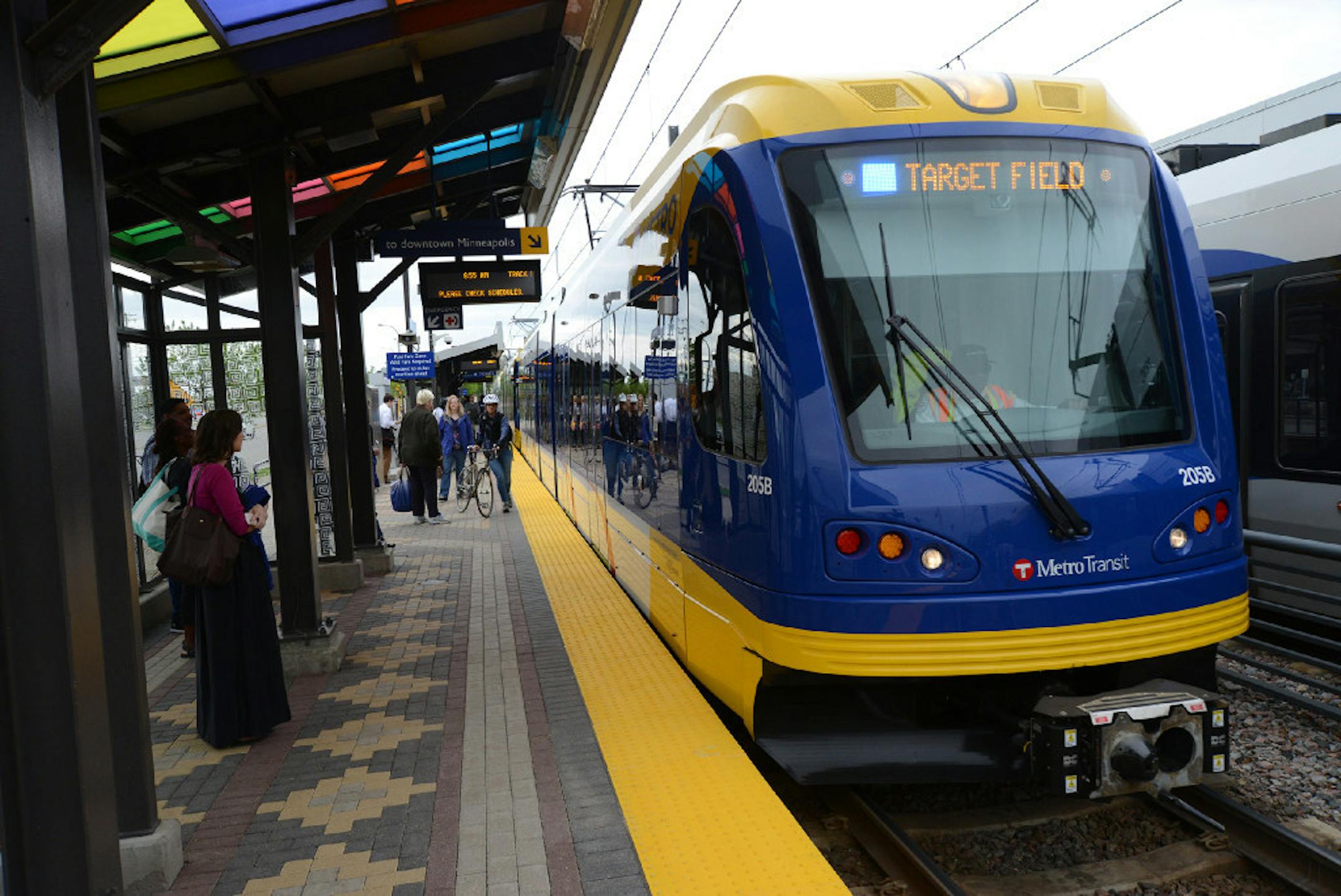
The Blue Line light-rail line photographed in Minneapolis. (The Minnesota Star Tribune)

The plan to extend light rail from downtown Minneapolis into its northwestern suburbs passed a key federal government hurdle this week, but that’s far from a guarantee that the costliest public works project in Minnesota history will happen.

The Federal Transit Administration (FTA) has approved an environmental review for plans to extend Metro Transit’s Blue Line by 13.4 miles, clearing the way for final design and construction of the contentious project planned to connect downtown with north Minneapolis, Robbinsdale, Crystal and Brooklyn Park.

When first proposed, the extension was expected to cost $990 million. That’s now ballooned to as much as $3.2 billion.

And recent moves by Republicans who control the White House and Congress have significantly clouded the prospects of the kind of federal investment necessary to mount such a pricey project.

What this step means

The approval, announced Wednesday, means the Metropolitan Council, the regional planning body that is building and operating the Southwest and Blue Line light-rail extension, can apply for a federal Capital Investment Grant to fund about half of the multibillion-dollar project, which has been on the drawing board for nearly a decade.

Will the feds fund the project?

Some Republicans in Congress want to nearly eliminate the Capital Investment Grants program, which would fund a big portion of the Blue Line extension. In a statement, Met Council officials acknowledged “uncertainty” at the federal level and said they continue to monitor the situation.

“We expect more information will become available in the months ahead,” they said in a statement said.

The Met Council plans to apply for the federal grant next spring and will update its project schedule before then. If the grant is awarded in late 2026, the planning agency expects some construction to begin in 2027.

What else does the federal approval do?

The FTA’s action will allow the Met Council to set aside up to $10 million to support residents and businesses before, during and after construction if the line is built. Businesses affected by the project would be eligible to get up to $30,000 in rent assistance. Another fund would go to help residents with rent and housing costs.

Other factors in play

The Legislature this year required the Met Council to conduct a study comparing the benefits of light rail with a bus rapid transit line along the corridor.

The study calls for comparing ridership, impacts of the transit system, project risks and other relevant costs and benefits. The analysis is due by next June.

“We don’t need to spend an exorbitant amount on fixed light rail when [bus rapid transit] is more flexible and affordable,” said state Rep. Kristin Robbins, R-Maple Grove.

She said it was crazy that lawmakers had to order the study. “It’s common sense,” she said.

Planners had studied bus rapid transit a decade ago and decided on light rail. But they later changed a section of the route away from freight rail tracks and instead through the heart of north Minneapolis.

Not everybody is on board

Even though the Robbinsdale City Council voted to support the Blue Line extension, there was reservation behind the vote.

A community group composed of Mayor Brad Sutton, current and former council members, and concerned residents in Robbinsdale, Crystal and north Minneapolis still hopes to persuade transit planners that bus rapid transit is the way to go.

“It’s less invasive, and it’s a better fit for the corridor,” said George Selman, a former Robbinsdale City Council member and a member of SLR81, the group opposed to light rail but in support of a bus rapid transit line.

Robbins said a light-rail line down Bottineau Boulevard/County Road 81 is not a foregone conclusion, even with the FTA’s approval.

“This is not a done deal,” she said. “We have a chance to stop this.”

What if federal and state funding does not come?

Robbins predicted the cost would fall to Hennepin County taxpayers, just as the county may have to raise property taxes to address the massive financial debt at HCMC.

She said costs skyrocketed over time for the new Green Line extension to Eden Prairie, also known as Southwest Light Rail. “We should not make the Blue Line a repeat of the same debacle,” she said.

In a statement in July, Hennepin County officials indicated federal funding would be essential for the project.

“These are big projects, and they are very hard for any one government entity anywhere to deliver on their own,” said County Board Chair Irene Fernando.

about the writers

about the writers

Tim Harlow

Reporter

Tim Harlow covers traffic and transportation issues in the Minneapolis-St. Paul area, and likes to get out of the office, even during rush hour. He also covers the suburbs in northern Hennepin and all of Anoka counties, plus breaking news and weather.

See Moreicon

Nathaniel Minor

Reporter

Nathaniel Minor is a reporter for the Minnesota Star Tribune.

See Moreicon