Metro Transit boosts uniformed security presence on light-rail trains

The Twin Cities transit agency has struggled with ridership since the pandemic and safety issues, real or perceived, have proven to be a hurdle in drawing people back to public transit.

The Minnesota Star Tribune
November 12, 2025 at 10:08PM
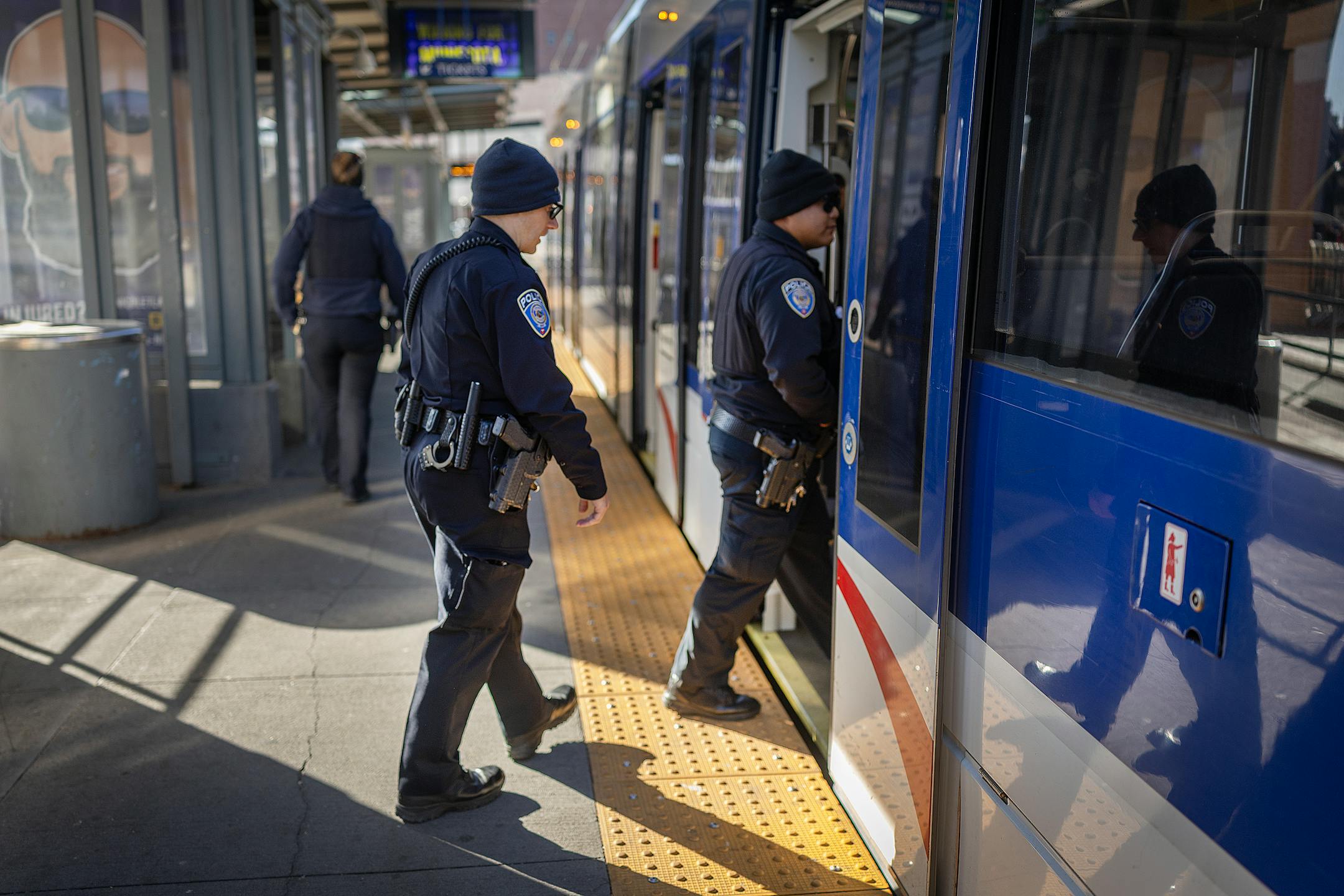
Metro Transit Police officers enter a train at the U.S. Bank Stadium light-rail station in Minneapolis on Wednesday. (Elizabeth Flores/The Minnesota Star Tribune)

Metro Transit says it will patrol nearly every light-rail train trip — especially during rush hours and late at night — starting this week, in a bid to assure riders the service is safe.

The agency announced the plans Wednesday at a news conference explaining it will deploy agency police, community service officers, transit ambassadors or contract security to patrol the trains.

The move comes as Metro Transit has struggled to bring riders back aboard light-rail trains after the pandemic. The agency is also inching toward the 2027 opening of the Green Line extension and seeking funding to bring the Blue Line extension to fruition, efforts that have come under fire from Republicans who cite costs, crime and ridership challenges on existing lines.

While data show serious crime on transit is down, Metro Transit surveys show safety remains a big concern for riders. Experts say the perception that transit is unsafe can affect if, how and when people ride public transportation.

That’s become a challenge as Metro Transit seeks to capture riders as they return to offices.

“We know that in order to build ridership, we need to build confidence that transit is a safe, comfortable way to travel,” Metro Transit General Manager Lesley Kandaras said at the news conference.

More uniformed presence

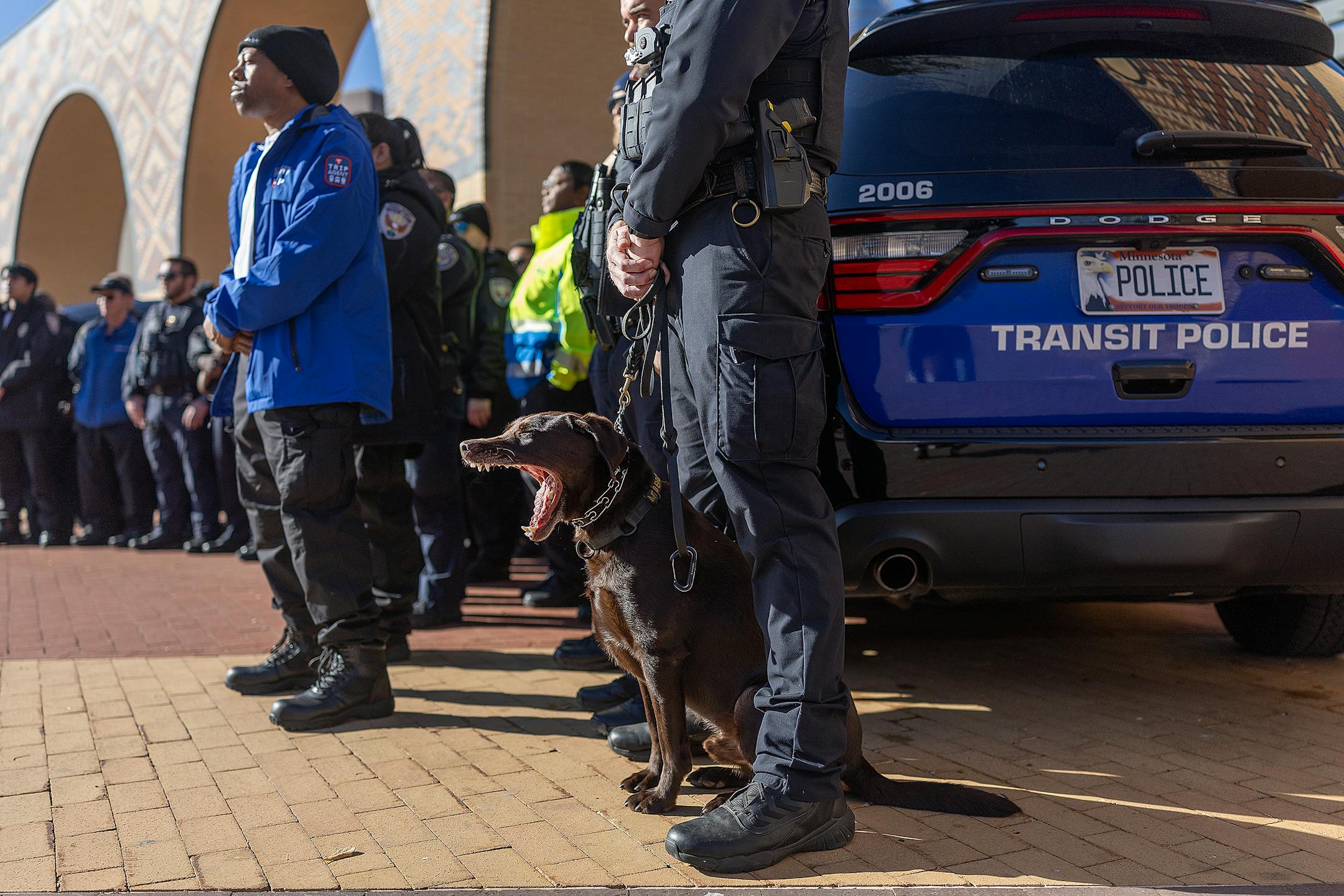
Metro Transit interim Police Chief Joe Dotseth said increased presence on trains will continue through the colder months, when Metro Transit tends to see a spike in problems.

“We will be especially visible during high-traffic periods, such as morning and afternoon rush hours and near the end of service,” Dotseth said.

Dotseth said the effort is made possible by a few things: additional hires, restructured staffing to make it possible to cover more rides and more contracted supplemental security personnel at some of the most troubled light-rail stations. Those changes in the coming weeks should free up officers to patrol the trains.

Metro Transit spokesperson Jeremy Zoss said the change is “a major increase in presence onboard trains” but didn’t have data Wednesday to quantify the increase.

In trial runs in recent weeks, Metro Transit managed to cover nearly every train during peak hours, Zoss said in an email.

“We’re just being much more efficient with our resources,” Dotseth said.

Metro Transit Police officers, including a canine, stand with Joe Dotseth, interim chief of Metro Transit Police, to address the media regarding a large step-up in security presence on light rail. (Elizabeth Flores/The Minnesota Star Tribune)

Safety perceptions a challenge

Transit ridership has fallen in many U.S. cities after the pandemic changed work habits and agencies cut service due to staffing and budget challenges.

But Metro Transit has struggled with ridership more than most of its peers, according to a Star Tribune analysis of ridership this summer.

The reasons are complex.

Metro Transit officials say serious crime is low and stable. Lower-level offenses, like drug use and vandalism, are up, however, an increase that officials largely attribute to more proactive policing detecting those crimes.

“Crime will not be tolerated on Metro Transit,” Dotseth said. “And those who commit crimes will be held accountable.”

Winter also brings an uptick of homeless people riding the trains. Dotseth said Metro Transit’s homeless outreach team works to connect homeless people to services. The increased presence, he said, is not an effort to criminalize homelessness.

Among Metro Transit’s efforts to make riders feel safe, the agency launched a trip ambassador program in February 2024. Agents on trains and platforms check fares, connect riders to services and contact emergency personnel when needed.

Kandaras said Metro Transit has checked more than 900,000 fares this year, roughly triple 2024’s numbers.

Metro Transit surveys show riders have noticed improvement but are still concerned with safety. When the most recent survey was conducted late last year, less than half of surveyed riders said they felt safe on trains and just over a third said they felt safe waiting on platforms. Metro Transit’s 2025 rider survey is underway, Kandaras said.

“People need to feel safe on the system,” Dotseth said. “We understand the perception of safety and what the reality is going on on the system — there’s a disconnect there.”

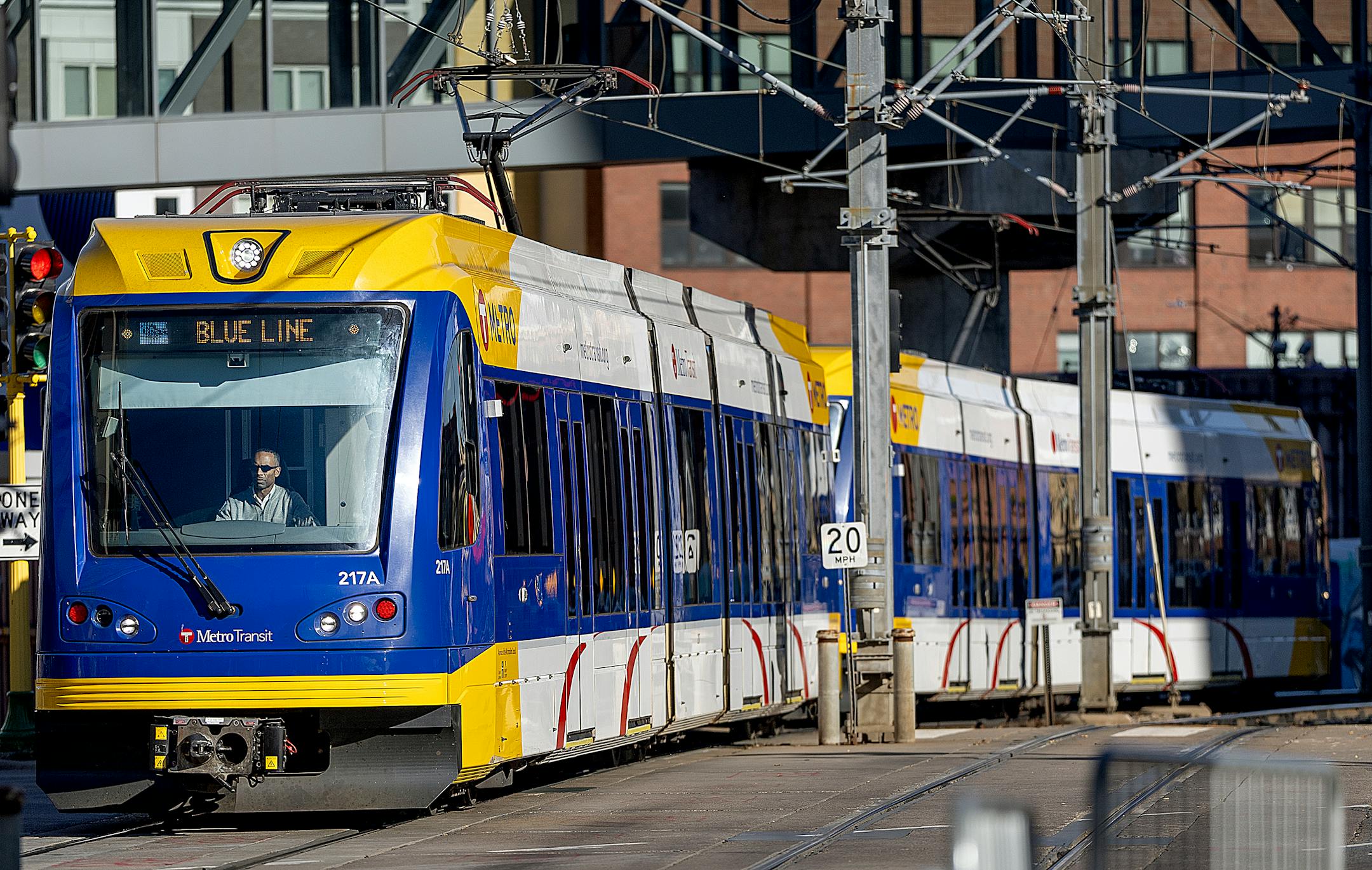
A Blue Line train enters the U.S.Bank Stadium light-rail station Minneapolis. (Elizabeth Flores/The Minnesota Star Tribune)
about the writer

about the writer

Greta Kaul

Reporter

Greta Kaul is the Star Tribune’s built environment reporter.

See Moreicon

More from Twin Cities Suburbs

See More
card image
Jerry Holt/The Minnesota Star Tribune

Six residents say they were threatened, pepper sprayed and unlawfully detained for observing immigration enforcement actions.

Union members, teachers and supporters cheered during a rally held by Education Minnesota outside the Anoka-Hennepin district headquarters Monday, December 11, 2023, in Anoka, Minn. ] CARLOS GONZALEZ • carlos.gonzalez@startribune.com