Editor's Pick

Editor's Pick

Less competition at MSP could raise fares and boost bottom lines of Delta, Sun Country

Spirit’s last flight out of MSP set for December marks the third low-cost carrier to leave in the span of one year.

The Minnesota Star Tribune
November 22, 2025 at 12:00PM
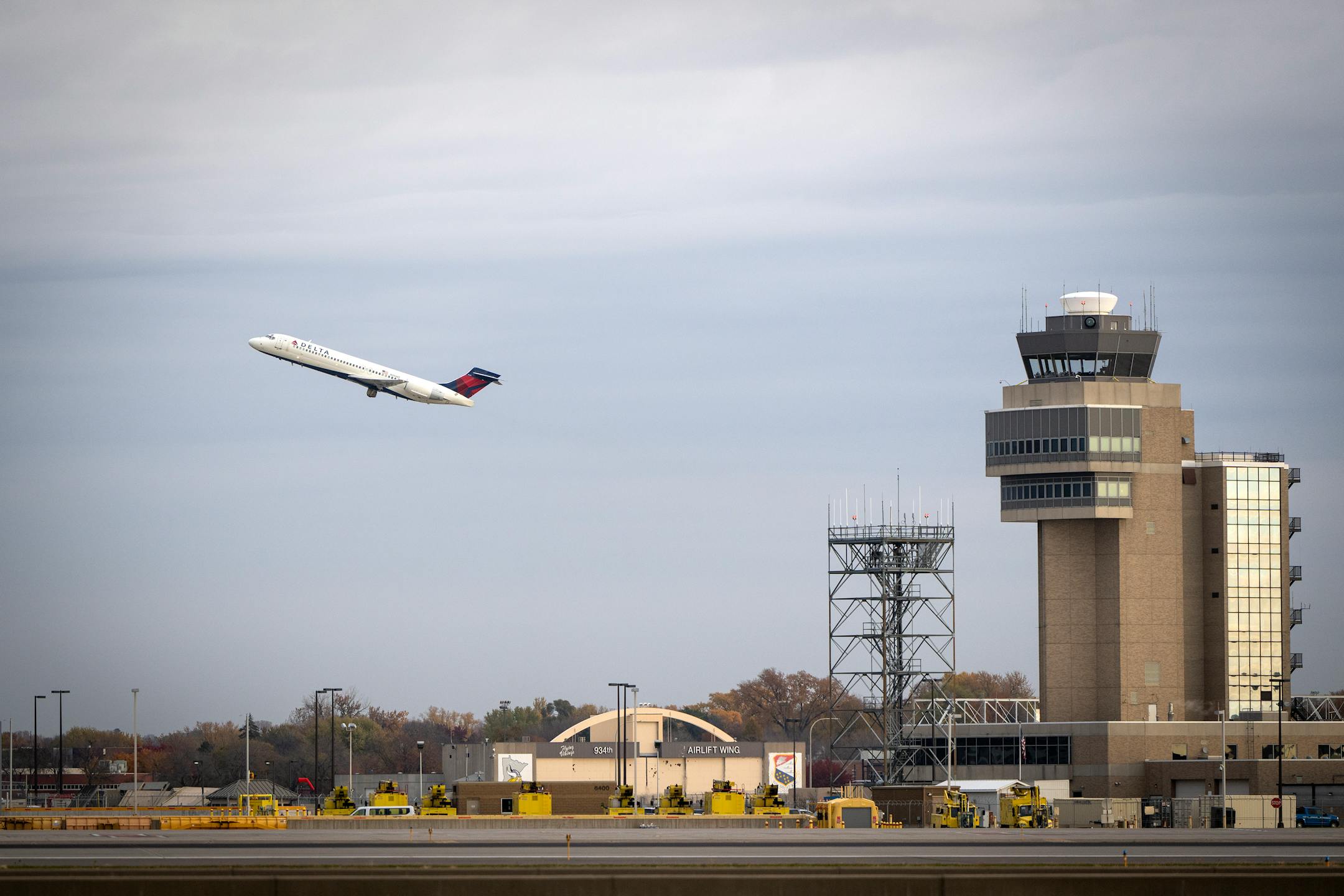
A Delta Airlines plane takes off at Minneapolis-St. Paul International Airport. The departures of three budget airlines in just over a year is reducing competition at the airport. (Leila Navidi/The Minnesota Star Tribune)

Twelve years ago, the first Spirit Airlines flights from Las Vegas and Chicago touched down at Minneapolis-St. Paul International Airport (MSP) with fanfare.

The budget airline hired an Elvis impersonator, served Chicago-style hot dogs and offered an implicit promise to put pressure on the competitors to lower airfares.

That party is over. As air travel rebounds from the federal government’s recent cutback in flights, Spirit in December will become the third low-cost carrier to stop flying to MSP in the past 13 months. JetBlue axed its service in October 2024. Allegiant left in August.

The sudden departures of these airlines come as low-cost flights become more difficult to deliver, with labor, material and operational costs on the rise. Other setbacks for the businesses include Spirit’s two bankruptcies inside a year and a Biden administration nix of a proposed merger between Spirit and JetBlue.

As a hub with heavy business travel and a hometown low-cost airline in Sun Country Airlines, MSP is still regarded as a well-served airport. But some airfare deal hawks warn a dip in competition at MSP may lead to increased airfare costs for the everyday flier, along with a reduction in daily routes.

Positioned to benefit from a less-competitive atmosphere are Atlanta-based Delta Air Lines, the dominant carrier at MSP, its second-largest hub, and Sun Country.

Famous for running tight margins, airlines are weathering some turbulence this year, the latest of which came through an unprecedented federal government mandate to limit air travel. As air traffic controllers collected $0 paychecks during the 43-day impasse, staffing constraints and a prescribed slowdown from the Federal Aviation Administration ultimately triggered thousands of flight cancellations across the U.S.

Meanwhile, major carriers like Delta have also expanded basic economy options, eating away at the profit margins of their no-frills competitors. And with leisure airline Sun Country’s 115 routes leading to and from the Twin Cities, out-of-town budget carriers find it difficult to gain ground and stay.

Sun Country CEO Jude Bricker said in a recent interview that his airline, which is heavily focused on the Minnesota leisure traveler, is “going to do the best we can to keep fares low.” But the cheapest options that deal-hungry consumers crave may become tougher to land.

“It’s not that we’re raising fares, but we’re cutting low-fare flights,” Bricker said. “So, if you want to go somewhere for $50, that’s going to be less likely to be available to you. That’s just the way the airline industry is dealing with some of the inflationary pressures we’ve had.”

The departures of Spirit, Allegiant and JetBlue are not sparking major concern at the Metropolitan Airports Commission (MAC), which has a dual mandate to keep MSP a hub airport and invite healthy competition.

“I’d say that the impact is pretty minor,” said Brian Peters, whose role as director of air service development includes attracting competitors to MSP.

As Spirit prepares to exit the market, the carrier has only two routes left, running between Atlanta and Detroit. Consumers are losing no destinations in the wake of the three airlines leaving, Peters said. And though “we hate to lose a carrier,” Peters said departures do not indicate a problem at MSP.

Retiring MAC Chair Rick King said major carriers are finding profit in selling the first-class seats in the front of the plane and less on the economy tickets — a script flip from recent years.

“I think it’s getting to be an economic thing where those carriers that totally depend on low price are not seeing enough people,” King said.

As for the impact on MSP, King said most of the seats leaving the market with the three low-cost carriers are duplicates.

“I want to have a good mix of those people at MSP, but I think the fact right now is we’re still going to have some low-cost seats.”

In 2024, Delta owned about 70% of the passenger market at MSP, followed by Sun Country at a little less than 12%, according to data from the MAC.

Average cost of airfare has trended down over the past 30 years. But airfares at MSP tend to hover above the national average.

During the COVID-19 pandemic, MSP fares reached parity with the national average but bounced back to an elevated level afterward. This year the average MSP airfare was $59.50 higher in the first quarter and $15.54 higher in the second, according to the most recent data from the U.S. Department of Transportation.

“It’s certainly a lot of losses in a relatively short time,” Kyle Potter, executive editor of ThriftyTraveler, said of the three carriers leaving MSP.

Competition from low-cost carriers is the No. 1 driver of lower prices for any airline, Potter said. But those carriers are shrinking and struggling.

As Southwest Airlines also pulls back some of its presence in the market, and Sun Country has planes tied up flying cargo, Potter said Minnesotans could notice fares rising.

Clint Henderson, managing editor at the Points Guy, said the major carriers have chipped away at the low-cost model over the past decade with the introduction of basic economy seating.

As major carriers like Delta are recording profits driven largely through the sale of premium perks like comfier seats, smaller competitors are looking for ways to turn a profit. One of the most recent innovations is from Canadian airline WestJet, which is now charging some passengers for the privilege of reclining their seats.

“If this is the direction we’re going, I’ll be happy if we just don’t have to pay for bathrooms at some point,” Henderson said.

Brian Sumers, author of the Airline Observer newsletter, said the Twin Cities is unique to have both a hub in Delta, the most powerful and profitable airline, plus a hometown carrier in Sun Country.

“It’s really, really hard for other low-cost carriers to win” in Minnesota, Sumers said.

about the writer

about the writer

Bill Lukitsch

Reporter

Bill Lukitsch is a business reporter for the Star Tribune.

See Moreicon

More from Business

See More
card image
Evan Ramstad

The fourth generation of descendants of George Marvin are teaching the fifth how to lead one of the nation’s biggest makers of windows and doors.

card image
card image