


Nineteen-year-old Brianna Moore was getting food from the McDonald’s at E. Lake Street and Stevens Avenue in Minneapolis when gunfire rang out across the street. A shooter had fired into a crowd of homeless people gathered by the Interstate 35W bridge Monday, injuring five and leaving a gory scene.
The blood is what sticks with her, Moore said.
All summer she had been living with her boyfriend at a homeless encampment that developer Hamoudi Sabri had set up in a parking lot he owned at 2716 E. Lake St. At about 10 p.m. on Monday, another mass shooting lit up that encampment, injuring seven. Moore saw people shot in the head, a friend’s “floppy body” loaded onto a stretcher and police closing the scene, preventing people from gathering their belongings.
“I think it’s [messed] up how they started destroying everybody’s stuff, throwing everybody’s stuff away ... And there, it’s cleared now,” Moore said as she smoked a cigarette on a picnic bench at El Nuevo Campo Park, a block away, the following afternoon.
She laughed when asked if there was any help for the people who witnessed the shooting. “Hell no. They don’t care about us.”
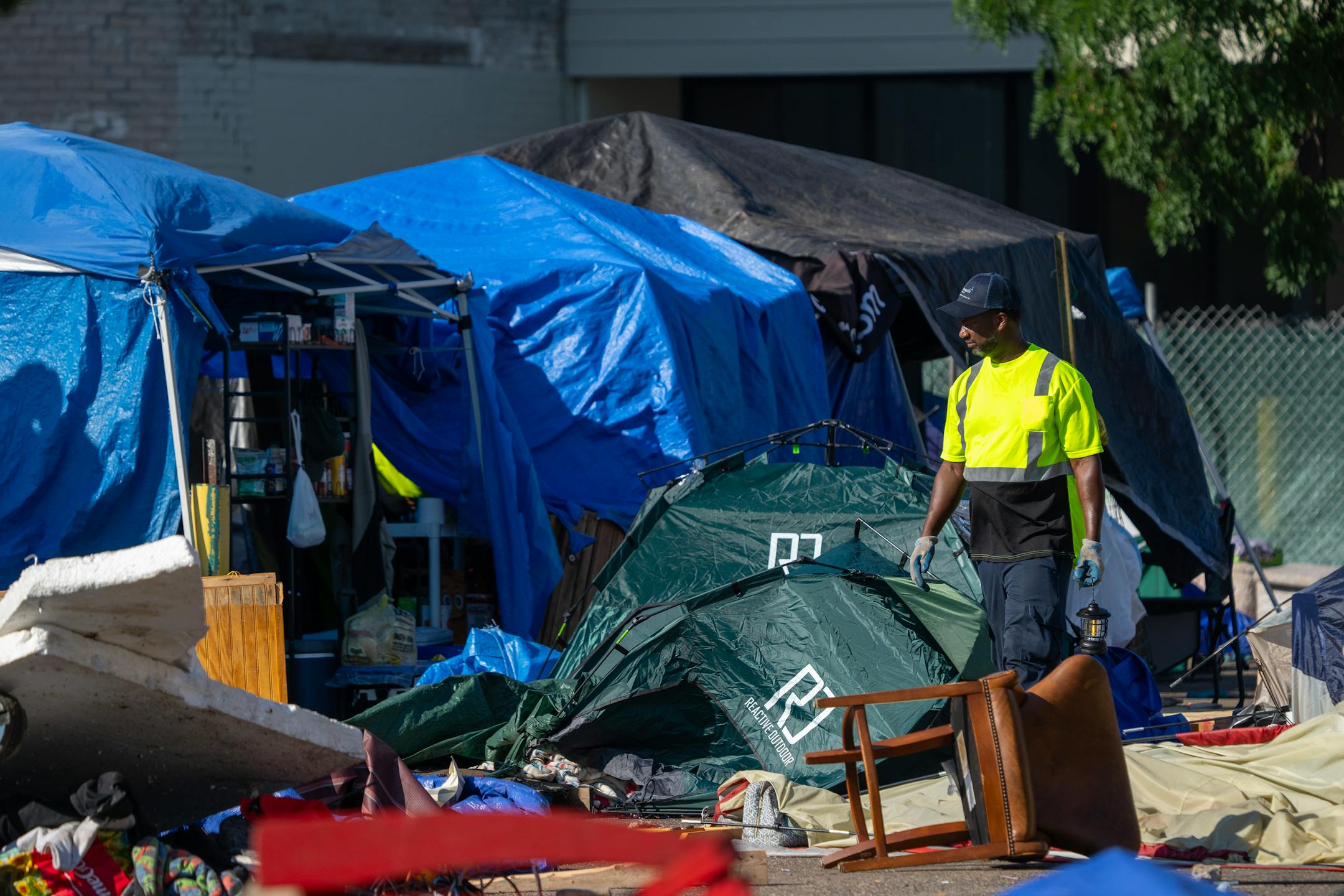
The two mass shootings targeting people in the street, one of which was at an encampment, punctuated a summer of gun violence not just along Lake Street, but in pockets across south Minneapolis.
The number of encampments fell earlier this year as city leaders cracked down on illegal camping. But people from the nearby neighborhoods could plainly see that didn’t erase the miseries — addiction, sex trafficking and violence — playing out beneath bridges and around transit stations and other marginal patches of ground that often fall between government jurisdictions.
From the 46th and Hiawatha light-rail station to the bridge along Cedar Avenue and 17th Street, neighbors and community leaders called out for help from police and government agencies.


