
Minnesota Supreme Court rules USA Powerlifting violated human rights of transgender athlete

The opinion determined that USA Powerlifting violated the public accommodations statute of Minnesota’s Human Rights Act. It left open the question of whether USA Powerlifting had a legitimate business reason to not allow JayCee Cooper to compete as a female.

The Minnesota Star Tribune
October 22, 2025 at 8:49PM
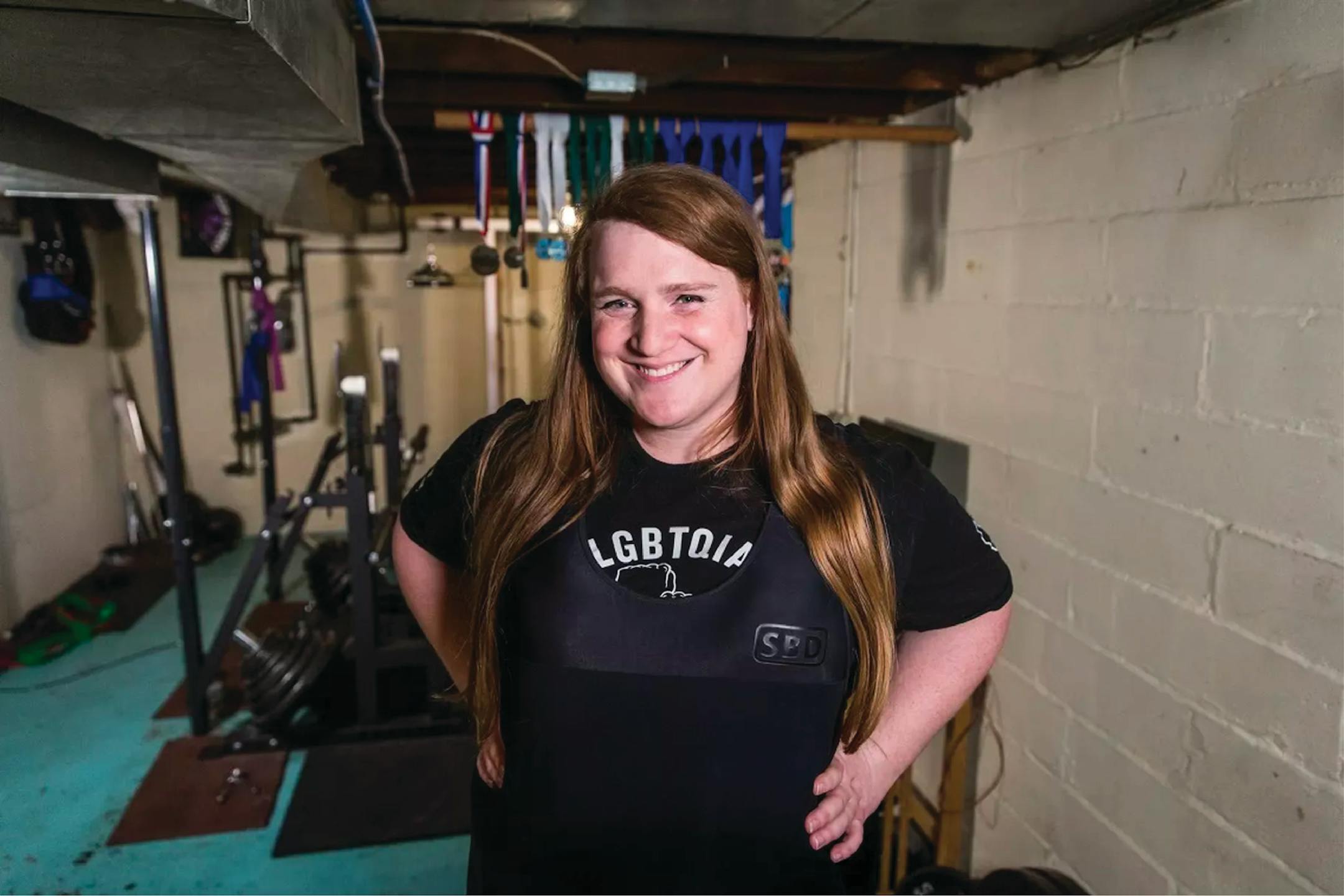
JayCee Cooper’s life has revolved around athletics, including soccer, wrestling, track and field, and curling in high school. (Courtesy of Gender Justice)

The Minnesota Supreme Court ruled Wednesday that the human rights of a transgender weightlifter were violated when USA Powerlifting refused to let her compete as a woman at two events in Minnesota in 2018.

The unanimous opinion affirmed one claim of discrimination brought by Minneapolis native JayCee Cooper, alleging that USA Powerlifting had violated the public accommodations statute of the Minnesota Human Rights Act. Cooper’s other claim of business discrimination was sent back to Ramsey County District Court because the justices found the weightlifting organization had presented “substantial expert testimony and scientific evidence that transgender women who have gone through male puberty have a significant strength advantage.”

The opinion comes amid a flood of executive and legislative maneuvering regarding transgender athletes that has recently targeted the Minnesota State High School League via executive orders from the Trump administration and legal filings from 19 state attorneys general in federal court in Minnesota.

“It’s a hugely important opinion,” said Jess Braverman, legal director of Gender Justice, who represented Cooper. “All of these policies you see where people are trying to exclude trans women, specifically, from public life, you can’t do that in Minnesota.”

Attorney Ansis Viksnins, who represented USA Powerlifting, said the opinion expressed a contradiction in Minnesota’s Human Rights Act by accepting the sports organization’s reasoning for denying Cooper entrance as a matter of business discrimination but not in public accommodation.

“The duality makes no sense as a matter of public policy,” Viksnins said. “The same legitimate reasons that could potentially avoid liability on the business discrimination claim are the reasons that should apply on the public accommodations piece. It’s the same argument.”

Chief Justice Natalie Hudson wrote the opinion, which largely sidestepped the intensity of the topic to focus on the Legislature’s intent to protect individual rights regardless of sexual orientation or gender identity.

The court ruled that USA Powerlifting’s policy “expressly prohibiting transgender women from competing in the women’s division of a powerlifting competition is facially discriminatory.”

Justice Theodora K. Gaïtas took no part in the opinion.

Cooper’s life has revolved around athletics, including soccer, wrestling, track and field, and curling in high school. She competed at the U.S. junior national team level in curling in 2007. Cooper was born male but struggled with gender identity throughout her life.

In 2018, she applied to take part in two USA Powerlifting competitions in Minnesota. At that time, Cooper was taking the medication spironolactone to treat gender dysphoria and applied for a medical exemption because the drug was banned by the World Anti-Doping Agency. The exemption request made USA Powerlifting aware that Cooper was transgender. In denying her request, the weightlifting organization wrote that, “Male-to-female transgenders are not allowed to compete as females in our static strength sport as it is a direct competitive advantage.”

Attorneys for Cooper argued that the policy clearly violated Minnesota’s prohibitions on discrimination in business and in public accommodations because it categorically barred transgender athletes from competing. USA Powerlifting said the decision wasn’t about gender identity, but about clear physiological advantages derived from going through “male puberty” that cannot be reversed through hormone therapy.

The Supreme Court found that argument lacking when it came to public accommodations and sided with Cooper. Hudson wrote that USA Powerlifting’s policy was “discriminatory on its face.”

“There is no individualized nuance to USA Powerlifting’s position,” Hudson writes. “It assumes that every transgender woman has a competitive advantage in the women’s division. There is no assessment of whether that is true in a particular case.”

Braverman said the ruling gave hope to trans people who have been targeted by politicians and that Cooper’s bravery was essential to that recognition.

“I cannot overstate how difficult it is to be a plaintiff in a civil rights case,” Braverman said. “It’s maybe one of the most difficult things a person can voluntarily take on — and when I say, ‘voluntarily,’ I use that term loosely because by the time someone comes to us, they’re already being discriminated against.”

Business discrimination exception

The court determined that USA Powerlifting presented a reasonable legal defense to the allegation of business discrimination.

Hudson writes that to prove an exception to business discrimination, USA Powerlifting “must show that the discriminatory policy is reasonably necessary for it to achieve its central mission and there are no reasonable alternatives.”

At the time it denied Cooper the chance to participate, USA Powerlifting had a transgender policy stating that male-to-female transgender athletes could not participate as women because they have “increased body and muscle mass, bone density, bone structure, and connective tissues” and that creates a competitive imbalance. USA Powerlifting submitted to the court “substantial expert testimony and scientific evidence that transgender women who have gone through male puberty have a significant strength advantage.”

While Cooper argued that allowing transgender women to compete in the women’s division didn’t change the sport or prevent USA Powerlifting from hosting women’s events, the Supreme Court ruled there is a legitimate question over whether USA Powerlifting’s transgender policy amounts to a legitimate business purpose.

The justices remanded that question to Ramsey County District Court for further proceedings.

Viksnins said it was difficult to settle the fact that the opinion potentially absolves USA Powerlifting from liability for business discrimination but not discrimination in public accommodations.

Braverman said that’s the whole point of dual claims, and, if Cooper were to choose, she could simply drop the business discrimination claim and move forward to argue what damages are owed to her by USA Powerlifting for its discriminatory policies.

More importantly, Braverman said, this sends a message to transgender people at a time when federal policies have targeted their livelihoods.

“They’re being told, ‘You’re not good enough to have what other people have,’ ” Braverman said. “It’s so harmful. A ruling like this sends the opposite message: This is Minnesota, we have our own laws.”

USA Powerlifting President Larry Maile said the opinion still allows the organization to operate in Minnesota and it plans to do that.

Maile said the opinion was at odds with the federal government and laws in 27 other states.

“For us, the more disturbing part is that if we are obligated to include trans women in the women’s division, without any adjustments or accommodations to assure fairness, then we have become an instrument of discrimination against, really, what is the largest protected class in the country, which is women,” Maile said.

Legal, political fight in Minnesota

The opinion amounts to a nuanced journey through the clearly protected rights of transgender individuals in Minnesota and comes at a time when sports organizations in the state are grappling with what those rights entail.

Republicans have attempted to advance legislation to ban trans athletes from girls and women’s sports, but the bills didn’t pass the closely divided Minnesota House.

“This issue is ultimately about safety and fairness, and Minnesotans overwhelmingly agree that their daughters and granddaughters should not be forced to compete against boys,” said House Speaker Lisa Demuth, R-Cold Spring. “House Republicans are ready to act in the first weeks of next year’s legislative session to make clear that girls sports are for girls.”

In a statement, the Minnesota Queer Legislators Caucus called the ruling a “historic victory” that affirmed fundamental rights for trans Minnesotans to “live their lives without discrimination in public spaces and accommodations — including in sports."

Last month, the Trump administration issued a letter saying Minnesota was in violation of Title IX because of the MSHSL policy that allows transgender athletes to participate in girls high school sports. The administration ordered the state to make changes in 10 days.

That deadline passed, and the state of Minnesota said it would not offer a “substantive response” to the demand, citing a lack of clarity amid the government shutdown. Solicitor General Liz Kramer criticized the Title IX investigation and the suggestion that the state “faces imminent cuts to federal funding” unless it makes changes.

“As you know,” Kramer wrote, “if the federal government intends to follow the law, it would need to follow an extensive, multi-step administrative process before any federal funding to Minnesota education programs or activities could ever be terminated.”

In August, attorneys representing three Twin Cities metro area high school softball players requested that a federal court temporarily block transgender athletes from competing in girls sports. Last month, U.S. District Judge Eric Tostrud denied that request, saying attorneys representing the athletes were unlikely to succeed in their argument that Minnesota’s nearly decade-old bylaw creates an uneven playing field and violates Title IX, the federal law prohibiting sex-based discrimination.

A little over a week after Tostrud’s denial, the Trump administration released its letter ordering the MSHSL to change its policy or face penalties.

Last week, attorneys general from 19 states filed a brief in the U.S. Court of Appeals for the Eighth Circuit seeking to reverse Tostrud’s decision. The brief accused the MSHSL of denying female athletes the benefit of “fair and safe competition” through its decade-old policy allowing people born male to compete in girls’ sports.

“That is basic biology,” wrote Iowa Attorney General Brenna Bird, who wrote the brief on behalf of the states. “And to deny or ignore that deprives females of what was fought for in this Nation’s history — the right to be treated equally and to have the same opportunities as their male counterparts.”

Allison Kite of the Minnesota Star Tribune contributed to this story.

about the writer

about the writer

Jeff Day

Reporter

Jeff Day is a Hennepin County courts reporter. He previously worked as a sports reporter and editor.

See Moreicon

More from News & Politics

See More
card image
Renée Jones Schneider/The Minnesota Star Tribune

A federal lawsuit alleges a Maryland company never delivered the lessons meant to tie into the city’s college savings program for newborns.