

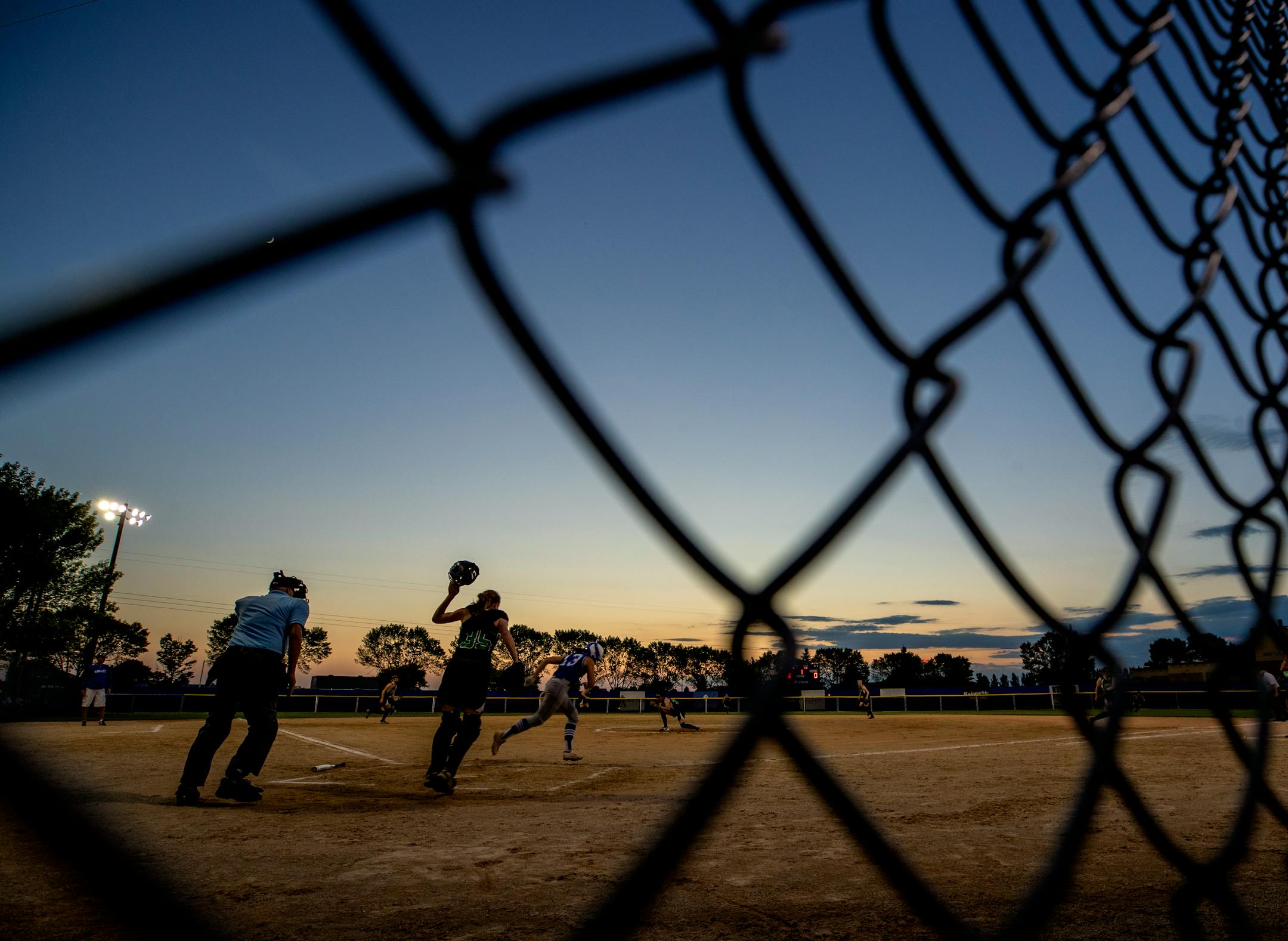
Attorneys representing three Twin Cities metro-area high school softball players on Wednesday requested a federal court to temporarily block transgender athletes from competing in girls sports.
In a federal courtroom in St. Paul, counsel representing Female Athletes United on Wednesday requested an injunction that would block transgender athletes from competing pending the outcome of their lawsuit filed in May against Attorney General Keith Ellison and other state leaders, which focuses on an unnamed metro-area player who they allege was born male. U.S. District Judge Eric Tostrud, who listened to arguments on the merits of the suit, took the matter under advisement.
The federal lawsuit filed in May came amid a flurry of debate on the national stage about participation of transgender athletes in high school sports. The suit was quickly followed by an investigation into Minnesota’s policy by the Department of Health and Human Services Office for Civil Rights to investigate whether the MSHSL and Minnesota Department of Education allowed “male athletes to compete on sports teams reserved for females.”
Minnesota sued the Justice Department in April in response to threats by the Trump administration to withhold federal funding if the state did not comply with executive orders attempting to ban transgender athletes from school sports and to define two sexes — male and female.
The Minnesota State High School League’s board of directors in 2015 opened girls sports to transgender student-athletes. The current bylaw allows for students to participate in a sport “consistent with their gender identity or expression in an environment free from discrimination with an equal opportunity for participation in athletics and fine arts.”
Rory Gray, representing Female Athletes United, argued the bylaw has created an unequal playing field in which female athletes are expected to compete against both athletes who identify as female and as transgender.
“The bylaws designed a web of protection to ensure equal athletic opportunities. The problem was, later the league came in and made a change that made a gaping hole,” he told the court.
Gray argued that the bylaw promotes unfair advantage and may harm female athletes’ ability to obtain college athletic scholarship opportunities if recruiters compare their ranks and statistics against dominant transgender athletes


