Twin Cities shoppers are likely to hold the line on spending this holiday season

Deloitte found that the local barometer is better than the nation, but Target and Walmart executives also said this week it will be a budget-conscious holiday season.

The Minnesota Star Tribune
November 20, 2025 at 5:22PM
AYRTON BRECKENRIDGE • ayrton.breckenridge@startribune.com
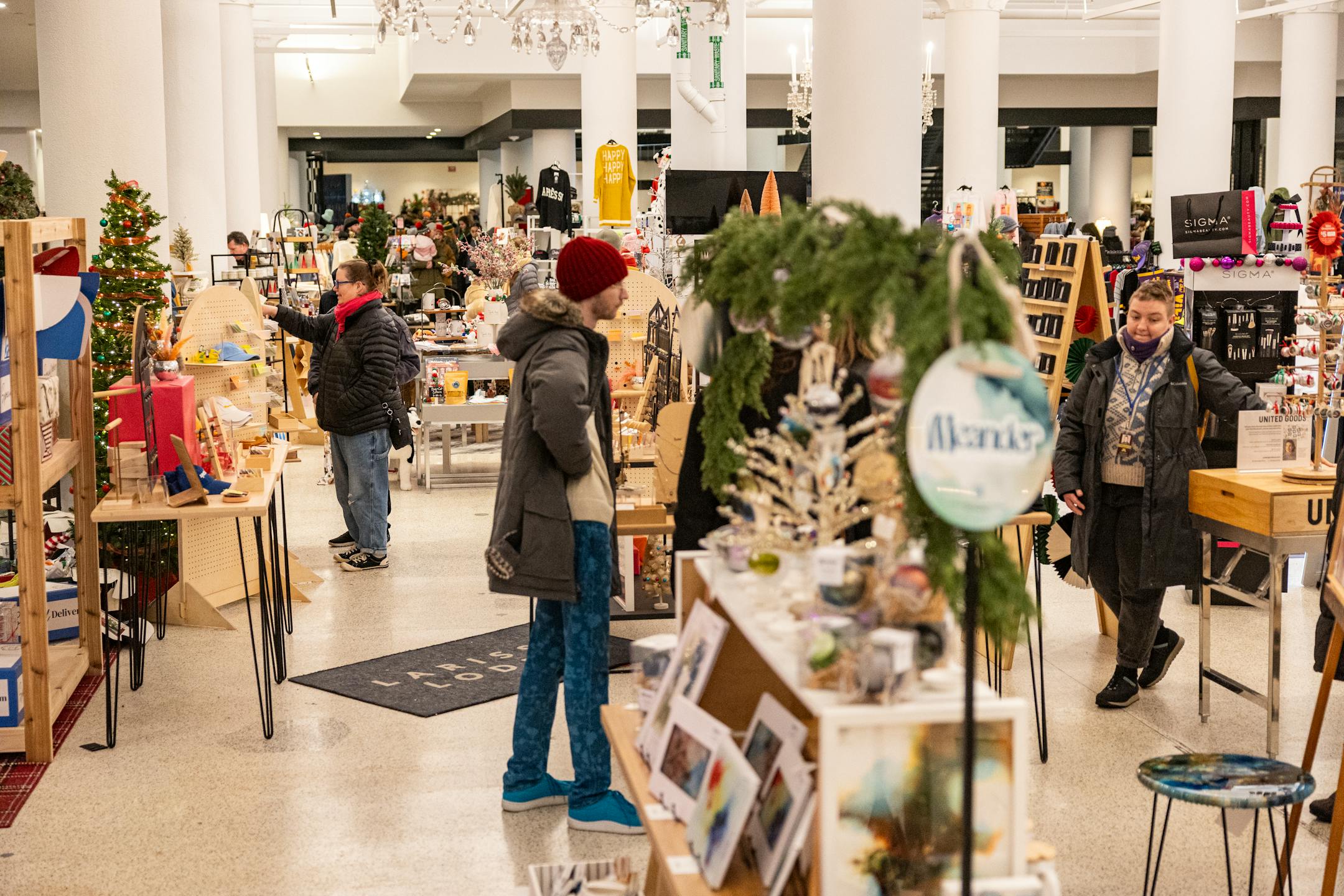
Looming economic uncertainty, layoffs and the recently ended government shutdown have made some households tighten holiday budgets. In the Twin Cities, shoppers expect to spend about the same, whether they are buying gifts at pop-ups like the Dayton's Holiday Market or Target. (Ayrton Breckenridge/The Minnesota Star Tribune)

Léa Payette has long had a strategy for holiday shopping that helps her dodge rising prices.

She keeps a running list of gift ideas and, as an avid thrifter, picks up inexpensive, eco-friendly items throughout the year. Last year, for her friend — a foodie who loves the outdoors — Payette found an Eddie Bauer picnic set in red, her favorite color.

After recent layoffs, the end of the government shutdown and rising economic uncertainty, many households are rethinking how they’ll spend their holiday dollars.

Minneapolis-based Target on Wednesday reported another sales decline for the August-through-October period, citing consumers making trade-offs heading into the holidays. A day later, Walmart said it continued to see value-seeking shoppers across all incomes, especially those with higher incomes.

“As we go into Christmas and the holidays, we think the consumer will prioritize what goes under the tree vs. what goes on the tree,” Target’s Chief Commercial Officer Rick Gomez said on a media call.

In the Twin Cities, Deloitte’s annual holiday survey found shoppers expect to spend about the same as last year — a contrast to the 10% decline projected nationally. However, higher inflation and tariff-driven prices could mean fewer goods in the basket.

Increasing price sensitivity

Deloitte’s findings add to several surveys predicting a spending slowdown, including one from PricewaterhouseCoopers. The National Retail Federation expects sales to rise 3.7% to 4.2%, a smaller bump than last year.

Shoppers are becoming increasingly price-sensitive, fueling fierce competition among retailers and prompting some to shift from Target to Walmart or Aldi for deeper savings. Walmart reported Thursday that it was continuing to see a growing number of higher-income shoppers who are seeking relief from pricier grocery bills.

Analysts say consumers are also redefining value, often looking to maximize what they get for their money.

“You’re seeing a lot more deals and offers, and even enhancements on products,” said Bruce Nustad, president of the Minnesota Retailers Association. He noted examples like book releases paired with in-store author events.

“Ultimately, the consumer wins in that scenario,” he said.

Many chains have rolled out holiday promotions at last year’s prices, or lower, to attract deal-hungry shoppers. But consumers are noticing shrinkflation — a reduction in size without a change in price.

Walmart’s advertised Thanksgiving meal now includes 15 items, down from 21 last year, and many retailers, including Target, have swapped in more private-label goods.

A September NielsenIQ survey found 58% of respondents are extremely concerned about food price inflation, and 31% say they will choose store brands whenever possible. Food costs in September were up 2.7% from a year earlier, according to federal data.

Patina has seen increased demand for all things “cozy and crafty,” including Jellycat plush toys, cookbooks and family games, said Liz Barrere, CEO of Patina Stores. (Jeff Wheeler/The Minnesota Star Tribune)

Patina, which has eight stores tucked into neighborhoods across the metro, has seen increased demand for all things “cozy and crafty,” including Jellycat plush toys, cookbooks and family games, said Liz Barrere, CEO of the local chain.

Those choices build on growing demand from adults for items that brought them joy during adolescence.

Target reported growth in beauty, food and beverage and hardlines, which includes popular items like trading cards, toys and electronics. The retailer has also announced exclusive product launches with Lego, Barbie and KPop Demon Hunters.

But Deloitte noted spending declines among Gen Z and millennial consumers.

That largely reflects buying power, said Allison Luedtke, associate professor and economics department chair at St. Olaf College. Those generations are earlier in their careers and more affected by inflation, tariffs and rising living costs.

But younger Minnesotans may be somewhat insulated compared with peers elsewhere, she said. Starting salaries tend to be relatively high and the cost of living comparatively low.

Lifestyle changes, such as having children, also shape spending habits and can cause expected spending to differ from what people ultimately buy.

“Now I have two children, and I’m much less flexible in what I’m going to be spending,” Luedtke said. “I’m going to be spending what I’m spending because I have children and they don’t know how tariffs work.”

Protection from tariff-driven increases

Minnesota may get a slight break on tariffs. The state is less exposed to imports — and thus tariff-driven price hikes — than some neighboring states, Luedtke said.

Still, Minnesotans face rising costs in areas where they spend heavily, including child care, housing and health insurance. Those expected increases could shape how much families spend on gifts and other holiday festivities.

“I’m always sensitive when I talk about how the economy does better in Minnesota because obviously it doesn’t do better for everybody,” said Matt Marsh, Minneapolis managing partner at Deloitte. “Lower- and middle-income people get hit harder by inflation because it eats up a greater proportion of their dollars.”

Even with less exposure, consumers are sensitive to tariff news, Nustad said, which can impact spending decisions, such as looking for deals or spreading out shopping.

Twin Cities residents consistently spend more than regional and national averages, including on back-to-school shopping. And when national forecasts predict large jumps in spending, Minnesota often sees steadier growth.

“Part of it is the balanced nature of the economy in the Twin Cities. It’s a very diverse, entrepreneurial community. It de-risks a lot of the economy up here,” Marsh said. “Historically, we’ve always been a little higher on the spend.”

Variation in surveys

If the National Retail Federation’s holiday estimates are correct, holiday spending could surpass $1 trillion nationwide. Deloitte, even with the spending dips, estimates the total could top $1.6 trillion.

That uptick, though, could come from higher prices rather than a surge in buying, according to the S&P Global’s 2025 Holiday Retail Sales Outlook.

“When I saw that [retail federation report], I thought, yeah, that’s just a statement about how the cost of stuff goes up over time,” Luedtke said. “I don’t think that’s a statement about how people are actually buying more stuff.”

Many surveys were conducted in August or September, meaning they’re only a “snapshot in time,” Nustad said. Expected spending may shift with changing economic conditions and policy decisions.

Traditional ways of predicting consumer spending aren’t always reliable, he added, noting that “you can’t necessarily even tie consumer confidence to what a consumer actually does.”

The University of Michigan’s monthly survey of consumer confidence fell to 50.3 in November, down from 53.6 the month before. The preliminary reading is hovering just above the lows seen during the 2022 inflation peak.

about the writer

about the writer

Carson Hartzog

Retail reporter

Carson Hartzog is a business reporter covering Target, Best Buy and the various malls.

See Moreicon

More from Retail

See More
Ten skids of loose peanut butter crackers wait to go to the land fill Saturday Feb. 7, 2009 as Gleaners Food Bank destroys products containing peanut butter as part of the nation wide recall of foods containing Salmonella tainted products from Peanut Corp. of America . (AP Photo/The Indianapolis Star,Michelle Pemberton)
The Minnesota Star Tribune

Gold Star Distribution, which supplies several Halal markets in the Twin Cities, is voluntarily recalling a list of food and merchandise products stretching 44 pages and including products from candy to medicine.

card image
card image