
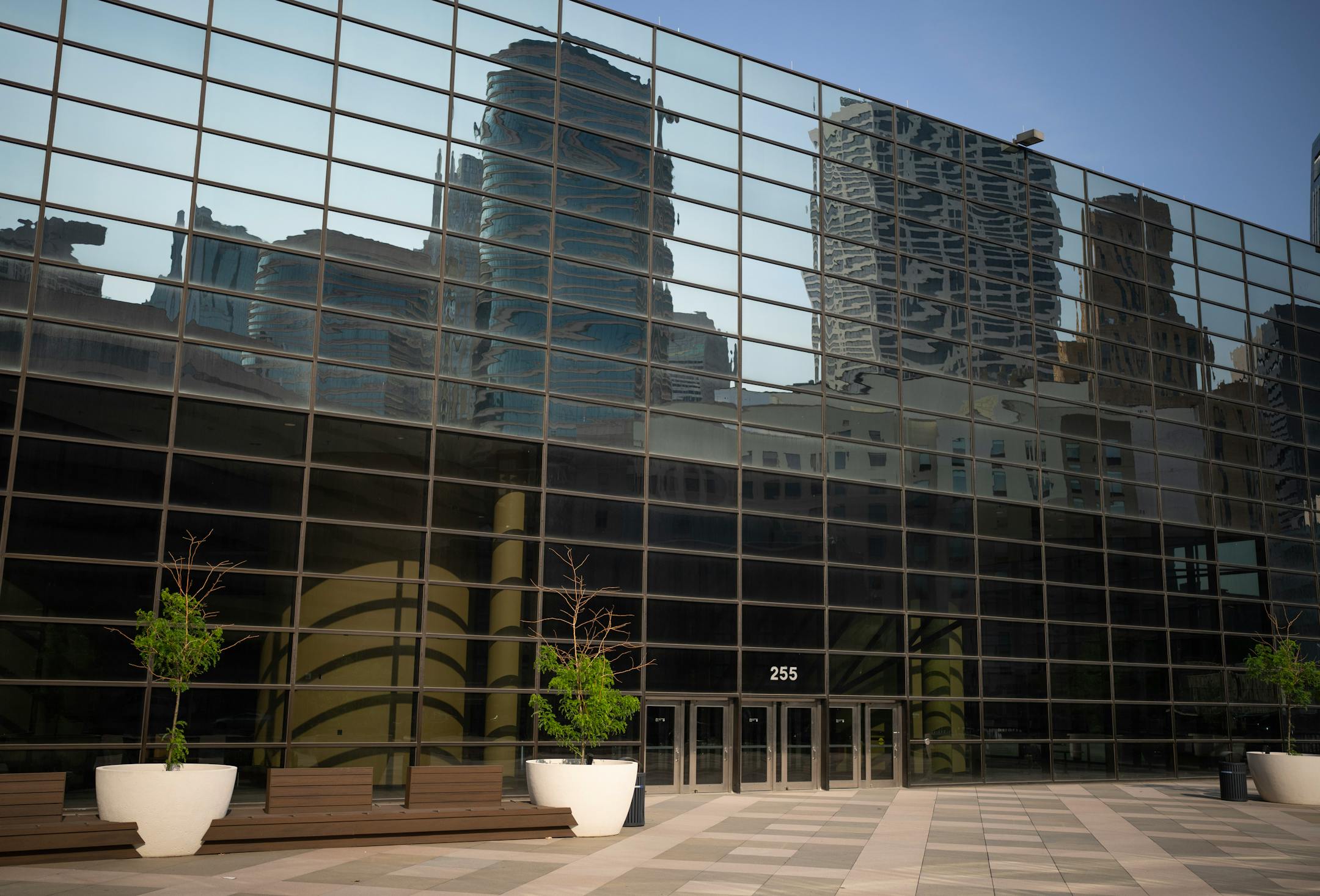
Former Wells Fargo operations center in Minneapolis up for sale, $400M housing plan scrapped

Sherman Associates looks to sell the former Wells Fargo operations center, with data center space at the core of the new vision.

The Minnesota Star Tribune
August 26, 2025 at 9:28PM
The former Wells Fargo Operations Center, at 255 Second Ave. S., in downtown Minneapolis seen June 8, 2023. (Jeff Wheeler/The Minnesota Star Tribune)

A prime block in downtown Minneapolis is no longer headed for mixed-use residential development.

Instead, the former Wells Fargo operations center at 255 Second Ave. S. is on the market for its underground data center.

The 550,000-square-foot vacant building was once the centerpiece of developer Sherman Associates’ $400 million Washington Yards project, formerly called “Harmonia.” That plan involved housing, office and retail space.

Now, the Minneapolis-based developer is scrapping that plan for a sharply different approach: Sell the property, with its existing 70,000 square feet of subterranean data center space at the heart of the new vision.

“We are out to market, in particular, with the existing data center space,” said Sherman Associates President Chris Sherman. “And it’s to be determined whether we sell some or all of the real estate.”

The pivot underscores the soaring demand for data center capacity to power artificial intelligence, cloud computing and streaming. Operators, like Oppidan and DataBank, have facilities in and around Minneapolis. Meta — and likely soon Google — is developing facilities across the state.

Sherman Associates is working with commercial brokerage Colliers to sell the glass building in the central business district.

“We do have significant interest at the table from users, buyers, developers,” Sherman said. “And those groups are wide ranging, from local groups to national groups.”

He added Sherman Associates might remain involved long-term, but that is not the primary goal. The building could portion into vertical subdivisions to allow for the possibility of selling portions rather than the entire property.

While there are no current plans to expand the data center, Sherman said Xcel Energy is adding infrastructure, including the supply of 26 megavolt-amperes of power. The overall build-out should take 14 to 16 months.

“The space that’s there is large, and because technology storage has improved so vastly, what was a much smaller amount of storage space in 1979 when it first opened can now accommodate a lot more storage space,” he said.

The three floors of data center space serve as the anchor, but Sherman said parts of the building could support offices, restaurants and food-and-beverage spaces.

But “housing is not part of the equation,” he said.

“We do expect to see interest in the existing data center footprint, but the property also has attractive existing office space,” said Raul Saavedra, leader of Colliers’ data center advisory services, in a statement.

Sherman Associates, one of the most active developers in the Mill District and along Washington Avenue, has a track record of being a prolific downtown apartment developer.

The developer’s projects include the O2 Luxury Tower apartments, Ladder 260 affordable housing and Mill District Event Spaces. The firm has also completed adaptive reuse efforts such as Groove Lofts in Minneapolis and Landmark Tower in St. Paul.

Reusing the building cuts construction timelines and channels investment into a downtown that has seen momentum but also faces vacancies. Downtown’s vacancy rate tops the metro average, but with no new projects on the horizon, that will likely shrink in the coming years.

Built in 1979 and connected to the city’s skyway system, the former Wells Fargo operations center had an estimated market value of $10.455 million in 2025, according to Hennepin County property records. But that could just be the starting point if its sale positions Minneapolis for the next wave of digital infrastructure.

“The pros vastly always outweigh the cons,” Sherman said. “The data centers are a tremendous benefit to our economies and to our consumers.”

The city of Minneapolis and business groups are working to revitalize downtown, such as the Minneapolis Downtown Council’s plan to reshape the urban core by 2035 to meet changing needs by focusing on mixed-use residential space.

But Minneapolis Downtown Council CEO Adam Duininck said Sherman Associates’ shift is an exciting opportunity for the building.

“That sort of infrastructure is essential for economic growth and downtown Minneapolis remaining the center of our region for jobs and industry,” Duininck said in a text.

about the writer

about the writer

Emmy Martin

Business Intern

Emmy Martin is the business reporting intern at the Minnesota Star Tribune.

See Moreicon

More from Business

See More
card image
Hormel headquarters in Austin, MN. ] GLEN STUBBE * gstubbe@startribune.com Friday September 11, 2015 Despite woes throughout the food industry, partly due to consumers turning away some from processed foods, Hormel has managed to continue prospering -- even though a good part of its business -- Spam, chili -- is about as processed as you can get. But the company's turkey and pork offerings are riding a hot protein trend. And over the past two years, it's made some of the biggest acquisitions in