Vang: How Catholic schools are redefining security in sacred spaces

After the Annunciation shooting, Catholic schools are trying to balance their traditional openness with keeping students safe.

Columnist Icon
The Minnesota Star Tribune
September 17, 2025 at 10:59AM
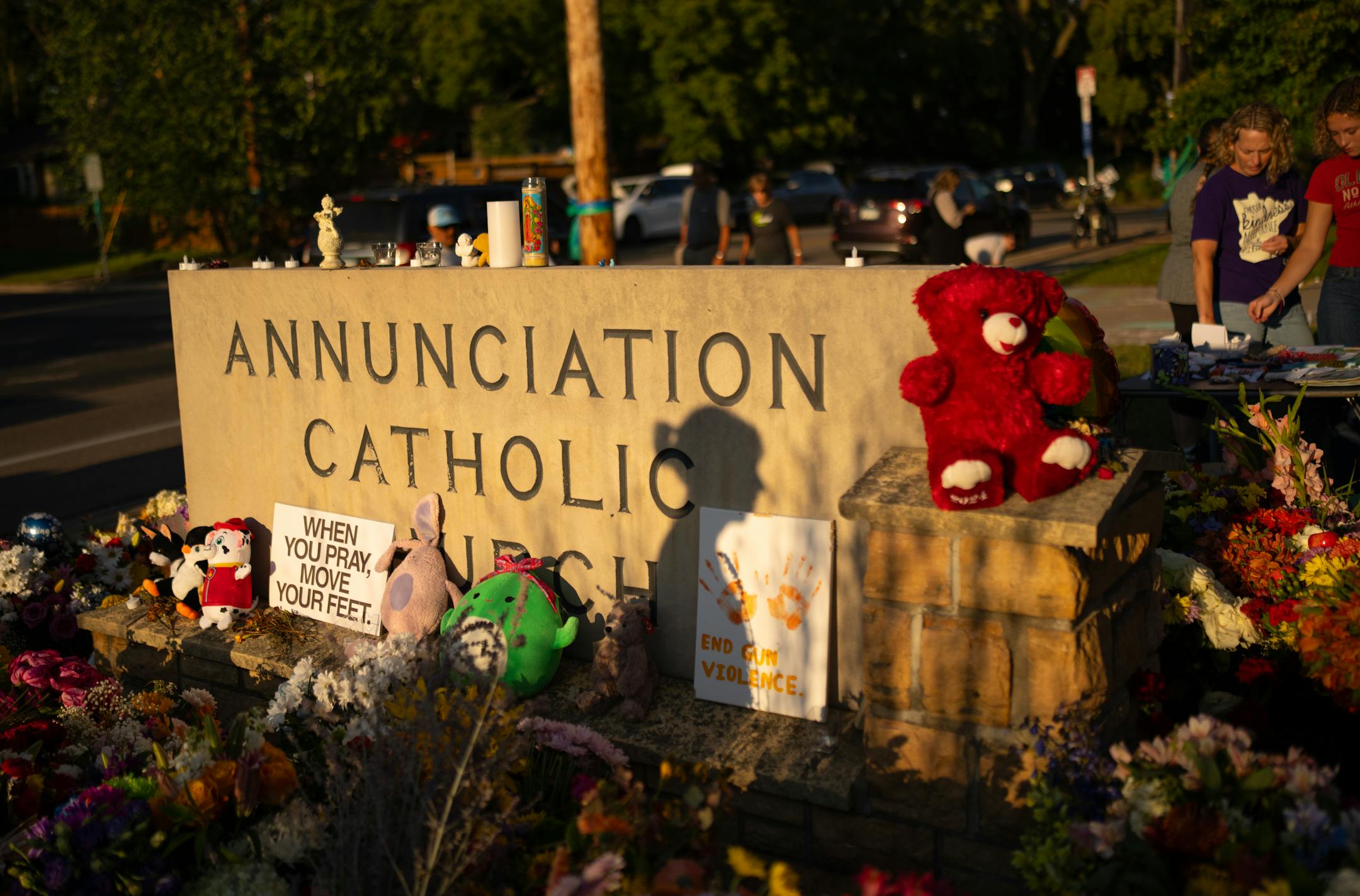
The memorial to the victims of the attack at Annunciation Church Aug. 30. (Jeff Wheeler/The Minnesota Star Tribune)

Opinion editor’s note: Strib Voices publishes a mix of material from 11 contributing columnists, along with other commentary online and in print each day. To contribute, click here.

•••

When I dropped off my son at his Catholic school recently, just days after the Annunciation school shooting, I saw the unfamiliar sight of a police car circling the school campus.

His school day at St. Joseph Parish School in Prescott, Wis., still begins with Mass, but for the first time the church doors are now locked and monitored. And at St. Elizabeth Ann Seton, the Catholic school in Hastings my daughter attends, Mass is now closed to the public and parents.

For generations, Catholic schools have been defined by their openness — doors unlocked during daily Mass, parishioners free to wander in to light a candle or sit quietly in the pews, families encouraged to feel that faith is most alive when shared in community. Yet today, in a world where even sacred spaces are not immune to violence, that openness is being reconsidered.

Across the state, Catholic institutions are grappling with how to protect their students without closing off the warmth and hospitality that have long been hallmarks of parish life.

The tension is profound. Catholic schools are not just academic spaces; they are spiritual homes. A locked church door can feel like a locked heart. A uniformed officer at the school entrance may be a comfort to some parents but can also be a jarring reminder of the world’s dangers to a child walking into class. Families like mine now live in the middle of this balance, wanting our children to be safe above all while yearning for the schools to maintain their role as sanctuaries of openness, welcome and trust.

These changes raise a difficult set of questions. What happens to the spiritual experience of Mass when movement is restricted, or when the presence of law enforcement changes the tone? How do we teach children about faith and trust while also teaching them that every door must stay locked and every stranger questioned? At what point does vigilance cross into fear?

Still, there is wisdom in acknowledging reality. Catholic tradition itself calls for stewardship, care and the protection of the vulnerable. Ensuring that children and teachers are safe is, in many ways, an act of faith. It is a recognition that the sacredness of life is worth guarding fiercely. The Gospel invites us to welcome the stranger, yes, but also to shepherd our flock. Today, shepherding may mean surveillance systems and safety drills alongside hymns and homilies.

For parents, these shifts are not easy. I cherish the memory of attending Mass at St. Agnes High School in St. Paul when I was growing up: doors open, pews waiting, the smell of incense in the air and having zero fear that a maniac gunman would kill me while I prayed.

My children may never feel safe in Mass again. Their memories will instead include locked doors, police cars, bullet-proof windows and worshiping in isolation. And yet, they will also know that their community values their safety enough to adapt, to change and to sometimes let go of tradition to preserve life.

In the small town of Prescott, St. Joseph Parish School is more than a school beside a church — it is the heartbeat of the community. It gathers Catholics and neighbors of every belief under one roof. Just this past weekend, hundreds came together for the school’s fall festival, sharing laughter over games and savoring sweet autumn treats.

The challenge for Catholic schools is to keep the heart of the faith alive while adapting to the realities of the modern world. That requires creativity, compassion and constant dialogue between parish leaders, educators, parents and students. It requires us to remember that while locks and patrols may shape the exterior, the true sanctuary is built in how we care for one another.

We live in a time when sacred spaces can no longer assume immunity from the world’s violence. That reality is heartbreaking but not paralyzing.

Catholic schools are showing that faith does not mean ignoring danger, and security does not mean abandoning welcome.

In every locked door, in every cautious protocol, there can still be an open heart, a community gathered in faith and a belief that safety and sacredness can, and must, coexist.

about the writer

about the writer

Ka Vang

Contributing Columnist

Ka Vang is a contributing columnist for the Minnesota Star Tribune. She focuses on historically marginalized communities.

See Moreicon

More from Contributing Columnists

See More
card image
Jeff Wheeler/The Minnesota Star Tribune

The loss of more than a billion dollars that’s occurred on the governor’s watch makes him unfit for further service to the state.

card image