

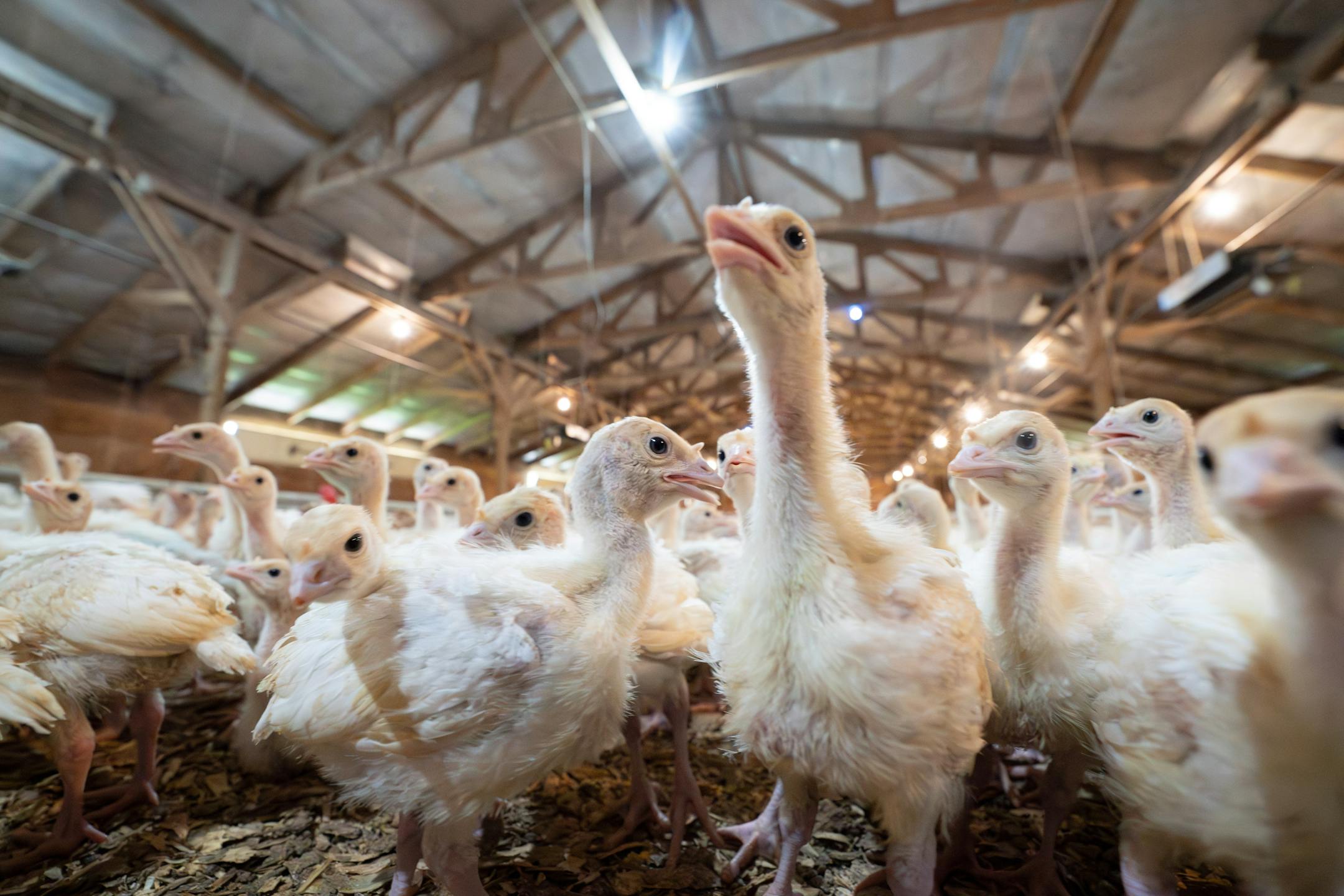
Avian flu flared up in Minnesota poultry operations last month after a nearly eight-month reprieve, forcing farmers to depopulate eight turkey barns.
A vaccine exists for this highly pathogenic avian influenza, which could be used against the nearly four-year outbreak that has wiped out 9.2 million birds in Minnesota alone.
But if American chickens and turkeys are vaccinated, other countries may not buy them. The fear among importers is that vaccinated birds might not show symptoms of an infection, allowing the virus to spread across borders undetected.
So the option is off the table until the federal government approves a vaccine and new trade pacts can be negotiated — even though bird flu could prompt a pandemic if the virus mutates and starts spreading broadly among humans.
“Vaccination is caught up in an international kerfuffle, if you will,” said Carol Cardona, a professor in the Department of Veterinary and Biomedical Sciences at the University of Minnesota. “We have vaccines. We have the ability to implement them.”
As frustrating as high egg prices have been for consumers, billions in lost exports would be a much bigger financial setback for the poultry industry. Minnesota is the country’s leading turkey producer. The Thanksgiving staple is a billion-dollar industry in the state, with more than 600 farms.
The U.S. Department of Agriculture has spent $100 million on bird flu vaccine research this year, though the agency hasn’t authorized one for commercial use yet. The USDA is talking to trading partners to make sure virus-fighting efforts don’t impact trade.
“In the meantime, biosecurity remains the best and most prudent approach to mitigate the impact of the disease today,” the agency said in an email.


