As Minnesota farms falter, so do farm families

Divorces on farms have gone up. With signs of a rocky farm economy ahead, therapists and farmers worry that farm families might crumble alongside their businesses.

For the Minnesota Star Tribune
December 22, 2025 at 12:00PM
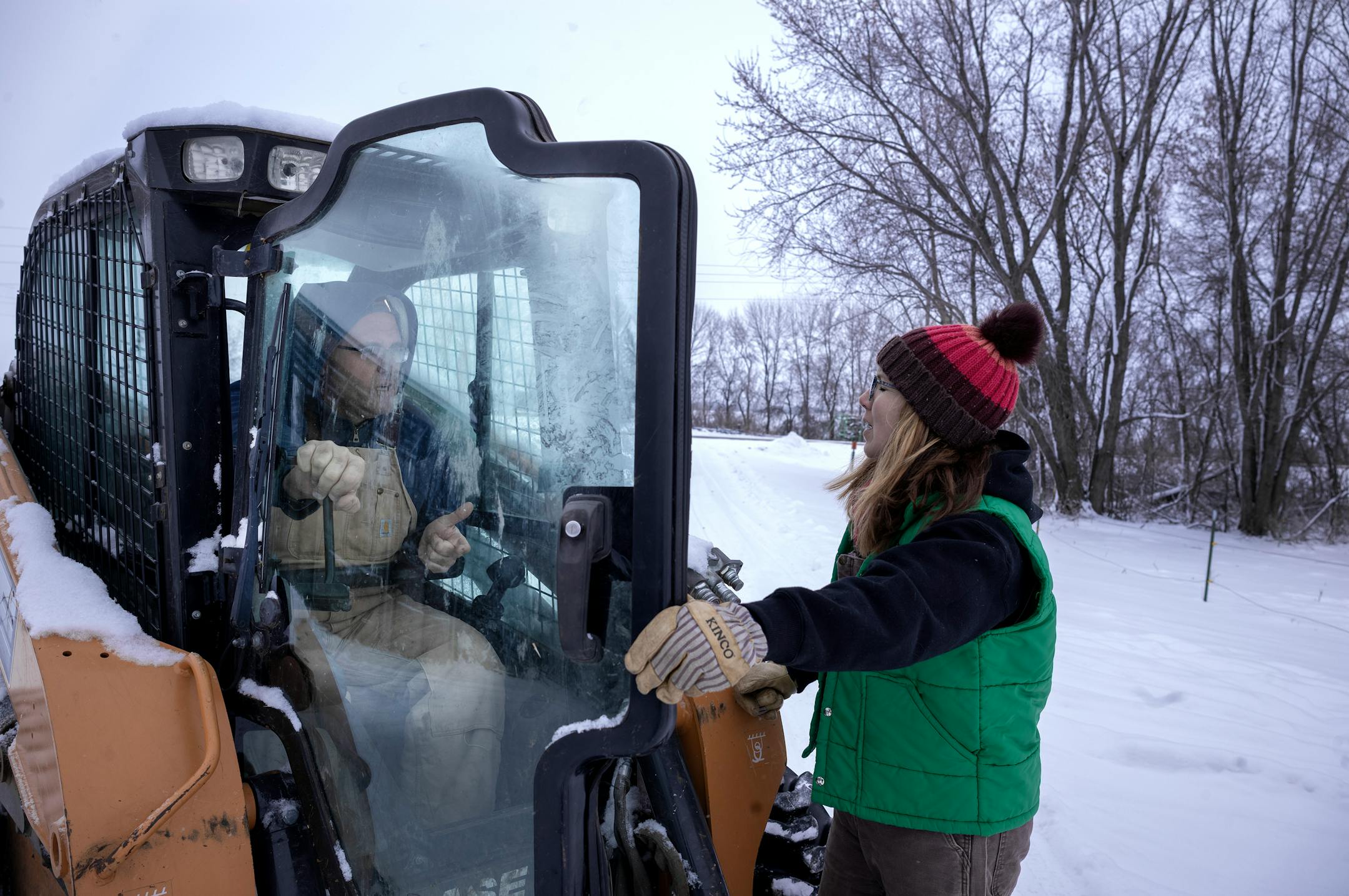
Katie Elvehjem and her husband, Matt Laubach, observe their cows after putting out fresh hay on their farm on Dec. 8 in Glenwood, Minn. (Jerry Holt/The Minnesota Star Tribune)

The dust cloud billows up behind your bumper whether you’re headed toward Katie Elvehjem’s farm or away from it. And on a Friday evening in spring 2024, Elvehjem was dreaming about leaving.

“I felt like driving 95 miles per hour down a road somewhere just to get out some steam,” she said. Her cows were calving, and that was stressful. Her children clamored for dinner, and that was stressful. Her husband, Matt Laubach, was in their fields, sowing the seeds that, come November, would either feed them — or not. And that was stressful.

Most of all, Elvehjem was stressed that her husband couldn’t seem to see she was stressed. But she didn’t leave their Glenwood farm. Instead, she sent an email to Monica McConkey, a therapist. By the next week, Elvehjem and Laubach were in couples counseling.

They were far from the only ones, according to state-funded therapists who work primarily with Minnesota farmers. After decades of rarely serving couples, they say marriage counseling is now their most-provided service. Nationwide, divorces on farms have ticked higher each year since the pandemic, according to marriage researcher Krista Westrick-Payne, even as divorce rates have flattened overall.

Now, as new tariffs scythe down revenue and stir memories of the widespread farm collapses in the 1980s, therapists say economic pressures have morphed into marital ones. If farms begin to fail, farmers and therapists worry families will too.

“This could get uglier and uglier,” Elvehjem recalled thinking on that spring evening last year. “And the thing that brought us together, our farm, could drive us apart.”

Our therapists

Where the dirt road turns to Elvehjem’s driveway sits a lumbering red tractor, its leather seat long given way to its yellow foam interior. In the floodlights from Elvehjem’s front yard, the old machine casts a shadow onto another tractor, that one kid-sized and equipped with pedals — more for making fun than money.

It’s sometimes hard to tell where the farming business starts and the family ends, said McConkey, whom the state funds to provide free counseling to farmers. Farmers marry their colleagues and raise them, too.

Unlike other family businesses, though, farming is notoriously unpredictable and uncontrollable. The sky might not offer up enough rain. Or too much. Or a key customer might suddenly stop buying crops, like China did to soybean farmers this year after President Donald Trump slapped it with tariffs. McConkey said the economic ups and downs bleed into farm relationships.

“In tough economic years like we’re in right now, there might have to be changes to lifestyle and spending,” McConkey said. “That’s hard, and those are hard conversations to have in marriage.”

Elvehjem can always see work outside the window, the more than 1,200 acres that roll into the horizon. She didn’t picture farming like this when she decided her career at 10 years old. She imagined something smaller, she said, maybe a little dairy operation with a few cows.

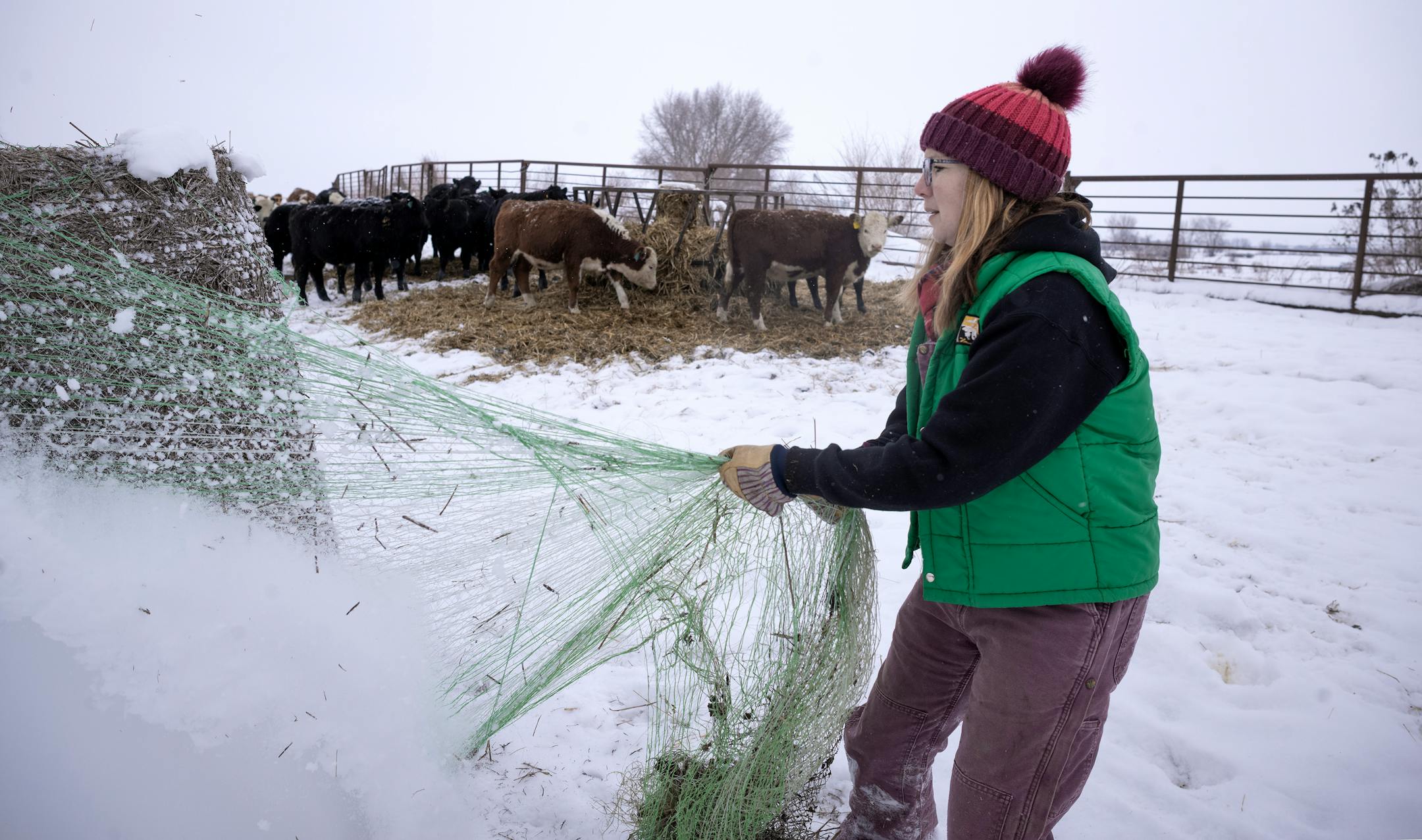
Katie Elvehjem removes wrapping from a hay bale on the family farm on Dec. 8 in Glenwood, Minn. (Jerry Holt/The Minnesota Star Tribune)

Farming is all about scale now, and her farm kept growing. A plot of land here. Another tractor, there. Corn and beans and cattle. A million dollars coming in and out of the door each year, with her hoping to somehow scrape $50,000 off the top in profit.

In their pastures and fields, the fights grow up from the ground. Should they till fields for the upcoming season? (Elvehjem doesn’t think so). Should they sell some cows to the slaughterhouse? (Laubach thinks so). Either way, they always come back to the farm’s finances, Laubach said.

McConkey, after that spring evening in 2024, suggested they schedule time each week to talk about money, even argue about it. To run their marriage a little more like a $1 million company might run its board.

That’s worked, Elvehjem and Laubach said, both crediting those meetings for dragging their marriage out of that “rough” spot in 2024.

‘Feel for the young families’

The bleeding between family and farm business is nothing new. But the divorces and calls for marriage counseling are, said Ted Matthews, who has counseled Minnesota farmers for more than three decades.

Divorces on farms were rare in the mid-20th century. Then, the 1980s brought crisis, where farms became saturated with debt and hamstrung by high interest rates. Thousands of Minnesota farmers were delinquent on their loans and hundreds faced foreclosure. Nationwide, there was a spate of farmer suicides, and anecdotally, a spike in divorces.

Bob Worth, who farms soybeans and corn near Lake Benton, remembers when the local bank told him he couldn’t get any more money from them. When harvest came in 1986, he couldn’t get out of bed. He remembers fighting with his wife and spending nights sleeping on the couch.

“There were times we were shaky,” he said of his marriage.

As the farm crisis wore off, Minnesota began offering mediation sessions between lenders and farmers who had defaulted on loans. Those sessions plummeted during the pandemic but in the last year, they’ve almost doubled — and dredged up memories of the 1980s.

“I feel for the young families,” Worth said. “They’ve got some tough times ahead of them.”

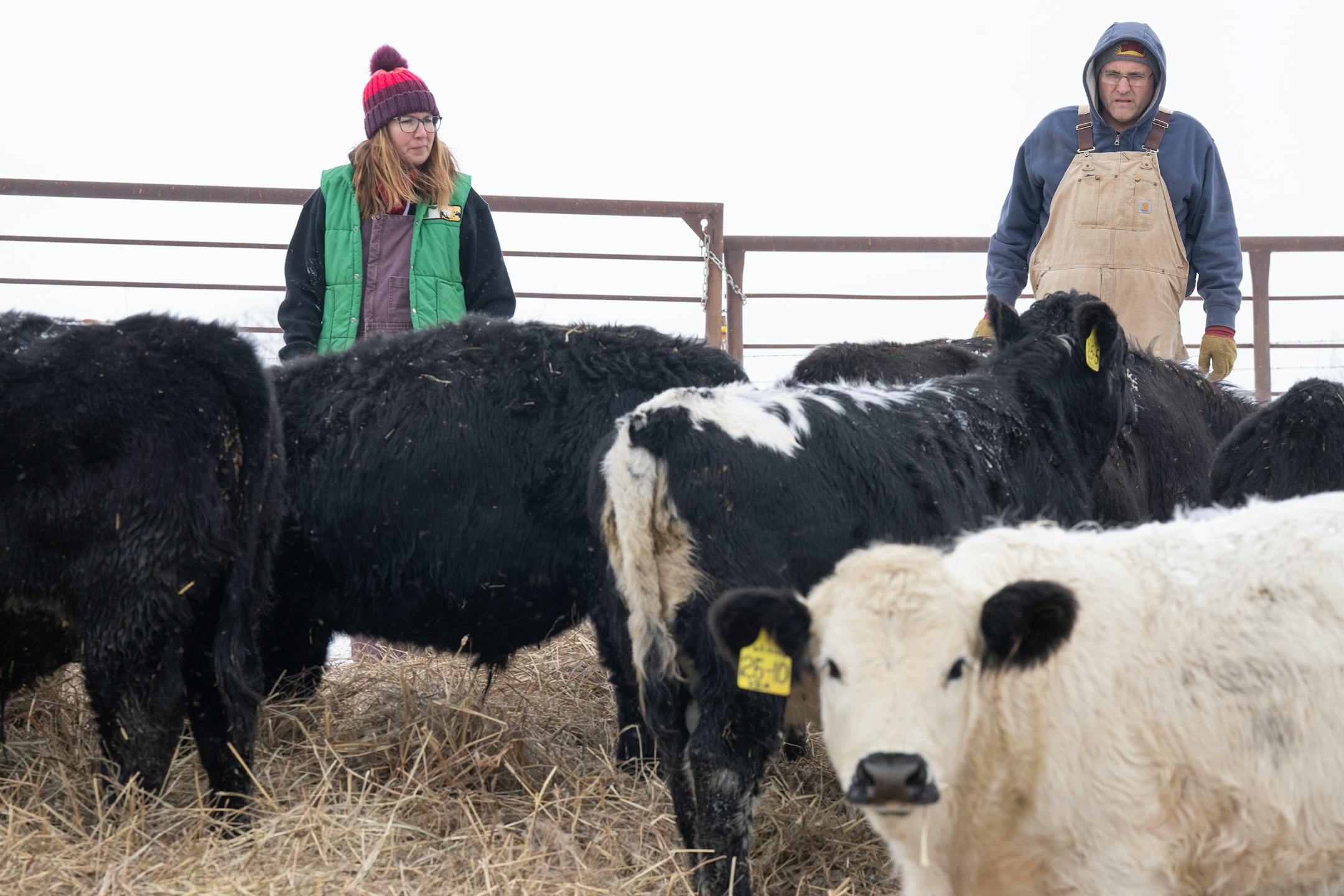
Katie Elvehjem and her husband, Matt Laubach, put out fresh hay for their cows on the family farm in Glenwood, Minn., on Dec. 8. (Jerry Holt/The Minnesota Star Tribune)

Farm debts have more than tripled since the early 2000s. Farmers, buoyed by high land prices, have actually increased their ability to pay them off, according to data from the USDA.

Still, farmers said that doesn’t stop making each planting season feel like a trip to the casino with their livelihood as chips. They said that while farms can stand all the debt, sometimes farmers — or their marriages — can’t.

“Success on the farm is success in the relationship,” said Thomas Duden, who raises cows in central Minnesota.

When Duden and his wife, Kristin Reiman Duden, took over her family’s dairy farm in 2017, they had a decision to make. Either they pump a few million into new land and new animals. Or try to diversify the farm they already had, some 40 cows that huddle on a postage stamp of land in Princeton.

They chose to diversify, but, to do it, they bought a new tractor. Then a new baler. Then another tractor.

Within two years, they owed about a half-million dollars, Duden said. He couldn’t bear to milk the cows anymore; it looked like money draining from his bank account, he said.

Stress reverberates

Kristin noticed as Thomas’ mood darkened. Her husband was suddenly dismissive of her, and a little mean, too. The funny, talkative Thomas that she’d first met on a high school trip to Washington, D.C., was gone.

Already in therapy after leaving a previous marriage she described as abusive, Kristin wondered if she was the problem.

Thomas sat in on a couple of her therapy sessions, where it didn’t take long for counselors to suggest that he might be steeped in depression. They started couples counseling and went on a couple’s retreat.

Most important, the Dudens said, was that Kristin took on milking the cows, trudging out to the barn every 12 hours. Thomas took a job off the farm training other farmers to use self-propelled sprayers

“Growing up, I thought that the man takes care of the finances. The man takes care of the household,” Thomas said. “No, it’s just whoever’s able and capable. We work together.”

The Dudens say the’ve grown into this new routine.

Still, farmers’ strategies for alleviating the financial stress, like working off-farm jobs or simply working longer, often show up in couple’s counseling, said Matthews. They put a strain on couples accustomed to spending hours together, then barely seeing one another.

Marital stress also reverberates to other family members. Lexi McMullen, who provides therapy at a rural school in Clay County, said more kids now come to her with stories about their parents’ economic anxieties.

“They feel that, they see that, they see their parents working overtime,” McMullen said.

‘Too much invested’

Elvehjem was thinking about her kids as she swerved down the dirt roads of Glenwood last spring. She’d do anything but take stress out on them, she remembers thinking.

After all, they still have a romanticism about farming, like she did when she was little. Her younger children, 5 and 3, push cardboard boxes around the house and say they’re driving tractors or planting fields.

Slowly though, Elvehjem and Laubach are breaking the innocence. They’ve begun to invite their 10-year-old, Finley, to the weekly meetings that McConkey assigned — to show her that farming isn’t really about driving tractors anymore.

Each debt, each purchase and each business decision is more stressful with kids waiting in the wings, Laubach said, gazing out over his herd of cattle enjoying the last warmth of November. A bad decision could both destroy a business built over three generations and deprive their kids of a chance to farm in the future.

Beef prices are high, and they need to decide on these cattle, which Elvehjem raises. They can’t keep from fighting about it a bit.

“Matt sees these animals and just sees dollar signs,” Elvehjem said, stroking the fur of a white cow.

Laubach smiled and shook his head. “There’s a quarter million dollars standing here,” he said. “Why don’t we just sell?”

By now, after almost two years with McConkey, the fights sound more like banter. Both Elvehjem and Laubach call their marriage a solid one. Still, Elvehjem can’t help but describe it in economic terms.

“We have too much invested in one another,” she said.

about the writer

about the writer

Cole Reynolds

intern

Cole Reynolds is an intern for the Minnesota Star Tribune.

See Moreicon

More from Agriculture

See More
card image
Jerry Holt/The Minnesota Star Tribune

Divorces on farms have gone up. With signs of a rocky farm economy ahead, therapists and farmers worry that farm families might crumble alongside their businesses.

card image
card image