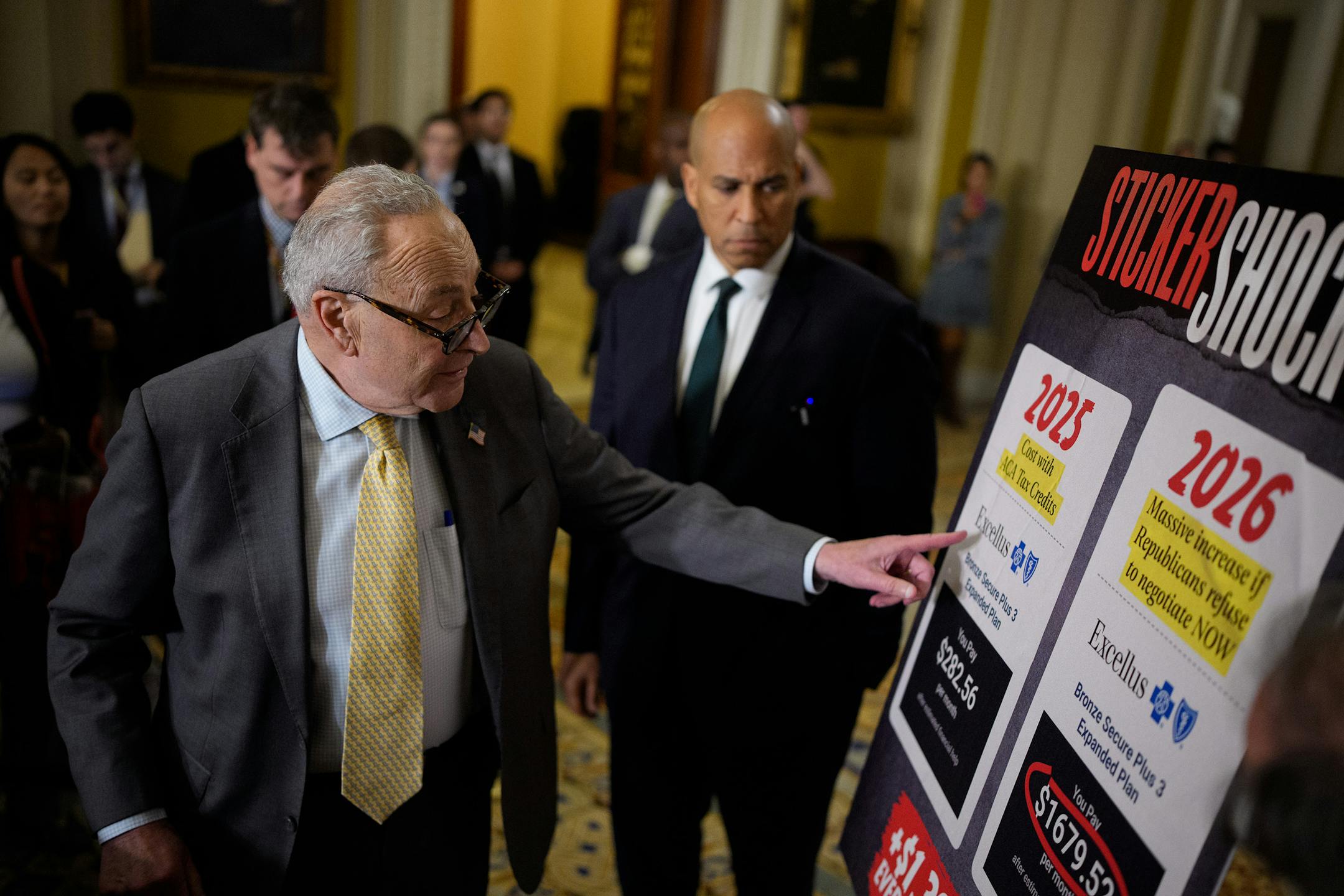
A married couple approaching retirement in Blue Earth County, with income fairly typical for their age, could get about $18,000 worth of federal subsidies this year for their health insurance using the MNsure exchange.
All of that financial assistance could disappear in January — leaving the family with a $25,000 increase in insurance costs for 2026, state officials say — depending on the results of an ongoing debate in Congress.
Lawmakers are considering whether to extend pandemic-era enhancements to tax credits funded by the federal Affordable Care Act (ACA). The fate of the enhanced subsidies, scheduled to expire at the end of this year, was the key sticking point in this fall’s government shutdown, when some also highlighted new federal requirements that will limit access to Medicaid for people with low incomes.
While the Blue Earth County example might be an extreme case, health care advocates worry that if enhanced tax credits aren’t renewed, people across Minnesota will see price increases averaging about $3,400. Nearly 20,000 will lose all subsidies, and some likely will go without insurance. They could get sicker from delaying treatments or create stress on hospital budgets by seeking free or discounted care.
“If you don’t have coverage, it doesn’t mean that you’re not going to get sick,” said Lynn Blewett, a health policy professor at the University of Minnesota.
Subsidy critics say the enhanced financial support was meant to provide assistance during the pandemic on a short-term basis. The original tax credits that remain in place, they point out, were heralded more than a decade ago for making insurance much more affordable.
The extra subsidy money has allowed for some improper payments, critics argue, while promoting higher health care prices overall by insulating consumers from the true cost of coverage.
“When the COVID credits are pared back to pre-pandemic levels, the supports will be robust, and ... states can regain market forces,” said Matt Dean, a former Republican state lawmaker who studies health care policy at the Center of the American Experiment, a conservative think tank in Minnetonka.