As people with disabilities live longer, Twin Cities facilities rework services

Providers are facing shortages in both funding and staffing, leaving some with waiting lists for group homes.

The Minnesota Star Tribune
December 28, 2025 at 11:30AM
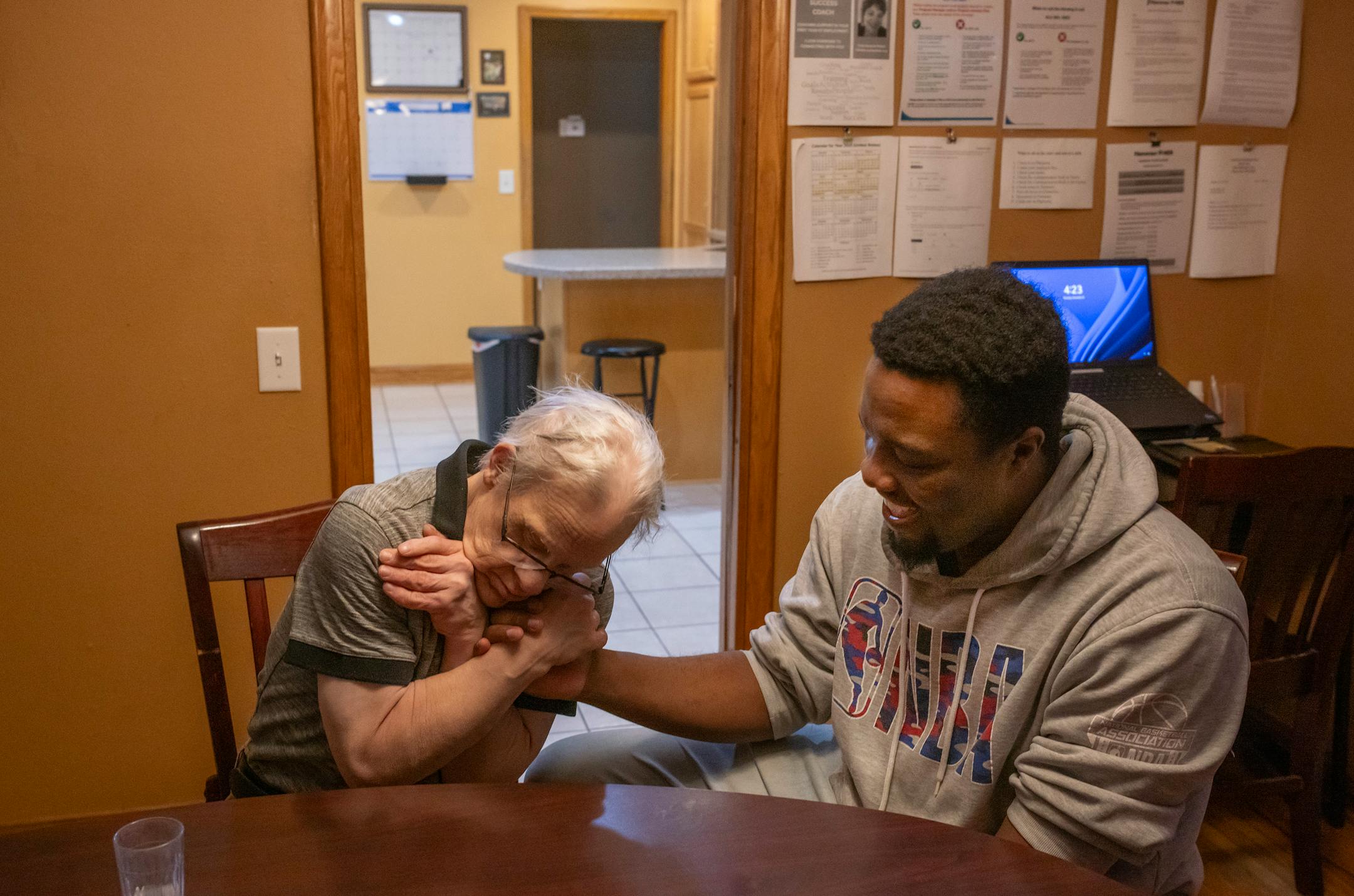
A resident of Hammer & NER with his caregiver Ramzi Geraldo in Shoreview. (Jerry Holt/The Minnesota Star Tribune)

Mickey Wesley was 11 when he moved into the boys dormitory on the Hammer campus in 1978 in Wayzata. Born with autism and Down syndrome, young Mickey loved going to church, bowling and fishing, his sister said.

Now 58, Mickey’s world has gotten much smaller. He needs help with bathing, toileting and dressing. He now needs round-the-clock care, said his sister Julie Wesley-Wong.

“What he needed when he was younger was staff to be much more like camp counselors,” she said.

And now?

People like her brother “need people who know them, can anticipate their needs, notice small changes in their health and well-being,” she said. “And provide the extra care they will need as they grow older.”

More Minnesotans with developmental and intellectual disabilities are aging and need more involved care, leaving more to soon need group homes and other residential facilities as their families, who often care for them, also age. Yet, facilities are facing stagnant state and federal funding and a national crisis of staffing shortages.

While the majority of people with developmental or intellectual disabilities are cared for by their families, the average life span for people with those disabilities has increased from 66 years in 1950 to 78 years in 2007. And it keeps rising, thanks to medical advances and improved living conditions, said Tamar Heller, who directs the Rehabilitation Research and Training Center on Aging with Developmental Disabilities at the University of Illinois at Chicago.
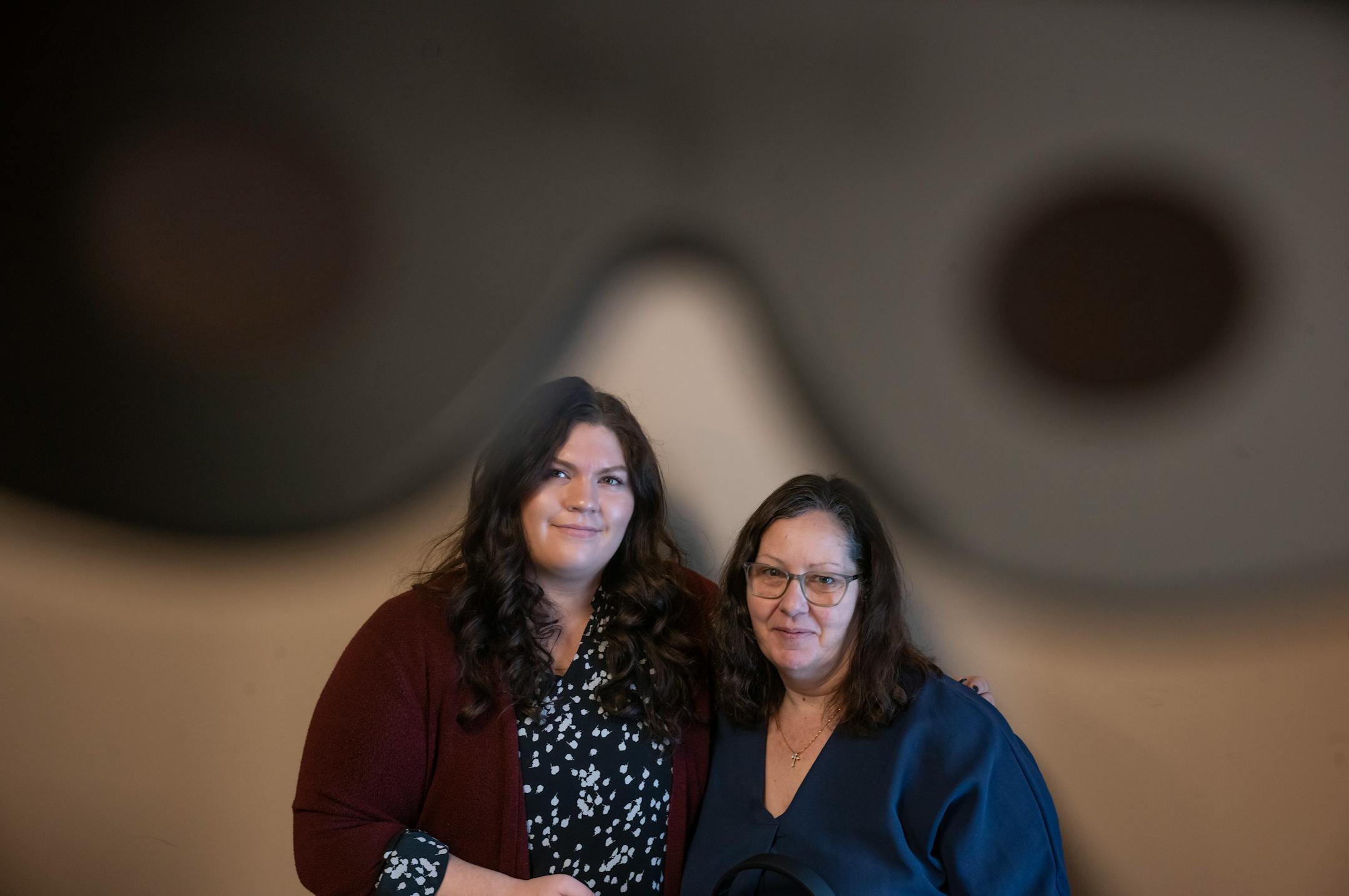
During a training session, Hammer & NER employees Anna Byro, left, and Brenda Barthel use special eyewear to show what it's like to be a person with dementia. (Jerry Holt/The Minnesota Star Tribune)

The number of people with disabilities over the age of 60 is projected to nearly double from more than 650,000 in 2000 to 1.2 million by 2030, she said.

Yet with more than 25% of family care providers older than 60, those numbers indicate a seismic shift in caregiving is coming, Heller said, and more of them will soon need group homes and other residential facilities.

“There are already waiting lists [for facilities],” she said. “And if more families can’t do it, they’ll need help.”

Funding shortages

The demographic trends illuminate an emerging need for facility staffing in the coming years, Heller said.

A national report released this fall found that 88% of community-based providers of intellectual and developmental disabilities services faced moderate or severe staffing shortages in the last year. The report, by industry group ANCOR, found that nearly two-thirds of providers had to turn away new referrals due to the lack of staffing.

While 10% to 20% of siblings assume the care of disabled adults after parents die, the need to start planning for an influx of older disabled adults into facilities “is now,” Heller said.

“That is really critical. Otherwise, you’re going to have emergency placement,” she said. “And that’s not going to go well.”

At Hammer & NER, which houses 356 people with disabilities in fully staffed group homes and apartments in the Twin Cities, the population is aging as well.

Of those residents, nearly a third are in their 40s, less than a quarter are in their 50s and 70 are 60 or older, said Jerry LeVasseur, Hammer’s senior director of program operations.

“We are looking at the first generation of people with disabilities outliving their parents,” LeVasseur said.

A pair of Hammer employees recently took training to better understand dementia, LeVasseur said. Those staffers, in turn, will train others.

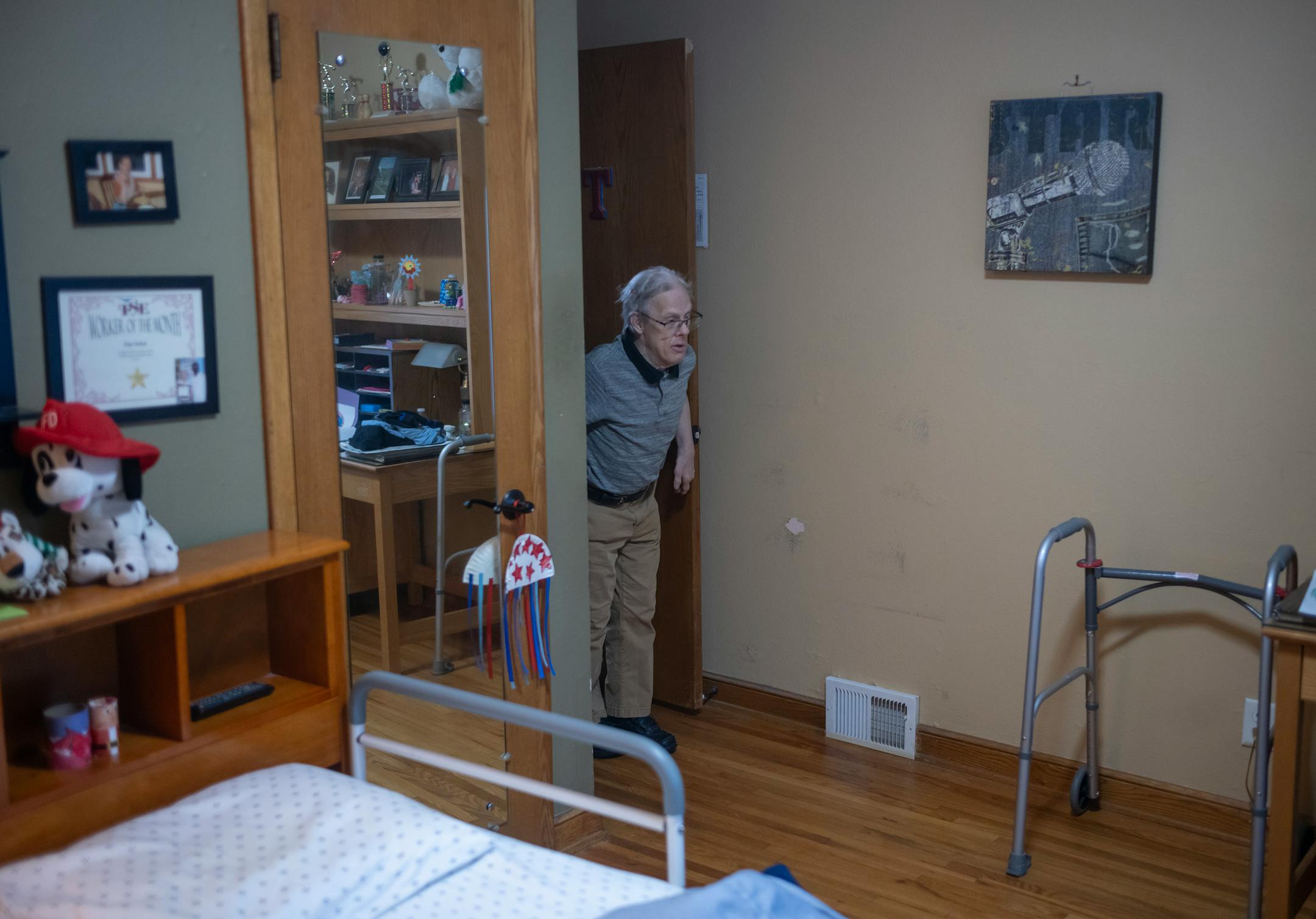
A resident navigates through his room at Hammer & NER in Shoreview. (Jerry Holt/The Minnesota Star Tribune)

There is also a need to upgrade facilities to better serve aging residents, said Pam Janczewski, senior director of program services. Begun in 1923, the longtime organization purchased a bunch of split-level homes in the 1980s, she said.

As residents age and have more trouble getting around, she said, Hammer intends to remodel homes and increase accessibility with new lifts and elevators, wider doors, remodeled bathrooms and more spacious floor plans, she said.

Some of that money will also boost pay to aid retention, as well as provide an employee success coach and advanced training.

To help pay for this, Hammer & NER launched a campaign in November to raise $5 million by April. That’s in addition to what Hammer already raises through its ongoing fundraising, said CEO John Estrem.

“We are now supporting the first generation of senior citizens living with intellectual and developmental disabilities with funding that is uncertain,” he said. “The need to address that is critical.”

In a statement, Estrem said the campaign “is critical to raising the funds to deliver our standard of exceptional care for the people we support as they age and for training staff to be able to provide the right care at the right time.”

Hammer has raised about $3.5 million so far, he said.

Helping people with disabilities

Joel and Mary Amundson’s 45-year-old daughter Sarah is developmentally delayed. But her disability didn’t cause them to worry about her life expectancy, they said.

It was the malignant brain tumor and the stroke they worried would take her from them. And there’s more.

“She has lots and lots of doctors and appointments,” Mary Amundson said. “And now she is declining with dementia.”

The Amundsons, now in their late 70s, watched their daughter grow and thrive after she moved from home and into a Hammer apartment building at 22. But she’s slipping, Joel Amundson said.

“She was so much better than she is now,” he said.

Once, the apartment facilitated a more independent life, they said. Now, it feels isolating. They praise Hammer for what it’s been able to do for their daughter. But her advancing age and progressing dementia are, like Mickey, shrinking Sarah’s world.

They said they hope Hammer succeeds in raising the money to help its older residents address their new, age-related challenges.

“She’s gotten older and more needy,” Joel Amundson said.

Said Mary: “My biggest hope is to have her live as much as she can right now for as long as she can.”

about the writer

about the writer

James Walsh

Reporter

James Walsh is a reporter covering social services, focusing on issues involving disability, accessibility and aging. He has had myriad assignments over nearly 35 years at the Star Tribune, including federal courts, St. Paul neighborhoods and St. Paul schools.

See Moreicon

More from News & Politics

See More
card image
Aaron Lavinsky/The Minnesota Star Tribune

From a major new paid leave benefit to the end of the deer shotgun zone, Jan. 1 brings several new laws.

card image
card image