
Key sale, acquisition helped 3M spinoff, Solventum, turn around in 2025

The health care company based in Maplewood started the year with investor unrest but has since posted positive financial results and paid off debt to enter 2026 with positive momentum.

The Minnesota Star Tribune
December 30, 2025 at 4:01PM
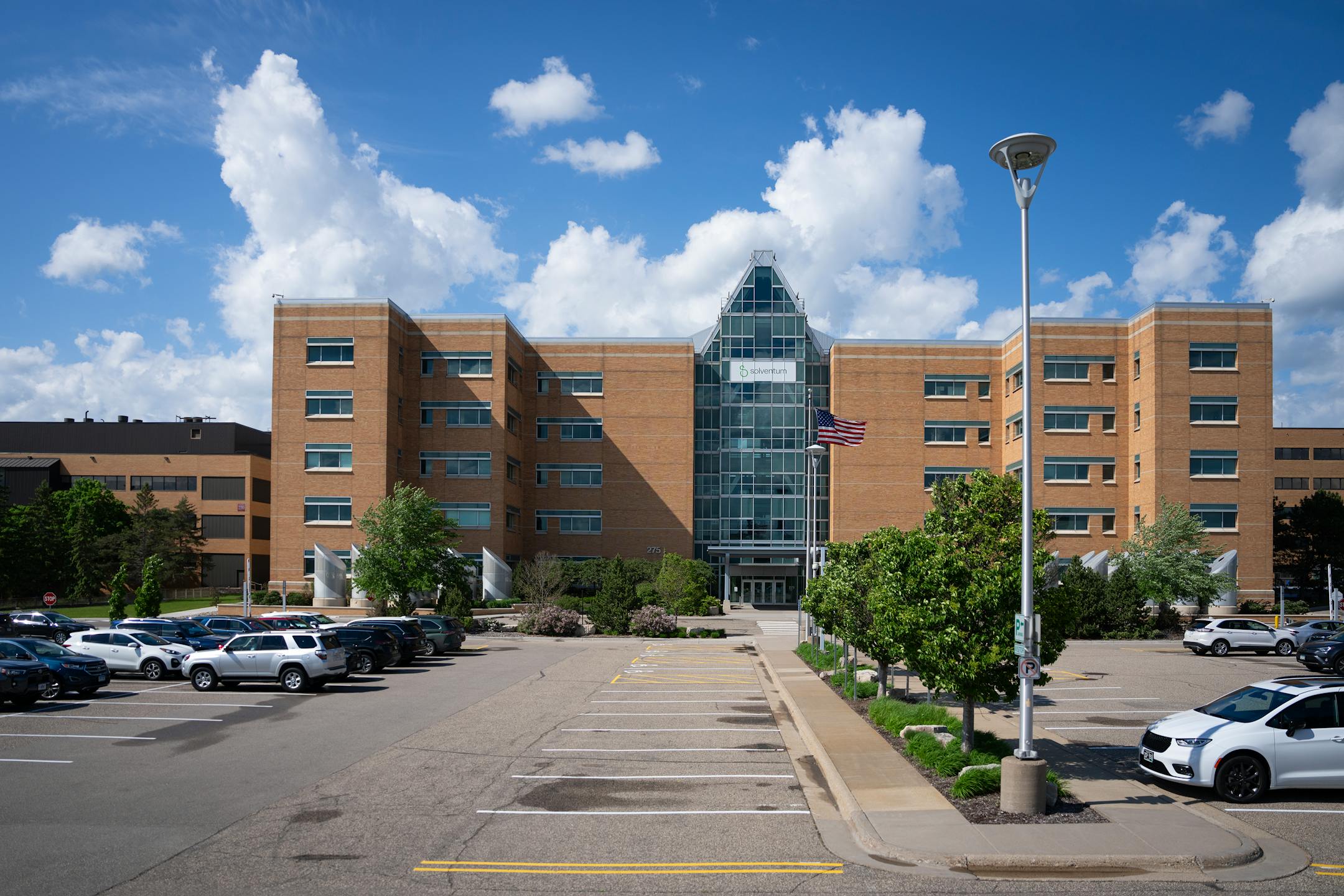
Solventum, a 3M spinoff based in Maplewood, is a medical-supplies giant and Minnesota's newest Fortune 500 company. (Shari L. Gross/The Minnesota Star Tribune)

Solventum, Minnesota’s newest Fortune 500 company, is finding its footing after starting its first full year of operations on shakier ground.

The 3M spinoff commenced 2025 with a deflated stock, which incurred concerns about the health care company’s direction from one of its largest shareholders. Nearly a year and a few key business decisions later, the medical-supplies giant is attracting renewed investor interest with a revamped innovation process and a slimmer portfolio aimed at efficiency.

Now Solventum must continue this upward trajectory to establish itself as another Minnesota public company with longstanding success.

In a Dec. 16 letter filed with the Securities and Exchange Commission, CEO Bryan Hanson said the company’s pace of execution “has been purposeful and intense, fueling optimism for 2026 and beyond.”

At the time of Hanson’s letter, the company’s stock had pivoted up by more than 20% in 2025. Heather Knight, Solventum’s chief commercial officer appointed this fall, said it appears the market is recognizing the company’s transformation.

“I think they like the capital-allocation strategy that we’re bringing forward,” Knight said. “And you can only really do that when you have strong financial performance, a really good balance sheet and cash-flow generation.”

Troubling start

In January, the tone around Solventum was different.

Trian Partners, billionaire Nelson Peltz’s investment management firm, labeled Solventum’s performance as “alarming” in a letter assessing the company’s trajectory. The firm had amassed a nearly 5% stake in Solventum, becoming one of its largest shareholders.
“Many current and prospective shareholders have expressed concern to us that the company has set extremely low expectations for the business today and a disappointing vision for the future,” the letter read.

Trian declined to comment further. But its complaints partly date back to an initial investor conference prior to Solventum’s listing on the New York Stock Exchange on April 1, 2024.

Solventum hosted one of “the more unusual pre-spin investor days” on March 19, the activist’s letter said, an event that highlighted more of the troubles ahead than the opportunities.

While Hanson said at the conference that he “absolutely” saw a pathway to unlocking “significant value creation” with Solventum, he also preached caution. He told investors the company would face challenges and suggested they think of the spinoff in terms of years, not months.

Hanson had previously helmed orthopedics technology company Zimmer Biomet and led the integration of health care supplies giant Covidien into Medtronic, which was the largest acquisition in medtech history.

Under 3M, Hanson said at the conference, Solventum wasn’t focused on the right performance metrics, and its market growth lagged behind peers. It was a hierarchical environment, with executives at the top making all the decisions and forcing business unit leaders to compete for resources.

“We’re just trying to do too much. We’re not focused,” Hanson said then, adding that the spinoff would be “distracting for everybody” as it created billions in debt. Solventum and 3M were more entangled than Hanson had expected.

BTIG analyst Ryan Zimmerman recalled this initial investor day as underwhelming and concluded the long-term strategy wasn’t clear.

“The sentiment on the stock was pretty bad,” Zimmerman said.

The company’s share price stayed flat until October, underperforming competitors. By December 2024, a broad restructuring shifted the way the company operated and led to job losses.

Yet about a calendar year later to the end of 2025, the company has appeared to chart a turnaround.

“Past performance is not an indicator of future,” Zimmerman said.

Two-sale turnaround

Zimmerman said Solventum selling much of its purification and filtration business spurred its positive swing.

Thermo Fisher making the $4 billion acquisition, announced in February, enabled Solventum to pay down its debt and free up cash to spend. A subsequent investor day this past spring and several-consecutive quarters of Solventum outperforming Wall Street’s profit expectation followed.

“You don’t complain about a complex situation: You fix it,” Hanson said during March’s investor conference.

The company announced it would stop developing products that could not drive growth, instead focusing on negative-pressure wound therapy, intravenous-fluid site management, sterilization, billing management and core dental restoratives. Executives said a new decentralized structure promoted employee autonomy and accountability.

Morgan Stanley analysts, led by Patrick Wood, said in a note that the day had gone better than expected.

“There’s still plenty to do at SOLV, but we think this has been a good first year, with the next catalyst outside of earnings likely being further portfolio changes” as well as mergers and acquisitions, they wrote.

Solventum raised its outlook for future earnings in October and announced a plan focused on saving $500 million annually to partially reinvest in growth initiatives. This plan — partially a response to tariffs — is broader than previous restructuring, chief financial officer Wayde McMillan said during a call with analysts. It evaluates the company’s supply chain and global footprint.

On Dec. 23, the company closed on its $850 million acquisition of Acera Surgical, which makes engineered materials for regenerative wound care following major accidents and surgeries.

“It’s very complementary to the portfolio,” Knight said.

Zimmerman recently raised his rating of the company’s stock to a “buy” quicker than he expected.

“I don’t think our upgrade is necessarily like rocket science,” the analyst said. “I think it’s just improved execution [and] steady margin progressions.”

Zimmerman said he feels Solventum is on the path to success, a belief company leaders seem to share. Solventum announced a buyback program that allows the company to repurchase up to $1 billion of its own shares. The corporate action — when a company buys its own stock to reduce the amount available on the open market, thus increasing the value of any remaining shares — typically serves as a signal of confidence. It demonstrates a business is willing to invest in itself and does not need excess cash.

Solventum declined to make officials available to talk about the share repurchase. But Hanson said in a news release the company’s “financial performance, operating cash generation and healthy balance sheet” gives it “the flexibility to invest in opportunities that accelerate sustainable growth” and pursue targeted tuck-in mergers and acquisitions such as Acera.

about the writer

about the writer

Victor Stefanescu

Reporter

Victor Stefanescu covers medical technology startups and large companies such as Medtronic for the business section. He reports on new inventions, patients’ experiences with medical devices and the businesses behind med-tech in Minnesota.

See Moreicon

More from Health Care

See More
card image
Shari L. Gross/The Minnesota Star Tribune

The health care company based in Maplewood started the year with investor unrest but has since posted positive financial results and paid off debt to enter 2026 with positive momentum.

card image
card image