
Opinion | Resolution of U/Fairview conflict is a job for Walz

His leadership is needed. It probably would be a good political move for him as well.

Columnist Icon
The Minnesota Star Tribune
December 31, 2025 at 7:03PM
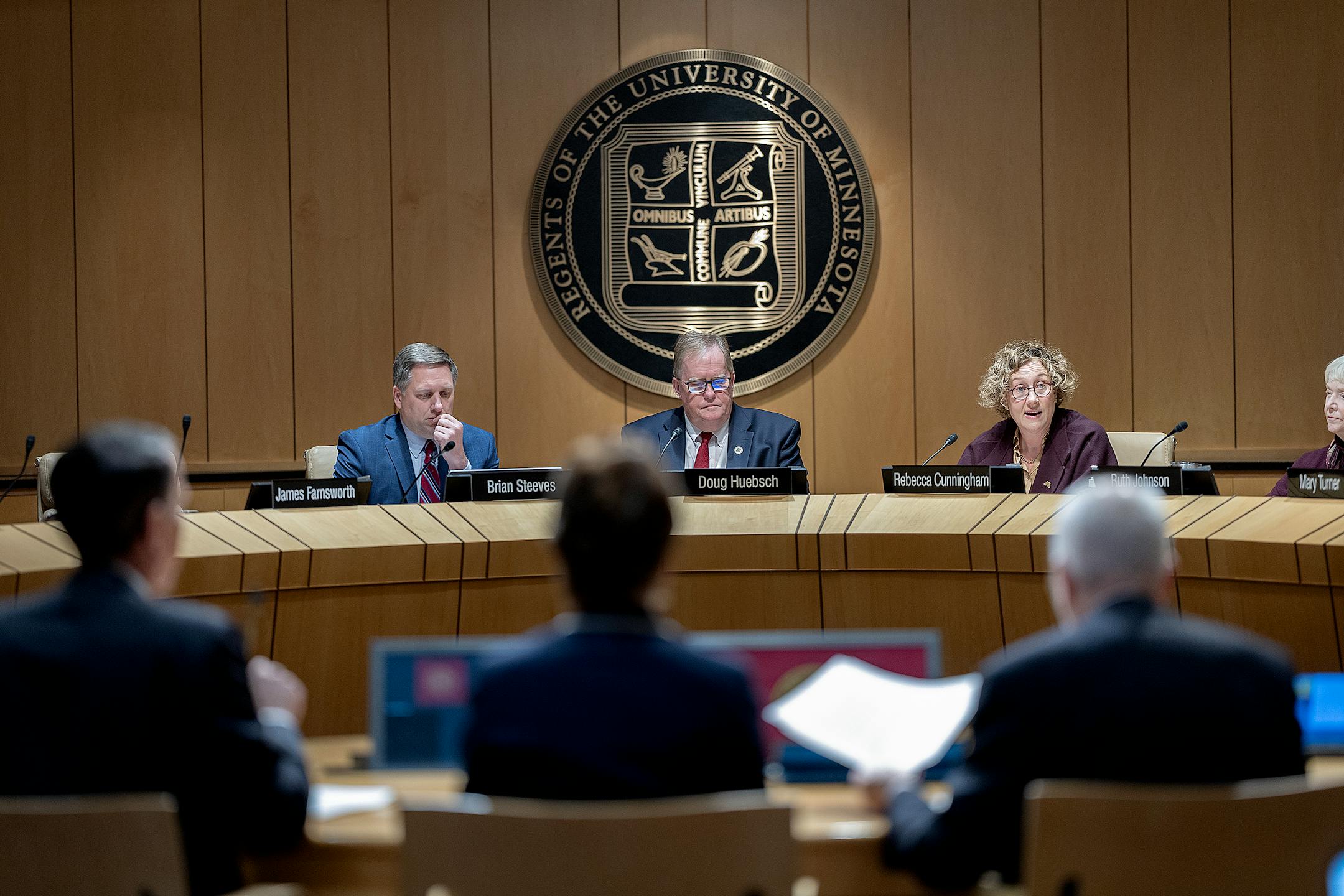
U of M Board of Regents Brian Steeves, left, Chair Douglas Huebsch, center, and University President Dr. Rebecca Cunningham, address the controversy over Fairview's plan to partner with University of Minnesota Physicians on a new deal to fund the U Medical School and academic health programs at the University of Minnesota’s McNamara Alumni Center in Minneapolis on Nov. 13, 2025. (Elizabeth Flores/The Minnesota Star Tribune)

Opinion editor’s note: Strib Voices publishes a mix of commentary online and in print each day. To contribute, click here.

•••

Cue the Rouser: I’m here today because of the top-notch medical care I received five years ago this week at the University of Minnesota Hospital.

The surgery that relieved me of my cancerous bladder and replumbed my innards was complicated, arduous and expertly done.

In other words, it was exactly the sort of sophisticated care that Minnesotans have come to expect at their flagship university’s medical centers. The ready availability of care of that quality surely warrants a few bars of “hats off to thee.”

But more than a pundit’s praise is needed right now to keep that vital asset strong. Gubernatorial leadership is needed.

Here’s a plea to Gov. Tim Walz: Please employ the tools that only a governor has to end the long-running conflict between the University of Minnesota and the owner of its hospital, Fairview Health Services, and to set academic medicine at the U on surer financial footing.

To be sure, the governor isn’t the only leader with a role to play in this work. Others of ability and goodwill (I’m looking at you, Attorney General Keith Ellison) have been seeking stability for the U’s medical enterprise for some time. Where and when appropriate, they should continue to play their parts.


But I hold that the fate of academic medicine at the U is too critical to the whole state for any official other than the governor to take the ultimate lead.

It’s not just that Minnesotans go to the U of M Hospital when they are really sick — though they do. It’s not just that research breakthroughs from university labs improve care — though they do. It’s not just that the students who would be doctors, nurses and other health professionals go to the U for training — though they do, in big numbers.

What’s vital is the synergy that results as education, research and clinical practice combine in the U’s medical quarters. When caregivers are also teachers and researchers — and when quality is a paid-for priority in all three missions — Minnesota benefits in far-reaching ways.

Medical outcomes improve. New industries develop. A reputation as the “wellness state” blossoms. Talent is attracted from around the globe. (I’ll bow here in the direction of Rochester to acknowledge the considerable contributions of the Mayo Clinic.) The state prospers.

That’s a case for U medicine that Minnesotans ought to hear loud and clear from a gubernatorial bully pulpit. Stakeholders — including other health care providers – ought to be subjected to gubernatorial jawboning to do their part.

And if — as I suspect — stability for the U’s medical enterprise will ultimately require a bigger and more dependable flow of public money, gubernatorial budget-dealing is in order. Legislators typically need a gubernatorial push to do right by a statewide asset like this one.

You might ask: What about the deal that Ellison helped broker in November between the university physicians and Fairview? Doesn’t that involve a sufficient flow of money to academic medicine?

Likely not, say U leaders. It guarantees the U $30 million less per year from Fairview than it receives now, while having the potential to disrupt the delicate balance between education, research and clinical practice that is academic medicine’s secret sauce. Put more emphasis on clinical practice, as U leaders fear this deal would do, and education and research will suffer, to Minnesota’s long-term detriment.

That’s why the physicians/Fairview deal ought not be the last word in this long-running drama. A surer way forward for academic medicine is needed, and soon: The existing arrangement between Fairview and the U will legally expire at the end of 2026.

This issue can’t wait. Not for an election, or a new gubernatorial term, or the next budget-setting year of the state Legislature. It needs a governor, now.

What’s more: Walz needs this issue just now. Politically, he needs to get out of the defensive crouch that the human services fraud revelations have put him in and stand up for a broadly unifying cause. As he asks voters for an unprecedented third four-year term, he needs to exhibit the problem-solving and power-wielding skill he has acquired through two terms in office.

And if he should yet decide to step aside in 2026, Walz will still have a legacy to burnish in the next 12 months. Securing high-quality academic medicine for future Minnesotans would be an accomplishment worthy of this state’s best governors.

Lori Sturdevant is a retired Star Tribune editorial writer and author of books about notable Minnesotans. Her latest book, “Martin Sabo: The Making of the Modern Legislature,” was released in September by Minnesota Historical Society Press.

about the writer

about the writer

Lori Sturdevant

Columnist

Lori Sturdevant is a retired Star Tribune editorial writer and columnist. She was a journalist at the Star Tribune for 43 years and an Editorial Board member for 26 years. She is also the author or editor of 13 books about notable Minnesotans. 

See Moreicon

More from Columnists

See More
card image
Elizabeth Flores/The Minnesota Star Tribune

His leadership is needed. It probably would be a good political move for him as well.

card image
card image