
Burcum: Stalemate over U medical center ill serves Minnesota

There have been months of negotiations without agreement among the University of Minnesota, Fairview and Essentia. It’s time to explore all options and find a way forward.

Columnist Icon
The Minnesota Star Tribune
November 7, 2025 at 11:11PM
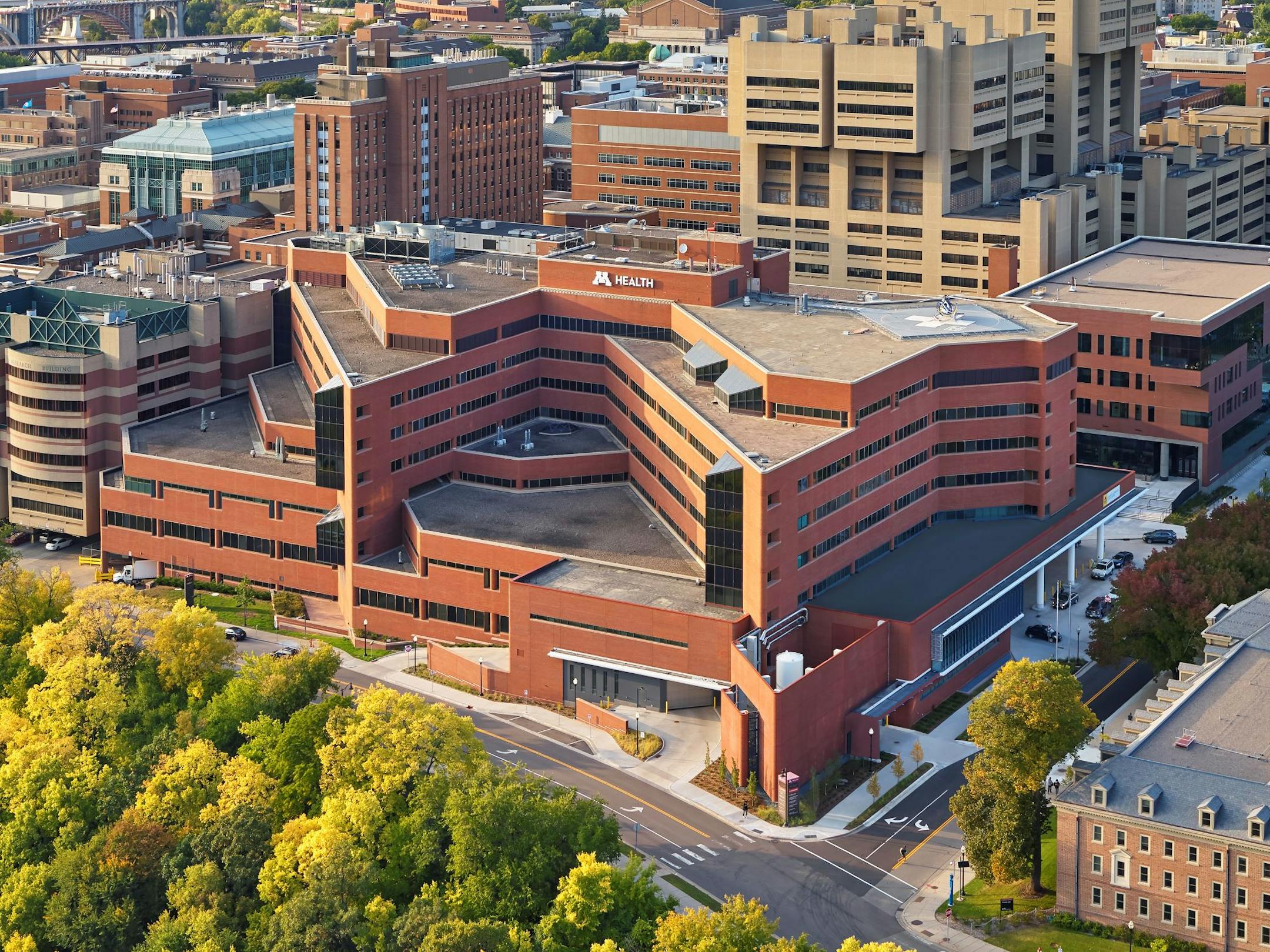
The University of Minnesota Medical Center in Minneapolis in 2020.

Opinion editor’s note: Strib Voices publishes a mix of commentary online and in print each day. To contribute, click here.

•••

Two letters behind Rebecca Cunningham’s name — M.D. — were especially encouraging when the state Board of Regents announced in February 2024 that she’d be the University of Minnesota’s next president.

Cunningham’s impressive career includes serving as  an emergency medicine physician and as the University of Michigan’s vice president for research and innovation. That medical expertise boded well for tackling perhaps the most critical challenge of her new Minnesota post: charting a new future for the university’s medical center.

A sudden invitation to her office about this last January inspired both confidence and concern. During that meeting, Cunningham and Dr. David Herman, CEO of Duluth-based Essentia Health, announced a proposal to create a new nonprofit health care system with the U’s teaching hospitals at the heart of it, along with a $1 billion joint investment.

Scant details were available, but it appeared the proposed collaboration offered an alternative to the U’s tense relationship with Fairview Health Services, which acquired the U’s teaching hospitals, where students receive critical training, in a late 1990s financial rescue. It also provides roughly $100 million annually to the medical school. The U-Fairview partnership was controversial at its birth and has grown more strained recently.

Optimism from Cunningham and Herman abounded in January, but there were clearly a daunting number of details to iron out. I wished them well at the time, but also put a reminder on my calendar to officially check in with Cunningham later in the year if the U/Essentia marriage hadn’t taken place.

I’d hoped that such a conversation wouldn’t be necessary, especially when Minnesota Attorney General Keith Ellison stepped in back in March to “facilitate” the talks among the U, Fairview and Essentia. But in late September, Essentia withdrew from the state-led talks. Officials said the attorney general’s strategic facilitator “determined Essentia no longer had a role in that process.”

That’s how I found myself in a Morrill Hall conference room on the U’s Twin Cities campus about a week ago. At the table were Cunningham and two members of her communications team. It was cordial but I left with little clarity on key questions:

  • What’s Plan B after Essentia’s exit, and is there another dance partner besides it or Fairview?
    • When does Cunningham expect the U to reach a deal with Fairview or another health care system?

      The last question is especially timely because the U’s current agreement with Fairview expires at the end of 2026. That doesn’t leave a lot of time because of the complex business of health care. The long-running ire between the U and Fairview exacerbates the challenge.

      Both sides share responsibility for the chilly relations. Fairview has tried twice previously to merge with Sanford, which led to statewide concern over an out-of-state entity controlling the teaching hospitals. The U trains about 70% of the state’s doctors.

      The U’s announcement in January about Essentia didn’t help, with Fairview leadership apparently given about 24 hours’ notice of the deal.

      Is it even possible for the U and Fairview to reach an agreement? If not, is it time for the two sides to begin formally unwinding their relationship? That process will not be quick or easy and likely needs to begin soon if this is the path forward.

      During the interview, Cunningham spoke movingly about the U’s central role in the state’s public health and its economic vitality. As she pointed out, the U doesn’t just train physicians; it’s one of the rare universities with a medical school and schools of pharmacy, nursing, public health and veterinary medicine.

      These capabilities make the U an extraordinary state resource. But decisive leadership and substantial investment are still required to keep up with the academic medical center arms race across the nation. In November 2023, I wrote about a construction boom on the University of Iowa’s campus that included “a new 842,000-square-foot inpatient tower, with a projected cost of $1 billion.”

      Competition like this adds to the urgency to share with Minnesotans a more detailed vision of the U’s next-generation academic health center and who its partner, or partners, will be.

      But Cunningham disagreed with me on the urgency of forging a deal. Negotiations continue, she said, adding that “the clock ticking is less important than making sure we get it right ... and do it in a way that’s respectful to our patients and respectful to the state.”

      As for the December 2026 expiration of the Fairview agreement, Cunningham suggested extensions are possible. That would require Fairview’s buy-in, however. I asked Fairview about this. Its reply:

      “We sincerely hope it doesn’t come to that ... but if a new agreement cannot be reached, we must begin to unwind activities to ensure that access to care for patients and our communities continues. Fairview has been clear that the current structure is not financially sustainable and that it cannot simply be extended.”

      During the interview, Cunningham said that the U is talking to other health care systems in the state. I asked which ones, and her reply was that the U is talking to “everybody.”

      Answers were also elusive when I asked how close we are to having a deal with Fairview or another Minnesota health care system; or having a firmer idea of the U’s vision for what a next-gen academic health center looks like. Cunningham said the work continues and that the attorney general’s process limits what can be said publicly.

      I understand, but I’m still concerned. In a statement, Fairview officials said that the U has “not shared a specific, detailed or viable framework,” instead offering high-level ideas.

      Cunningham said she appreciates Minnesotans’ desire to know when the talks will end and what they’ll yield. She emphasized that the U continues to engage with the Attorney General’s Office. “I would love it to be done tomorrow. I think everybody would. But it’s more important to get it right.”

      It certainly is important to get this right. At the same time, we’re closing in on a year since the U/Essentia announcement.

      There’s been time to do the work and there are risks from the continuing uncertainty, such as difficulties hiring or retaining medical researchers and doctors.

      It’s possible to “get it right” while making progress. It’s time to strike that balance, consider all the options available and move forward.

      about the writer

      about the writer

      Jill Burcum

      Editorial Columnist

      See Moreicon