
Burcum: The House betrayed the BWCA. The Senate is next.

Congress could hand over Minnesota’s precious Boundary Waters Canoe Area Wilderness to the Trump administration, which has already shown its contempt for science and conservation.

Columnist Icon
The Minnesota Star Tribune
February 10, 2026 at 10:59AM
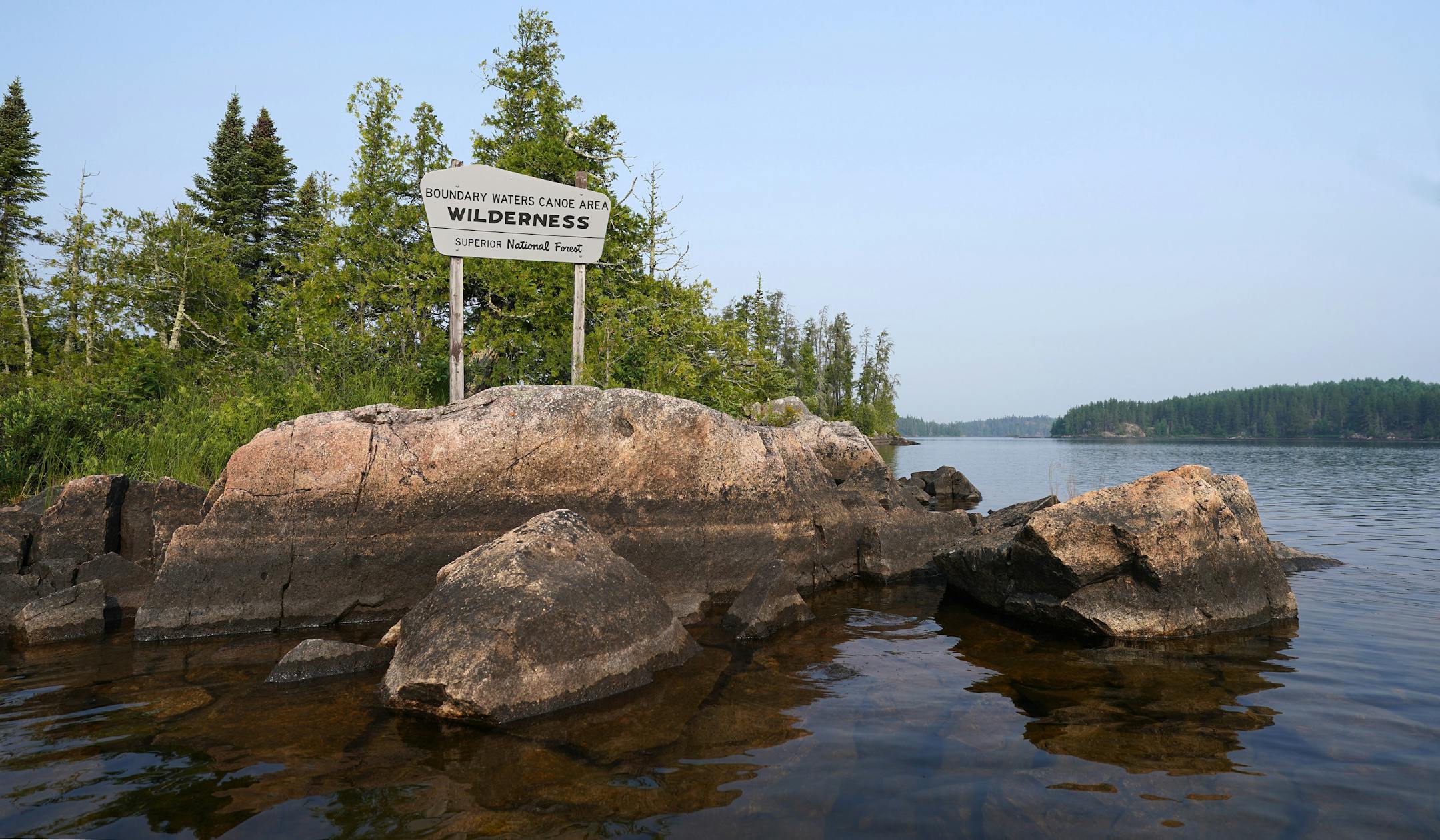
A sign on Seagull Lake marks the edge of the Boundary Waters Canoe Area Wilderness on July 13, 2021, in Cook County in northern Minnesota. (Anthony Soufflé/The Minnesota Star Tribune)

Opinion editor’s note: Strib Voices publishes a mix of commentary online and in print each day. To contribute, click here.

•••

A president who has taken a backhoe to the White House and threatened to strip the Kennedy Center down to its steel skeleton cannot and should not be entrusted with the fate of another irreplaceable national treasure — Minnesota’s Boundary Waters Canoe Area Wilderness.

Until this moment, a 20-year-moratorium on copper mining has protected this fragile watery wilderness from falling into the clutches of a presidential administration staffed by science deniers and on the prowl for donations to pay for pet projects like the new White House ballroom. Alarmingly, an upcoming vote in the U.S. Senate could soon overturn the moratorium. Passage would likely fast-track the opening of a Chilean-owned copper mine on the BWCA’s doorstep, leaving some of the world’s cleanest water at risk of destructive downstream pollution.

President Joe Biden’s administration put the moratorium in place in 2023. This move came after the first Trump administration made clear it had the BWCA watershed in its crosshairs. Federal officials at that time halted a key scientific analysis of copper mining’s risk to the BWCA and engaged in dodgy legal maneuverings to move the project forward.

A 2019 Minnesota Star Tribune Editorial Board special report noted that copper mining, which has never been done in the state, carries more risks than taconite mining, an industry that has operated here for decades. The report, titled “Not This Mine. Not This Location,” noted that these risks are exacerbated by northern Minnesota’s wet and extreme climate compared to the dry conditions where copper and related minerals are typically extracted.

The report did not oppose all copper mining in the state. But it spotlighted the risks from a particular mine proposal, one owned by Chilean mining conglomerate Antofagasta, that is not in the BWCA but would be perched on the shore of a nearby lake draining into its connected waterways. These waters are uniquely vulnerable to pollution because they are so pristine.

Regrettably, the U.S. House passed a measure, H.J. Res. 140, on Jan. 21 that would nullify the moratorium, affecting approximately 225,504 acres of federal forest lands in Cook, Lake and St. Louis counties in northeast Minnesota. The measure’s author is U.S. House Rep. Pete Stauber, who serves the state’s Eighth District but never misses a chance to carry water for Antofagasta’s Chilean billionaire owners, the Luksic family.

All four of Minnesota’s Republican U.S. House delegation voted yes on the measure. All four of the state’s Democratic U.S. House representatives voted no. The measure passed but still needs to clear the Senate, where a vote is reportedly imminent.

Because of some dubious procedural gymnastics ginned up by Antofagasta’s congressional toadies, it appears that it will only need a simple majority to pass, avoiding the 60-vote threshold typically needed to advance legislation in the upper chamber. Republicans control the Senate, so the measure could swiftly move to the desk of a president who vowed to undo the moratorium on the 2024 campaign trail.

The threat to the BWCA is very real and urgent. Still, the Antofagasta proposal, better known as Twin Metals, will have to clear both federal and state reviews before operation begins. But given persistent pay-to-play concerns about the Trump administration and its shameful rollbacks of environmental protections, it’s naive to think that it can be trusted to conduct an independent, science-based review of this project and others like it.

Adding to these credibility concerns: Greenlighting the Chilean-owned mine at the federal level would also check off another item on the Project 2025 to-do list. Project 2025 is a conservative policy framework from the Heritage Foundation that lays out plans to dramatically expand presidential control over the federal government. It calls specifically for removing the copper mining moratorium protecting the BWCA watershed.

Other fodder that should give pause about Antofagasta’s Minnesota project: On Jan. 23, Reuters reported that Chile’s environmental regulator has fined Antofagasta Minerals $775,000 for “failing to comply with water management regulations at its Centinela copper mine.” The Miami Herald has also previously documented a Chilean village’s struggle to hold Antofagasta accountable when a different mine operated by the mining giant threatened its water supply.

Wilderness advocates nationally are understandably sounding the alarm. I spoke over the weekend with Theodore Roosevelt IV, a direct descendant of the U.S. president remembered for his farsighted efforts to protect the nation’s natural wonders. Roosevelt, a member of The Wilderness Society’s Governing Council, talked passionately about his ancestor’s vision, about mining’s risks to the BWCA and the potential economic harm for the region’s existing business owners, many of whom rely on tourism.

“Unfortunately, the Republican Party no longer seems to care about conservation as it did during the time of Presidents Grant, Lincoln and the old lion,” Roosevelt said, with the lion referring to his illustrious forebear. “And so I urge the Senate and I urge everybody in the Minnesota Legislature, let’s step up to the plate and do what’s right.”

Minnesota’s two Democratic U.S. Senators Amy Klobuchar and Tina Smith have followed the BWCA mining issue closely and well understand the risks. They should not only vote no but use their clout to convince others to do the same. A Klobuchar spokesperson said she will be voting no and is concerned that the procedural mechanism in use to pass the bill would have far-reaching consequences for public lands.

Smith is also a no vote. “Republicans are trying to use arcane congressional procedure to undo these protections so they can line the pockets of a Chilean mining conglomerate,” Smith said. “I want to be clear that I support mining. But not this mine in this place.”

Minnesota legislators have a chance to protect the BWCA as well. A bill introduced in the 2025 session would prohibit state permits, licenses or leases for mineral exploration or mining in the Boundary Waters Canoe Area Wilderness and Rainy River headwaters, except in a congressionally declared national emergency with prior approval from the Minnesota Legislature. There’s no time to lose in moving it forward.

Gov. Tim Walz, who is not running for re-election, can also push for stronger BWCA safeguards before leaving office. Ensuring that generations to come can enjoy this special place would be a worthy legacy for him and all who serve at the State Capitol.

about the writer

about the writer

Jill Burcum

Editorial Columnist

See Moreicon

More from Columnists

See More
card image
Anthony Soufflé/The Minnesota Star Tribune

Congress could hand over Minnesota’s precious Boundary Waters Canoe Area Wilderness to the Trump administration, which has already shown its contempt for science and conservation.

card image
card image