
Burcum: An Army veteran, surgeon becomes collateral damage in U–Fairview spat

Newly released analysis details Dr. Greg Beilman’s urgent concerns about ‘unwinding’ a critical health care partnership.

Columnist Icon
The Minnesota Star Tribune
November 30, 2025 at 11:00AM
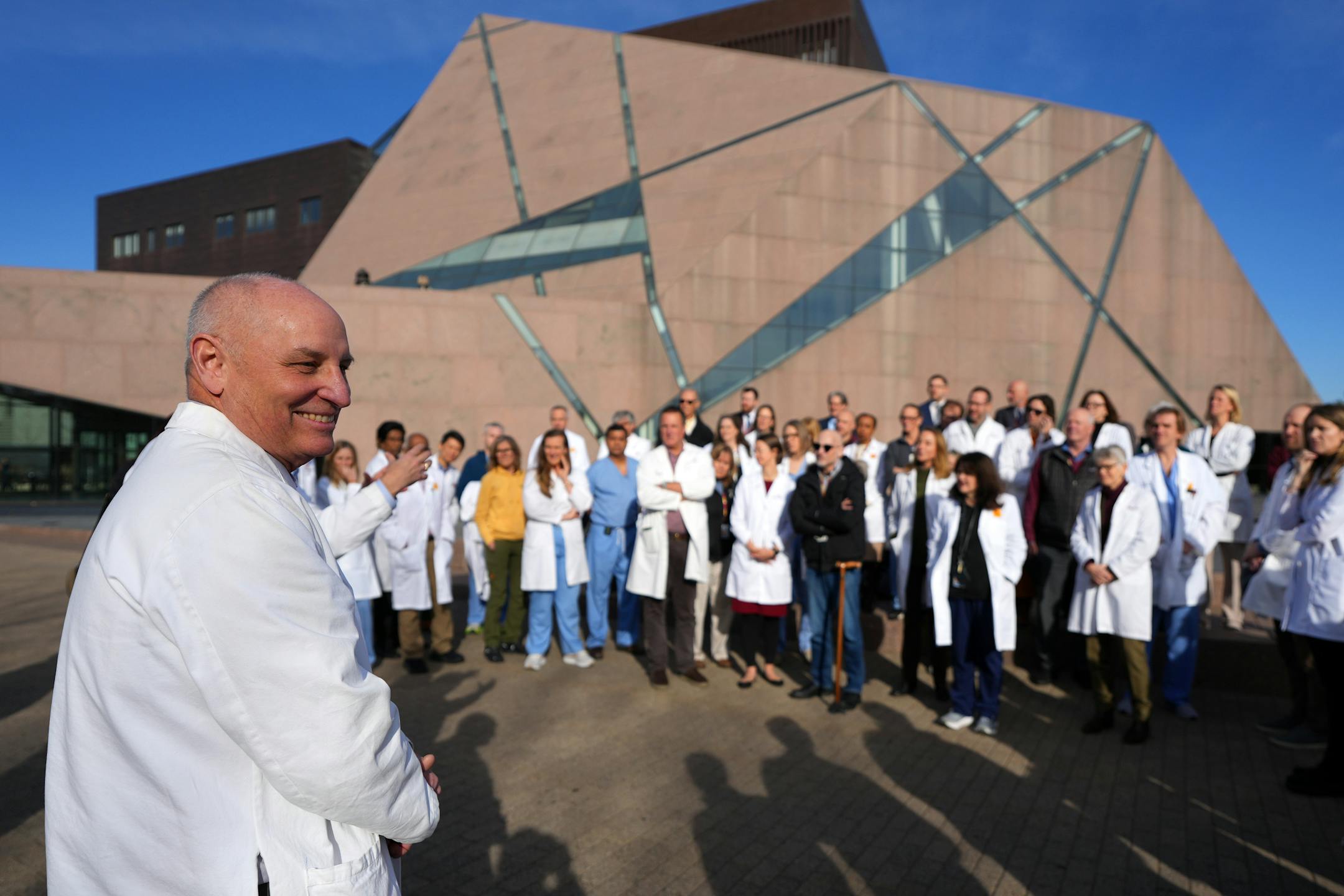
Dr. Greg Beilman, interim CEO of the independent University of Minnesota Physicians, was removed from his role as interim vice president for clinical operations at the U. Here, he gets a round of applause after posing for a photo on Nov. 21 with a group of physicians who work for M Health Fairview. (Anthony Soufflé/The Minnesota Star Tribune)

Opinion editor’s note: Strib Voices publishes a mix of commentary online and in print each day. To contribute, click here.

•••

I first crossed paths with University of Minnesota surgeon Dr. Greg Beilman in late 2024 when writing about the U’s pioneering “Medic to Medical School Pathway."

This worthy initiative helps military men and women with health care training get an M.D., providing one timely solution for the nation’s daunting physician shortage. Beilman, who served a quarter-century with the U.S. Army Reserve, worked with combat medics during deployments. He came back eager to tap that talent pipeline and then launched the program in astonishing time.

But circumstances and fortune can change quickly. It’s been just under a year since my Medic to Medical School column ran. Beilman is now coming under heavy fire himself in the bitter conflict between the University of Minnesota administration and Fairview Health.

Minnesotans ought to be alarmed because Beilman is taking flak for essentially doing the same thing he did in setting up the Medic to Medical School program: finding a pragmatic solution to a challenging problem. This time, it’s the long-running stalemate between the U administration and Fairview Health over continuing their nearly 30-year institutional partnership.

Financial struggles at the U’s teaching hospitals in the 1990s led to Fairview acquiring them in 1997. It’s been an uneasy marriage since then, with the latest operating agreement set to expire at the end of 2026.

The clock is ticking on inking a new deal or finding an alternative, as the U administration has sought. With months of talks managed by Minnesota Attorney General Keith Ellison breaking down this fall, Beilman donned one of his professional hats. In addition to being a general surgeon and medical school professor, he serves as the interim CEO of the independent University of Minnesota Physicians (UMP) group practice.
In that last capacity he struck a 10-year deal with Fairview, announced earlier this month. It was a solution designed to preserve the institutional partnership in which Fairview provides substantial support for the medical school, and its hospitals continue to be critical training grounds for the next generation of Minnesota physicians.

All of this is at stake if a deal isn’t reached. But the U’s administration has decried the newly formed agreement as a “hostile takeover.” In a commentary published in the Minnesota Star Tribune, three members of the Board of Regents blasted the agreement, writing that it placed the medical school and its mission in jeopardy. In the fallout, Beilman lost his job as the U’s interim vice president for clinical operation.

It’s been discomfiting to watch, with the rhetoric and retaliation feeling both unproductive and un-Minnesotan to me. It’s been particularly uncomfortable watching Beilman pay a professional price.

He’s a respected surgeon and medical school faculty member who has served the U for three decades. He’s a retired colonel who’s been deployed to dangerous places globally to provide medical care. He turned the Medic to Medical School program from a good idea to reality in remarkable time.

He should be considered an ally by the U’s leadership, not an enemy combatant. Fortunately, all parties — Fairview, the U and the physicians’ group — recently agreed to resume negotiations. The Minnesota Attorney General’s Office will continue to manage the talks.

In an interview, Beilman remained all business, not even finding humor in a joke about combat zone deployments prepping him for this particular career moment. He did tell me that he was “not drastically surprised” by his termination as a U vice president but added that he continues “to love what I do, taking care of patients.” Beilman continues to practice as a surgeon, serve on the medical school faculty and remains interim CEO of the physician group practice.

“Moving forward, I see this arrangement with Fairview and our long-term arrangement with Fairview to be critical to the success of the medical school, my faculty practice plan and of the patients that I serve,” he said.

Over 200 doctors from the group Beilman leads signed a recent letter to the Board of Regents strongly supporting the new agreement with Fairview. The lengthy list of signatories speaks volumes about the agreement’s merits from these key stakeholders’ perspective.

A newly available analysis shared with me this week underscores the urgency of reaching a deal, as well.

The analysis is from Beilman’s UMP physicians group. It was put together in response to a Sept. 12 letter from Ellison’s office. The attorney general sought a better understanding of what would happen if the U and Fairview “unwound” their long partnership.

Even with its dry clinical language, the UMP report is a sobering read. It warns that a full unwinding of the Fairview partnership — which could happen if the impasse continues — would be “catastrophic” for Minnesota’s health care system and its medical school, harming patient access, driving away specialized physicians and dismantling a clinical and research enterprise that took decades to build.

Two eye-catching data points from the report: The UMP analysis “estimates its lost revenue as a result of an unwind will be over $480 million and anticipates terminating over 3,000 employees.”

The implications are especially alarming for patient care, the report states. Downstream impacts would be felt acutely in neurology (particularly stroke care); pediatric specialty care, including cancer care; emergency care; geriatrics; rehabilitation; and molecular and cellular therapeutics, according to the report. Community care in low income and diverse communities would also be affected.

This last bit of information makes abundantly clear the stakes of the now-resumed talks. This isn’t just another set of business negotiations. At stake is the world-class health care that powers Minnesotans’ quality of life and the state’s economy.

Attorney General Ellison merits praise for shepherding these difficult negotiations. But if tensions don’t resolve soon, Gov. Tim Walz needs to step in, both to find a timely solution and put an end to harmful crossfire.

about the writer

about the writer

Jill Burcum

Editorial Columnist

See Moreicon