
Minnesota applied for a share of Trump’s rural health grant. Now the wait is on

State’s proposal for $1 billion advocated for one-time investments that will spawn long-term improvements in workforce, childbirth services and more. But it won’t offset the much bigger losses from cuts to the federal Medicaid health program.

The Minnesota Star Tribune
November 10, 2025 at 12:01PM
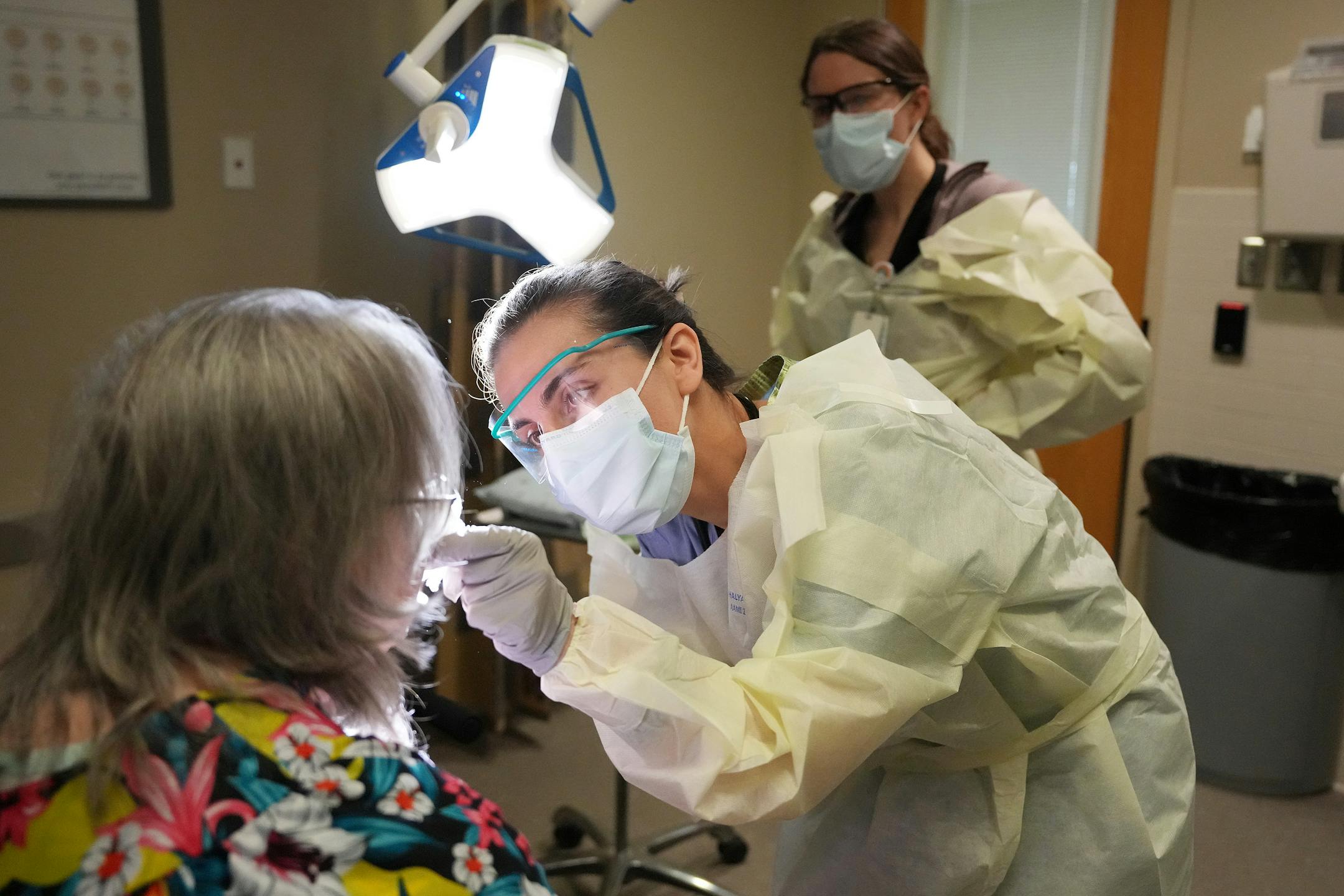
Dr. Alison Raffman, a medical resident at HCMC who spent a month doing rural ER care at Sanford Bemidji Medical Center, treats patient Sandy Helberg for a bloody nose as attending emergency physician Dr. Andrea Patten looks on in February. (Anthony Soufflé/The Minnesota Star Tribune)

A $1 billion grant to improve rural health care won’t offset the much bigger losses from looming cuts to the federal Medicaid health program, but Minnesota wasn’t going to miss out on its chance for the money.

The state completed its application on time last week for the rural health transformation funding, which President Donald Trump’s administration and congressional Republicans offered to soften the blow of Medicaid cuts. Wisconsin similarly announced its appeal for funding.

“This is a lot of money,” said Diane Rydrych, health policy director for the Minnesota Department of Health. “It’s really significant for Minnesota if we get this grant, but it’s also a really tough time. It’s not going to be sufficient funding to address all needs.”

Next up: an unsettling wait. Minnesota should find out in the next month if it will receive its share.

Each state applied for $200 million per year for five years, but the actual amount could vary. Some have worried Republican-led states could have an advantage, given Trump’s rhetoric against Democrats and actions in Democrat-led cities and states, such as military deployments and immigration crackdowns.

Politicians nationwide offered positive messages for their state’s applications to build support. State Sen. Melissa Wiklund, DFL-Bloomington, issued a statement Friday giving Minnesota leaders “tremendous credit” for an application that could give the state’s “rural health system the support it so urgently needs.”

Those needs became more apparent last week when Allina Health announced it would stop scheduling childbirths at its hospital in Faribault and consolidate those services in Owatonna. The number of Minnesota counties with hospital-based obstetrics care has declined from 64 in 2010 to 50 in 2023 because of staffing shortages and declining births, according to the University of Minnesota’s monitoring.

Minnesota’s application leans heavily on existing but underfunded efforts to stabilize rural health care, said Dr. Rahul Koranne, chief executive of the Minnesota Hospital Association. Community Memorial Hospital in Cloquet offers a childbirth simulation so doctors and nurses from low-birth hospitals can keep their skills sharp.
Bipartisan support from Minnesota’s congressional delegation should help Minnesota gain its share of the funding to expand these efforts, Koranne said. States are supposed to learn how much they receive before the end of 2025.

The state set ambitious goals for the next five years, including a 50% increase in medical providers who intend to stay in rural areas. Federal leaders warned that states need to use the grant funding to improve care rather than keep struggling hospitals afloat.

Many hospitals nationally are warning of financial struggles because of a projected $1 trillion cut to Medicaid in the next decade. The government-subsidized health plan pays medical providers for the care of low-income and disabled Americans. This program covers about one-fifth of patients in Minnesota hospitals.

Rydrych said the state was considering a dramatic expansion of loan forgiveness programs that require new doctors, nurses and other providers to work in rural areas but then received federal guidance against that idea. The state plans to invest in training programs that require new doctors and nurses to spend extended time in rural hospitals and clinics.

“The research does show people tend to practice where they train,” said Zora Radosevich, director of the state’s Office for Rural Health and Primary Care.

Sanford Health has already invested in one such partnership with Hennepin Healthcare, which rotates doctors in training from its urban hospital in Minneapolis for a month of work at Sanford’s hospital in Bemidji.

Other goals in the next five years include an increase in telehealth medical appointments and a 10% reduction in rural Minnesotans who return to hospitals with avoidable problems. Essentia Health employs paramedics who visit with patients and help prevent their hospital readmissions, though it has made cuts to the program.

The federal government billed the funding as one-time support for five years, so Rydrych said the state focused its application on up-front investments that could pay off after the money runs dry. Technology upgrades to boost telemedicine visits were one example.

The state also pledged to use the funding to increase by 15% the number of rural providers engaged in value-based care. That means the providers agree to contracts with insurers that stipulate their payments depend on the health of their patients rather than the volume of medical procedures completed.

Rural providers sometimes have too few patients or procedures to qualify for value-based contracts, but Rydrych said the funding could support partnerships between providers so they could become eligible. A group of rural hospitals in Minnesota has already formed the Headwaters Network in pursuit of that goal.

As proposed, the state would spread funding in the first year broadly across rural hospitals, federal health centers, tribal health programs and rural mental health services. The state would then seek competitive applications from providers for the next four years, in order to steer money toward the most-promising solutions.

about the writer

about the writer

Jeremy Olson

Reporter

Jeremy Olson is a Pulitzer Prize-winning reporter covering health care for the Star Tribune. Trained in investigative and computer-assisted reporting, Olson has covered politics, social services, and family issues.

See Moreicon

More from Health Care

See More
card image
Jeremy Olson/The Minnesota Star Tribune

Triage unit treats many children without ever taking them into the actual ER, freeing up time for the rest of the emergency medical staff.

card image