
Minnesota hospitals try to lower readmission rates, improve patients’ health in the process

Community paramedics and other investments to monitor patients after they are discharged from hospitals help prevent them from returning with avoidable complications.

The Minnesota Star Tribune
October 22, 2025 at 4:59PM
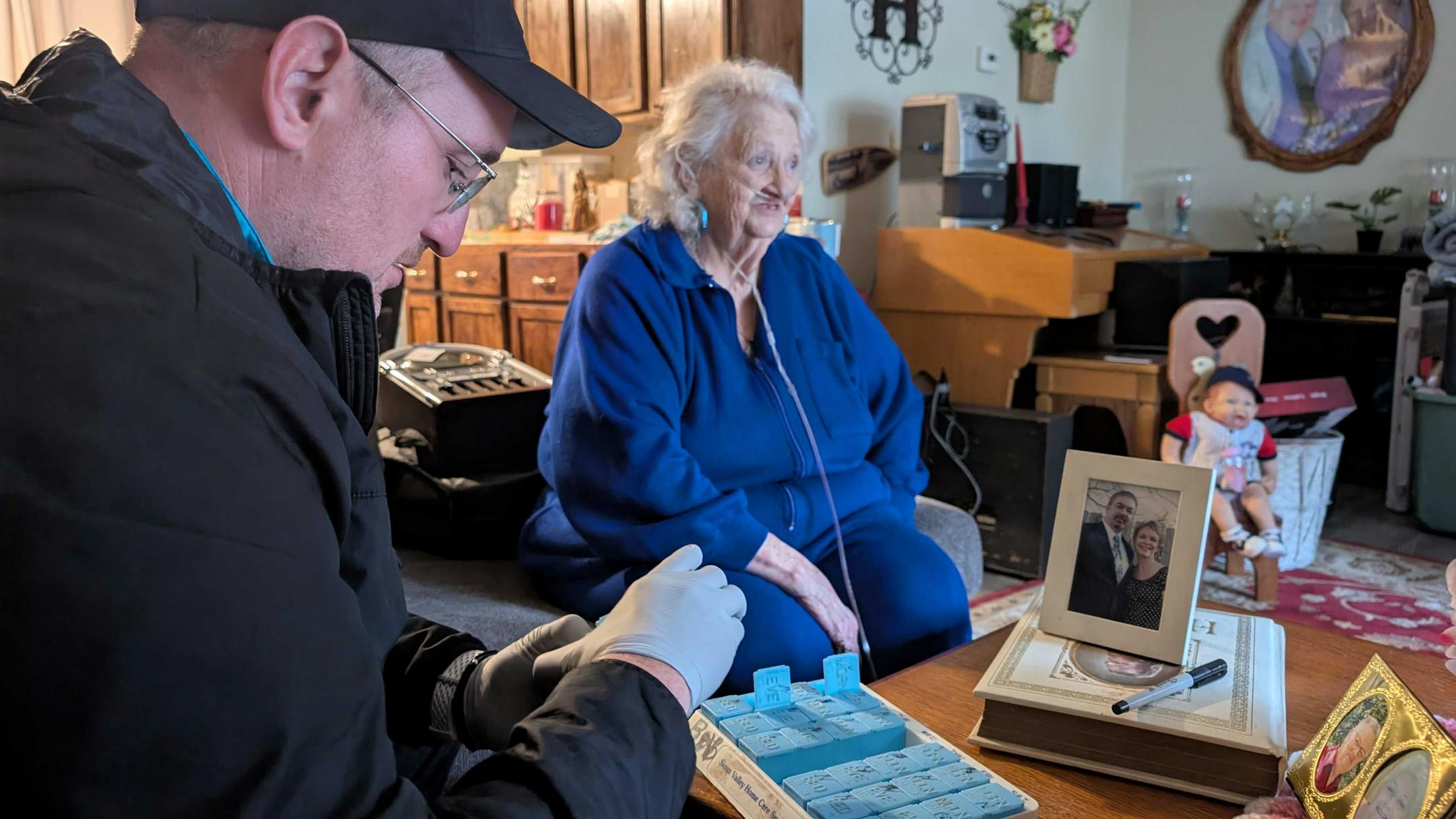
David Smith, an Essentia Health community paramedic, restocks the pill box for 82-year-old Beverly Hand of Brainerd. Smith's visits are designed to keep her healthy at home and out of hospital care. (Jeremy Olson/The Minnesota Star Tribune)

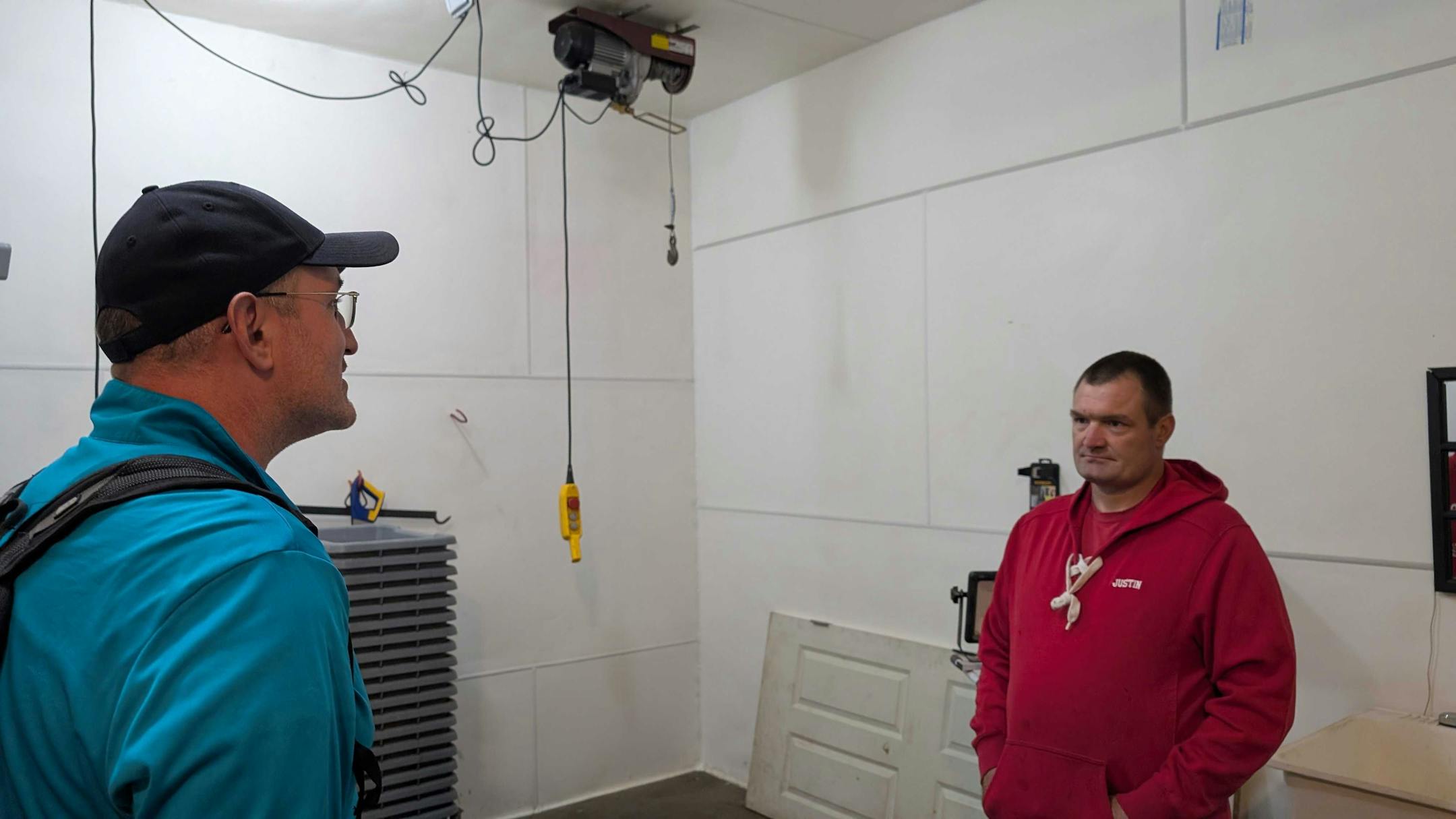
The back room of Gerdes and Sons, a Brainerd-area business where deer are skinned and quartered, was an odd location for community paramedic David Smith to examine his patient, Justin Gerdes.

But it didn’t change Smith’s goal: keeping Gerdes out of the hospital. Both his patient’s health and the bottom line of his employer, Essentia Health, were at stake.

Gerdes had been admitted this fall to St. Joseph’s Medical Center in Brainerd for a fungal infection that got into his blood stream and damaged his heart. The 42-year-old was at risk for going back to the hospital if he overexerted himself. On the other hand, it was the busy season for his all-purpose maintenance business. There were docks to pull, yards to maintain, pumpkins to sell and wild game to dress.

“I understand. I live in reality,” Smith told Gerdes on Oct. 15 after checking his blood pressure. “Just as long as you’re not getting lightheaded, dizzy. Those are the cardiac symptoms you really need to look out for.”

Paramedic visits and other efforts have helped Minnesota hospitals reduce readmissions for patients such as Gerdes and avoid steep federal penalties from Medicare, the massive federal health care program for senior citizens. New federal data shows 16 Minnesota hospitals avoided any penalties at all out of 46 scrutinized for readmissions.

The other 30 hospitals will collectively pay $2 million to $3 million in federal penalties next year, which is relatively small compared to the billions of dollars that Medicare reimburses them for medical care. But the penalties aren’t just about money. They can be publicly embarrassing, and an indication that hospitals are struggling with value-based care, an industry term that means taking better care of patients for less money.

“Everybody loses if patients get readmitted that shouldn’t have needed readmissions,” said Dr. Cathy Cantor, chief population health officer for Duluth-based Essentia Health.

Twelve years ago, Medicare began penalizing hospitals on as much as 3% of their fee-for-service revenues if they readmitted too many patients. Today, it remains the most public example of numerous financial incentives for hospitals.
About half of Essentia’s patients have public or private health insurance with value-based rewards for efficient care or penalties for problems such as readmissions.

“That’s where I make money for the hospital,” Smith said of preventing readmissions. After years of treating traumas and emergencies in ambulances, Smith became an Essentia community paramedic. He meets patients deemed at risk for readmissions in homes, offices, cafes or even parks.

Avoiding readmissions also means that patients are in better health, and that hospital beds are conserved to avoid overcrowding.

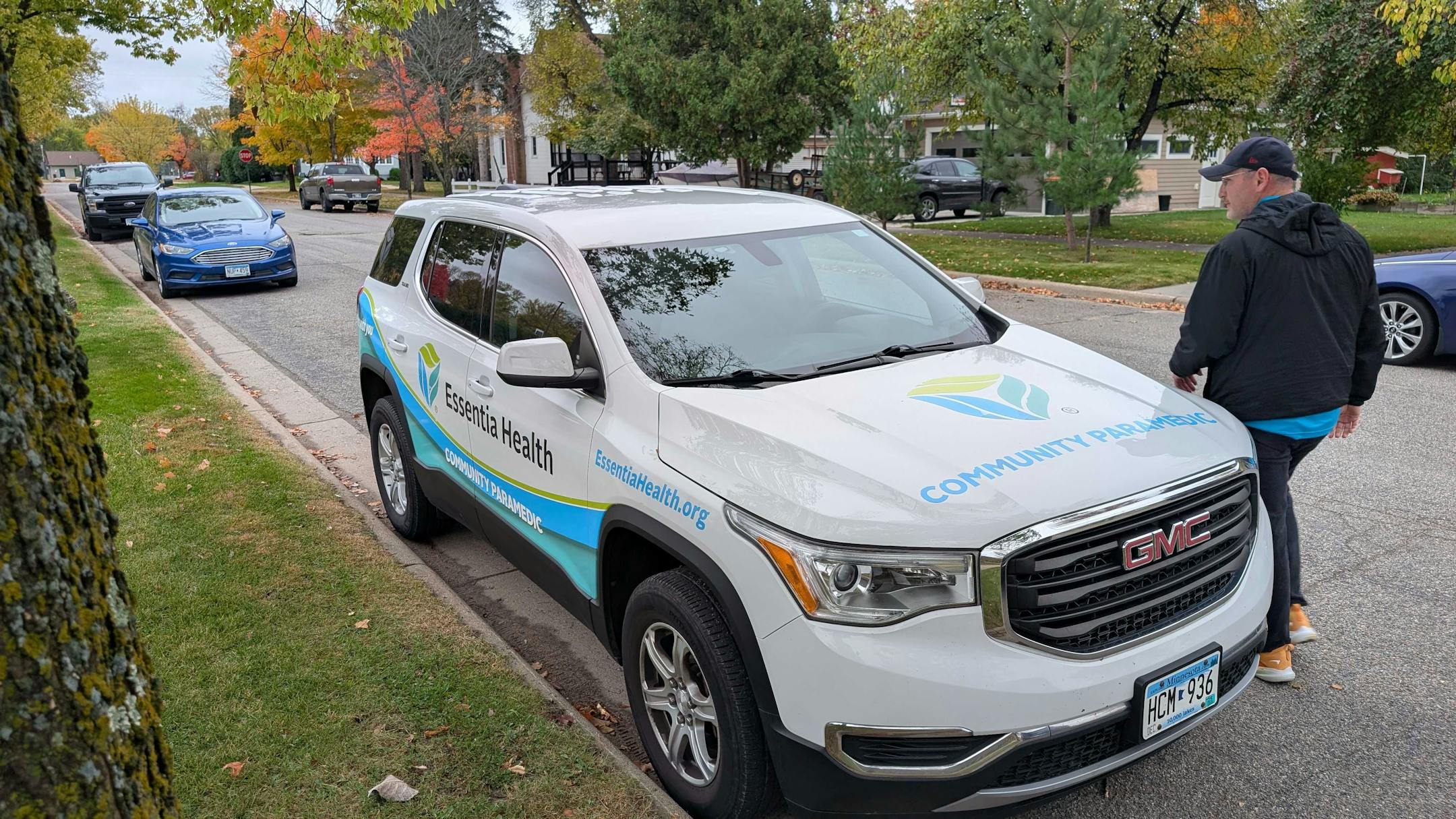
Community paramedic David Smith went out to visit Essentia Health patients with the goal of keeping them healthy and out of the hospital. (Jeremy Olson/The Minnesota Star Tribune)

Medicare is issuing penalties of more than 1% on fee-for-service revenues next year to 238 U.S. hospitals that had significant problems with readmissions. Only one of these hospitals is in Minnesota, Lake Region Healthcare in Fergus Falls.

Hospitals credited a variety of strategies for avoiding worse penalties: home visits by paramedics like Smith, calls from pharmacists to help patients understand new medication regimens, and food vouchers if patients appear at risk for malnutrition back home.

The efforts are no guarantee. Methodist Hospital in St. Louis Park was hit with a 1% Medicare readmission penalty, its highest penalty since the federal government started issuing them. The HealthPartners-affiliated hospital was among the first in the U.S. to confront readmissions by sending firefighters to check on patients.

Medicare also assessed higher-than-average readmission penalties on North Memorial Health in Robbinsdale, United Hospital in St. Paul and Olmsted Medical Center in Rochester.

The penalties were based on care from 2021 through 2023 during the COVID-19 pandemic, which hurt Methodist’s performance, according to a statement from HealthPartners. The health system nonetheless is trying to improve, recently opening an advanced care clinic that specializes in managing patients with long histories of hospital visits.

Some readmissions are unavoidable. The penalties are based on actual readmissions compared to the expected number for patients treated for six conditions, including heart attacks, pneumonia and worn-out hip or knee joints that need replacement.

Cantor said there is trial and error in figuring out what investments reduce costs and readmissions, but that the data support the paramedic program. Essentia studied 700 patients and found a 65% decline in emergency room visits and hospital admissions in the month after they received visits from paramedics.

Smith meets regularly with some patients who need help at home, but others just once or twice. He was feeling confident about Gerdes, the cardiac patient recovering from infection. Relatives at his family business were taking on more physical labor and keeping an eye on his workload.

“I’ve been taking it easy,” Gerdes assured him. “Easy as I can.”

Community paramedic David Smith, left, met with patient Justin Gerdes to discuss his health care needs in the same room where Gerdes butchers deer and other wild game. (Jeremy Olson/The Minnesota Star Tribune)

An hour earlier, Smith had met with Beverly Hand, 82, who was struggling with leg pain — it’s like a “hot iron,” she complained — and breathing trouble.

The paramedic checked her pill box. The Brainerd woman might have missed some doses of an important blood-thinner that were left in a part of the box marked for evening medications instead of bedtime.

“I’m switching them all to bed,” he told her as he refilled the box.

Since her last visit from Smith, Hand had cleaned up the clutter that was making it hazardous to walk around. She even hosted friends for (non-alcoholic) margaritas. She also took in a cat for companionship and was waiting for her granddaughter to name it.

“I haven’t been in the hospital for almost two years now,” Hand said. “I’m doing pretty good.”

“Yeah,” Smith replied. “You’ve had a steady run.”

A low readmission rate meant low to no penalties for Essentia’s hospitals in Duluth, Virginia and Detroit Lakes. St. Joseph’s in Brainerd received a 0.12% penalty on its Medicare fee-for-service revenues, well below the national average.

Essentia’s Cantor said that all suggests the prevention efforts and home visits are paying off, but the health system still had some avoidable readmissions.

“The fact that we had some,” she said, “tells us we have some work to do.”

about the writer

about the writer

Jeremy Olson

Reporter

Jeremy Olson is a Pulitzer Prize-winning reporter covering health care for the Star Tribune. Trained in investigative and computer-assisted reporting, Olson has covered politics, social services, and family issues.

See Moreicon

More from Health Care

See More
Nancy Ingham gives newborn Sophia Rash a hepatitis B shot several hours after she was born, Jan. 17, 2006.
Renée Jones Schneider/The Minnesota Star Tribune

A federal vaccine advisory committee voted on Friday to end the longstanding recommendation that all U.S. babies get the hepatitis B vaccine on the day they're born.

card image
Nancy Ingham gives newborn Sophia Rash a hepatitis B shot several hours after she was born, Jan. 17, 2006.