
How hockey families build backyard ice rinks at three different price points

These Minnesotans have spent anywhere from hundreds to thousands of dollars for a place to skate close to home.

The Minnesota Star Tribune
December 20, 2025 at 1:00PM
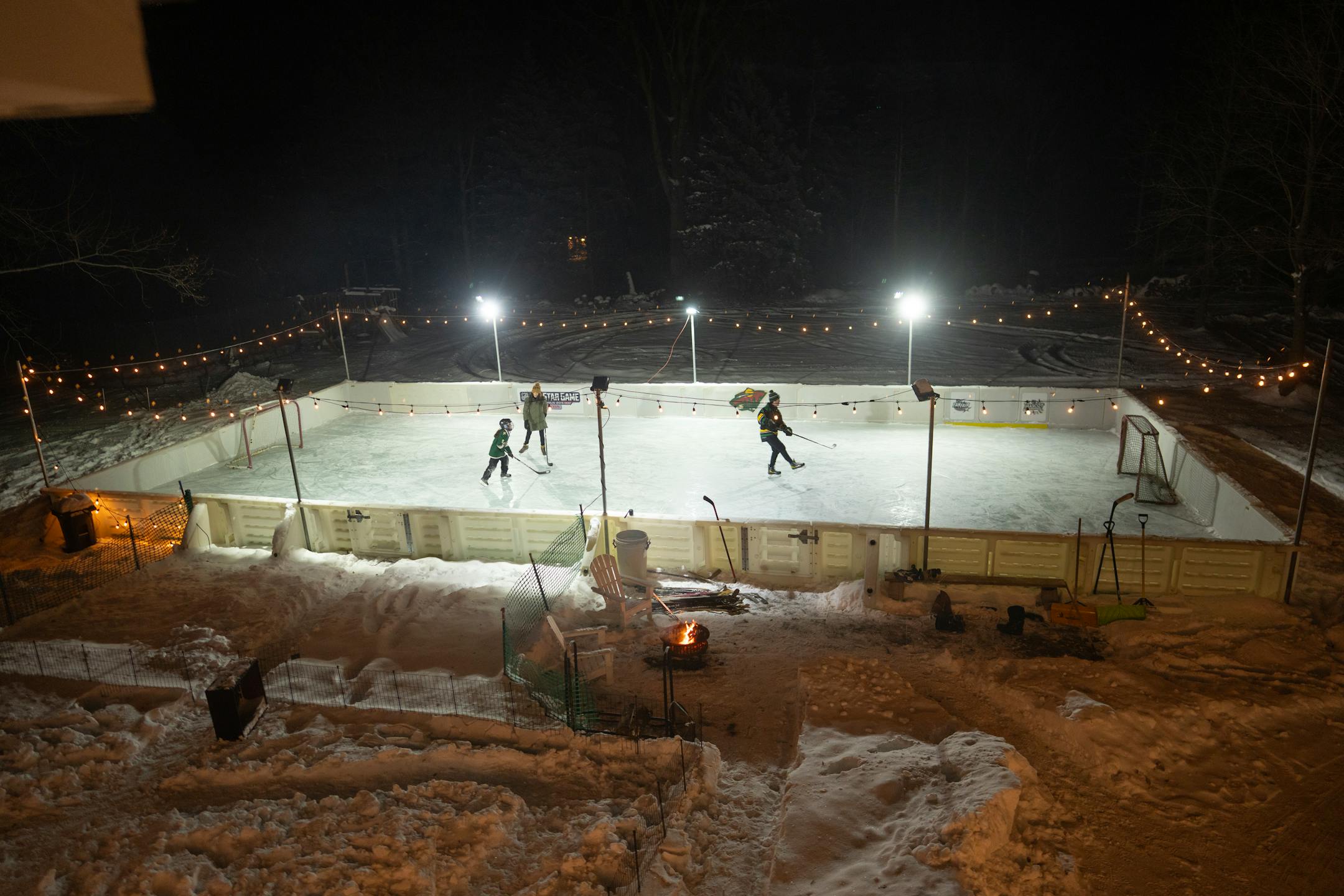
Jacquie Van Guilder skates on her family’s front yard rink with her daughter Rosie, 10, and son Tommy, 14, on Monday, December 15, 2025 in Stillwater, Minn. James Van Guilder built an ice rink in his front yard for his family to enjoy. (Jeff Wheeler/The Minnesota Star Tribune)

Jeremy Barrick has what so many hockey parents contemplating a backyard ice rink want: advice from the pros who have to make outdoor ice every year.

Barrick, who works at the Minneapolis Park and Recreation Board as assistant superintendent of environmental stewardship, remembers going into work, upset that a hose he left on overnight for his backyard rink formed canyons instead of a smooth layer of ice. He thought the rink was done for the season.

His coworkers, a few of the 150 employees who make ice for the city’s 42 rinks, helped Barrick solve his problem.

Other parents aren’t so lucky. It takes years of tinkering and observation to get the ice just right and the task of keeping up good ice is never ending. DIY and online-purchased “homebonis” help to smooth the ice, but even then, a rink can be spoiled by leaves that break up the smooth surface, too much snow inhibiting ice growth and pee from the family dog.

We asked hockey parents with varying rink sizes, what it took to make their rinks and their top tips this winter. All rinks included are on the ground, not on lakes or ponds. Prices are approximate.
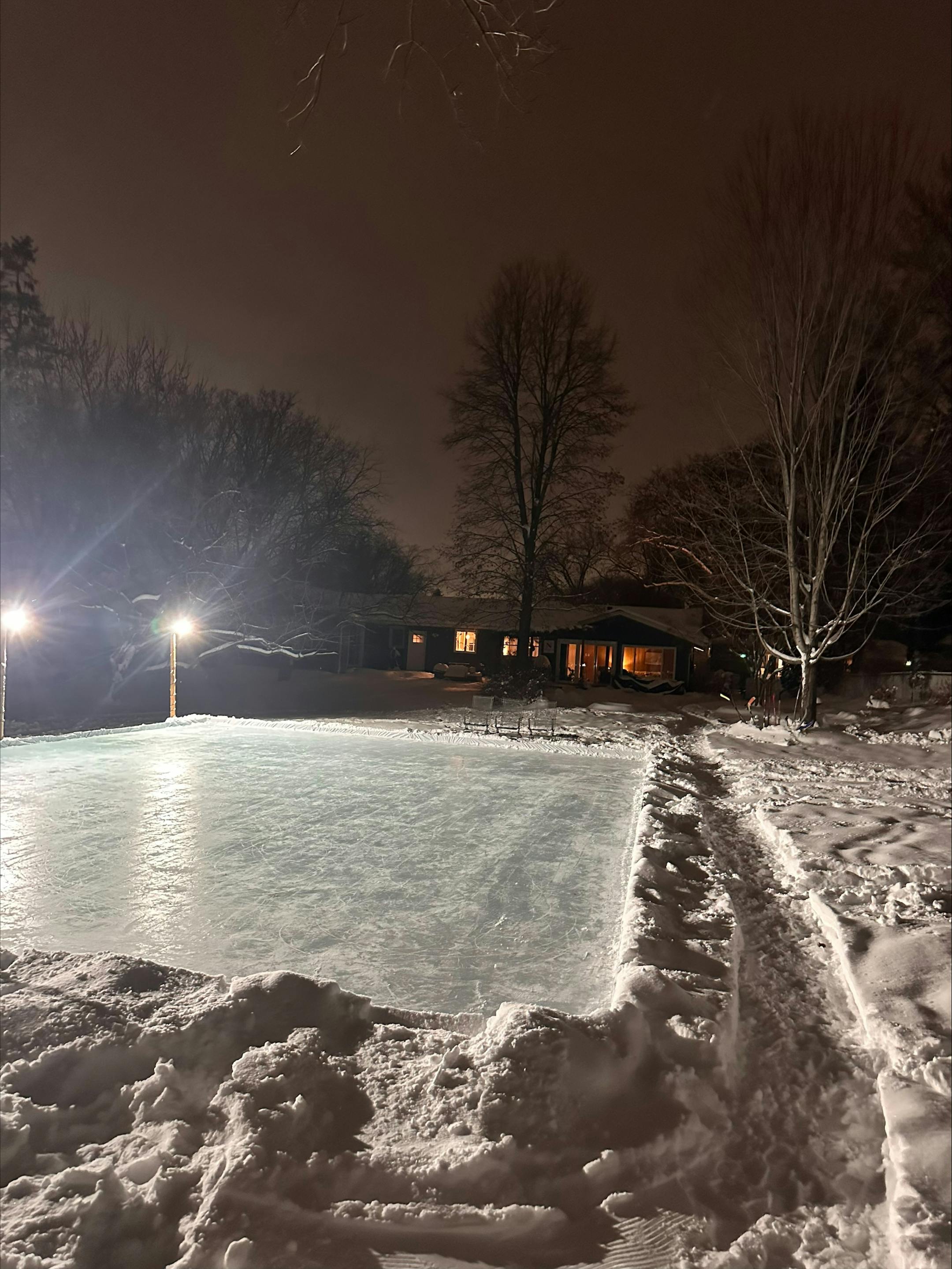
Chris Nelson scaled down his ice rink in Golden Valley after he realized a bigger rink was too much maintenance. (The Minnesota Star Tribune)

As big as it needs to be — $1,000

Chris Nelson built his first rink in his backyard when his Golden Valley neighbor was ready to pass on the ice making duties to someone else, he said. Since then, his backyard has turned into a place where kids skate while the parents hang out in a nearby sauna.

Now in his eighth year of putting up the rink, Nelson says the key to a good one is picking the right size. In years past, he made his rink so big it took 28 hours to fill up with water and too much time to shovel and maintain.

His set up includes several lights, one hockey net and wooden boards that rise about six inches from the ground. Nelson learned early on that it’s important to reinforce those boards with support after one broke, causing gallons of water to spill out.
His best resource is a group chat where he and other hockey dads discuss trials and tribulations of maintaining the perfect ice each winter. His tip is to start as early as possible.

Builders who start in the fall, when the ground is soft, can more easily install a wooden frame for the rink and then attach a large liner. Then you just fill it up like a tray of water, Barrick said.

Size: 16 feet by 24 feet

Materials: 3 sheets of 3′ x 4′ plywood, 5 packs of a dozen stakes, 2 inch construction screws, a large plastic liner and approximately 2,000 gallons of water.

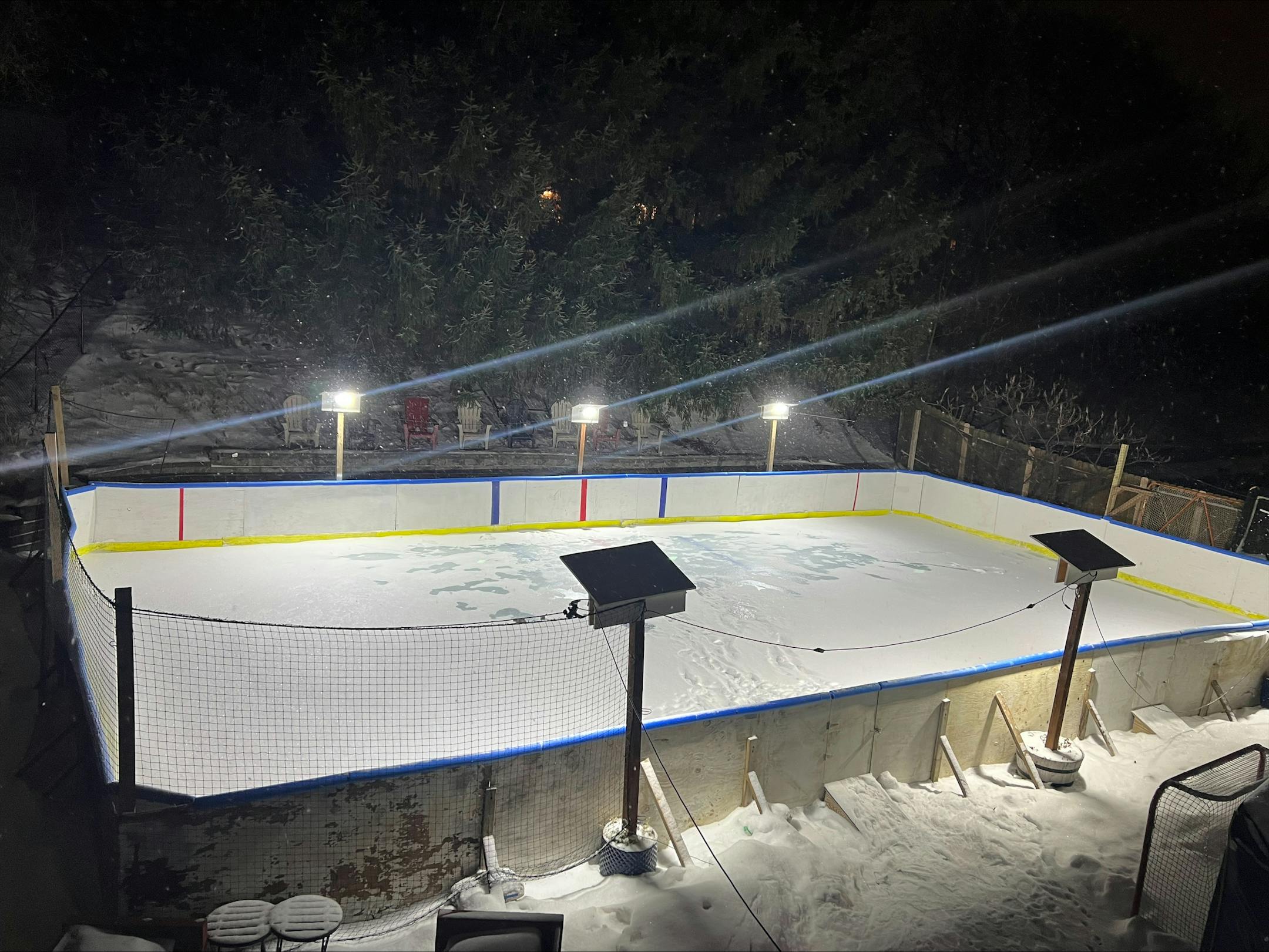
Jeremy Barrick's ice rink in Bloomington is made up of items he found second hand over the years. (Alex Chhith/The Minnesota Star Tribune)

A collection of secondhand finds — $2,500

Barrick’s setup at his Bloomington home includes two hockey nets and large plywood panels that are about 4 feet high. Half of that plywood and almost every other part of the rink was sourced second hand, including a scoreboard he found online for about $10.

Barrick estimates the rink uses about 3,500 gallons of water (and costs more than $400 to fill). He has long since tackled the rookie mistake that led to canyons in his ice. The ice makers at the city told him to fill the canyons with snow and to pour water every few hours. The problem, they told him, was that the water thawed the frost on the ground, which ruined the base of the ice.

That doesn’t mean he has solved all his rink-related water problems. When Barrick turned the water back on to the outside of his house in the spring last season, he didn’t notice the spigot to the backside of the house was left open. Subsequently, his basement flooded causing tens of thousands of dollars in damage.

His tip is to be careful, but to have fun with it.

Size: 32 feet by 56 feet

Materials: 22 half-inch thick sheets of 4’ by 8′ plywood, 2′ by 4′ wooden brackets to support the boards, 6 posts that hold up the lights, lights on each post, 2 large nettings, a homeboni, shovels, heat gun and a large plastic liner.

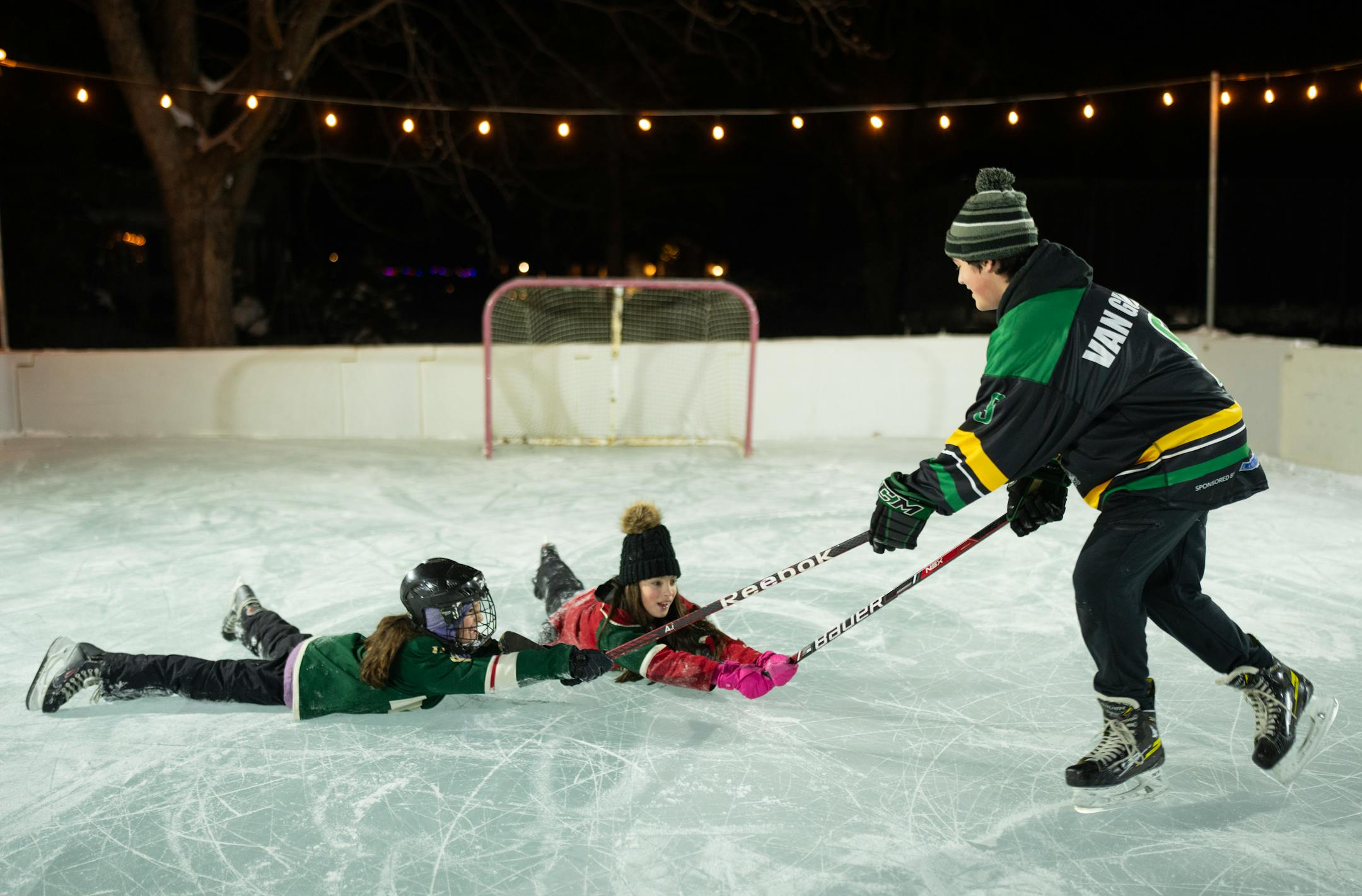
Tommy Van Guilder, 14, hauls his sisters Rosie, 10, left, and Maddie, 12, around the rink their dad built in their front yard Monday, December 15, 2025 in Stillwater, Minn. James Van Guilder built an ice rink in his front yard for his family to enjoy. ] JEFF WHEELER • Jeff.Wheeler@startribune.com (Jeff Wheeler/The Minnesota Star Tribune)

A steal of a deal — $4,000+

James Van Guilder started out by making a small patch of ice in his backyard for his son about 14 years ago. Today, his Stillwater rink has quadrupled in size and has two hockey nets. He even fixed his garage with a hot water line that he uses to maintain the ice.

About seven years ago, he made the biggest upgrade when he purchased standard hockey rink boards, along with netting, lights and posts for the lights. The boards alone retail for $16,000, but he got the setup from a buddy for just $2,500.

His top tip for a good rink: patience.

One year, he broke through the smooth layer of ice while removing snow and another year a neighbor’s skate shattered a portion of the surface when she went out on the ice too early, he said.

“The timing of when you put up [something this big] is meticulous,” he said. “You need the perfect weather.”

That weather is much like what Minnesota experienced right after Thanksgiving this year: frigid temperatures without much snow. Van Guilders said he is looking forward to getting a lot more use out of the rink than previous years when the state had milder winters.

Size: 40 feet by 70 feet

Materials: More than two dozen plastic hockey rink boards, 6 LED flood lights, two nettings that are about 40 feet wide, 10 metal posts for the lights, lots of rebar stakes, a liner, shovels, hoses and extension cords.

Share your backyard rink

We are looking for the best home ice in Minnesota. Whether you are a backyard hockey veteran or a rookie rink builder, we want to see your set-up. Share photos and the story of your rink below and you might be featured in a future Star Tribune story.

about the writer

about the writer

Alex Chhith

Reporter

Alex Chhith is a general assignment reporter for the Minnesota Star Tribune.

See Moreicon