

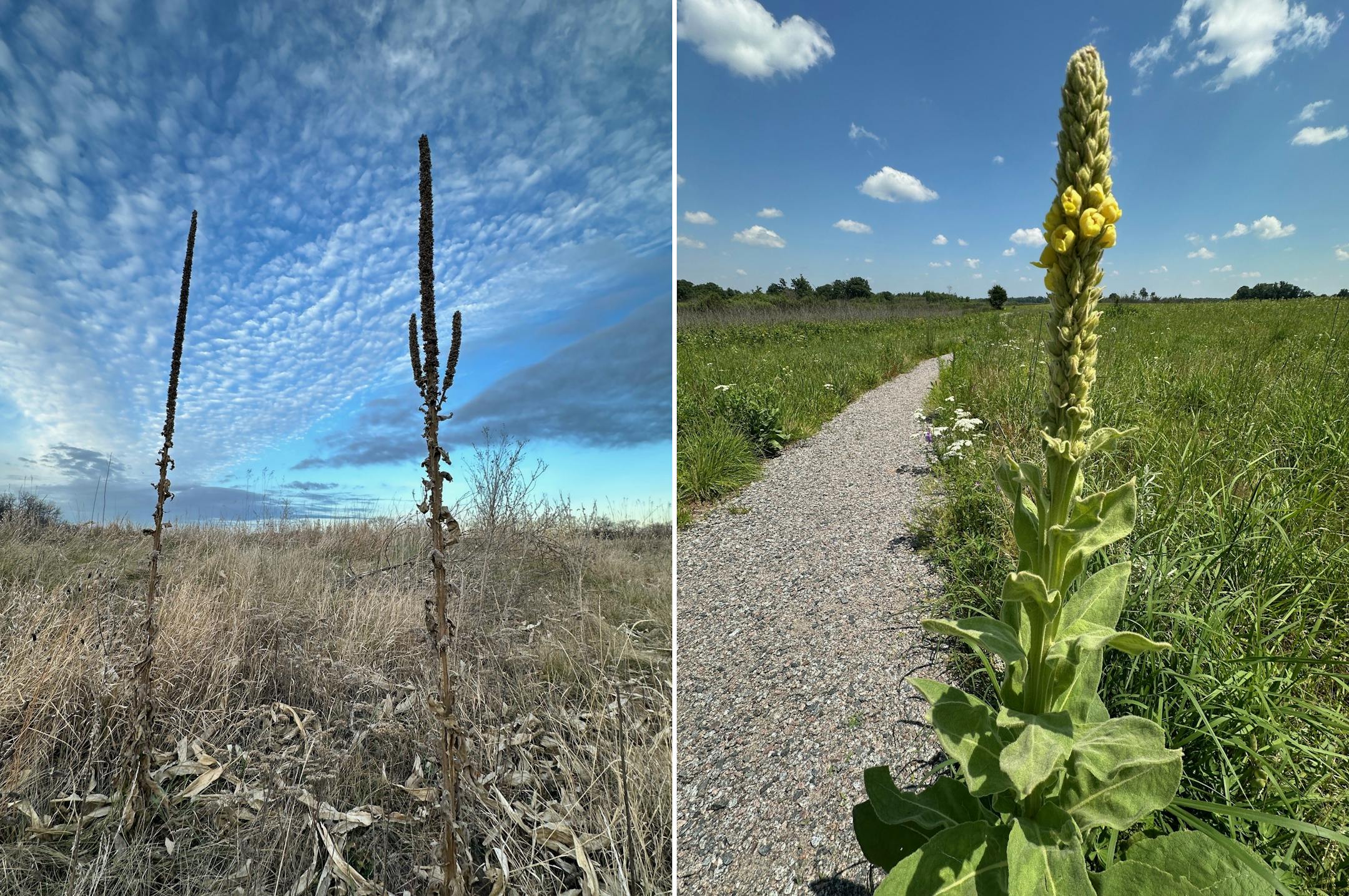
Take a winter stroll through a Minnesota meadow, prairie or any open land or roadside, and sturdy, stalky mullein may be the easiest plant to spot. Its dead or dormant brown stalks and seed heads tower up to six feet tall or more, enough to rise above most snow drifts.
European immigrants brought the first mullein (Verbascum thapsus) seeds to North America before the Revolutionary War 250 years ago. The prolific plant was especially valuable during the winter, when teas and tinctures made from it during the growing season helped people cope with seasonal illnesses.
Mullein’s expectorant and anti-inflammatory qualities were thought to soothe the seasonal cacophony of winter coughs, bronchitis, asthma and lung issues, among other uses. Other herbalist and folk remedies included putting leaves — up to a foot long or more near the base of the plant — into shoes or boots to help with achy feet. The plant was also dipped in tallow and used for torches.
If you find a dormant stalk on a winter hike, give it a shake and listen for the rattle of seeds. It takes two years for the plant to mature, bloom and produce those seeds. A single plant can produce more than 100,000, so it’s best to dead-head or pull any unwanted mullein before it reaches that stage.
The seeds that birds don’t eat can scatter to the soil and regerminate into new plants. Scientists have found that mullein seeds estimated to be more than 100 years old can still be viable.
As snow melts in the coming weeks, mullein’s distinctively fuzzy rosettes of green-gray leaves will be among the first plants to appear. The fine hairs on the broad flat leaves — thickest on the underside — influence the plant’s common names, including flannel leaf, calf’s tongue and velvet plant.
When summer arrives, the top foot of mullein will bloom with five-petaled yellow flowers. The plant’s height also makes it a popular destination for dragonflies and other pollinators as they scout the landscape. Birds also stop for a rest on their stalks year-round.


