

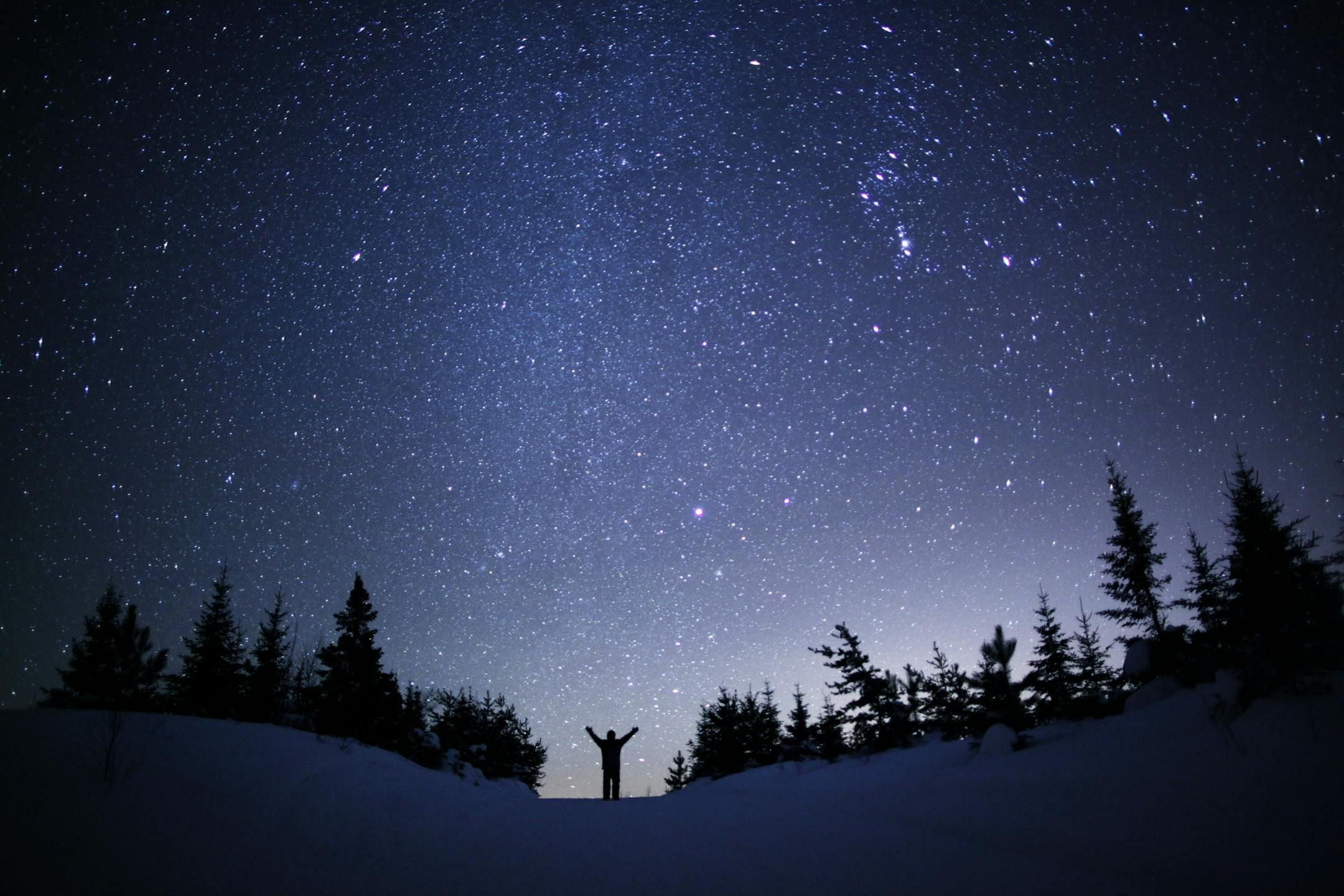
January’s polar temperatures can make it difficult to stay outdoors for very long, especially in the evening. But these conditions are ideal for stargazing. Leafless trees make it easier to see the sky, cold dry air creates a crisper view of stars, and the ability to walk onto a frozen lake or prairie offers an expansive view.
The Bell Museum, Friends of the Boundary Waters, The National Park Service, and other organizations will highlight marvels of the winter sky during a variety of astronomy events both in person and virtual during the fourth annual Boreal Stargazing Week Feb. 9-16. Locations stretch from Richfield’s Community Center in the Twin Cities north to Voyageurs National Park.
Anyone already familiar with Greek constellations can find fresh ways to see the winter skies by learning about Indigenous constellations and the stories behind them through organizations such as Native Sky Watchers.
The Ojibwe constellation Biboonkeonini, or the Winter Maker, overlaps with the Greek constellation Orion the Hunter. The three bright aligned stars of Orion’s belt make up the Winter Maker’s shoulders and arms, which extend farther to include stars from the Greek constellation Canis Minor to the left and Taurus the Bull to the right.
Stars in the Little Dipper and Big Dipper create Ojibwe constellations that include the Loon (Maang) and the Fisher (Ojiig) while summer and fall stars making up Pegasus and Cygnus the swan form into the Ojibwe constellations of moose and crane.
You can learn more about Ojibwe and Dakota star knowledge through stories told by elders on the Native Skywatchers website or books by the organization’s founder Annette Lee. There is also the pop-up planetarium experience, “Living in Balance: Anishinaabe Star Knowledge,” at the Walker Art Center, and in collaboration with the Bell Museum, on Thursdays Feb. 13-27. First Nations astronomer Wilfred Buck will share stories during the Feb. 13 presentations.
Lee also helped the Great River Children’s Museum in St. Cloud create a night sky with Ojibwe, and Dakota and Lakota constellations as part of its Itasca Headwaters-themed camping and great outdoors play area. The exhibit cycles between day and night and can be explored year-round.


![Frosted Birch trees reach for the sky on a bitter cold morning in December. ] Minnesota -State of Wonders, Arrowhead in Winter BRIAN PETERSON • brian.peterson@startribune.com
Grand Marais, MN 2/14/2014](https://arc.stimg.co/startribunemedia/6ZXHG4LKYMULX4MFGGBDRWW2GE.jpg?&w=252&ar=3:2&fit=crop)