
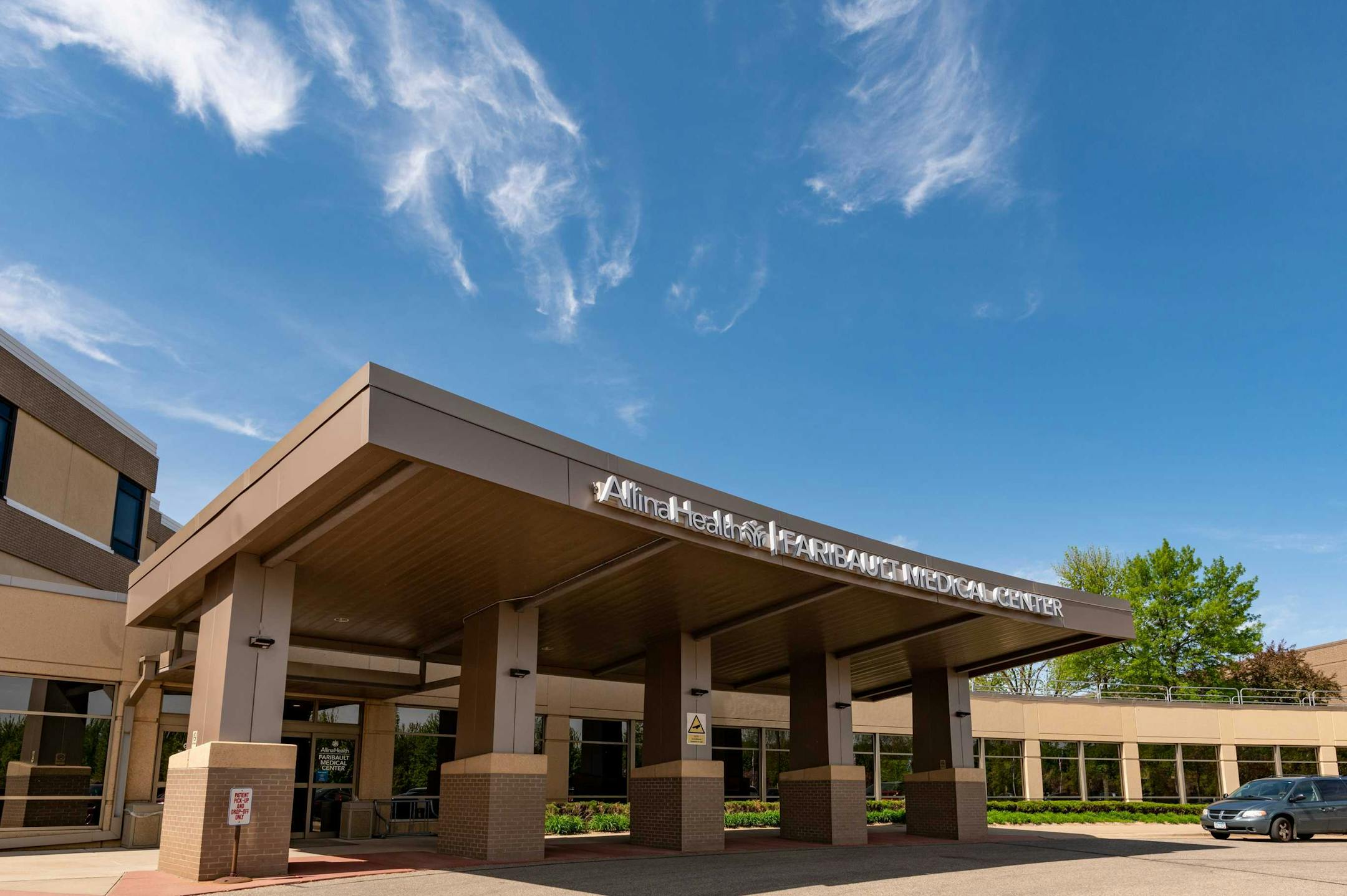
Allina cutting childbirth, surgery services in Faribault

The health system will consolidate two childbirth centers in south-central Minnesota following Mayo Clinic’s withdrawal of obstetricians from the region.

The Minnesota Star Tribune
November 7, 2025 at 7:06PM
Allina Health is consolidating childbirth services at its hospitals in Owatonna and Faribault. (Photo courtesy of Allina Health)

Owatonna leaders fretted last month that their local Allina hospital could stop scheduling childbirths, but instead, it’s nearby Faribault that is losing the valued medical service, along with some surgical and pediatric care.

Allina announced Thursday it can no longer maintain labor and delivery units at two rural hospitals 16 miles apart, following a Mayo Clinic decision to withdraw obstetricians who performed most of the childbirths at Owatonna Hospital. Under the consolidation, Owatonna will become a regional childbirth center, while Allina’s Faribault Medical Center will lose its delivery unit.

The consolidation of childbirth units Dec. 1 will ensure “continued access to these vital obstetric services for our region,” said Whitney Johnson, president of both hospitals. She cited “provider shortages, long recruitment timelines, declining birth volumes and low reimbursement rates” for the decision.

The consolidation continues a trend in Minnesota, where the number of counties with hospital-based obstetrics care has declined from 64 in 2010 to 50 in 2023, according to monitoring by the University of Minnesota. The decline has been more rapid in Minnesota, but that’s partly because it had a broader network of full-service hospitals than many other states.

While closing OB units relieves hospitals of some pressures, studies suggest the loss of local access increases the risks of preterm births along with births in emergency rooms or outside hospitals entirely, said Katy Kozhimannil, co-director of the university’s Rural Health Research Center and a leading national researcher on rural access to OB care.

“Not having births locally, it may not seem like a big deal to travel 15 or 20 miles, but [it can be] when you are in labor, when you are planning for a birth,” she said, adding that’s especially true for people with lower incomes and limited transportation options or for people who already have children at home.

The domino effect in this instance started with Mayo, which had recently lost two of the four full-time obstetricians it needed to fully cover childbirth needs in Owatonna. The Rochester-based health system, like many, is facing struggles in replacing OB doctors in rural areas. Two of its nine openings for OB positions across Minnesota have been open for more than two years.

Allina responded by patching together a network of doctors from the region to maintain childbirth coverage in Owatonna after Nov. 17, when the Mayo doctors were to withdraw from the hospital. But the health system announced a week later this stopgap solution was unsustainable.

Faribault lost out in part because it has the smaller of the OB units, performing 197 childbirths last year compared to Owatonna’s 397.

The Faribault hospital also will stop, as of Dec. 1, providing emergency surgeries at night or on weekends, because it will no longer maintain the 24-hour access to anesthesia providers it needs for its birthing center. Patients needing emergency surgery will be transferred to Owatonna or elsewhere.

The hospital also will stop admitting pediatric patients in May because it is losing the doctor who provided that care as part of the Owatonna consolidation.

After Mayo announced its plans, Owatonna’s mayor and other local leaders urged Allina last month to fill the gap and maintain OB services.

Similar messages emerged this week in Faribault, where Mayor Thomas Spooner called obstetric care “a fundamental piece of public health” and said he and community leaders would look for ways to maintain the service.

“A key piece of moving our community forward is attracting and embracing growing families and ensuring those in our community have the care they need, when they need it,” he said.

Prenatal and postpartum care will remain available, both from Mayo doctors in Owatonna and Allina doctors in Faribault. As required under state law, Allina will report this reduction in hospital services to the Minnesota Department of Health, which will then schedule a public hearing to discuss it.

Allina has announced other consolidations in recent years in response to financial pressures and staffing shortages that worsened during the COVID-19 pandemic. The upcoming closure of five clinics in the Twin Cities includes the loss of at least three pediatricians, according to doctors familiar with the transition.

The health system last year halted intensive care admissions to the Fridley campus of Mercy Hospital and pediatric admissions to its Coon Rapids campus. Allina also merged Regina Hospital in Hastings with United Hospital in St. Paul in 2022. The Hastings hospital stopped scheduling childbirths in 2021.

The loss of childbirth services in Faribault is the latest hit for the region of Minnesota immediately south of the Twin Cities. Mayo also halted childbirths at its New Prague hospital in 2024 and closed six clinics this fall, including in St. Peter and Belle Plaine.

about the writer

about the writer

Jeremy Olson

Reporter

Jeremy Olson is a Pulitzer Prize-winning reporter covering health care for the Star Tribune. Trained in investigative and computer-assisted reporting, Olson has covered politics, social services, and family issues.

See Moreicon

More from Health Care

See More
card image
Jeremy Olson/The Minnesota Star Tribune

Triage unit treats many children without ever taking them into the actual ER, freeing up time for the rest of the emergency medical staff.

card image