As Mayo Clinic pulls back, small towns work on what’s next

Some southern Minnesota communities are scrambling to fill the gap in health care access after Mayo announced it would shutter six clinics by the end of the year.

The Minnesota Star Tribune
September 17, 2025 at 5:13PM
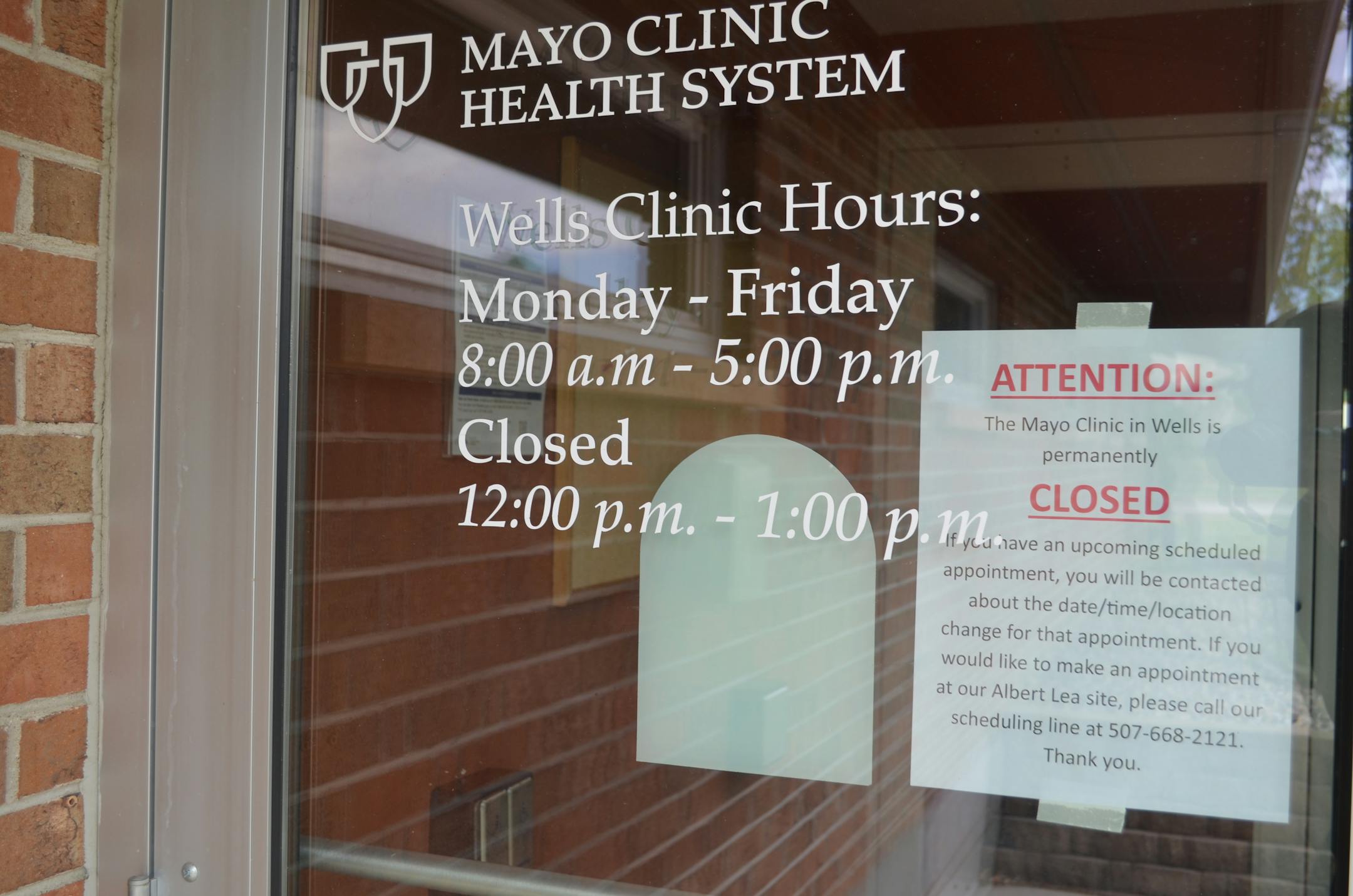
A sign posted on the door of Mayo Clinic Health Systems' Wells clinic directs patients to contact Mayo's larger hospital in Albert Lea for future appointments. Mayo closed the Wells location toward the end of August. (Trey Mewes/The Minnesota Star Tribune)

WELLS, MINN. – Tammy Aadsen knew something was up when her mother couldn’t get blood drawn at Mayo Clinic’s Wells location last month.

Aadsen’s mother had to travel more than a half-hour from Easton, near the Iowa border, to Mayo’s Albert Lea clinic instead. It wasn’t until Aadsen needed to make appointments for herself that it hit her: Mayo had closed up shop in Wells, the city of 2,400 more than 20 miles northeast of Albert Lea.

“I drove up and there were no vehicles around,” Aadsen said. “I didn’t know what was going on.”

Mayo closed its Wells clinic in August, leaving residents like Aadsen wondering what to do next. With Mayo’s announcement last week that it would close six smaller clinics throughout southern Minnesota, communities are wondering the same thing.

“From the feedback that I’ve gotten so far, there’s been a lot of people pretty upset about it,” Wells City Council Member Nancy Kruger said.

Smaller towns in greater Minnesota typically have clinics that do routine checkups and other outpatient care. As those clinics have closed or consolidated, residents are routinely having to travel to larger sites in bigger cities for regular treatment.

The clinic closures in Wells, Belle Plaine, Caledonia, St. Peter, Montgomery and North Mankato affect those communities in different ways. North Mankato residents may have to drive only 10 minutes farther to get health care in Mankato, while Wells and Caledonia are both more than 20 miles away from the nearest clinic.

Kruger, who sees a doctor in North Mankato, said she’ll be fine with the switch, but she worries for other residents who can’t drive and who can’t catch a ride to another city. Wells has another clinic in town run by United Hospital District, but it’s unclear how many residents who receive care with Mayo would switch doctors.

“It’s all so fresh right now, none of us really know the impact in a month, six weeks from now,” Kruger said.

Wells officials are starting to search for solutions. City Council members at their last meeting briefly suggested starting or partnering with a rideshare operation.

Other communities are reacting more aggressively. Caledonia City Manager Jake Dickson said local officials there want to acquire the former clinic site from Mayo and reopen it.

“We are actively looking for somebody to take that over and to pick up right where Mayo left off,” Dickson said.

Seniors in Caledonia heavily favored the Mayo location there; city employees also used the clinic for physicals and other checkups.

Dickson said he and other city officials were concerned something might happen to the Caledonia clinic, but they didn’t expect it to close this year. Caledonia, a city of 2,700 and the seat of Houston County at the southeastern tip of Minnesota, is more than 20 miles away from the nearest hospital in La Crosse, Wis.

The lone transit service in Caledonia doesn’t cross state lines, according to Dickson, so city officials are looking into expanding transit options.

Greater Minnesota has suffered from hospital consolidations and closures for decades, worsening health care access for rural residents. Wells had its own hospital until it closed in 1998.

University of Minnesota researchers tracking hospital closures this year found that nationally more than 190 rural locations shut down between 2005 and 2023. In Minnesota alone, 12 hospital and clinic locations have closed completely since 2010, according to data from the Minnesota Department of Health.

Changes in how medical systems are reimbursed for patient care largely drove those closures, but some experts have called for changing how rural clinics are financed, especially as much of Minnesota’s workforce ages into retirement.

“This is a very strange situation in which demand for services is going up, particularly in rural areas, and the supply of services seems to be concentrating or declining,” said Kelly Asche, a researcher with the St. Peter-based Center for Rural Policy and Development. “It’s a broken market.”

Center researchers have highlighted worsening health care access for years, including in a 2020 report arguing rural health care needs alternative funding streams and more community buy-in to succeed under the U.S. health care economic structure.

Asche said ideas like Wells’ rideshare approach or Caledonia’s clinic search can work, but it will require more government funding to be sustainable.

“People are going to have to accept that things might be a bit more expensive,” he said. “You might lose money on the deal. These things are not going to come cheap.”

Wells residents like Carol Blakestad say they want health care as close to home as possible. Walking through downtown Monday afternoon, 72-year-old Blakestad said early signs of dementia aren’t stopping her from volunteering at her daughter’s day care business or driving a friend to the bank.

But Blakestad is looking to move closer to Albert Lea. Though she uses United Hospital District, she’s unsure where she’d get health care if she moves out of town. With Mayo Clinic’s Albert Lea hospital moving much of its services to Austin, Blakestad knows she definitely doesn’t want to make the drive to Austin.

“I don’t know those streets as well as I do here,” she said. “I want to be somewhere I’m familiar with.”

about the writer

about the writer

Trey Mewes

Rochester reporter

Trey Mewes is a reporter based in Rochester for the Star Tribune. Sign up to receive the Rochester Now newsletter.

See Moreicon

More from Greater Minnesota

See More
card image
Leila Navidi/The Minnesota Star Tribune

Friday’s morning commute and weekend travel could be impacted by the snow.

card image
card image