To protect wild rice, Minnesota moves to cut off pollution from taconite basins

July 27, 2025
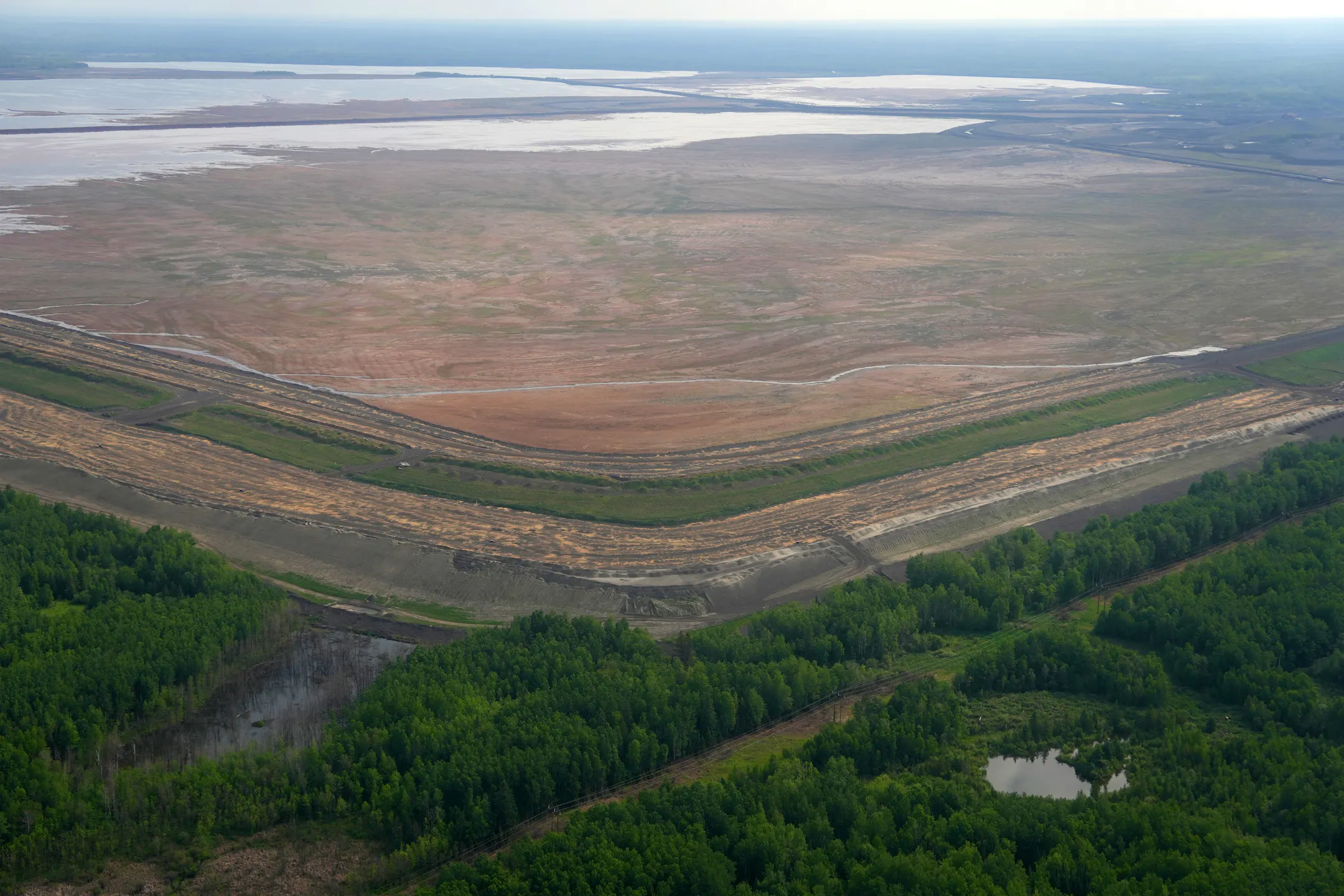
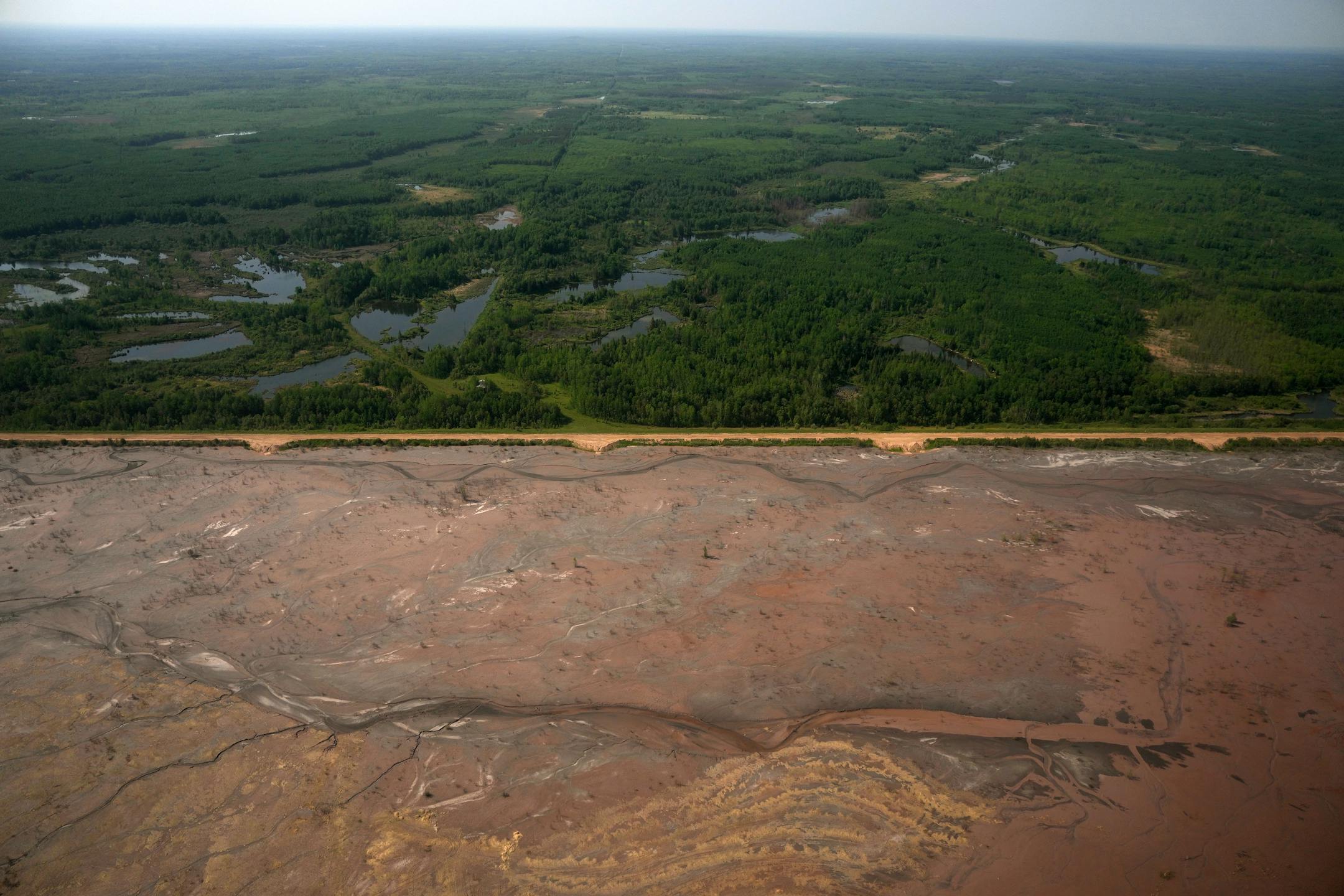
The outer perimeter dike at the Keetac tailings basin during a flight across the Iron Range with mine engineer Chris Baldwin in June. (Anthony Soufflé/The Minnesota Star Tribune)

The Minnesota Pollution Control Agency is trying to enforce a sulfate limit at U.S. Steel’s Keetac basin, one of six that leak the substance.

The Minnesota Star Tribune

From the air, the Keetac tailings basin looks out of place, a complex of lakes and mud flats rising from the pines and bogs of northern Minnesota. It’s more than three times bigger than the nearby town of Keewatin.

The massive complex has stored the leftovers of taconite mining for decades. Every day, the processing plant sends about 20 million gallons of water laced with sulfate into it. Water is also constantly draining out of the basin, flowing south to a wild rice bed in Hay Lake.

Now state regulators are poised to restrict the pollution from the Keetac basin. A draft permit would make owner U.S. Steel add eight sites to test the water and impose limits on sulfate discharges.

If successful, it will be the first tailings site on the Iron Range where the state will enforce a rule to protect wild rice.

“It’s taken us a long time to get here. Like a whole career,” said Nancy Schuldt, water projects coordinator for the Fond du Lac Band of Lake Superior Chippewa. Schuldt first started studying the sulfate issue back in 2004. That’s when she realized the state was not enforcing a limit on the books since the 1970s.

Across the Iron Range, taconite firms collect their waste in six huge tailings basins. All of them leak sulfate, according to data collected by the state of Minnesota and the EPA. Sulfate isn’t found naturally in the waters of northeast Minnesota. In Minnesota’s mucky lakebeds, this mineral salt is converted into sulfide, which snuffs out wild rice and damages other aquatic plants.

In the past, legislators told regulators to rewrite protections for wild rice, a process that was never finalized. Then, in 2022, the EPA ordered the state to enforce the existing limit on sulfate in lakes and streams where wild rice grows. The limit of 10 parts per million is expected to affect a wide range of facilities, including power plants and municipal sewage treatment plants.

Keetac represents the test case for taconite. Even if the permit goes into effect, U.S. Steel would have years before it might have to install a treatment system around the tailings basin.
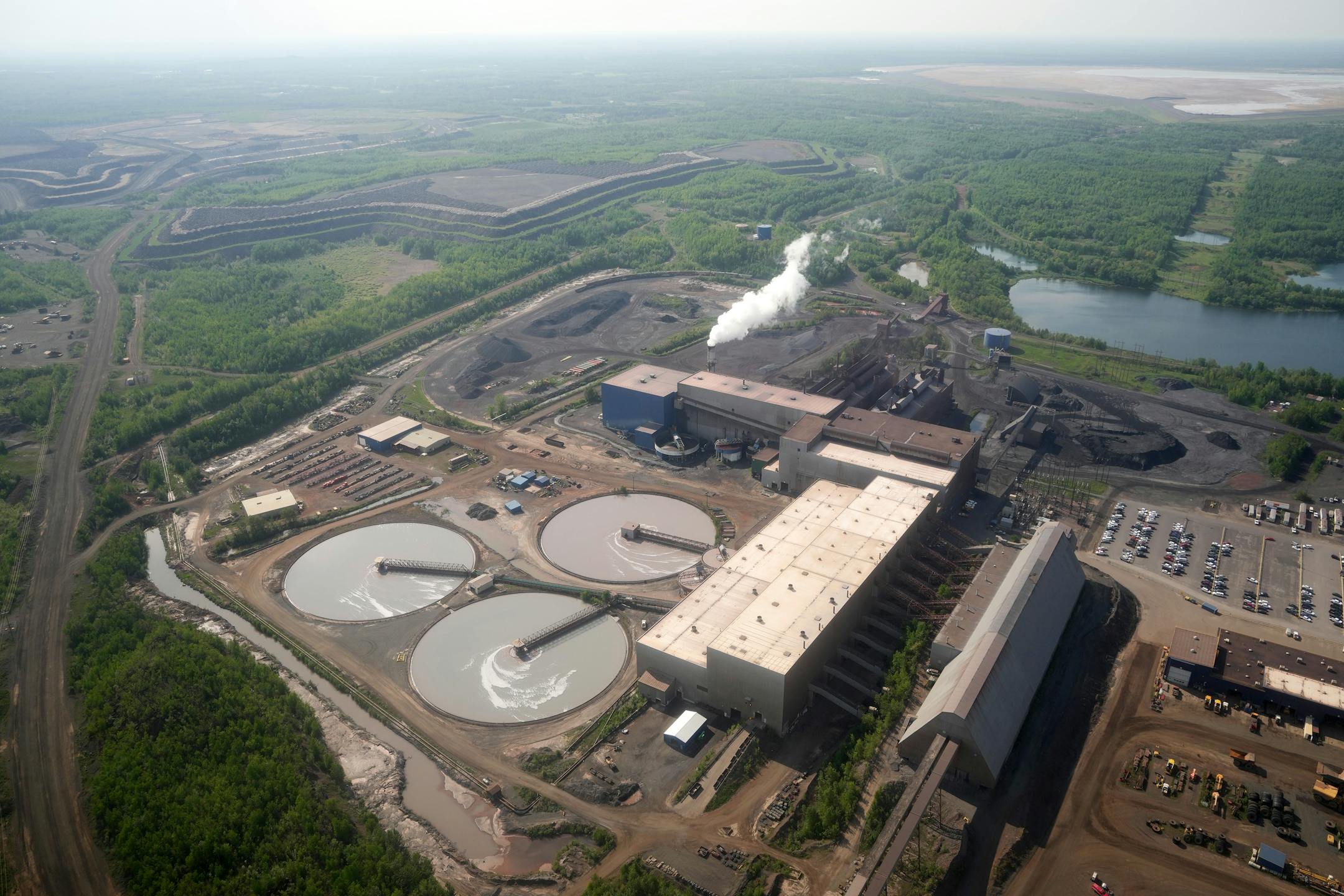
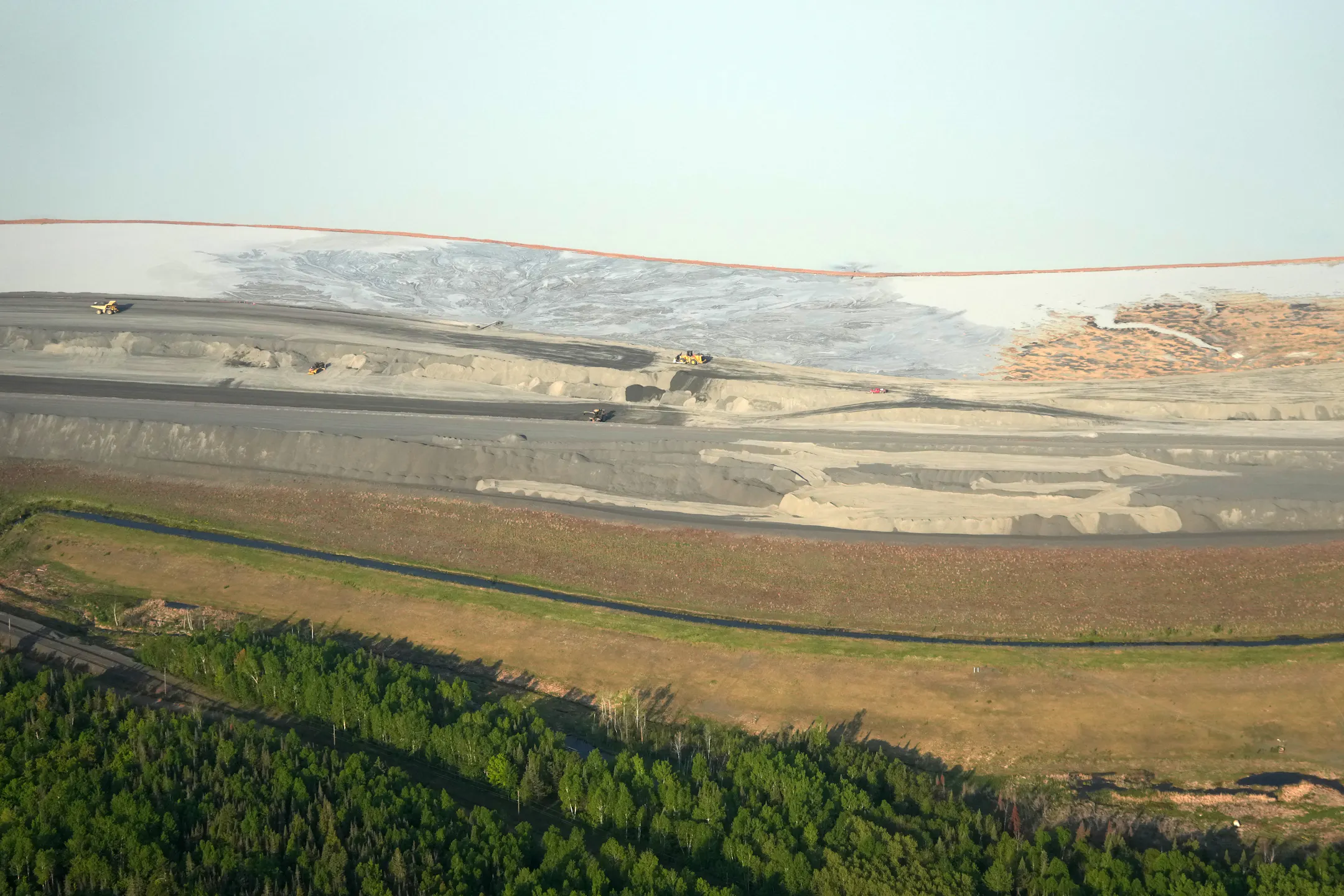
The Keetac processing plant, seen during a flight across the Iron Range in June. (Anthony Soufflé/The Minnesota Star Tribune)

The Minnesota Pollution Control Agency (MPCA) is also supposed to write a new permit for Minntac, an even bigger tailings site also owned by U.S. Steel. A draft has not yet been released.

U.S. Steel argues that the existing sulfate limit should not be enforced and has repeatedly asked for exemptions. In a statement, the company said it would work with the MPCA on “solutions that are well-grounded in law, and are based on sound science, available and proven technology, and that consider costs.”

The MPCA has so far denied those requests. A spokeswoman said the agency was working on implementing the sulfate rule as required under the federal Clean Water Act.

At taconite basins, the rule presents a unique challenge. Tailings basins drain on purpose, to relieve stress on the walls that hold them together. The pressure of the tailings also pushes on the groundwater below, causing it to surface outside the basin.

The more companies mine, the higher the basins rise. Sometimes miners need whole new basins, and in some situations, these expansions rely on environmental analysis that’s decades old.

The southwest corner of the Hibbing Taconite tailings basin has been planted with some grass. Water seeps from the edge of the Minorca tailings basin. Hay Lake, a wild rice bed south of the Keetac basin, has been polluted by that site, the EPA alleges.

A place for waste

Taconite has always produced more waste than the red-rock iron mines that came before.

Taconite ores are first finely crushed and ground into powder. Then a magnet helps sort out the iron that is later baked into pellets. An estimated 70% of the ore taken out of the ground is left behind, and ends up as tailings.

Basins at Keetac, Minntac and Cleveland-Cliffs’ United Taconite were first permitted in the early 1960s, according to the Department of Natural Resources. The DNR issued those original permits and oversees the stability of the basins. The MPCA regulates water quality, including sulfate pollution.

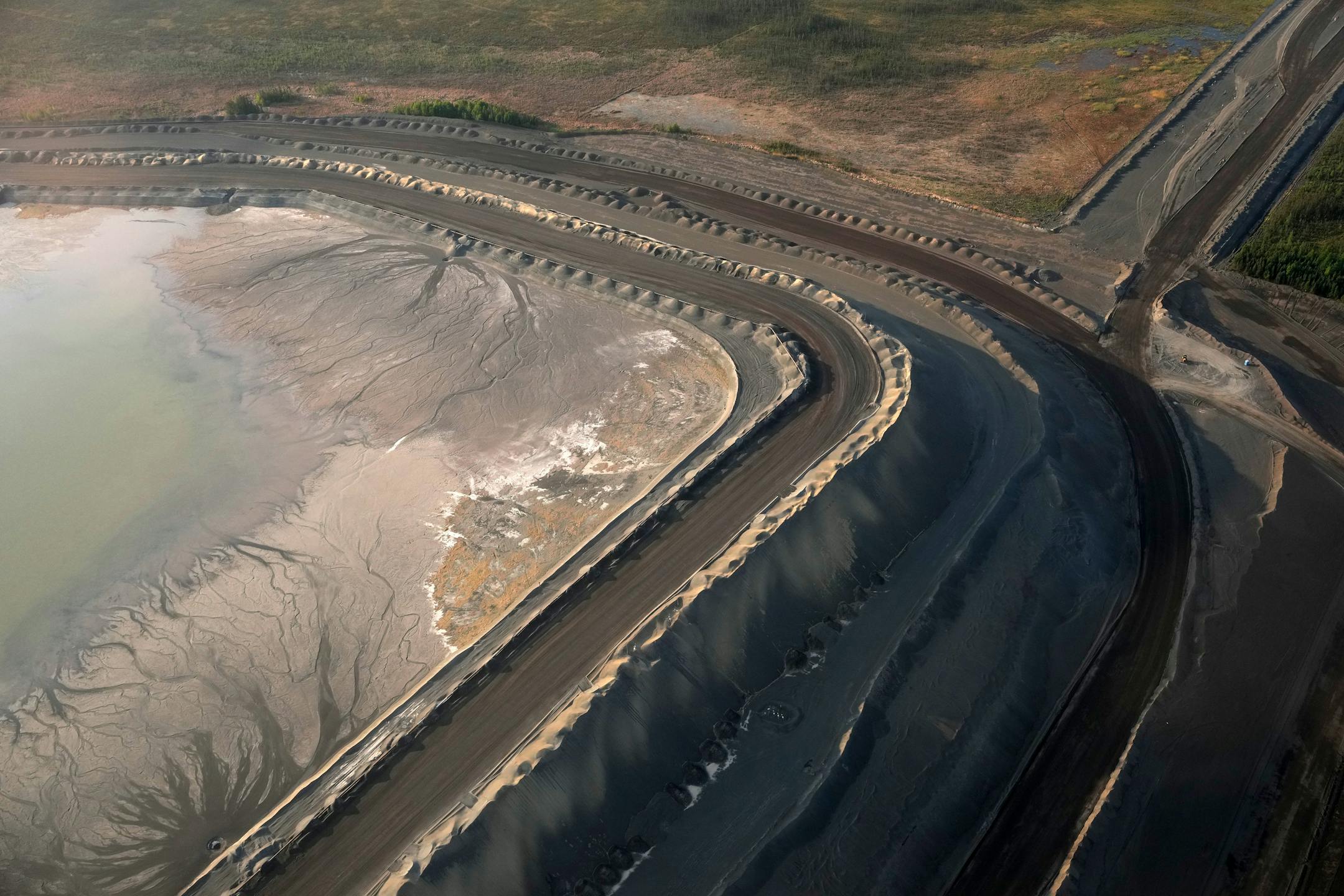
These basins have grown over the decades, and the companies use the waste to create the structure. Gravel-sized tailings form the outer dams. Fine particles and water from processing is piped in a slurry into the middle.

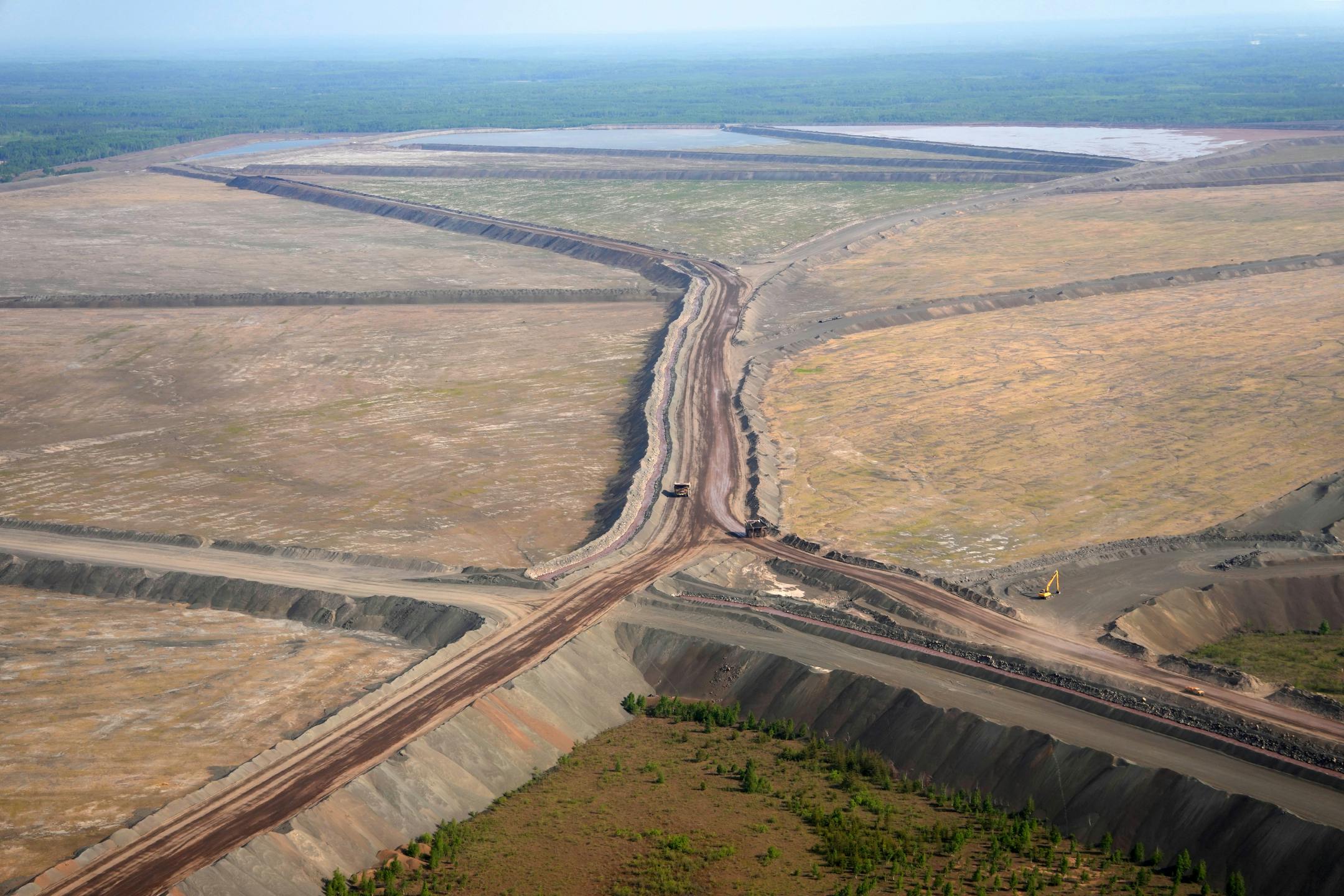
Many tailings basins today are complexes of multiple cells. Interior dikes criss-cross open water and solid expanses of brown and yellow tailings.

In more than one case, these tailings basins are relying on plans and environmental studies from decades ago to continue their expansion. That’s happened at Milepost 7, a Cliffs-owned basin. Concern that the basin’s dams could fail has spurred two lawsuits from the group WaterLegacy. As a result of one of those suits, a court ordered the DNR last year to consider redoing the environmental impact statement from 1976.

As these basins expand, state permitters at the DNR “simply will not look again at the scientific facts,” said Paula Maccabee, executive director of WaterLegacy.

The Milepost 7 tailings basin was constructed after one of the most infamous environmental cases in Minnesota history. It was built after Reserve Mining was ordered to stop depositing tailings directly into Lake Superior.

A DNR representative previously called Milepost 7 “one of the most studied and litigated mine sites in the whole state.” It’s not the only place where an expansion is relying on a decades-old study.

At United Taconite’s tailings basin, outside Forbes, Minn., crews are working now to add a third cell. Though its environmental impact statements haven’t changed since 1980, the DNR determined four years ago that a new study wasn’t needed.

Dams at the third cell at United Taconite will eventually rise 150 feet, said Erik Evans, a DNR spokesman. The entire project is being constructed on wetlands, according to a map provided by the DNR. Construction will disturb 1,399 acres in all, and the company will have to buy mitigation credits to offset the damage, according to Craig Jarnot of the St. Paul office of the Army Corps of Engineers.

The United Taconite expansion is projected to be operational in 2031 and receive waste for the next 30 years, Evans said. The base of the facility will be compacted peat and gravel.

“Compacted peat has been modeled by the company and they report that it helps prevent seepage,” Evans wrote in an email.

Cleveland-Cliffs, which owns and operates United Taconite, did not respond to a request for an interview.

The edge of United Taconite's tailings basin near Forbes, Minn. The basin is being expanded now with a third cell. (Anthony Soufflé/The Minnesota Star Tribune)

Managing pollution

The MPCA has the job of managing the water quality at sites that were originally permitted before the modern Clean Water Act, and before the state’s sulfate standard was on the books.

The massive basins are designed to contain tailings and all the water that may be pumped from the plant, and have enough space to catch the rain and snow that falls on top.

The tailings stay in place, but the water doesn’t. “If the water is polluted, the pollution is going to leave,” said Aaron Klemz, chief strategy officer at the Minnesota Center for Environmental Advocacy.

State data shows sulfate is present in tailings basin drainage water at every site where data is collected. The chemical originates in the “scrubbers” at taconite plants that keep sulfur dioxide from being piped into the air. Instead, water from these scrubbers and from plant operations is pumped into the tailings basins. Taconite ore itself also contains low concentrations of sulfur-bearing pyrite.

U.S. Steel has tried some of its own interventions at Minntac, the largest basin on the Range and among the highest in sulfate concentrations. Results are mixed so far.

At Minntac, average measurements at one drainage point taken through May show sulfate levels at 920 parts per million, according to data collected by U.S. Steel and sent to the MPCA.

That’s 92 times higher than the state’s water quality limit to protect wild rice, and more than three times higher than the EPA’s recommended limit for color and taste in drinking water. Minntac has no specific sulfate limit in its permit, however.

U.S. Steel has installed systems to capture and pump back groundwater that would otherwise flow into the Sand River and the Dark River.

The Minntac tailings basin and processing plant. Owner U.S. Steel installed a system to capture escaping water on the west side of the basin in 2020.

For that reason, the company stopped collecting data at a drain that leads to the Dark River in 2020. But downstream, sulfate continues to show up, averaging about 290 parts per million so far this year.

Schuldt said she estimated that only 50% to 60% of the water seeping out of Minntac is being collected by the current system. The Fond du Lac Band previously hired a photographer to take infrared photos of the site in winter, which showed surface water continuing to emerge from the dams.

U.S. Steel has acknowledged that sulfate is still escaping. A 2022 compliance plan it submitted to the MPCA noted that 3,910 tons of sulfate were leaving the basin every year.

The company’s plan proposes building deep underground walls on the east and northeast edges of the basin, and a treatment system to reduce the sulfate in the basin’s water.

Right now at Minntac and Keetac, Schuldt said, “there’s clear data that Minnesota water quality standards are being violated.”

U.S. Steel disagreed. In a statement, the company said it was in compliance with its Minnesota permits.

Minntac's tailings basin contains many internal dikes and cells. It's the biggest basin on the Iron Range, covering more than 13 square miles. (Anthony Soufflé/The Minnesota Star Tribune)
about the writer

about the writer

Chloe Johnson

Environmental Reporter

Chloe Johnson covers climate change and environmental health issues for the Minnesota Star Tribune.

See Moreicon

More from Environment

See More
Rising above the treeline (Top of this photo), on the shore of Birch Lake, the Twin Metals Copper Nickel Mine Plant site and Tailings Management site is part of the proposed plan. ] In theory, the copper-nickel mine Twin Metals wants to build in the headwaters of the Boundary Waters Canoe Area Wilderness is a zero-discharge mine — a closed loop that will endlessly recycle millions of gallons of water, including rainwater and the polluted process water it uses to extract ore and
Brian Peterson/The Minnesota Star Tribune

The copper-nickel mine is controversial for its proximity to the Boundary Waters Canoe Area Wilderness, and the Biden Administration had canceled its leases.

card image
card image