
What to know about Kaohly Her, the next leader of St. Paul

Here are five things to know about the state lawmaker who pulled off a historic victory in St. Paul.

The Minnesota Star Tribune
November 5, 2025 at 1:41PM
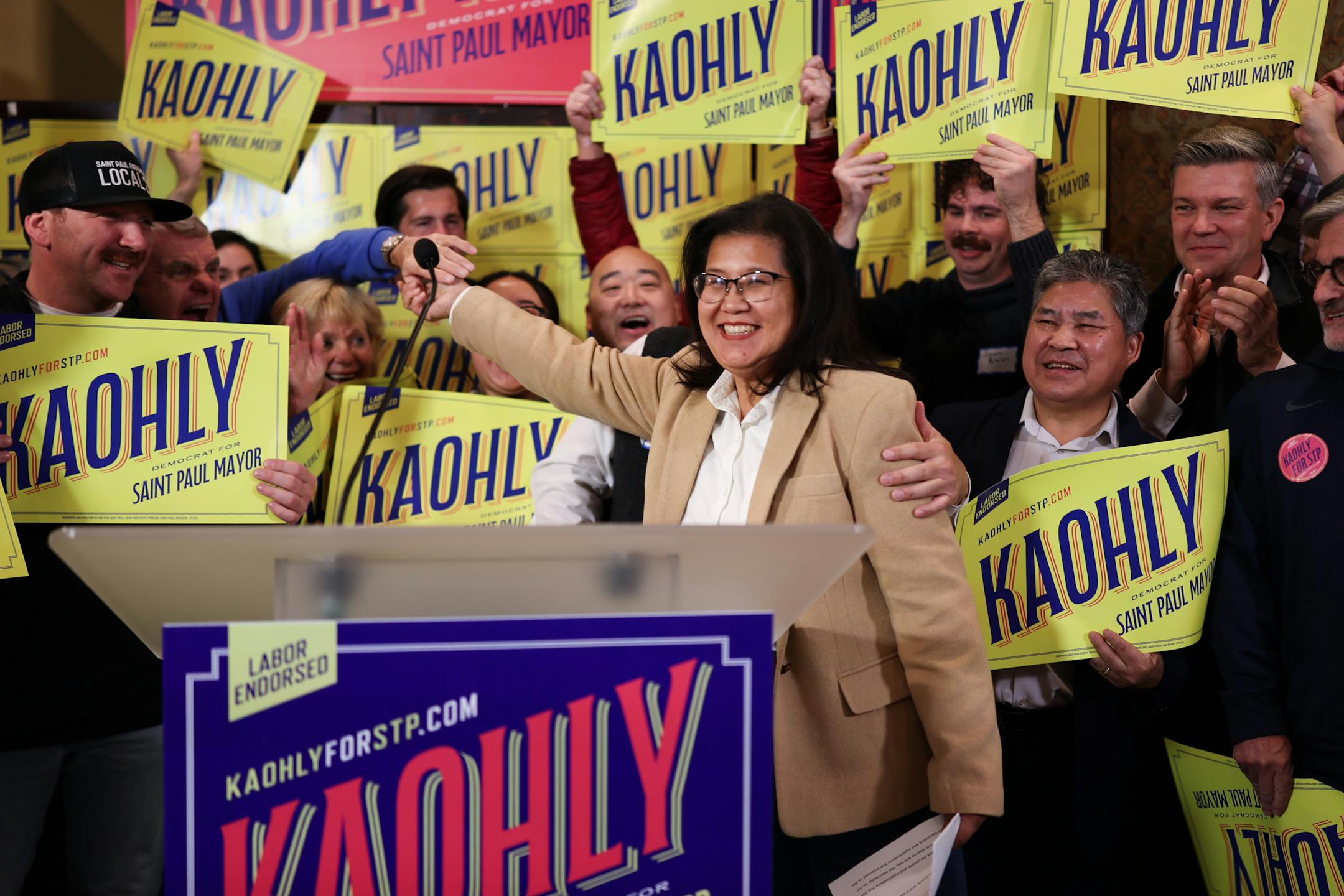
State Rep. Kaohly Her celebrates with supporters during her election night watch party at Sweeney's Saloon in St. Paul. (Carlos Gonzalez/The Minnesota Star Tribune)

State Rep. Kaohly Her pulled off a historic victory on Tuesday, defeating Mayor Melvin Carter to become the next leader of St. Paul.

The 52-year-old state lawmaker upset Carter, who sought a third term as mayor. Her’s victory marks a strong desire among voters for St. Paul to evolve, as she cast herself as a candidate able to tackle persistent problems including a struggling downtown, rising property taxes and a need for more housing options.

Here are five things to know about the mayor-elect:

Her’s win is historic

She will be the first woman and first person from the Hmong community to serve as St. Paul mayor.

Her came to the U.S. from Laos as a toddler. Her family settled in Appleton, Wis., and she graduated from the University of Wisconsin-Madison.

Her has said her grandfather worked for the CIA during the Vietnam War, and her family left the country as refugees.

Her’s political rise is a major achievement in the community, 50 years after Hmong refugees began arriving in the U.S. after the war. She is part of a long line of Hmong politicians to come out of St. Paul, where about a third of the more than 94,000 members of the Minnesota Hmong community live.

She’s served four House terms

Her was first elected to the Minnesota House in 2018.

She represents House District 64A, which includes the St. Paul neighborhoods of Union Park, Mac-Groveland, Cathedral Hill and parts of the West Seventh area. She was a deputy House speaker pro tempore in 2025 and co-chaired the Commerce Finance and Policy Committee.

She was one of the legislators who founded the Minnesota Asian Pacific Caucus.

In the 2025 session, she spoke about her family’s story as she advocated against the revocation of health insurance for undocumented immigrants.

She defeated her former boss

Her worked as Carter’s policy director during his first term as mayor, a job she continued until 2021.

Her ran on a similar platform as Carter, and even campaigned with the incumbent in support of the city’s two ballot questions. But she was able to distinguish herself by criticizing Carter’s leadership, arguing his office has been disengaged while progress in the city stalled.

Speaking to supporters after winning Tuesday’s election, Her thanked Carter for his service and for his role hiring her, which helped bolster her political career.

Her worked with Carter to establish St. Paul’s $15 minimum wage. She also helped launch the city’s college savings accounts for newborns. While also serving in the House, Her proposed funding the savings accounts with state money, which drew some criticism.

She previously worked as administrator for the St. Paul school board, and also served on the city’s Police Civilian Internal Affairs Review Commission.

She channeled voter frustrations

Her cast herself as someone who can bring fresh energy to a city seeing slow movement on issues such as rising property taxes and sluggish economic development.

Her’s win comes as St. Paul residents grapple with a proposed property tax levy increase of 5.3% for 2026. She will also contend with rising rents and the city’s push to increase housing.

Residents have grown frustrated as the downtown struggles to recover after the pandemic, as well as with vacancies at malls in the Midway neighborhood.

She’s critical of rent control

Her has said additional changes could be needed to address small landlords’ issues with rent control.

During her time in the Legislature, Her supported several bills aimed at expanding tenants’ rights. But she has signaled a willingness to soften rent control.

Her told the Sahan Journal she voted against the rent stabilization referendum in 2021, when a majority of voters capped most apartment rent increases at 3% per year. Developers have partly blamed the measure for the city’s lack of new apartment buildings.

A divided City Council earlier this year took a step toward weakening rent control by permanently exempting all buildings built in 2005 or later from the ordinance.

Josie Albertson-Grove of the Minnesota Star Tribune contributed to this story.

about the writer

about the writer

Sarah Ritter

Reporter

Sarah Ritter covers the north metro for the Minnesota Star Tribune.

See Moreicon

More from St. Paul

See More
card image
Jerry Holt/The Minnesota Star Tribune

Among federal policy reversals on the rollout of SNAP benefits this month, cities and counties have focused on funding food banks themselves to help residents make ends meet.

Katie Sullivan (far right) and members of the Handmaids of Minnesota stand on the capitol steps Nov. 8 to protest for a National Day of Action.
card image